SUMAC Tours Europe and the UK by Volcanic Storm
Music
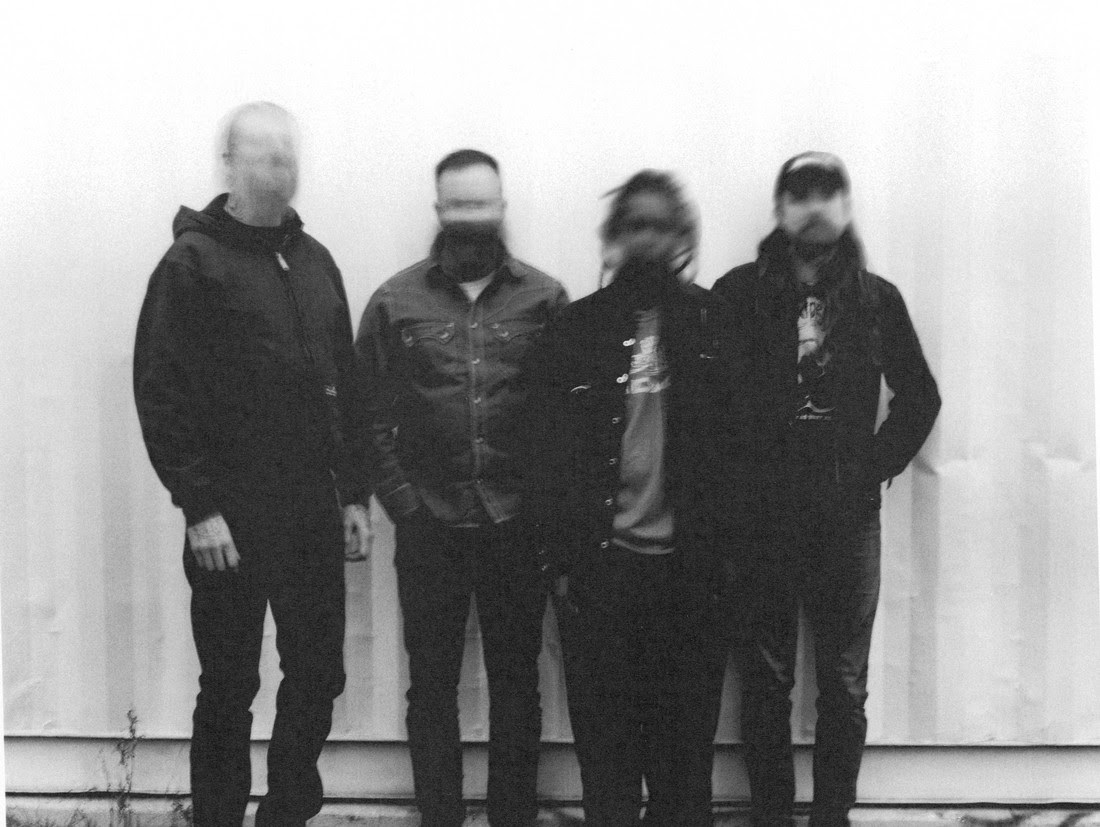
There are no rules to musical expression, as a subjective diagnosis is never linear. How is sound manipulated and extended to the listener yearning to align their narrative with a message? Northwest-based trio SUMAC, consisting of guitarist/vocalist Aaron Turner, bassist Brian Cook, and drummer Nick Yacyshyn, establishes the voices of our ancestry in guttural and textural time signatures — the meat and potatoes of a well-balanced music pyramid. SLUG Magazine is presented with the opportunity to interview Cook about SUMAC’s upcoming EUR/UK tour for their most recent album release, The Film, featuring Moor Mother (an American poet and activist), and other featured artists.
SLUG: You are about to embark on a EUR/UK tour—what about this tour are you looking forward to the most, and how does this tour stand apart from prior EUR/UK tours? What past experiences/knowledge from prior tours will you take into this one?
SUMAC: I don’t think about tours in this capacity. Touring is my livelihood, so between SUMAC, Russian Circles, and the occasional other opportunity, I’m on tour half the year. It all blurs together. There was the realization a few weeks ago that this was my first European tour with SUMAC since June 2019 (though they did do a European tour with Joe Preston filling in for me in 2022), so it’s pretty wild to think it’s been six years since I’ve been back here with Nick and Aaron. But in 2019, we came here three times, so it all blurs together. There’s an opportunity to learn something new every time you’re out on the road, and after doing this for nearly thirty years, there’s a pretty long list of knowledge that you carry into each tour. I go on every tour to keep things stable and boring. I want structure and routine.
SLUG: Tell us about your upcoming collaboration with Moor Mother. How did this project originate, and what was the process like creating the album, The Film, together? Were there any notable moments of tension or notable moments of ease?
SUMAC: I don’t really know how it came together. Aaron mentioned wanting to tour with Moor Mother early on in the band’s existence, but it never really worked out. At some point, Aaron and Camae (Moor Mother) became friends, and the conversation shifted from touring together to making music together. The songs started much the same way the usual SUMAC songs begin—with a structure laid out on guitar. Nick and I filled out the ideas in the rehearsal space, and then we all convened in the studio and worked out the foundations for the album. Even though Camae was with us in the studio, she added a lot of ideas on her own between our time in the studio and the mixing process, and Nick contributed a few synth passages at her request to help shape the flow of the album. It was a fairly relaxed process. I think the general idea was to get the meat and potatoes of the instrumentation established first and then let Camae explore the material and supplement the vocals she tracked with us. There was never any tension in the process.
SLUG: A bigger conceptual question: Moor Mother discussed viewing this album as a complete work of art, something you can’t digest until it is completed, and “a moment outside of convention”. How do you feel you’ve both achieved that in this project? How do you create a project outside the “box of consumption” by the music industry?
SUMAC: I think the main thing is that we didn’t want to release traditional singles or lead tracks that gave away the overall sound or power of the album, so most of what people have heard from this record leading up to its release are the more minimal or fragmented tracks of the album. This isn’t really a “singles” kind of record anyway. As with all of our records, it’s meant to be listened to in its entirety. That’s not the direction the industry is going at this point. People have short attention spans, and the larger population has lost interest in the AOR vibe of the ’70s. And that’s fine. That’s not a new development. Casual music fans want to listen to music casually. We’re not going to win over those types of people, so there’s no reason to pander to them.
SLUG: Between your bold sound and Moor Mother’s explorative stanzas, in what ways do your sounds pair well with each other, and how do they uplift and enrich each other’s concepts?
SUMAC: I think we both work with non-traditional structures. And there’s an element of improvisation and malleability to both SUMAC and Moor Mother in our work. I think there’s also a similar fixation on exploring repetition in a non-linear capacity. No one in our camp is trying to do a catchy verse-chorus type of thing. In terms of enriching each other’s concepts, I think we sonically reinforced the urgency in Camae’s work while she provided clearer and more pointed social commentary and recontextualized our sound to help people hear our music outside of the framework of metal or noise rock or whatever it is that we make.
SLUG: The shows in which you and Moor Mother share a stage are limited — just two nights in Berlin and Tilburg—what do you hope to achieve in those minimal shows? Are you excited to share a stage with Moor Mother?
SUMAC: We were excited and very nervous. The songs really took shape over a long period of time, and we never performed the finished versions as a full unit until soundcheck in Berlin. So that was pretty intense. But again, our music is meant to be malleable and shape-shifting. We just wanted to make sure the songs were performed with conviction and not with hesitation. I think we succeeded on that front.
SLUG: Having performed at prior Roadburn Festivals, how is the energy between the stage and the crowd? In what ways does performing at the Roadburn Festival make this experience unique? What was it like performing at the festival for the first time?
SUMAC: Roadburn is a cool festival, and the people who attend it tend to be very receptive and musically adventurous. It’s always a good crowd. Walter and Becky — the festival organizers — have done an excellent job of curating it in such a way that it feels like the premier metal festival for people who want a more intellectual, progressive and art-minded heavy music community. So it feels like our tribe when we play there. Personally, my first experience at Roadburn was kind of a nightmare. Russian Circles played early in the day in a new venue back in 2010 on a bunch of gear we were unfamiliar with, so it was kind of a train wreck performance-wise, but no one was really there to witness it. It was the second-to-last show of a six-week tour. We were supposed to fly to Athens for our final show the next day, but a volcano in Iceland erupted and shut down all the air space over Europe, so we were stuck in a hotel out by the Amsterdam airport until the following weekend, at which point we were able to fly east to Athens. But we couldn’t fly west for nearly another week after that because of the ash cloud over Western Europe, so we were just sorta stuck in Greece, which I’m sure sounds nice, but after 7 weeks away from home, it was pretty bleak to be stuck overseas hemorrhaging money. All my subsequent Roadburn experiences have been lovely, though.
SLUG: Are there venues in this tour where you haven’t performed before? How do you compare the energy of a new venue to one you’ve previously played at, and what message do you hope to convey to new listeners?
SUMAC: This tour has been a mix of familiar and new venues. The energy varies from night to night, but our familiarity with a venue has nothing to do with that.
SLUG: Being seasoned veterans of both road and instrument, what do you hope to gain/what goal do you hope to achieve by the end of the tour, and does it set the trajectory for the next tour’s goal?
SUMAC: I just take it day by day and hope the van, the gear, and our bodies don’t break down. So far, the van and two amps have broken down. But health-wise, we’re all hanging in there. That’s about all you can really hope for.
SLUG: Tell us about working with guest vocalists Kyle Kidd, Sovie, and Candice Hoyes. What new elements and talents were they able to bring to the album?
SUMAC: Those were all contributions that Camae organized. But I think she did a great job curating new voices for the material. It added a textural depth to the record that I don’t think any of the three of us would have ever thought to explore. I can’t say much beyond that because I’ve never met these people in person. They’re just strange, disembodied voices that appeared on our album. Hahaha!
You can stay updated on SUMAC’s latest adventures by following them on Instagram at @sumacbandofficial.
Read more interviews with national artists:
Allegra Weingarten and Etta Friedman of Momma Talk Welcome to My Blue Sky
Bartees Strange on Horror, Alternate Worlds and George Clinton
