Film Review: Perfect Blue
Arts
Perfect Blue
Director: Satoshi Kon
Madhouse, Rex Entertainment
Released: 02.28.1998
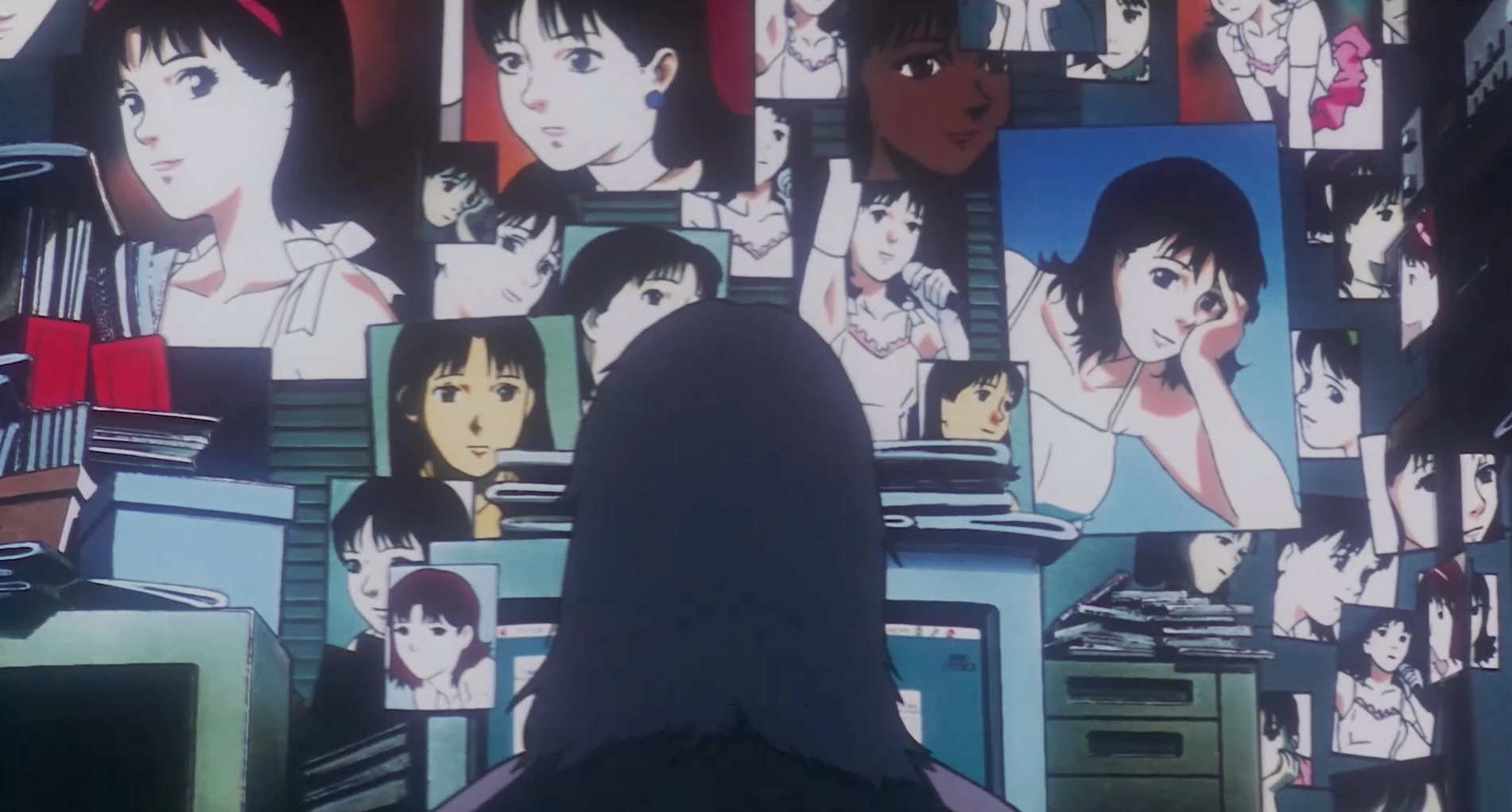
Satoshi Kon’s masterpiece Perfect Blue has returned to theaters for the most horrifying time of the year. And what an experience it was to see this beautiful 4K restoration on the big screen. It is a timeless film, whose themes of celebrity culture, obsession, perception, psychosis and identity ring truer today than ever before. It is a beautiful descent into psychological disturbance.
The story follows retired J-pop idol and now aspiring actress Mima Kirigoe (Junko Iwao, Cardcaptor Sakura, X) as she tries to establish her acting career. Her first big role since leaving her idol group CHAM! is a part in a murder-mystery drama. As she tries to shed her pure idol image, more and more people in her proximity are gruesomely murdered. To make matters worse, Mima begins to lose her grip on reality due to the entertainment industry’s demands and a blog that recounts her day-to-day activities in extreme detail, claiming to belong to the real Mima. What is actually going on? Is Mima the actress even real, or has she stolen the place of Mimarin the idol?
I got to see this movie with my sister (who has seen the film) and our best friend (who has never heard of it), which gave me an interesting glimpse into two completely different experiences. My sister was excited to see the film in theaters. Unfortunately for her, she’s only ever seen the English dub, so the fact that the showings were only in Japanese with English subtitles was a downside for her. While I got used to it quickly, my sister and our friend found themselves struggling to adjust. Neither of them was fond of the high-pitched Japanese voice acting. Our friend even commented that watching this movie with subtitles made her realize how much she relied on tone when watching a movie. I don’t think this was a knock on the acting itself, but more so an insight into how difficult it can be to fully take in a film when language and cultural barriers exist. Sure, subtitles help, but there is a reason why localization exists, and dubs don’t just use direct translations.
Despite that, I see the film as both deeply Japanese and still universal. The Japanese aspect comes from the entire idol-culture aspect of it. While IPs like Love Live! may show a sugar-coated version of the idol lifestyle the reality is far darker. The fans are intense and latch onto manufactured images of these women as pure and innocent girls. To them they are perfect beings, or idols, and any straying from that image — even something as little as being in a relationship — results in severe punishment.
The West may not be as openly intense about these parasocial relationships, but the unfair and belittling sentiments held in regards to celebrities, especially female celebrities are still there. The cultural shifts and conversations that happened when good girls like Miley Cyrus went bad or the Sabrina Carpenter album cover debacle all showed the audience’s unwillingness to view these people as anything other than the version that had been created in their head. And that is without even getting into the unhinged beauty standards in both the East and West or the cruelty of the entertainment industry. Honestly, seeing Mima trying to navigate the early world wide web was both comical yet deeply prophetic. The way the internet shapes our culture and our views so quickly, yet none of it feels permanent is worrying. Any opinion from any corner of the world can be dropped into a sea of discourse that feels almost inescapable — like there is a need for everyone to participate. Now anyone, anywhere has a set of fans who have latched on to the person projected on their screen and any deviation from that persona feels like an imposter. There is a sense of ownership viewers, fans and audiences havel, and when the subject tries to take back a shred of their identity it always leads to a backlash. These people can choose to ride it out, let it get to them or confront it head on and affirm themselves in who they are.
These themes are what allow Kon’s direction to shine, making him a master of mindfuckery. You always question what is real and what isn’t — a throughline in many of his works. Even though I have seen this movie multiple times I am always surprised by how graphic it is, a testament to Kon’s ability to lower people’s guards before shoving them into a gory violent image. Scenes will seamlessly blend into the next before hard cutting to something completely different, disorienting you and leaving you in the same headspace as Mima. What’s real? Who am I? Did that really happen? Each time you have a grasp on the story, you are surprised with a new revelation. His movies are labyrinths that reward you with each rewatch.
The film itself is a vibrant visual treat. Watching this 4K restoration left me both amazed and longing for the days of hand-drawn cell animations. This isn’t a knock on current digital hand-drawn animation; there is a level of smoothness and glossiness, almost perfection, with lots of these new animated projects. Just take the work of Makoto Shinkai, for example, and his nearly photo-realistic yet saturated landscapes and cityscapes. And yet, there is just something so captivating about watching these cell-animated films. There is a level of texture and grit in each scene that reminds you that human hands painstakingly drew in and colored each detail. Each setting has its own distinct feel. Mima’s apartment is small, cozy and a little messy with warm yellows and oranges, with hints of bloody red that creep up and become more prominent as she starts to unravel. Other settings have cooler, darker palettes; lots of greens and purples give the scenes a naturalistic, chillier atmosphere, only for blacks and blues to overtake the visuals in scenes of distress that leave us in a dark void.
Good animation is one thing, but a great score elevates the picture. Composed by Masahiro Ikumi, the soundtrack ranges from poppy melodies to disturbing soundscapes. The pop songs, sung by Mima and her former idol group, are peak city-pop tracks. They are catchy, bright and energetic and feel very ‘90s. The ballad sung by Mima is calming and hypnotic with her low register vocals lulling you into a sway. The score itself brings the unsettling imagery to life. Using industrial sounds and synth to heighten the intensity it creates a sense of danger that permeates the film. A standout track though is “Virtual Mima (Voice Version).” It fills you with dread and disorients you with the high pitched humming, frightening wails and a haunting layered chorus that builds and builds and smothers you in sound. It envelops you, especially in the theater and leaves you clutching your armrest unable to escape.
I usually end my review with a critique, but my deep love for this film makes it hard to find faults. It’s a classic for a reason, although it definitely is not for sensitive viewers. I mentioned the graphic gore, but there are also instances of sexual violence that bear mentioning. I know for many people scenes like that feel unnecessary or gratuitous. While I personally wouldn’t describe those scenes like that, it does feel like something people should know about before going in.
Seeing the 4K restoration of Perfect Blue in theaters reminded me why this film continues to grow in popularity. While I definitely could go into more detail about this film, I’ll end with this: It’s themes are timeless, the direction is immersive, the animation is a sight to behold and it is all wrapped up in a haunting score. It can be hard to watch, but at the same time it is beautifully rewarding. It will linger in your mind long after the credits roll and leave you questioning what you know. If you are a fan of Perfect Blue, anime or animation in general you owe it to yourself to see the 4K restoration of Perfect Blue in theaters. —Angela Garcia
Read more reviews on throwback films:
SLUG Magazine Presents: 31 Nights of Secondhand Screenings
The Top 11 Films of 2024
