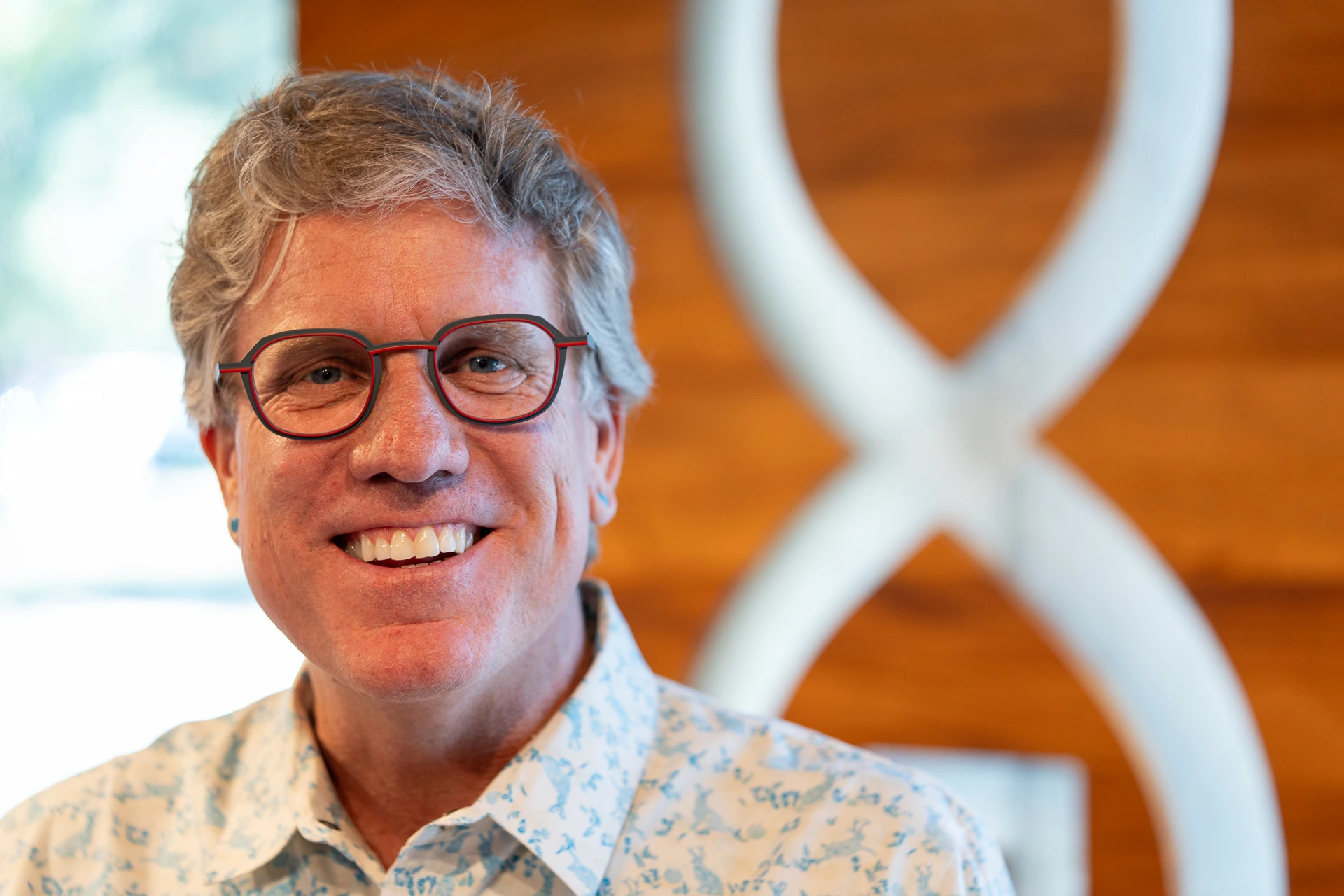
Listening to the Lake: Kelly Hannah and the Art of Seeing Differently
Art
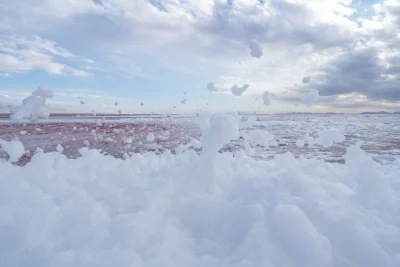
When Kelly Hannah points his lens toward the Great Salt Lake, he’s not chasing a perfect shot. He’s listening. The longtime photographer moves slow, waiting for the water, light and sky to align into something that can’t be staged. “I’m mostly trying to stay open to the photos moving to me, rather than the opposite,” he says. “It’s less about creating and more about receiving.”
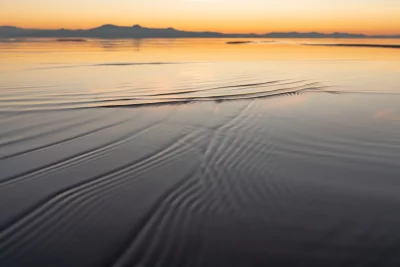
“Out there it’s hard to tell what’s air and what’s water. That compressed perspective fascinates me.”
That patience defines Hannah’s creative process. After 25 years in real estate, he found himself drawn back to photography about 13 years ago. The spark came from a personal loss — a camera destroyed in a fire years earlier — and a renewed desire to document the lake that’s shaped his sense of place. “I wanted to start photographing my relationship with the lake again,” he says. “It’s been this ongoing conversation ever since.”
That conversation has stretched from quiet dawns at the shoreline to turbulent afternoons when clouds and foam become indistinguishable. Hannah’s work plays with that blur, the thin space where boundaries between elements disappear. “Out there it’s hard to tell what’s air and what’s water,” he says. “That compressed perspective fascinates me — it’s about what connects things, not what divides them.”
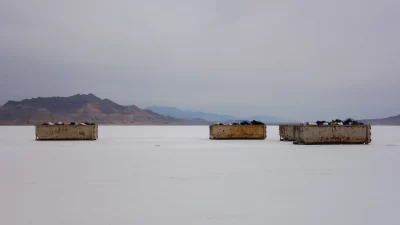
Hannah’s eye is drawn to overlooked corners of experience. While most people at Bonneville Speedway focus on the cars, he points his camera the other way. “Everyone’s watching the main event, but I love turning around and seeing the dumpsters out there on the salt,” he laughs. “It bends my mind a little.” His images invite viewers to pause, reframe and notice what the spotlight misses.
Beyond his camera, Hannah’s advocacy mirrors that same instinct to look deeper. As Vice President of FRIENDS of Great Salt Lake, he’s helping preserve the fragile ecosystem that fuels his inspiration. His connection began decades ago when he first drove into Utah as a young ski racer, watching waves crash against Interstate 80 during the lake’s record floods. “That was my introduction to Utah,” he says. “Over the years, some of the most profound moments of my life have happened out there.”
“We might all benefit from taking another look — checking our compass before deciding what we think we see.”
Today, his volunteer work gives him a platform to protect the place that keeps shaping his art. “It’s nice to work for something so integral to our lives here,” Hannah says. “FRIENDS of Great Salt Lake has built decades of trust by listening, by keeping open eyes and ears.”
Lately, his projects have branched beyond the lake. Partnering with Amplify Utah, he’s been photographing unhoused Utahns for In Their Words, a portrait series blending images with first-person storytelling. The exhibit debuted at the Salt Lake City Public Library and will show next at Salt Lake Community College. “It’s larger than life,” he says. “It’s about amplifying people’s own voices through both image and text.”
He’s also quietly building long-term personal projects — the Rural Mailbox Portrait Project, for instance, a series documenting clusters of worn mailboxes that line Utah’s dirt roads. “They’re as different as people’s faces,” he says. “Each one tells a story.”
“It’s larger than life. It’s about amplifying people’s own voices through both image and text.”
What unites all of Hannah’s work, whether environmental or human, is his steady patience. His photographs feel like reminders to slow down and notice — the way light folds over salt, the way weather erases edges, the way perspective shifts when you stop rushing to define it. “I think it all comes back to acceptance,” he says. “It takes time and space to understand anything. We might all benefit from taking another look — checking our compass before deciding what we think we see.”
To learn more about Kelly Hannah’s work, visit kellyhannah.com or follow him on Instagram at @k.kellyhannah.
Read more features on local photoraphers:
Finding Beauty Where it Shouldn’t Be: The Work of Photographer Don Ducote
Worth a Thousand Words: The Photography of Melanie Moreno
