
FilMéxico: A Cinematic Love Letter to La Patria
Arts
Exploring Mexican Culture Through Film at FilMéxico
The 14th annual FilMéxico was a colorful and warm celebration of all the wonderful voices that make up the Mexican experience. Presented by the Salt Lake Film Society in collaboration with the Mexican consulate, the film festival took place from November 13-20. Each film, shown at the Broadway Centre Cinemas, tells a unique and deeply personal story that unpacks what the Mexican culture means to them and how that informs their identity. In FilMéxico’s line-up, one will find narratives about inspirational Mexican women, the strength of the Indigenous Mexican communities, the beauty of nature and the love for the Mexican spirit. Each film adds color to the mural of the Mexican identity.
Binnigula’sa’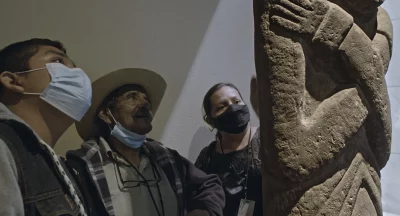
Director: Jorge Ángel Pérez
Binnigula’sa’ is the Zapotec word for “ancient people.” There is a deep sadness that can overtake us when we don’t know our history, when we reach out into a void with no tangible anchor. It is the reason why preservation and connection are not only a comfort, but a necessity.
Featured at FilMéxico, the documentary follows Tá Cándido, an elderly Zapotec man who discovered an ancient Zapotec monolith at age 14. After he discovered it, authorities promptly took the artifact from the Zapotec community in Juchitán and left it unlabeled in a museum in Mexico City. Now nearing the end of his life, Cándido has decided to see the monolith one last time and possibly return it to the community.
The documentary is about the importance of keeping culture alive and learning about our history. These artifacts are more than just fossilized and carved stones; they are how we connect to those who came before us. The documentary goes to great lengths to show how the people in Juchitán keep their culture and language alive. It is a great educational watch that pairs nicely with another entry, Chicharras, for a Zapotec double-feature. Interspersed with colorful animations and quiet, introspective moments, the documentary truly makes you reflect on the importance of culture.
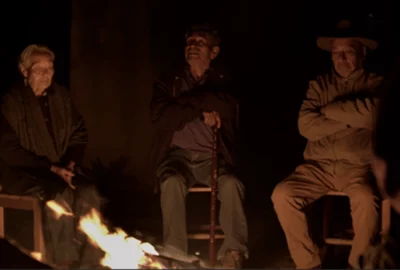 Chicharras
Director: Luna Marán
Chicharras, featured at FilMéxico is an intimate and simple film that packs a lot into its short runtime. The film offers glimpses into the lives of a Zapotec community as they debate whether to embrace a new federal project that promises to create more jobs and economic stability for the residents or reject it due to the potential environmental and community impacts. At the same time, it highlights the importance of the women in the community to make decisions such as these and the lives they live.
The film urges people to participate in their local community. The film is very authentic, while almost voyeuristic at times. The handheld cinematography makes you feel like you are just another member of the community, hearing these discussions and seeing how the community ultimately comes to a decision.
The film feels authentic in every sense of the word, without overdramatizing or heightening events for effect. Sparse music accompanies the natural sounds—the chirping of cicadas, the high-pitched calls of birds, and the rustling of wind in the leaves. It all makes you feel like you are there and experiencing things alongside the Zapotec community. I also have to commend this film for going as far as to have the character speak in the Zapotec language, as it adds so much texture to the story!
Corina
Director: Urzula Barba Hopfner
Corina is probably my favorite entry from the lineup at FilMéxico. I am just a sucker for small, quirky stories with lots of heart. The kind of stories that can make the everyday feel like an adventure. Corina follows the titular character, played by Naian González Norvind, a 28-year-old agoraphobe whose life is confined to one square block and works as an editor of erotic romance novels for a small publishing company. When Corina rewrites the ending for one of the books of the company’s most esteemed writer, she must finally venture outside her safety zone and fix her mistake before it is too late.
This film was something that really resonated with me. It may be the most easily digestible film on the list, but it is one I can see myself adding to my comfort film rotation. The colors are warm and bright, which gives the film an inherent charm. Corina is a shy yet likable character that you find yourself both frustrated with and rooting for.
The film also shows a deep love for the art of writing. The narration will often go on and on about all the little nuances of language and how small edits can change so much. I also can’t move on without mentioning the amazing camera work in this film, specifically an intricately choreographed one-shot that showed the film’s dark yet endearing sense of humor. I hesitate to compare it to a Wes Anderson film, but no doubt the look of the film alone will evoke that. In conclusion, Corina is a great time with plenty of laughs and heart.
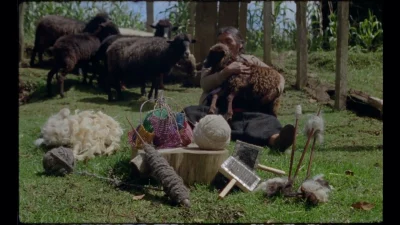 Formas de Atravesar un Territorio
Director: Gabriela Domínguez Ruvalcaba
Formas de Atravesar un Territorio follows a group of Tsotsil women in the mountains of San Cristobal who raise and herd sheep and shear the wool to create their traditional regalia. The documentary follows their day-to-day lives and the work they do as they talk about their history and the changes they have witnessed over the years, touching on themes of discrimination and modernization. The documentary shows a deep reverence for nature.
The interviews are interspersed with shots of the lush, green forest. You can feel the cool landscapes, and Ruvalcaba’s eye for detail entrances the audience and transports you into the mountains. It is all about capturing the beauty in the smallest things. Screened at FilMéxico, the documentary is a slow and relaxing time that simply asks the audience to exist with these women and learn about their traditions and craftsmanship.
Jornalero: Una Mirada Al Frente (Day-Laborer: A Look Ahead)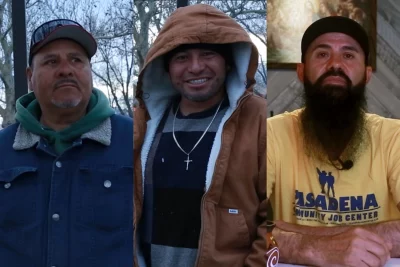
Director: Pablo Tellechea
A much more straightforward, but still as impactful short, Jornalero gives us an inside look into the lives of the day laborers, or “jornaleros,” that live right here in our very own Salt Lake and West Valley communities. The ones who wake up at 5:00 in the morning and head down to the nearest Home Depot, with the hope of picking up some work that day. Following three men, Raúl, Agustín and José, the short documents their testimonials as they talk about the work they do, the difficulties and injustices they face and their hopes of returning to la patria, or the homeland.
Each man has come to the United States by himself, hoping to find some way to support their family back in Mexico. There is a deep sense of sadness that comes with hearing these stories, as it reminds you of how lonely and isolating this decision is. All one can do is smile through it and hope it was all worth it in the end. Screened at FilMéxico, the documentary goes to great lengths to explain the injustices these people face all just to send a little money to support their families: corrupt and abusive bosses, the fact that many of these jornaleros are not aware of their rights as workers and the unjust system that punishes these people simply for wanting a job — while ignoring the employers who take advantage of their desperation.
Highlighting not just the stories of the jornaleros, but also gathering testimonials from organizations that offer help and resources, this short is an informative and necessary watch that calls us to take action and protect our neighbors. It is a reminder of the vulnerability and resilience these men show every day as they stand patiently at the Home Depot corner. The documentary is even more important now than ever. It hits so close to home because this is our home, right here in Utah.
 Las Voces Del Despeñador
Director: Victor Rejón and Irving Serrano
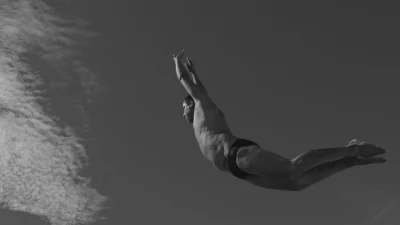
There is a certain beauty to the art of diving that is just enthralling. It’s more than the grace and precise movements of the divers; it’s that split-second between being in the air and hitting the water that keeps you on edge. For a second, you feel the same rush of adrenaline as them. For the cliff divers, or “clavadistas,” of La Quebrada, diving is more than just a job to entertain people — it is a tradition, it is their life.
La Quebrada is an icon of Mexican landmarks — though perhaps not as famous as Chichen Itza, La Quebrada still carries with it a rich history created by generations upon generations of clavadistas. From a rugged and steep rock, clavadistas will jump from a height of approximately 115 feet, making sure to catch the wave at just the right time. These clavadistas become celebrities in their own right and inspire the younger generation to quite literally carry the torch. Shot in beautiful black and white, the short presents testimonials from different clavadistas, young and old. It begins with a poem talking about the greatness of La Quebrada and the sensations of the descent from making it to the top of the rock to the feeling of being in midair and finally hitting the water.
Each line is read by a different person, the voices of the abyss. Beautiful wide shots highlight the majesty of La Quebrada and its scale. The black-and-white cinematography allows for a crisp and stark contrast in the lighting, highlighting the darkness of the sea and the brightness of La Quebrada. The slow-motion shots of each diver as they take their leaps and descend into the ocean, while the music crescendos, create a fantastic sequence that immerses the viewer in the experience. Screened at FilMéxico, this short is a poetic ode to the grandness of La Quebrada and introduces the public to such a unique community.
 No Nos Moverán
Director: Pierre Saint-Martin
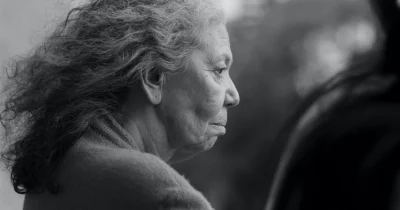
No Nos Moverán featured at FilMéxico, is a dark, comedic Mexican drama that follows Socorro, played by the legendary Luisa Huertas. She is a depressed lawyer obsessed with avenging her brother, who was killed in the infamous Tlatelolco Massacre that occurred after the Mexican government deployed troops against protesting university students. It is a dark and bloody mark on modern Mexican history, as anywhere from 300-400 students were killed or went missing during the tragedy. When Socorro finally gets a lead to find the soldier who killed her brother, her plans for revenge start to unravel her well-being and her family relationships. It is a descent into lingering grief and heavy grudges.
The film is an engrossing watch. Shot in black and white, the framing and composition take center stage. The sound design is also a standout — it is minimal but noticeable and adds so much to the storytelling and atmosphere. Using only diegetic music and sounds produced by the environment, it grounds the film’s more dramatic elements. However, the main reason to watch this film is for Huertas. Her performance is layered and nuanced, capturing a range of coldness, bitterness, cheeriness, rage and all-consuming grief. A beautiful character piece, it is no wonder the film was nominated for and won so many awards.
 Tan cerca de las nubes
Director: Manuel Cañibe
Tan cerca de las nubes documents the story of the 1971 women’s soccer team that played against Denmark in the Second Women’s World Cup. An underdog tale, ripe with the potential for a “based-on-a-true-story” sports film, the Mexican women’s soccer team, or fútbol feminil, rose to stardom and became a symbol of pride for the Mexican public.
The documentary gathers archival footage and present-day testimonials from the female soccer players who played in that fateful tournament. Screened at FilMéxico, It’s the kind of documentary that transports you through time as you watch the fútbol feminil players talk about the hardships they faced and the emotions they felt in those very moments, while also giving you exciting play-by-plays of the soccer games.
The documentary is a breezy watch that flies by as you become engrossed in these women’s journey to become world champions and the drama it unravels. The women are all engaging and endearing to listen to, each showcasing their unique personalities. The film doesn’t shy away from talking about the machista culture that ran and still runs rampant in Mexico and the criticism they dealt with. It’s a long-forgotten story that deserves to be told, as your heart will be warmed by the end once again when you see these inspiring women reunite and play the sport they so loved once more.
Read about more local film festivals here:
Utah Queer Film Festival 2025 Showcases Local Queer Shorts
Inaugural Orem Film Festival Debuts Ten Local Shorts
