Josephine Is Daring, Devastating and Dynamic Filmmaking
Film
Sundance Film Review: Josephine
Director: Beth de Araújo
Kaplan Morrison, Kinematic, Spark Features
Premiere: 01.23.2026
The only thing scarier than being a helpless child is being a helpless parent, and the responsibilities to nurture, teach and protect your child are the greatest joy and heaviest burden imaginable. When you add to that the fear that women face every day in a world that minimalizes and refuses to hear victims, you have some very heavy subject matter, and Beth de Araújo’s Josephine tackles them all with an unflinching commitment to truth.

Courtesy of Sundance Institute | photo by
Joey Ally
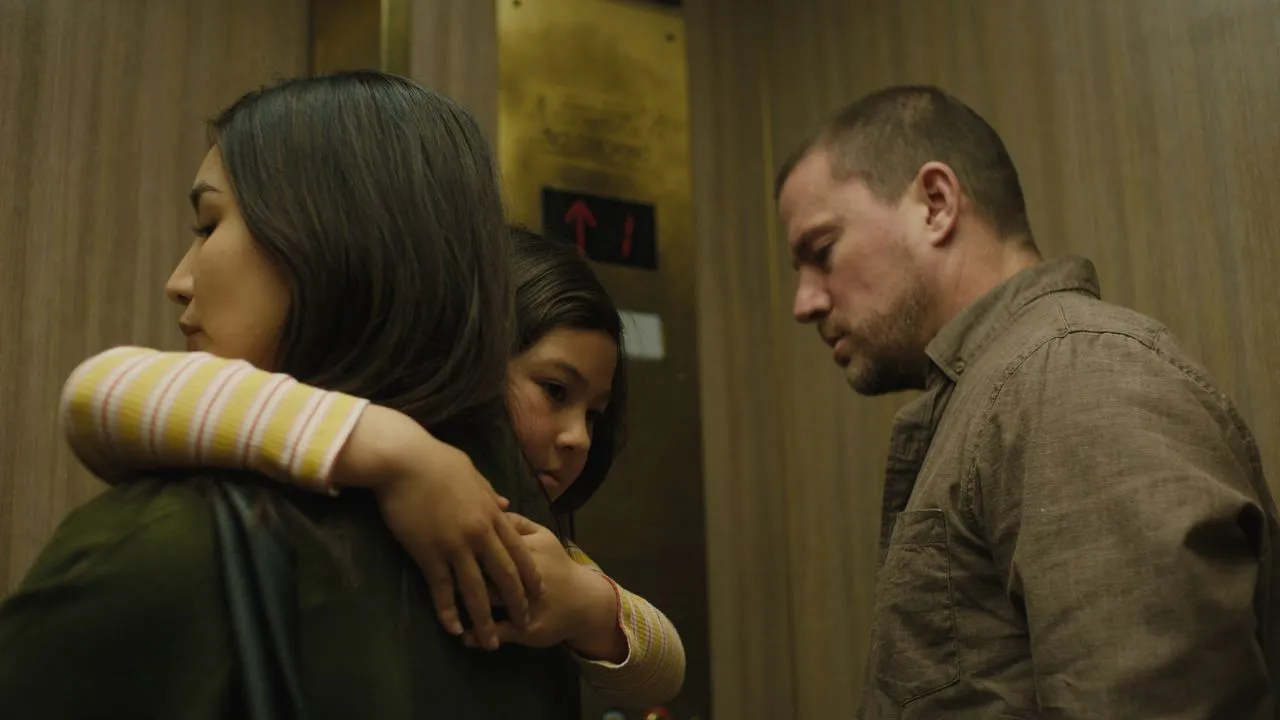
The film centers on eight‑year‑old Josephine (Mason Reeves), who is jogging in Golden Gate Park with her father, Damien (Channing Tatum, Magic Mike, Logan Lucky), when she runs ahead. Josephine suddenly sees a woman struggling away from a strange man, and she witnesses a brutal sexual assault that shatters her sense of safety and innocence. As fear and paranoia take hold, Josephine begins acting out violently and obsessively, haunted by what she saw and struggling to make sense of it. Her father — and her mother, Claire (Gemma Chan, Crazy Rich Asians, Eternals) — are devoted but deeply conflicted in how to support her, especially when the police ask Josephine to testify in court. The family faces impossible decisions and tension that they must try to make together as tensions mount and they struggle to trust and understand each other.
Josephine is a painstakingly crafted story, with de Araújo committing fully to presenting the world entirely through the eyes of the young titular protagonist. The film is both deeply thought-provoking and devastating, fearlessly examining trauma, the limitations of adult understanding and the fragile, desperate ways a child tries to reclaim agency in a world where safety and fairness are irrevocably shaken. Every moment is imbued with emotional weight, from small gestures of innocence to sudden, harrowing jolts of fear, creating a narrative that is both intimate and unflinchingly raw.
Through meticulous attention to perspective, and to human nature, Josephine captures the profound vulnerability, resilience and complexity of childhood in crisis, leaving the kind of lasting impression and burning itself into your memory in the way only the best and most serious mixed films are able to do. There’s a lingering sense of being haunted that is prevalent throughout the film, as Joseph imagines the attacker (mesmerizingly portrayed by Philip Ettinger of First Reformed and I Know This Much Is True) to be everywhere, including her bedroom at night. The assault is graphically portrayed, a bold and potentially controversial choice, but one which I found to be justifiable and even necessary in order to fully put us inside Josephine’s trauma. The courtroom sequence is arguably even more harrowing, as Josephine faces the attacker and is callously cross examined by the defense attorney, and honestly, I felt like screaming while watching.
Tatum, an actor whom I and most critics once wrote off as little more than an attractive prop who has now become one of Hollywood’s most serious and unwaveringly committed thespians, follows a career-best performance in Roofman with an even better one. Tatum embodies the perils of fatherhood as a simple, loving man caught between his instinct to protect his daughter and the darker, anger‑driven impulses that threaten to overtake him. Every look, every pause conveys the tension of a man wrestling with love, guilt and the limitations of his own understanding, making his struggle feel painfully real and grounded. Opposite him, Mason Reeves is revelatory, delivering a raw and piercingly honest portrayal of a child navigating trauma. Her performance is electric in its vulnerability and clarity, capturing both the fragility and fierce agency of a young girl forced to confront horrors far beyond her years. Xhan is quite effective as the conflicted mother, but the film completely and utterly belongs to Reeves and Tatum. Together, they anchor the film’s emotional core with heartbreaking precision.
Josephine is a towering achievement that is likely to emerge not just as one of the defining films of the 2026 Sundance Film Festival, but of all of 2026, and announces Beth de Araújo’s arrival as one of the most skilled and interesting new filmmakers of our time. I can’t decide whether I’m dying to see it again or if I’ll avoid it for the rest of my life, but it’s playing in my head non-stop either way. —Patrick Gibbs
Read more of SLUG’s coverage of the 2026 Sundance Film Festival.
