I Want Your Sax: Will Bates On Scoring Tuner and Knife
Arts
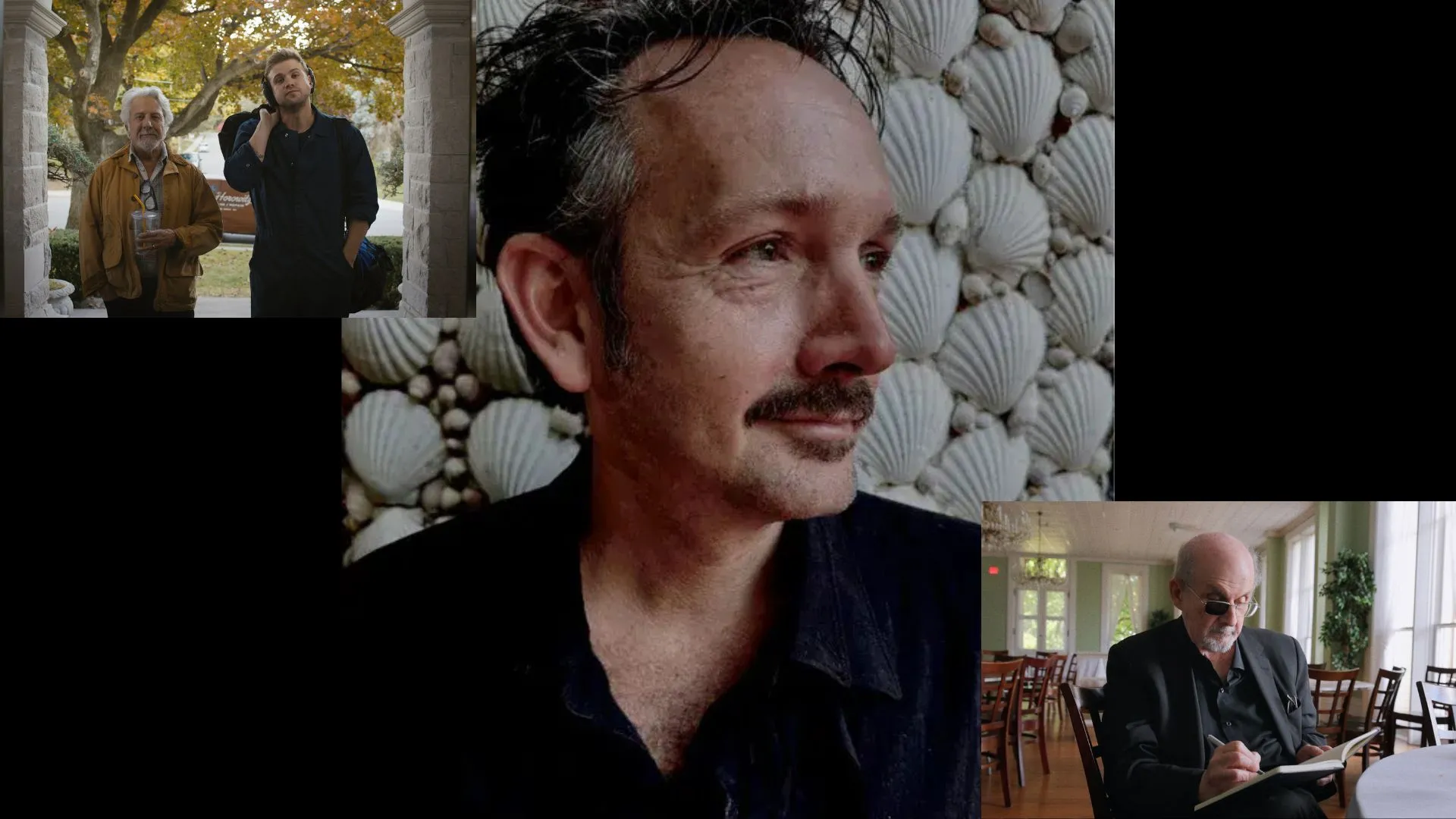
Composer Will Bates arrives at the 2026 Sundance Film Festival with two very different films that share a common thread: Both rely on music not as mere decoration, but as a driving narrative force. Tuner is a propulsive, melody-driven thriller, while Knife: The Attempted Murder of Salman Rushdie is a documentary about survival, recovery and choosing life after unimaginable violence. Together, the films showcase the range of Bates’ work, from romantic, saxophone-led themes to quietly hopeful textures shaped by trauma and resilience.
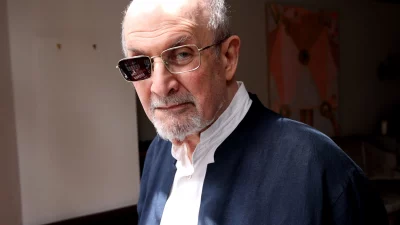
“So, I guess I’ll start with Knife,” Bates says, and the way he says it makes clear this one still lives in his body. A longtime collaborator of director Alex Gibney, Bates was a natural choice to score the story of the 2022 attack on the renowned author Salman Rushdie and his recovery. “It opens with the actual footage of what happened to Salman on the day that he was attacked. So it’s extremely shocking, it’s very disturbing,” Bates says. What mattered most to Bates, though, was what followed. “Then it kind of launches into something that’s a little more optimistic. I don’t wanna say brighter, but one of the things that Alex Gibney always does with his movies — this is about the sixth or seventh one we’ve done together — is that the first two minutes tend to be a thesis,” Bates explains. Bates describes the score’s role as guiding the viewer through a recovery rather than trapping them in trauma. “It’s about how Salman recovered from the attack, how he dealt with all the darkness in his life and how he basically made himself better through this awful trauma,” Bates says. “So there is a lightness to it. There’s an almost dreamlike quality to the way that he recovered.”
“So there is a lightness to it. There’s an almost dreamlike quality to the way that he recovered.”
Bates keeps returning to the idea of balance, of not letting the film collapse under the weight of its own horror. “It’s almost slightly hallucinatory, I think, in the way that Alex patched his story together,” Bates says. “Every time it got too dark, he was very sensitive to it. Alex would just be like, ‘No, it’s getting too heavy. It can’t be heavy. That’s not what this is about.’” Instead, Bates saw the film as a portrait of survival. “It’s about Salman kind of choosing life — to coin an Irvine Welsh term. That was a huge part of it,” Bates says. That sense of life, of movement forward, opened the door to an unexpected palette. “There was a lot to draw on in that sense,” Bates says.
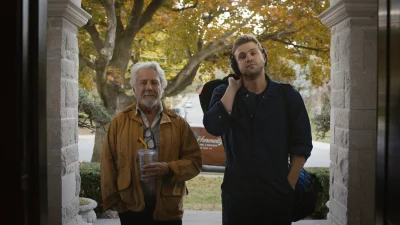
Tuner, directed by Daniel Roher and starring Leo Woodall (Nuremberg), two-time Academy Award winner Dustin Hoffman (Kramer vs. Kramer, Rain Man) and Havana Rose Liu (Mayday), required a very different musical engine, but one that was just as emotionally specific. “With Tuner, to me, the thing that we cracked early on was melody,” Bates says. “It was really important for Leo and Havana’s characters to have a melody that we can draw from.” Nicky, Woodall’s character, lives in a state of isolation, and Bates wanted that to be audible. “Leo’s character has this kind of loneliness, so there’s a kind of elegant quality to his theme. But then, when he meets Havana’s character, there’s a romance and a beauty to it,” Bates says. “Then of course it gets dark. Like, super dark. And that’s important. There’s a propulsion to the score.”
“What was funny about Tuner is that I ended up writing most of it on the saxophone.”
The propulsion didn’t come from electronics alone. In a twist even Bates didn’t anticipate, Tuner became the most personal score of his career. “Sometimes I torture everyone around me because I’m convinced that John Williams has come up with every melody, and there are none left,” Bates says with a self-effacing smile, “but there is always one lurking there.” For Tuner, that melody emerged through an instrument he’d spent years avoiding. “What was funny about Tuner is that I ended up writing most of it on the saxophone,” Bates explains. “I started life as a jazz saxophone player, and I tend to not have sax in my scores. If I incorporate any, it generally gets thrown out pretty early on.”
Bates ran the themes by his wife first, as he always does. “She listened to the stuff and was kind of like, ‘These are great, but it’s a bit saxy, isn’t it? Maybe you should rein that in a bit. He’s just gonna chuck it out like they always do,’” Bates says. So Bates stripped it back, replaying the melodies on synths and modular textures. Roher’s reaction surprised him. “He was kind of like, ‘Love the melody, but I just wish that the instrumentation had some kind of human element,’” Bates says. When Bates came back with the original saxophone version, Roher instantly knew it was the sound he was looking for. “He was like, ‘It’s that, man. Why didn’t you play me that first?’” Bates laughs. “I don’t know, I’m just kind of shy about the saxophone.”
“Coming up with themes — that to me, that’s the job.”
The result is a score Bates never expected to make. “That process kept repeating itself throughout making the score. And then in the end, it’s a saxophone score, the first one I’ve done, which is kind of crazy as a sax player.” That confidence carried back into Knife in an unexpected way. Bates recalls a cue called “The Music of the City,” when Rushdie is finally moved from an upstate hospital back to Manhattan. “His first night, he’s just lying in bed, and he’s hearing the sound of the city. And then my score comes up through it.”
For Bates, the sound of New York had a very specific reference point. “To me, the music of the city in New York City is Wayne Shorter, right? So I just thought, ‘I’m gonna put some sax on it.’” Gibney didn’t hesitate. “From that moment, Alex was like, ‘I like that. Can we do more? Can we have more sax?’ And then, ‘My God, what’s going on?’” Bates laughs. “So there’s a few horns in there. I use a lot of modular synths. I have a wonderful string player called Lev Zhurbin, who’s a viola player and a wonderful cellist. It’s a really interesting mix of instruments that I’m really happy with.”
For Bates, whether he’s scoring survival or obsession, recovery or descent, it always comes back to the same thing. “Coming up with themes — that to me, that’s the job.” And sometimes, it turns out, the sound you’ve been hiding is the one that finally tells the truth.
Read more of SLUG’s coverage of the 2026 Sundance Film Festival.
