Luc Besson’s Dracula Lacks Bite
Arts
Dracula
Director: Luc Besson
EuropaCorp
In Theaters: 02.06.2026
It might seem odd to draw a line between Dracula and The Fantastic Four, but they share a curious bond. In most cases, the imitation rarely surpasses the source, yet these two are striking exceptions. Marvel’s first family and Bram Stoker’s immortal vampire have been so thoroughly reimagined that their offshoots have eclipsed them. The Incredibles and Nosferatu, in particular, feel more vivid, more enduring and ultimately more compelling than the originals that inspired them.
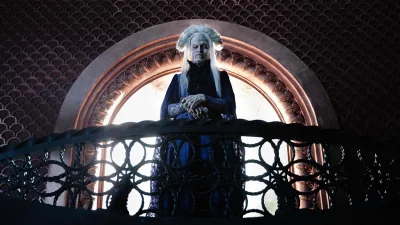
After the death of his beloved wife Elisabeta (Zoë Bleu, The Institute, Signs of Love) during a brutal battle with the Ottomans, Prince Vladimir of Wallachia (Caleb Landry Jones, The Outpost, Nitram) renounces God and embraces immortality, reborn as Dracula. For centuries, he searches for Elisabeta’s reincarnation, creating vampiric servants and even a seductive perfume to draw women to him. Four hundred years later in Paris, while finalizing a real estate deal with solicitor Jonathan Harker (Ewens Abid, The Last Rifleman, Andor), Dracula realizes Harker’s fiancée Mina is the woman he has been waiting for. Imprisoning Harker, Dracula rejuvenates himself and travels to Paris, where he finally finds Mina and attempts to awaken her memories of their past love. As Mina is torn between mortal life and eternal devotion, a relentless Priest (Christoph Waltz, Inglorious Basterds, Django: Unchained) and his allies close in on Dracula’s trail. Their pursuit culminates in a violent siege of Dracula’s castle, forcing the immortal prince to confront repentance, sacrifice, and the true cost of eternal love.
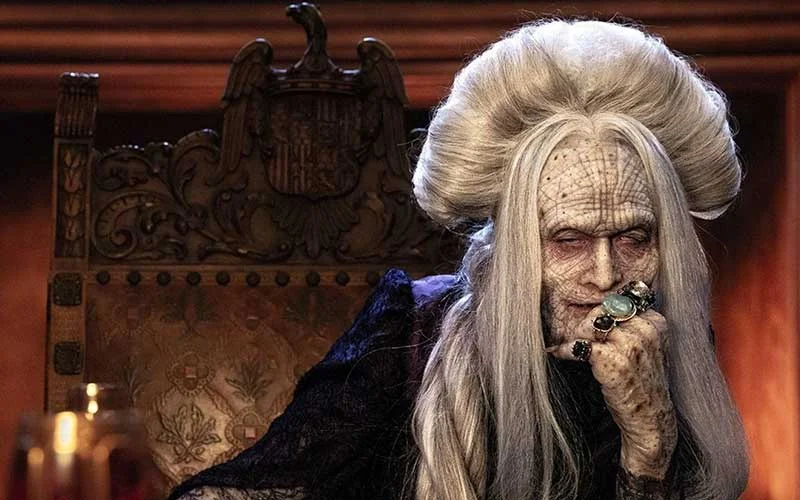
Director Luc Besson (La Femme Nikita, The Fifth Element) has never been so much a storyteller as he is a visual artist who excels at often gaudy yet undeniably eye-popping spectacle, and Dracula seems like a project that he could really sink his teeth into. However, he’s not working with the kind of big budgets he did before Valerian and the City of A Thousand Planets lost an estimated $83 million at the box office in 2017 that led its studio EuropaCorp to cut 28% of their staff. Even if he was, Robert Eggers’ dark 2024 remake of Nosferatu already gave us a gleefully gothic and bloody take on the ultimate vampire saga for this generation that was executed practically to perfection, leaving a new one Dracula decidedly in its shadow. Besson tries to focus his interpretation on the title character’s tortured longing for his lost love, even releasing it under the title Dracula: A Love Tale in France and other parts of Europe. Besson certainly has his reasons to strongly identify with a creepy old man chasing much younger women, but while it’s certainly more focused on Dracula and his obsession than most versions, the film isn’t romantic or even sexy. For the most part, it’s simply sluggish and lifeless, and there’s enough cheap imitation of Francis Ford Coppola‘s costly and divisive 1992 version in the first half to call it a true reimagining. There are scattered moments where it’s entertaining enough, especially a sword fight sequence, but even that is hampered by the budget, which was high by the standards of French cinema but rather meager by today’s Hollywood blockbuster standards.
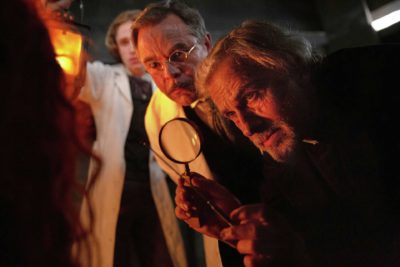
The film’s major saving grace is the enthusiastic performance by Jones, a gifted actor who really deserves a star vehicle, and he works hard to bring depth to the role. Bleu has the physical beauty required for Eisabeta/Mina, but she’s given nothing to work with in terms of three dimensional character. Abid’s Harker is a peripheral character who couldn’t be less memorable if they set out to make him so, and perhaps they did just that. Waltz, who made a big splash in the Quentin Tarantino films for which he won two Academy Awards, has spent the majority of his career since then slogging through half hearted performances in poorly written parts that leave most of us muttering “This guy has TWO Academy Awards?” The unarmed Priest serves as the closest thing to a Doctor Van Helsing character, and his come to Jesus talk with Dracula in the film’s finale left me feeling vaguely like the this had suddenly become an Angel Studios movie.
Dracula isn’t a total disaster, thanks primarily to Jones’ considerable presence, as well as an effective score by Danny Elfman. If you’re a die hard vampire enthusiast, there’s probably enough here to make it worth sitting through once, but do not go in expecting a modern classic telling of old fashioned horror in the vein (pun intended) of Eggers’ Nosferatu or Guillermo del Toro‘s Frankenstein. And wait for a bargain price Tuesday screening. —Patrick Gibbs
Read more film reviews from Patrick Gibbs:
The Incomer Proves To Be A Welcome Visitor
Hot Water Warms The Soul
