Film Review: How to Make a Killing
Film
How to Make a Killing
Director: John Patton Ford
Blueprint Pictures
In Theaters: 02.20.2026
How to Make a Killing – Plot and Storyline
Genealogy has always struck me as a tedious pastime, all dusty branches and distant cousins — unless, of course, you have something to gain. How to Make a Killing turns family history into strategy, following a man who climbs his family tree and decides it could use a little pruning.
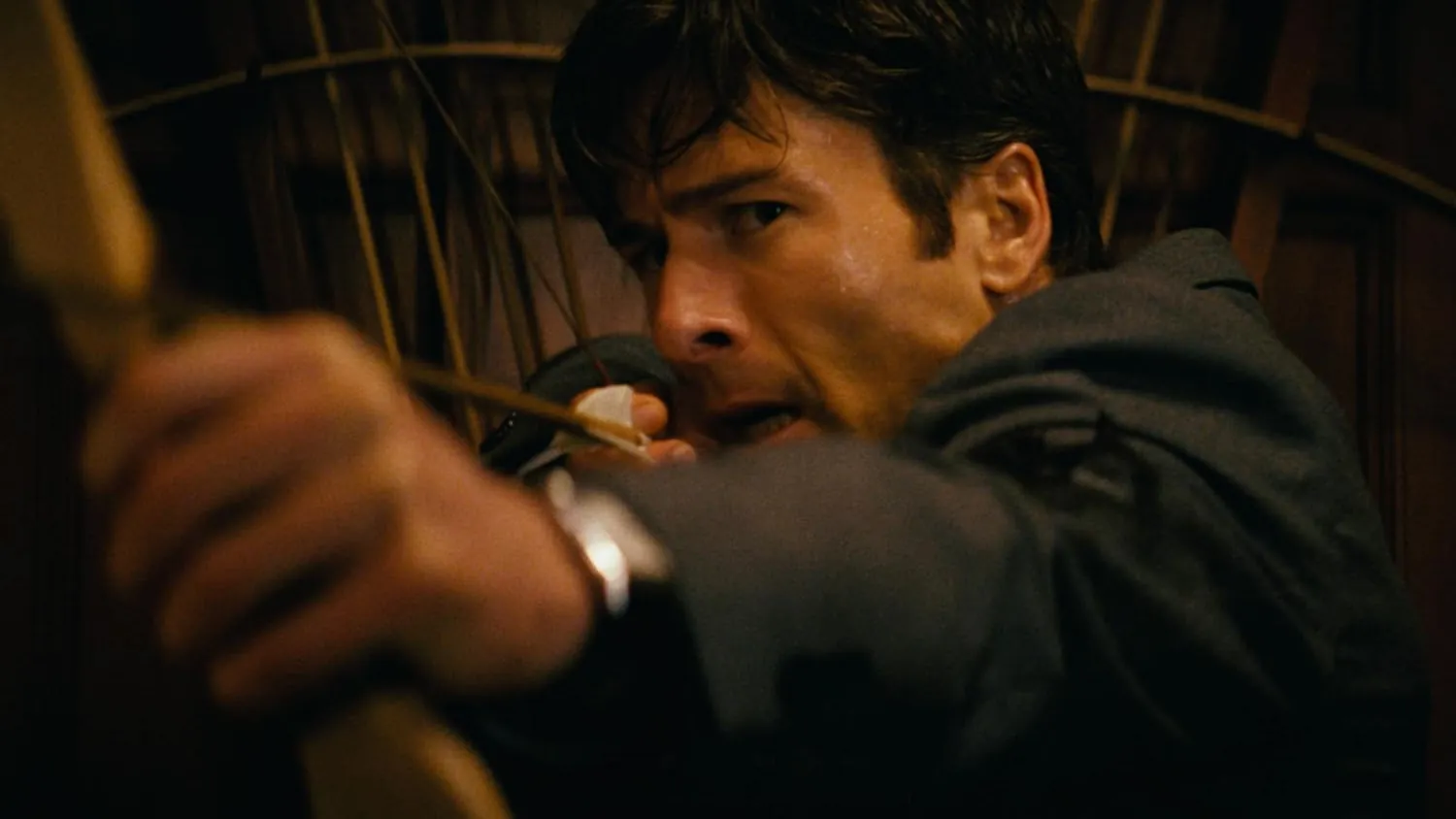
Becket Redfellow (Glen Powell, Twisters, The Running Man) is a blue-collar New Yorker born into one of the world’s wealthiest families. When his mother, Mary (Nell Williams, Blinded By the Light) got pregnant by her middle-class boyfriend and chose to keep the baby, she was disowned by her father, Whitelaw Redfellow (Ed Harris, The Right Stuff, Love Lies Bleeding), raising Becket by herself in the hopes that one day he would have “the right kind of life“. Becket finds only seven relatives between himself and the title of oldest living Redfellow, seizing the chance at that life and claiming the family fortune for himself. Determined to claim it, Becket begins a calculated campaign to eliminate each heir, staging a series of increasingly elaborate “accidents.”
Intrigue and Complications in Becket’s Quest
As his plan unfolds, his relationships grow complicated. His girlfriend Ruth (Jessica Henwick, Love and Monsters, The Royal Hotel) questions his ambitions, while his childhood crush, Julia Steinway (Margaret Qualley, The Substance, Blue Moon) reenters his life with motives of her own.
Writer-director John Patton Ford (Emily The Criminal) takes the story of Israel Rank: The Autobiography of a Criminal by Roy Horniman — the inspiration for both 1949 British comedy Kind Hearts and Coronets with Alec Guinness, as well as the Broadway musical A Gentleman’s Guide To Love and Murder — and breathes fresh life into this tale of death.
Casting Choices and Character Depth
When I first heard that Powell had joined the film, I recalled his tour de force performance in Hit Man and assumed that Ford would follow the traditional conceit of casting the same actor to portray each family member in succession. While Powell could have done this very nicely, Ford’s choice to waive tradition turns out to be the right one, because it allows both Powell and the audience to stay focused on getting inside of Becket, fleshing him out enough that it’s hard not to root for him. At the same time, it also lets each family member in line in front of him be a character rather than a characterization, and they feel just real enough for us to be aware that we’re rooting for a guy who is murdering actual people.
The purposeful pacing and the sense of fun to this methodical game had me hooked from beginning to end, and the combination of writing and performances creates vivid characters who are all awful enough that it’s hard to shake the feeling that at the very least, the world isn’t going to be missing these people — from Zach Woods’ (The Office, Spy) insufferably egotistical artist who signs an autograph “White Basquiat” to Topher Grace‘s (In Good Company, The Waterfront) smarmy and corrupt evangelist. Yet as Becket dispatches each one with surprising ease, he leaves a lingering unease and the sense that he has just given up another piece of his soul.
Standout Performances and On-Screen Chemistry
Powell sparkles with charisma and the kind of leading-man presence that made him jump to being a hot commodity in Hollywood, and his liability is crucial to making the movie work. Perhaps the smartest choice that Ford made was in casting Grady Wilson (The Iron Claw) as Becket in the flashback sequences. The quiet confidence and lovability of this young actor give us a window into Becket that makes us care a lot about him, and Ford makes sure we get plenty of Wilson in Powell. Qualley sizzles as Julia, bringing her patented magnetic allure to the enigmatic character, and Henwick is thoroughly appealing as Ruth.
Woods and Grace are literally the first two actors that come to mind in answer to the question: “Who is recognizable and popular enough to add energy, but part of you always wants to see them get murdered?” The legendary Harris commands the screen as the villainous Whitelaw Redfellow (you can’t find a more hilariously on-the-nose name for a rich villain than “Whitelaw”), and Bill Camp (The Queen’s Gambit) is superb as Becket’s guilt-ridden uncle, Warren Redfellow.
How to Make a Killing – Final Thoughts
How to Make a Killing is a splendidly entertaining film that requires a certain amount of suspension of disbelief and some suspension of conscience — though the latter is allowed in at the right moment. It’s enough to make me eager for Ford’s next film, and I’ll definitely be revisiting this killer comedy. —Patrick Gibbs
Read more film reviews from Patrick Gibbs:
Good Luck, Have Fun, Don’t Die is a Timely Warning
Moor is Less in Emerald Fennell’s “Wuthering Heights”
