Film Review: Animal Farm: A Cautionary Tail
Arts
Animal Farm: A Cautionary Tail
Director: Andy Serkis
Angel Studios
In Theatres: 05.01.2026
It was April of last year. In the north end of Sutton Courtenay, a village in Oxfordshire, seismologists were called in from Oxford and London by the civil parish to identify the source of an unusually intense seismic event for the English countryside. Seismographs were taken and measured at a 6.5 magnitude. Even more unusual, the civil parish lay on no fault lines, and the seismographs indicated that the oscillating churning movement of the seismic event could not come from a typical earthquake.
As it had turned out, Andy Serkis’ Animal Farm: A Cautionary Tail had just been announced, and George Orwell was rolling in his grave.
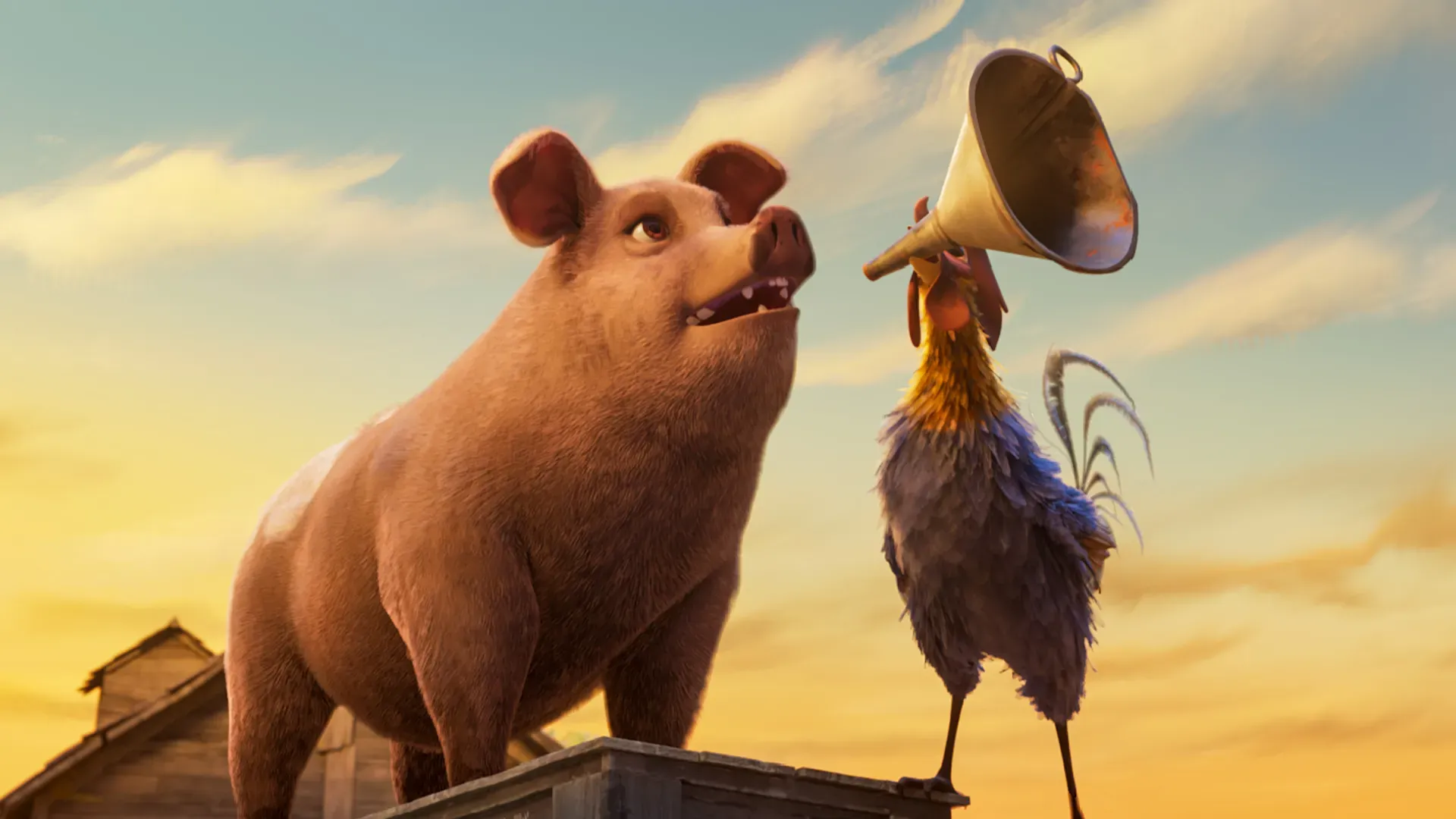
The only way I can describe this film is “ironic.” It’s ironically Orwellian that the author of 1984 would have his other most famous work diluted into anti-Communist Netflix-adaptation children’s slop, but it was bound to happen in this day and age. Even more ironic and Orwellian was the marketing for the film, which after receiving mostly (justifiably) negative critical reviews during its world premiere last year, used the campaign trail to argue that critics were sorely mistaken, and this movie was “actually” good. Apparently, Squealer was the head of marketing.
Seems like they needed an actual “human” to market the movie though, as three other friends and I purchased tickets to the film at a Cinemark during the film’s opening weekend, and only two other people showed up to the showing. I checked other showings across the valley: two tickets sold, four tickets sold, zero tickets sold, three tickets sold. These theaters spent more money on the projector’s electricity bill than they made off tickets. But who would want to see this film in the first place? Anyone who has any grasp of media literacy could see this film was in poor taste.
I feel that almost everybody reading this has a basic grasp of the plot of Animal Farm, either through high school or through one’s own research, but if you aren’t familiar with the plot of the book, I highly encourage you to read it. It’s a short read, and audiobook versions of the book are only about three hours long. You should not go into this film anticipating an accurate summation of the plot, though. If you insist on gathering the plot from a film adaptation, refer to the infamously CIA-backed 1964 film, which rather accurately summates the plot in comparison.
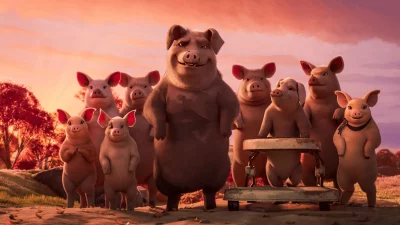
The truth is it takes a lot of creative liberties in the name of “making a children’s film.” A new character is added in the form of Lucky (Gaten Matarazzo, Stranger Things), acting as the film’s protagonist. Clover, the original novella’s representation of the female working class, is cut entirely, with female representation being replaced by a gender-bent Snowball (Laverne Cox, Orange is the New Black) and new characters Puff and Tammy (Iman Vellani, The Marvels), who act as the love interests of Lucky and Napoleon (Seth Rogen, Pineapple Express) respectively.
The morals of the original novella have been cast aside entirely in exchange for a vanilla dilution. Much like the book, Boxer issent to a glue factory and presumably killed. In contrast to the propagandist approach the pigs take to the problem in the book, Rogen’s Napoleon laughs it off and admits it! The segment is almost played off as a joke with how cartoonishly evil the dialogue is, but I don’t think that’s even the most egregious instance of whitewashing — I think it’s the fact that the good guys actually win. Shortly after Lucky is driven out of the farmhouse by Napoleon’s guard dogs, he moves in with the rest of the farm animals and plans a rebellion. They destroy the pigs’ dam (the film equivalent of the book’s windmill) with fireworks, blunder Napoleon’s propaganda and end in a therapy-speak clash between Lucky and Napoleon, resulting in Napoleon’s death. It’s a conclusion that destroys any and all meaning of the original novella.
Look, I’m well aware of the target demographic of this film: It’s the impressionable children of conservative parents who didn’t quite pay attention to the book in high school. The takeaway from this film for these folks will be that socialism or communism will always lead to authoritarianism; a takeaway that Orwell made careful work to avoid, being a Social-Democrat himself. Orwell also made careful work to avoid the book being misconstrued as a children’s novella, dissuading libraries from placing the book in the children’s section. Oh, the irony.
The film, much like most other films produced by Angel Studios, displays a QR code at the end of the film requesting donations. It’s a poetically ironic ending to a cash-grab film about the woes of socialism. The default selection in our theatre was $75. That is an egregious ask for presumably working-class families in this day and age.
I told you earlier that you shouldn’t go see this movie anticipating an accurate summation of the plot. I’d like to revise my previous statement: You shouldn’t go see this movie at all. Discounting the fact that the film is a terrible watch and a terrible retelling of Orwell’s novella, seeing the film in theaters or watching the film on a streaming platform is financially backing the idiots who made it. If you insist on viewing the film, pirate it, take enough drugs to dull your mind past the point of cohesion and enjoy the bright colors. —Ezra Smith
Read more by Ezra Smith:
Localized: Modern Speed
Local Review: Electric Outlaws — Brain Eating Amoeba
If you enjoy SLUG’s film reviews consider joining our community of donors.
