Secondhand (Aesthetically Pleasing) Screenings
Film
This edition of Secondhand Screenings was originally going to be primarily fashion-focused, but I don’t think I could read through several takes on The Devil Wears Prada and how Stanley Tucci is “daddy.” That being said, filmmakers (both visionaries and myopians) have to think like a fashion designer. The splash of color and light, the intricate mise-en-scene, the particularly appropriate placement of props and clothing — all of this plays an important part in storytelling. From Wes Anderson’s vintage and childlike flair to the futuristic sleekness of Bladerunner, we ask a simple question: what piece of media do you find “aesthetically pleasing?”
The Science of Sleep
Director: Michel Gondry
Partizan Films, France 3 Cinéma
Released: 08.16.2006
This film tickles every hole in my body… there has to be a better way to describe that, but I don’t care.
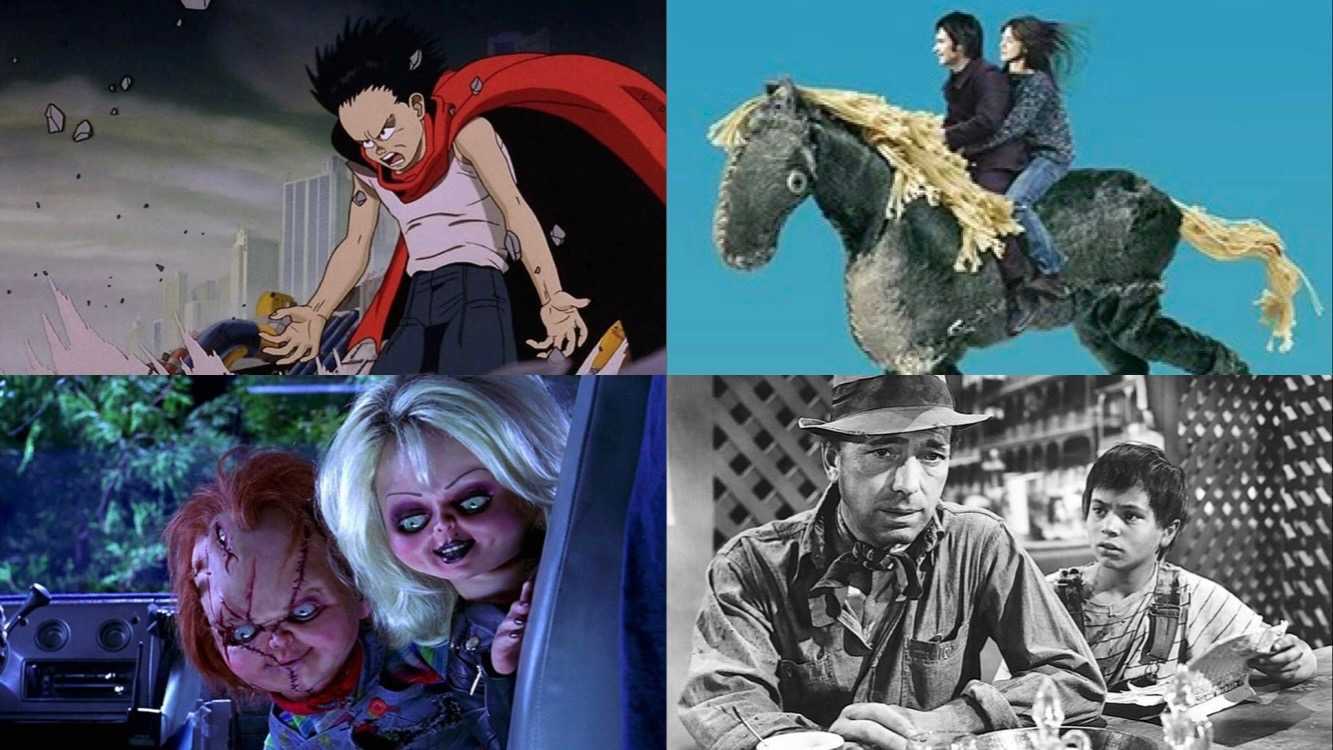
In the 2000s, when “indie” stood for “independent” instead of whatever sadgirl folksy mumbo-jumbo vernacular it attracted in later years, French director Michel Gondry used practical effects and practical magic to create a concrete daydream. Stepping to the silver screen with Eternal Sunshine of the Spotless Mind and a plethora of hands-on music videos for heavy-hitter talents like Radiohead, White Stripes and the motherfucking Icelandic pixie Bjork, Gondry snuck this surrealist reel into the 2006 Sundance Film Festival, to cumbersome reviews. Some thought it was an ambitious display of cinema practicality, others thought it was way too out there for the average theater audience. However after revisiting it two decades later, I applaud the film for its crafted beauty and complex storytelling.
Returning to his Paris home after his father’s death, white-collar social shut-in Stéphane (Gael García Bernal, Coco, The Motorcycle Diaries) begins his new life renting out his childhood home and starting a job as a calendar graphic designer. Little does his small circle of family and friends know, but Stéphane is slowly losing his grip on reality, as he confuses his larger-than-life dreams with his mundane day-to-day life. Things only become more complicated when the kinship with his next-door neighbor Stéphanie (Charlotte Gainsbourg, Nymphomania, Antichrist) sparks intimacy while Stéphane sleeps, leading to a complicated love line of emotions and stop-motion absurdity.
Now after scanning a few write-ups from the cinephile chronically nesting on Letterboxd, it seems the criticism has shifted drastically to Stéphane’s incel behavior. Am I defending his immature demeanor? Absolutely not! Being emotionally detached only to break out into man-child tantrums doesn’t make you quirky — it makes you a liability. However, having such an unreliable narrator adds to this surrealistic atmosphere. Landscapes made from fruitbox cardboard, creatures molded from cloth and clay, scrambling of love letters to give it that subconscious zest — all of it melts me to my core like a dreamsicle.
Note to self: Just because you don’t agree with the plot doesn’t mean you can’t enjoy the film. —Alton Barnhart
The Treasure of the Sierra Madre
Director: John Huston
Warner Bros.
Released: 01.24.1948
Dust sticks to greasy, sweat-slicked faces. Decency and degeneracy look the same when nuance is hidden under thick layers of grime. Old men tell tall tales of candy mountains in 50-cent cots. The gain of gold drives men mad with desire, and the loss of it drives men mad with liberation, and it just so happens that gold, to the untrained eye, looks like sand. Greed leads to mania, mania leads to hellfire.
I challenge you to invent a title more exciting and provocative than The Treasure of the Sierra Madre. It’s both adventurous and ominous. The opening credits are drawn to appear as if etched into stone like commandments. John Huston (who I will forever picture in my mind as David Lynch) was visually brilliant, especially when working in black and white. He creates such huge landscapes and settings filled with life and vibrancy. His characters weave through crowds and jungles, and they cross barren deserts with pack mules. He dresses his characters brilliantly. Humphrey Bogart is especially well-dressed. Bogey was so slicked back and clean as a corrupt detective with a heart of honor who drinks hooch from those fancy liquor carts. Huston seems to have gone to great lengths to break that perception. Bogey wanders around Tampico with a five o’clock shadow. He can’t bring himself to look at the men he begs for money in the eyes. His hair is wild and curly as he drinks from the same river as his ‘burros.’
Walter Huston, upon accepting his Oscar, joked, “Many, many years ago, I brought up a boy, and I said to him, ‘Son, if you ever become a writer, try to write a good part for your old man sometime.’ Well, by cranky, that’s what he did!” While it’s hard to look past Bogart in this, his co-stars are fantastic. Walter Huston is brilliant, and this performance is likely the genesis of any generic hobo/prospector you’ll ever see committed to film. Tim Holt is also fantastic, but he’s less engaging. He’s the straight-man to the other guys’ outrageous performances.
It really doesn’t get much better than The Treasure of the Sierra Madre. Its plot is unbelievably predictable, but it’s written so well that you won’t really care. You’ll still get invested in its characters and feel all the foreseeable ups and downs, because this film is so excellent in all aspects.
It’s a real toss up if I prefer this Bogey film to Casablanca, though. —B. Allan Johnson
Akira
Director: Katsuhiro Otomo
Toho Co., Ltd.
Released: 12.25.1989
It’s not often that I interact with any kind of media and am left in awe at the end of it because of the reality that humans made it. I distinctly recall the first time I watched Akira (1988) and couldn’t believe the scale of not only the story that I saw but the production that delivered it to the audience. The forever-referenced “Akira slide” is just one example of the ways Akira changed cyberpunk stories, as well as the broader genres of science fiction, action thrillers and Neo-noirs all the same.
The world of Akira is so dense and so complex that even while following the story of Kaneda and his gang, or Tetsuo as he navigates changes within himself, the world brings the viewer along as smoke and dust are the only signs left of the crashes and deaths of rival biker gangs fighting in the streets, explosions and fire from the people of Neo-Tokyo as they combat military and police forces throughout downtown. All of it working together with such grace and synergy, it’s like each speckle of light suggests that the lives of everyone else throughout Neo-Tokyo who are too far away for us to see are nevertheless real, and are all caught alongside our protagonists as the world they knew changes in ways they never could’ve predicted. The impact of Akira exists to me just as much in its hand-drawn animation as it is in the questions it asks viewers to consider mentally, morally and even spiritually. —Hans Magleby
Adventures from Moominvalley
Director: Hiroshi Saito
Telecable Benelux B.V
Released: 04.12.1990
When discussing aesthetically pleasing media, it would be a disservice to dismiss Finnish author Tove Jansson‘s masterpiece The Moomins. While the Moomins universe has been adorned with endearing characters, nostalgic stories and timeless films since its first comic in 1947, we’re focusing on the aesthetic artistry of the third animated adaptation. Released in April 1990, the series was originally broadcast in Japan before being distributed in several countries. Thirty-six years later, there is now a 74-episode archive of the series available on the Moomins’ official YouTube channel titled “Adventures from Moominvalley”. The archive is quite vast, though all 74 episodes are offered in chronological order until the final 30 episodes, which were never dubbed into English.
The series introduces viewers to the Moomintroll family living in a fictional valley based on the coastal archipelago landscapes of Pellinki, Finland. Moominvalley is the epitome of tranquility, abundant in lush flower meadows, rocky ocean shores, thick lodgepole forests and rolling green hills resembling the scenery of Jannson’s childhood summers. Paired with comforting hand-drawn backdrops we’re introduced to a cast of precious creatures including Moomin, Snufkin, Little My, and more; designed to make fans of all ages feel at home — a versatility that is best seen in the series’ witty humor, subtle confrontations and timeless truths made to educate all. We love the ambiguity of a queer author! This adaptation also takes a slow approach, with adventures unfolding across multiple episodes involving Jansson’s fictional creations such as Thr Groke, and features from European folklore like The Hobgoblin. Think of a series like The Berenstain Bears if it were more visually pleasing – and less focused on fundamental messages meant for children. This easy-paced adventure series reflects the realm of older animation, which often let viewers relax without a major evolving plot, manufactured music, disruptive colors or coiled writing.
If classic animation and dreamy coastlines aren’t enough to satiate your aesthetic cravings, the soundtrack is here to save the day. Using synthesizers, Japanese flutes, and the vocals of Emiko Shiratori, composer Sumio Shiratori delicately ties this soundtrack into a playful, angelic masterpiece that is echoed each time a flower field is in view. Finally, anyone who has yet to know MoominMama will melt from the motherly love pouring from the monitor. If you’re looking for a simple, soothing cartoon that feels like being tucked in on a summer afternoon, look no further! – Juno McKell
Bride of Chucky
Director: Ronny Yu
Universal Pictures
Released: 10.16.1998
Bride of Chucky is an overlooked piece of art. While it completely stays true to the core tone of the Chucky films — a raunchy, ridiculous, dark comedy — this fourth installment is a great standalone watch. The movie has its own style: a late ’90s revamping committed to making each shot beautiful, terrifying, funny, or all three, while staying consistent in its moody film noir feeling. Inspired by Scream, it delivers equal appeal with rich colors, natural grain, great fashion and dark-witted dialogue.
Another visual benefit of the era is the limitation of CGI; each action scene involving the dolls relied on technical effects or real stunt people dressed as the dolls, resulting in grounded but bizarre shots. For example, the dolls do have sex, which includes a shot of two little people inside giant makeshift heads putting their tongues through the mouth.
The Gotham-like dramatic theming and colorful sets make for a solid movie, but the extra flavor is all thanks to the bride, Tiffany Valentine, Chucky’s old lover and fellow serial killer. Think of a mix of characters like Harley Quinn, Elvira, Roxi from Chicago or Marisa Tomei in My Cousin Vinny. Even when she’s murdering men, she’s never without her wit, bleach-blonde bob, ’90s thin brows, mole, and lit cigarette.
The first sign you’re watching a work of art is seeing her tin motor van’s interior: purple and black, 90s, darkly feminine, and dramatic, with so many expository details. If you liked The Craft, you will eat this up. Her Marilyn Monroe affectations, beauty, and comedic timing make for a completely satisfying character to watch. The Bride ignites the plot by summoning Chucky back into the doll with a Voodoo for Dummies book.
After they reunite over a little murder, a betrayal leads to Valentine’s aesthetic death – including a bubbly bathtub, a sky window, and a little pink television. She wakes up in the body of a Bride doll and is thrust into a journey with Chucky to get their bodies back, but not before a doll makeover montage. The movie constantly foreshadows through imagery and dialogue, paying significant homage to Bride of Frankenstein.
Meanwhile, a local high school couple, Jade (Katherine Heigl) and Jesse, struggle to hide their relationship from her corrupt cop uncle despite support from their friend David. More of the town’s strong visuals are shown through them, like Jade’s big colonial house, Jesse and Tiffany’s trailer park, and the town’s tailgating hangout. They accidentally get into deeper trouble when Jesse agrees to transport the possessed dolls for money and convinces Jade to run away with him and get married.
The movie’s strong recurring motifs and visual style stay consistent while the pacing stays in a constant flow. The audience has no time to get bored before the setting changes on this crime spree.
The most memorable sets are a kitschy pink quickie wedding chapel and a camp 70s-style honeymoon motel with silk waterbeds. In each setting, Tiffany and Chucky find creative, Final Destination-like ways to kill people as dolls. Tiffany pushes Chucky to kill in more creative ways besides his original knife, including explosions, giant nails and a ceiling mirror.
Jesse and Jade are quickly framed as a Bonnie-and-Clyde type despite neither committing a crime. The two students are in a funny but tragic psychological drama with one another, both innocent yet questioning whether the other is a killer, with their friend David stuck between them. The two couples, dolls and human, make their way to a showdown at the graveyard while both relationships compete for survival. The director doesn’t waste any scenes, using different perspectives and tactics like a split-diopter shot to build emotional tension.
This movie is everything you would expect out of a comedy-slasher and out of Chucky. It wants to shock, offend you, and make you laugh, but unexpectedly, it refuses to settle for anything less than compelling visuals. —Lalise Eshete
Hades
Artist: Jen Zee
Supergiant Games
Released: 09.17. 2020
Hades is a roguelike, action role-playing game that transports the player to a brutal underworld where they’ll play as Zagerus, the son of Hades, as he attempts to escape his father’s domain. While the game has received plenty of praise since its 2020 release, I’m going to reiterate just how incredible this game looks and feels to play. Your escape is divided into four biomes: Tartarus, Asphodel, Elysium, and the Temple of Styx. Each is masterfully created with memorable, cohesive landscapes. Tartarus is lit by pale green flames and bridges of rotting brick with enemies like shades and brimstone. Elysium is lush and green, a beautiful home for the Underworld’s heroic elite. Yet it’s still filled with enemies like Flame Wheels. They’re freaky but still their designs manage to feel right at home in the Underworld’s paradise. The smaller, simplified sprites during gameplay also contrast nicely with each environment, and really play up how fantastical and larger-than-life this underworld is.
Failed escape attempts land you right back where you started in the House of Hades, where you can regularly find other characters to chat with. The art style is dark, comic book-esque interpretations of classic Greek art. Nyx is my favorite design. She truly feels like the personification of the night itself (Just look at her hair!). The work that went into making Hades cannot be praised enough. Instead of being desolate, Hades’ underworld is diverse, stunning and surprisingly full of life. —Margaret Pugh
Little Elegies for Sister Satan
Author: Michael Palmer
New Directions Publishing Corporation
Released: 05.04.2021
I’m going to be a shameless poet and shove some aesthetically pleasing poetry in your face. I initially read Little Elegies for Sister Satan in grad school because my poetry professor assigned it as class reading. It was by far my favorite of all the books we read that semester (shoutout to Abe for introducing us to such great poets).
Michael Palmer is known for his decades of work in experimental poetry as well as in translation. His latest poetry book, Little Elegies for Sister Satan, takes readers on a foray into strange and breathtaking imagery as he meditates on a range of subjects — destruction, politics, grief, poetry itself and so much more. It’s broken into three sections: “Little Elegies for Sister Satan,” “World Enough” and “Midnights,” each one holding a different theme and atmosphere.
Let me give you a little taste. From “Fourth Elegy” on page 9: “Lift the ice and the sun / to your lips, Sister, / and to mine. And sing / the words between the lines.” From “Midnights: La jetée” on page 82: “Will the fires yes the / fires will consume us. / We will scatter our own / ashes, scatter them in a spiral / between lake and sky, / cadmium yellow sky.”
For me, these poems felt fantastical. They took me to a place that seemed familiar yet unknown, similar to how I felt reading some of my favorite works of surreal fantasy such as The Starless Sea by Erin Morgenstern and Piranesi by Susanna Clarke. Little Elegies for Sister Satan was also the push and permission I desperately needed to incorporate strange and mystical imagery into my own poetry.
This avant-garde style of poetry certainly isn’t for everyone. It might leave you scratching your head and thinking “what?” But my advice is to focus on the images and the feelings they evoke, following them to a place both deep and dark and strangely beautiful. You might find you’ve already been there, but only with your eyes closed. These poems will coax them open. —Rebekah Bowman
Read more Secondhand Screenings from SLUG’s staff:
Secondhand Screenings’ Survival Guide
Secondhand Screenings Presents: Guilty Pleasures
To help SLUG continue to support the film industry, consider joining our community of donors!
