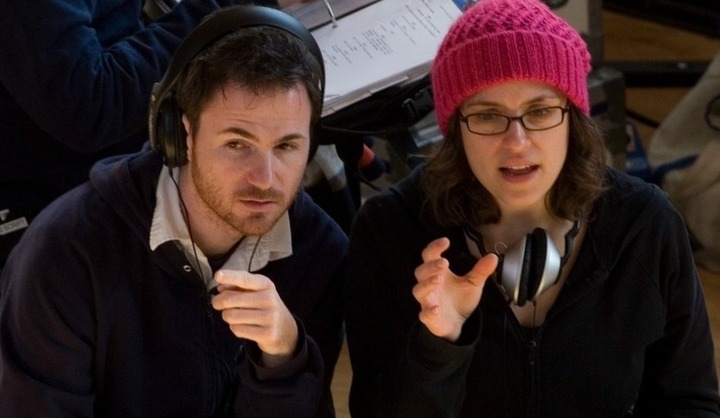
Anna Boden, Jared Hess and Ira Sachs Look Back at Sundance in Park City
Film Interviews
It’s time to head up the mountains once again, movie buffs, because Sundance is here… for the last time. After this, it will be there: Boulder, Colorado. Sundance Film Festival 2026 is bittersweet, as it’s the final time that Utah will host filmmakers from around the globe for this one-of-a-kind event. It feels less like a sudden ending than the closing of a long, winding road — one paved with snow, popcorn and careers that began in the freezing cold. For filmmakers who found their footing on those mountains, Sundance wasn’t just a festival. It was a place where a life in movies became possible. Anna Boden, Jared Hess and Ira Sachs have had prolific careers and varied filmographies, but they share the fact that if it wasn’t for a one-of-a-kind launching pad in Utah, they may have never moved beyond simply having big dreams.
“Sundance has completely changed our lives.”
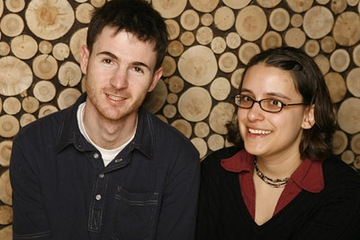
“Sundance has completely changed our lives,” Boden says. Boden and her filmmaking partner, Ryan Fleck, first came to Park City with Gowanus, Brooklyn, a short film that won the Grand Jury Prize at Sundance in 2004. The short then served as the basis for their feature debut, Half Nelson, which premiered at Sundance in 2006 and made Boden and Fleck into a bonafide Hollywood team. They would go on to six direct major features, including Mississippi Grind (2015) and even the Marvel Cinematic Universe entry Captain Marvel (2019). Four of those features, including Half Nelson, premiered at Sundance. “We went there literally as kids with a short film, and no connections at all to the film industry, “ Boden says. “We came out of going to that festival with a lot of friends, connections and support towards learning how to take steps to become a professional filmmaker and have a life doing that.”
That sense of growth mirrored Sundance itself. Boden watched the festival evolve as she did, returning again and again as her career expanded. “The festival has meant so much to us … and we’ve watched it change over the years as we’ve been there,” Boden says. After unveiling Freaky Tales in 2024 and hearing the news of the festival’s venue change to Boulder in 2027, Boden and Fleck, assumed that their Park City days were behind them — knowing that they wouldn’t have another feature out in time for 2025. As it turned out, they had one more visit left, as Half Nelson is set to screen as part of the Park City Legacy series at The Ray Theatre on January 29. Boden and Fleck will be in attendance, along with one of the film’s stars, Shareeka Epps.
“It’s such a part of our culture, and the people really came out for it. There are cinephiles in Utah, and they loved it.”
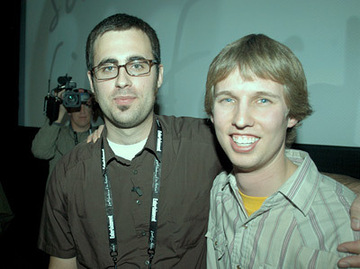
If Boden’s story reflects Sundance as a launchpad, Jared Hess’s memories capture it as a local heartbeat. Hess, who grew up in Utah and later broke out with Napoleon Dynamite, experienced Sundance not as an abstract industry event but as something woven into daily life. “It’s heartbreaking,” Hess says of the festival’s time in Park City coming to an end. As he scouts locations for the sequel to his mammoth box office success, A Minecraft Movie, Hess’s mind easily turns to Utah and to Sundance. “It’s such a part of our culture, and the people really came out for it. There are cinephiles in Utah, and they loved it.” For Hess, Park City wasn’t incidental — it was essential. “If you talk to Amy Redford, she’ll tell you that there was a reason her father chose to have Sundance in Park City instead of a bigger city like New York or LA,” Hess says. “The mountains, the scenery — it was a unique experience.”
That setting helped define Sundance’s identity: not just a market or a media frenzy, but a communal pilgrimage into winter. Hess also points to the festival’s singular place in the film calendar. “There’s a lot of other festivals, but nothing like Sundance,” Hess says, noting how its January timing often means that films discovered there could reach theaters within months. “And it’s kind of the one bright spot in January when the holidays are over. It’s something to look forward to here,” Hess says.
“I wouldn’t be a filmmaker without Sundance.”
As film students at BYU, Hess and his wife, writer and director Jerusha Hess, would drive from Provo to Park City, chasing that bright spot. When Napoleon Dynamite was accepted in 2006, the moment crystallized everything Sundance promised. “They do the phone calls basically the week of Thanksgiving,” Hess says. “We got the call from Trevor Groth, who was a senior programmer at the time under John Cooper. We were a little movie with nothing big behind us, and to be told that not only were we playing at the festival, we would be part of the dramatic competition — it was just incredible.” For Hess, his unique experience in being quite possibly the biggest Utah filmmaker to come out of Sundance is perhaps best represented by an emotional experience in running into the High School teacher who inspired him, working as a humble volunteer at the festival. “That was the most surreal and magical moment, and it still gets me,” Hess says. Napoleon Dynamite is one of the great unlikely success stories, and the film’s surprise box office success and indelible cultural footprint only amplified how humbly and improbably it all began.
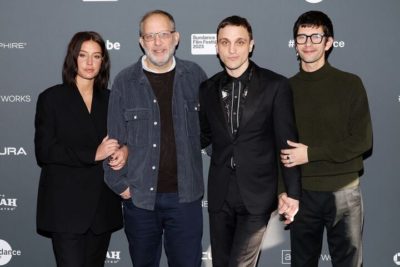
For Ira Sachs, Sundance isn’t just part of his origin story; it’s practically his childhood home. “I wouldn’t be a filmmaker without Sundance,” he says plainly. Sachs began attending the festival at 13 after his father moved to Park City in the late 1970s. “And so I was exposed to a kind of community of artists and storytellers and filmmakers that I certainly would never have had contact with if Sundance didn’t exist.” Over the next several decades, Sachs would premiere a staggering seven films at Sundance, including Forty Shades of Blue, Love Is Strange, Passages and Peter Hujar’s Day, while also becoming deeply involved with the Sundance Institute labs.
“I have been educated for decades on the mountain. And I’m really grateful for that.”
“I’ve been involved in so many different ways as a filmmaker with many films at the festival, but also involved the lab as a director, as an advisor, as a screenwriter,” Sach says. “So I have been educated for decades on the mountain. And I’m really grateful for that.” As Sundance prepares to leave Park City, Sachs is keenly aware of what’s being lost — not just symbolically, but locally. “I think the impact is probably greater for the local community than for those of us who don’t live there, because we will find other ways to commute… but there is this kind of local experience that I think would be hard to separate from who you are at this point.”
That sentiment echoes across all three filmmakers. Sundance in Park City wasn’t merely where films premiered. It was where careers were shaped, friendships formed and identities forged in snow and story. As the festival moves on, those memories remain embedded in the mountains — proof that for a generation of filmmakers, Park City was where dreams came true.
Read more of SLUG’s coverage of the 2026 Sundance Film Festival.
