Film Review: Ella McCay
Arts
Ella McCay
Director: James L. Brooks
Gracie Films
In Theaters: 12.12.2025
We’ve got plenty of high tech toys hitting theaters this holiday season, as well as lovingly crafted offerings that come straight from the heart. I’ll gladly unwrap either gift, but don’t give me cheap, easily broken junk made on an assembly line. If you give me an Ella McCay, you’d better include the receipt so that I can exchange it.
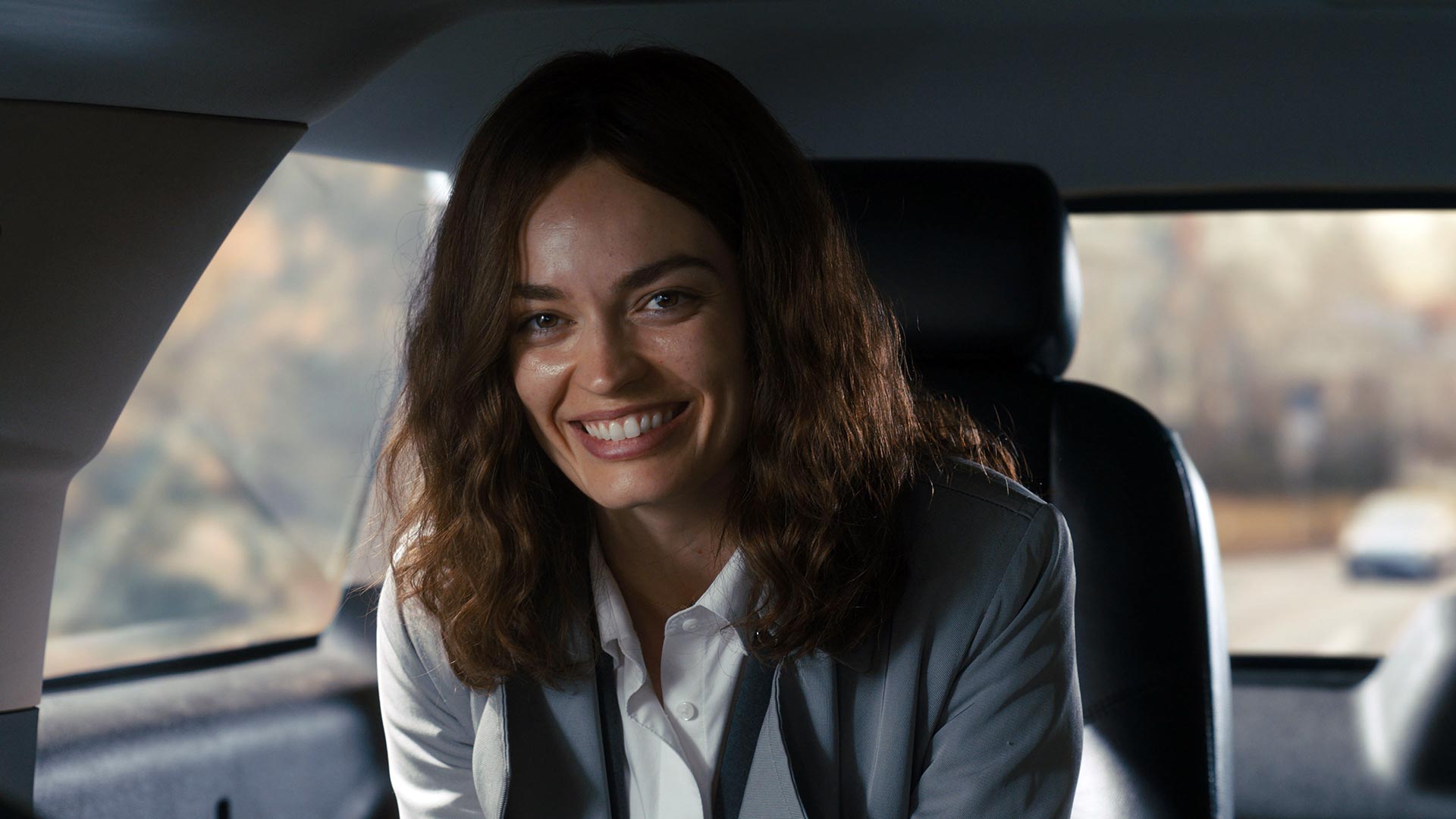
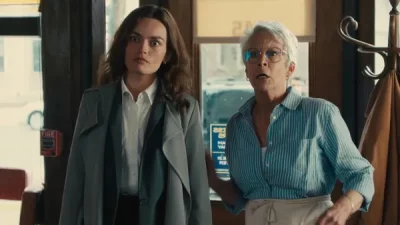
The titular character played by Emma Mackey (Sex Education, Bronte) is a young, idealistic lieutenant-governor on a unspecified state (apathy would be my guess) in 2008, who suddenly finds herself elevated to governor when her mentor and boss, Governor Bill (Albert Brooks, Broadcast News, Finding Nemo) accepts a Presidential cabinet position. As Ella steps into her new role, she struggles not only with political responsibilities, but also with her estranged and perennially womanizing father, Eddie McCay (Woody Harrelson, Three Billboards Outside Ebbing, Missouri), who resurfaces with a new fiancée who wants him to reconcile with his kids. Then there’s her agoraphobic younger brother Casey (Spike Fearn, Alien: Romulus), whose anxiety and loneliness are a constant source of worry. Finally, there’s her ne’er-do-well husband, Ryan (Jack Lowden, Slow Horses), who is suffering from arrested development and end stage rectal-cranial inversion. The only person Ella can depend on, aside from her driver, Trooper Nash (Kumial Ali Nanjiani, The Big Sick), is Aunt Helen McCay (Jamie Lee Curtis, Everything Everywhere All At Once) her late mother’s sister, who has been a second mother and best friend to Ella throughout her life. As Ella juggles the pressures of her new job, she is faced with the question of what kind of leader (and person) she really wants to be.
Writer-director James L. Brooks (Terms of Endearment, As Good As It Gets) is a Hollywood legend, and few wanted to see the 81-year-old workhorse gallop triumphantly to a blue ribbon, or a trophy (or whatever the hell you give a horse when it wins a race) more than I did. I certainly didn’t want to be the one saying he needs to be put out to pasture, but if Ella McCay is what he’s got left in him, perhaps we’re beyond the pasture and we should be looking into the glue factory. This contrived and inane collection of silly stock characters and self-consciously cutesy dialogue isn’t just a misfire — the powder is soaking wet. A throwback movie is entirely welcome, but a movie that feels cluelessly out of step with what decade (or even century) we’re currently in or how to create a feeling of relevance or relatability is not. At its best, Ella McKay is a naively quaint film that thinks we can still make movies set in the world of politics where “the party” is referenced but never named so as not to alienate half of the audience. At worst, it’s a hackneyed mess assembled from spare parts of better films from yesteryear that aren’t compatible with anything built or used in the modern world. Sure, it takes aim at our world with lots of references to therapy, attempts at feminism, and quite possibly the least scandalous political scandal in history, but it’s so far from hitting the target that at times it seems to be facing the wrong direction. And if you think I’m being harsh, consider these two facts: 1. The first film in 15-years made by an Oscar winning auteur who was once synonymous with the term “entertainment for grown ups” has remained under embargo until two days prior to release, lest the grown ups who have seen it actually talk about it, and 2. Out of a good sized audience of critics and their guests who attended the local screening, I was one of its more enthusiastic defenders.
Mackey is a talented actress who unfortunately feels miscast, and who is concentrating so hard on nailing that American accent that she’s unable to make sense of the character. It doesn’t help that she’s stuck playing Ella both as a high schooler and as a thirtysomething with nothing but a change in hair and exaggerated teen mannerisms to distinguish a difference, but whoever is to blame, there’s a surprising lack of maturity to her performance. Curtis is so energetic and lovable that several times throughout the 115 minute runtime she almost convinced me that I cared what was happening. On the other end of the spectrum, Lowden’s Ryan is the most one dimensional, slimy antagonist to come around in a light dramedy in some time, and he’s still less off-putting than Harrelson’s Eddie. And then there’s Julie Kavner, aka the voice of Marge Simpson, as Estelle, the secretary who serves as the film’s mostly off screen narrator. It’s not that she’s bad, it’s simply that she’s Marge. The folksy, wise old storyteller technique feels forced to begin with, but when she sounds exactly like the world’s most famous cartoon mom, it becomes impossible to not to become hopelessly distracted every time she speaks, and it’s just a terrible choice.
Ella McCay brings to mind a blind old incontinent sheepdog who is clinging to the last vestiges of life. There’s a feeling of love and fond memories of better days, and no small amount of pity. Still, when the end finally comes, there’s an unmistakable sense of relief. —Patrick Gibbs
Read more film reviews from Patrick Gibbs:
Film Review: Fackham Hall
Film Review: Wake Up Dead Man
