Film Review: The Odyssey
Arts
The Odyssey
Director: Christopher Nolan
Syncopy
In Theaters: 07.17.2026
In a very real way, Christopher Nolan‘s career has been one Trojan horse after another. In 1999, he snuck an experimental art film into multiplexes hidden by a revenge thriller. In 2005, he smuggled a smart and relevant character study into theaters hidden inside a Batman movie. And in 2023, he crammed both a history lesson and a dire warning about playing God disguised as a mammoth blockbuster with Oppenheimer. Now, with The Odyssey, Nolan needs no other strategy but to charge in at full gallop.
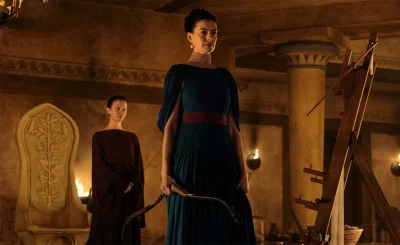
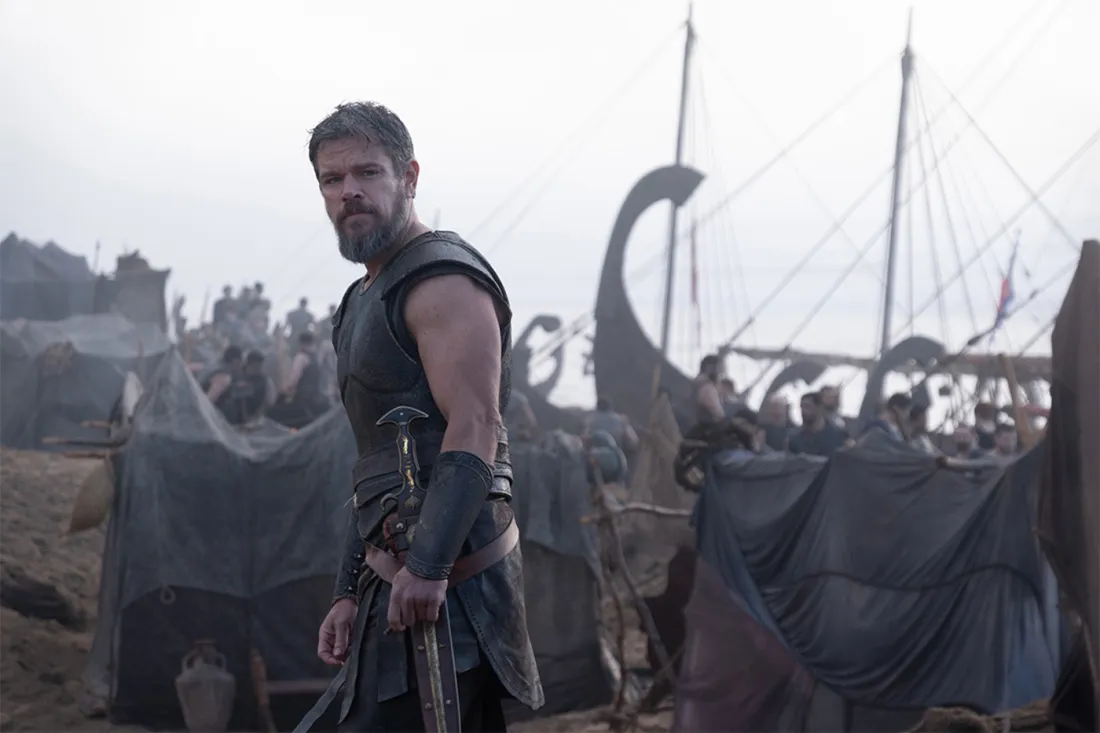
The Odyssey, based on the classic work of everyone’s second favorite Homer, follows the legendary King Odysseus (Matt Damon, The Bourne Identity, The Martian) as he embarks on a dangerous, years-long journey back to his kingdom of Ithaca after the end of the Trojan War. Along the way, his only companion is a vision of the Goddess Athena (Zendaya, Dune, Challengers) who occasionally appears to him. Odysseus must survive a series of extraordinary trials, facing mythical figures and supernatural forces including the Cyclops Polyphemus (Bill Irwin, Popeye, Legion), the alluring Sirens and the immortal nymph Calypso (Charlize Theron, Monster, Mad Max: Fury Road). As Odysseus struggles to overcome each new obstacle, his ultimate goal remains returning home to reunite with his devoted wife, Penelope (Anne Hathaway, The Devil Wears Prada, Mother Mary), whose own endurance and faith are being tested, as scores of pernicious suitors, including the treacherous Antinous (Robert Pattinson, Twilight, The Batman), who aims to wed Penelope and take control of Ithaca and get rid of Telemachus (Tom Holland, Spider-Man: Homecoming, Uncharted), the heir to the throne.
It should come as no surprise that Christopher Nolan has delivered a spectacular and stirring epic, but what is surprising is how effortlessly The Odyssey feels both timeless and immediate. Rather than simply translating Homer’s foundational adventure to the screen, Nolan breathes new life into it, finding contemporary relevance without sacrificing its mythic grandeur. His trademark nonlinear storytelling is put to excellent use, weaving together Odysseus’ long journey into a narrative that rewards patience and a basic familiarity with the source material without ever becoming needlessly opaque. Visually, the film is nothing short of breathtaking, balancing intimate human moments against landscapes and seascapes of staggering scale. Equally remarkable is the sound design, which delivers every crashing wave, clashing sword and thunderous battle with visceral force without letting booming bass overpower the dialogue the way it did in Tenet. Ludwig Göransson‘s experimental score is immersive and raw, and one particular string cue in the final act is a testament to the power of movie music.
Nolan also makes a series of inspired creative choices that subtly reshape familiar material. His decision to have the cast speak in contemporary American accents, rather than the customary mix of British voices or awkward and generic high school drama style affectations that weighed down epics like Clash of the Titans and Troy, strips away the artificiality that often distances audiences from ancient stories. Small but clever anachronistic flourishes, including rapper Travis Scott appearing as a bard, further bridge the gap between antiquity and the present without ever feeling gimmicky. Most striking, however, is the casting of Elliot Page as Simon (not Achilles, as was erroneously reported and caused an online freakout), a Greek soldier and Odysseus’ cousin who fought beside him at Troy, as Antinous pays Simon to send the young man in his stead. Nolan never turns Simon into a thesis statement, yet the character’s quiet presence becomes one of the film’s most resonant ideas: a meditation on the difference between the version of manhood the world expects someone to perform and the identity they know within themselves. It’s a bold piece of casting that refuses to announce its intentions, instead allowing the performance to deepen the film’s broader exploration of identity, honor and knowing oneself.
Damon is superb, relying on honesty and realism to bring depth and truth to Odysseus, and he proves that he’s still a viable action hero. Hathaway is riveting in her most emotional moments, and no one can play a smarmy villain like Pattinson. John Leguizamo is a standout as Eumaeus, Odysseus’ most trusted servant and friend, as is the always mesmerizing Samantha Morton (Minority Report) as the witch, Circe, in a terrific sequence that seamlessly mixes practical effects and CGI to create something disorienting and extraordinary. Nolan wisely takes advantage of the long-standing friendship between Holland and Jon Bernthal (The Punisher) to create a credible kinship and respect between Telemachus and Menelaus, and though Lupita Nyong’o‘s time on screen is small, she brings both a smoldering and exotic beauty and a weariness and cynicism to Helen of Troy that make her a perfect choice for the role. She also does double duty as Helen’s sister, Clytemnestra.
The Odyssey is both a dazzling feast for the senses and a big of a slow burn leading up to an unforgettable finale. Whether or not it can match the sheer explosive power of Oppenheimer in awards season, it firmly establishes Nolan as both the biggest brand name in current popular filmmaking and an Oscar mainstay, as his decades-long journey to glory shows him claiming his rightful throne. —Patrick Gibbs
Read more film reviews by Patrick Gibbs:
Film Review: The Invite
Film Review: Moana
