Film Review: The Secret Agent
Arts
The Secret Agent
Director: Kleber Mendonça Filho
CinemaScópio, MK Productions One Two Films, Lemming Film
In Theaters: 12.12.2025
As Thomas Wolfe said, “you can’t go home again.” The celebrated author was speaking metaphorically about going back to childhood dreams, but in some cases it can be both figurative and literal. In The Secret Agent, returning home is truly impossible because it’s simply not the same place that it used to be.
The Secret Agent
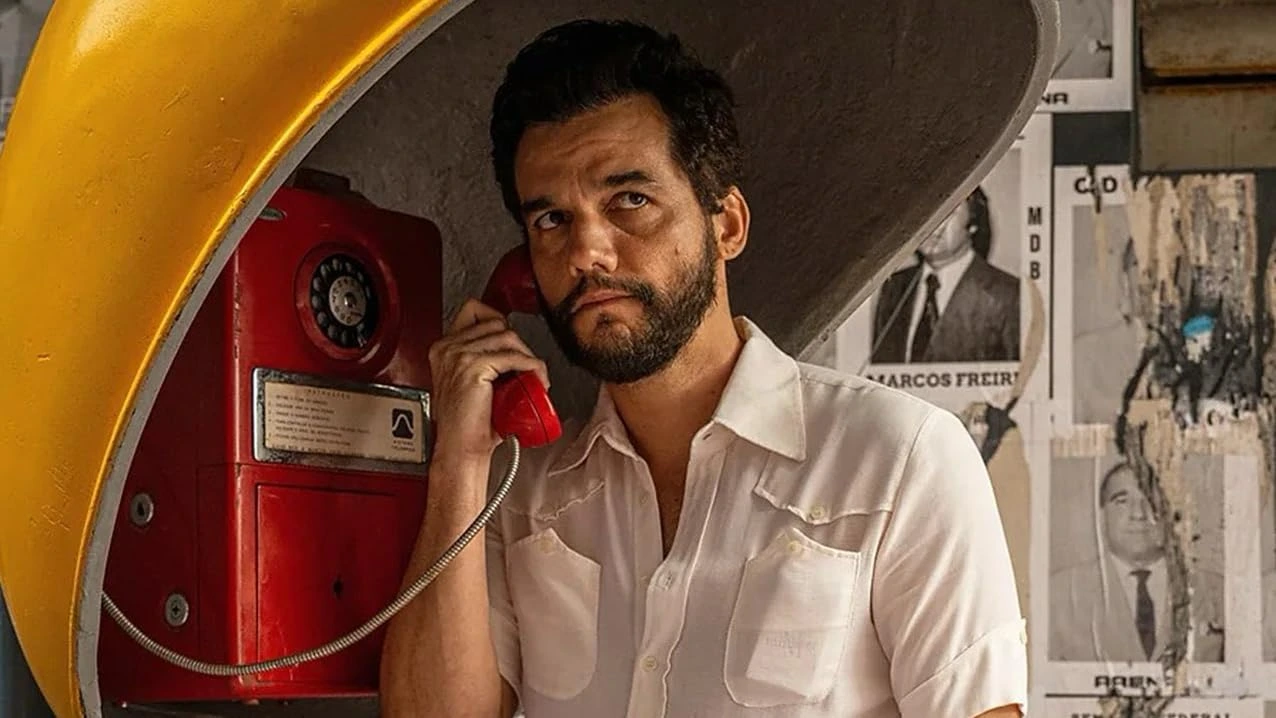
In Brazil of 1977, with the country under the iron thumb of military dictatorship, biologist-turned-fugitive Armando (Wagner Moura, The Gray Man, Civil War) drifts through the city of Recife under an assumed identity, answering to the name “Marcelo.” Still mourning the wife he lost and the son he was forced to leave behind, Armando moves like a ghost through crowded streets and carnival processions, always aware of the unseen hands tracking him.
Armando tries to reclaim fragments of the life he once knew, and an archivist and a young documentarian draw him into their quest to uncover stories the regime buried. As their pursuits intertwine, Armando’s flight becomes a tapestry of shifting loyalties, political shadows and half-remembered myths that seem to follow him from one safe house to the next. The film blends political paranoia with moments of lyrical stillness, building toward a reckoning in which Armando’s personal history and Brazil’s collective wounds converge, revealing the cost of survival in a country where truth itself has gone underground.
Life in 1977 Brazil
The Secret Agent is a slow burn that requires patience and a strong attention span. Its portrait of suppressed histories and state surveillance resonates sharply with the present, and the story’s blend of paranoia, despair and determination often casts an unsettling, immersive spell. But the narrative unfolds at such a leisurely pace — and at such length — that its momentum begins to sag, especially in the middle stretch, where repeated beats dilute the urgency of Armando’s journey.
Still, there are great moments-a sequence where a group of refugees meet together for a night of recreation and end up talking about the death threats against them, and some dare to share their real names, is riveting and empowering. The film’s ideas remain strong throughout, yet the runtime works against them, softening the impact of an otherwise gripping and relevant story, as does the frequently unfocused storytelling. Thankfully, the final third picks up considerably, and is quite riveting, including one of the best slow speed chase sequences I can ever remember seeing on film. The quiet character moments are still when the film has its greatest impact, and it all evens out to a rewarding experience.
Wagner Moura’s Performance
Moura delivers a quietly intense performance as Armando, layering fear, sorrow, and resilience into even the smallest gestures. Moura grounds Armando with a quiet, lived-in tension and his presence gives the story its emotional spine, allowing long stretches of silence to feel loaded with meaning. The strong supporting cast deepens that impact: each character Armando encounters feels lived-in, shaped by the pressures of the era. Isabél Zuaa (Good Manners, A Yellow Animal) has the film’s most touching moment as a fellow refugee who goes by Tereza Victória with a hit out on her, who goes by the name of her late favorite aunt in order to draw strength from her.
Storytelling and Pacing in The Secret Agent
The Secret Agent drags at times and could use judicious trimming, but the film captures life underground, showing people avoiding notice and merely existing rather than truly living. The portrait of normal people having to keep to the shadows in everyday life for fear of the government is chilling and far more relatable than it should be, and the film is definitely worth a look. —Patrick Gibbs
Reach more film reviews by Patrick Gibbs:
Film Review: Ella McCay
Film Review: Fackham Hall
