Hamlet: To See, or Not To See? That Is The Question
Film
Hamlet
Director: Aneil Karia
BBC Film, Left Handed Films, Storyteller Films, JW Films, Confluential Films
In Theaters: 04.10.2026
When it comes to adapting the works of William Shakespeare to film, there are the traditionalists who want everything in the original setting and to have the dialogue treated like scripture, and there and then there are the revisionists and iconoclasts who thrived on experimental reinvention for its own sake. For my part, I just want to see it done brilliantly and passionately. Aneil Karia‘s new version of Hamlet succeeds consistently at the latter, and if you can keep an open mind to revisionism, quite often at the former as well.
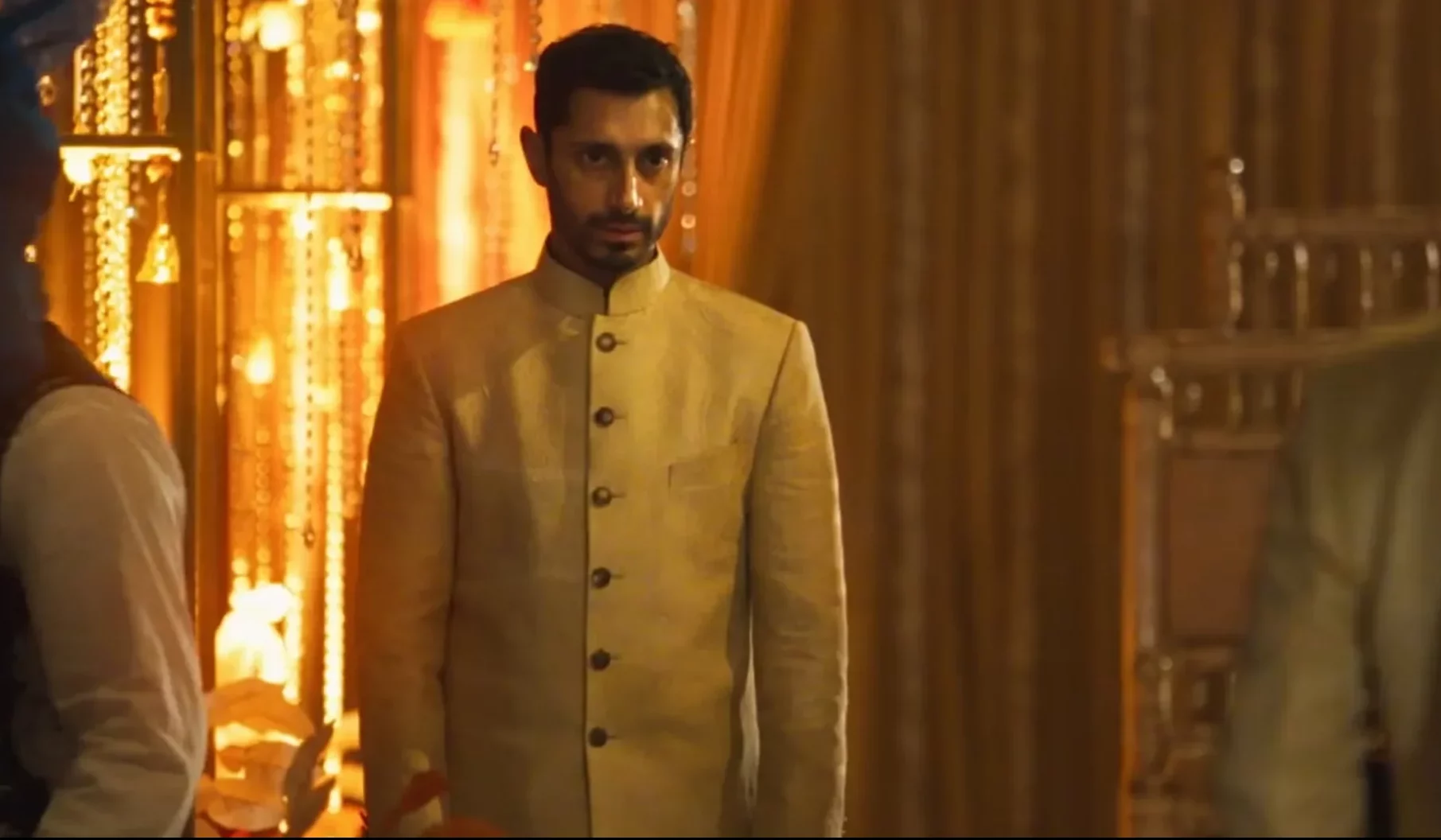
In present-day London’s South Asian community, Hamlet (Riz Ahmed, The Sound of Metal, Bait) returns home after his father — the head of a prominent property empire, Elsinore Enterprises — dies suddenly. At the funeral, Hamlet’s uncle Claudius (Art Malik, The Jewel in the Crown, True Lies) announces his intention to marry Hamlet’s mother, Gertrude (Sheeba Chaddha, Badhaai Do, Doctor G), which doesn’t go over well with Hamlet at all. When the ghost of Hamlet’s father, Bijan (Avijit Dutt, Madras Cafe) appears on a rooftop, Hamlet learns that his father was murdered by Claudius. As he navigates a world of privilege, tradition, and corruption, Hamlet’s grief — fueled by drugs, stress, and obsession — turns to rage, and as he ventures out into the city’s underground, moving between Hindu temples and homeless camps, his sanity hangs by a thread as he struggles to understand what is real, and plots his vengeance.
Director Aneil Karia, an Academy Award winner for the short film The Long Goodbye (another collaboration with Ahmed), presents a 113-minute Hamlet that is both streamlined and reinterpreted in ways that are disorienting enough to a longtime enthusiast such as myself that I had to see it twice before composing my thoughts. Screenwriter Michael Leslie (Macbeth, Now You See Me, Now You Don’t) has stripped the text to its bare bones, eliminated and combined characters, and molded the story to fit Karia’s bold vision. There are some puzzling minor wording changes made to Hamlet’s most famous soliloquy, though the choice to do the sequence in single take as Hamlet recklessly and angry drives at night and plays chicken with a big rig truck, is enthralling. The most jarring moment comes with an entirely invented scene late in the film, where Hamlet meets two mysterious men, identified on the credits as Reynaldo (Kash Ahmad, I: Proud To Be An Indian) and Marcellus (Eben Figueiredo, Testament) inside a tent city for the homeless people of what has been dubbed “The Fortinbras Movement”. The sequence is made up of pieces of dialogue from other scenes, and some that’s entirely new, and it adds themes of class warfare that give very specific context to the villainy of Claudius, but plays so loosely with the text that it’s bound to be debated for years.
All of these points aside, the bottom line is: does this radical approach work, and does it make for a good movie? The answer is that most of it works quite well, and it’s an intoxicatingly original and very good film. There’s a gritty realism that is simply mesmerizing, though the story is so slimmed down in both length and scope that it takes a broad and highly attentive mind to fully appreciate Karia, Leslie and Ahmed’s shared vision. Ahmed is a powerfully committed actor, and his fiery portrayal ranks among the best I’ve seen. Hamlet is a deeply troubled and highly flawed character — a protagonist, not a hero — and cinematic incarnations from Laurence Olivier to Mel Gibson have worked overtime at trying to make him more glamorous. Ahmed’s take is intentionally less magnetic to begin with, but he reels us in until we are transfixed by his dark intensity. The decision to combine Ophelia (Morfydd Clark, The Lord of the Rings: The Rings of Power) and Horatio is a fascinating one, though the excursion brings mixed results. This is an Ophelia who knows Hamlet’s secrets and has sworn an oath to keep them, and thus her breaking off their relationship cuts him more deeply, though it requires more dialogue alterations, and her motivation for doing so is made a tad confusing by the significant reduction in the role of Polonius (Timothy Spall, Topsy Turvy, The King’s Speech). It seems to be assumed that audiences will know the material well enough to fill in the gaps, and especially upon repeat viewing, this leaves room for some very intriguing interpretation and discussion.
Few if any adaptations of Shakespeare can be called definitive, and this Hamlet should be viewed as a gutsy alternative take on the material, and certainly not as a gateway piece like the 1990 Franco Zefferelli film. If you’re already intimately acquainted with the play while being open to reimagining it, this is a highly skilled and giddily exciting take on a classic. I’m giving this one an enthusiastic “to see” rather than a “not to see.” —Patrick Gibbs
Read more film reviews from Patrick Gibbs:
Film Review: They Will Kill You
Film Review: Project Hail Mary
