My Worries Remain After Watching The AI Doc: Or How I Became an Apocaloptimist
Arts
Sundance Film Review: The AI Doc: Or How I Became an Apocaloptimist
Director: Daniel Roher & Charlie Tyrell
Focus Features
Premiere: 01.27.2026
There’s a big anxiety bubble that looms over society like a low-hanging barrage balloon. A technological shift magnified on a global scale has split people worse than any presidential election. One side is forward-thinking, fantasizing about an innovative future with greener energy, accelerating productivity and a sky’s-the-limit tomorrow. The other senses doom — an authoritarian surveillance state dreamt from George Orwell’s 1984 ending in a cosmic bang that could result in humanity’s extinction. Teetering between dystopia and utopia, this shift is streaking through in a digitalized arms race, deploying its own campaign (spelled with a capital “AI”). Artificial Intelligence is here, and the stress follows suit. So what do we do? Join them as one small step for man or defend yourself for the preservation of mankind? In the cultural battle of promise versus peril, let The AI Doc: Or How I Became an Apocaloptimist become your survival handbook for such uncertainty.
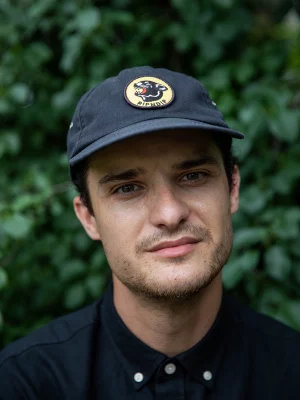
We see the life of director Daniel Roher, as he and his wife are about to introduce their newborn son into the world. Instead of worrying about what Pampers won’t give his child diaper rash, Roher plummets into a downhill spiral of AI-generated anxiety. What kind of future are they about to bring their son into? One that’s emission-free and reflecting a Tomorrowland blueprint, or one that’s shackled by the hardwire Skynet-reflective software? As a way to ease his mind, Roher weighs the pros and cons by interviewing a plethora of technicians, AI risk management, data analysts and even tech CEOs like OpenAI’s Sam Altman. Other notable names mentioned, but declined or never showed up to the interview, were Facebook’s Mark Zuckerberg and Donald Trump’s ex-boyfriend Elon Musk. Hey, I get it! They’re important personalities — they can’t be everywhere at once (they were probably too busy scrubbing their names off a certain stack of files somewhere). As he ascends up the Everest of paranoia and questions, Roher begins to discover both possibilities and threats that virtual tools can harbor, resembling a struggle that many of us are facing currently.
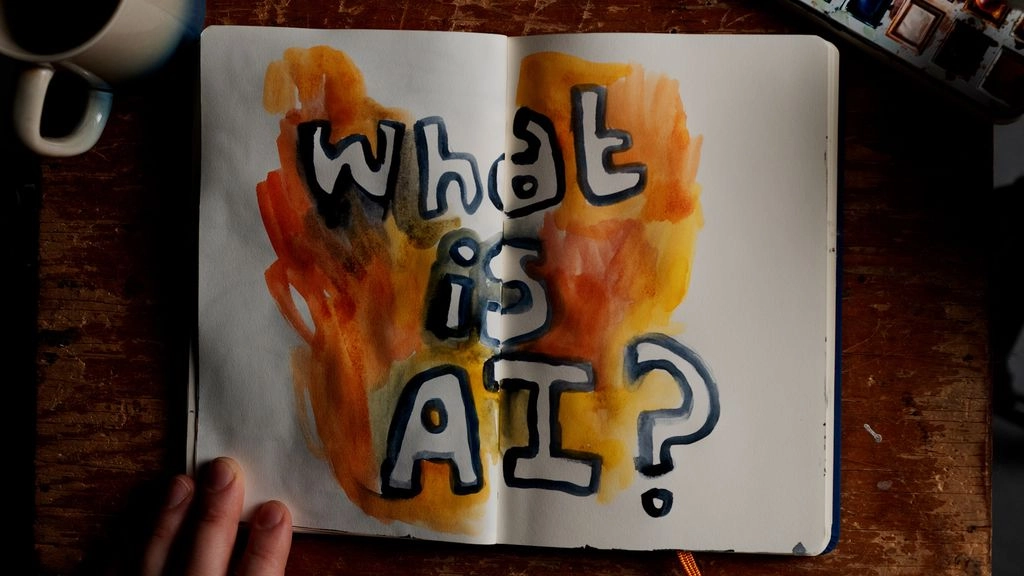
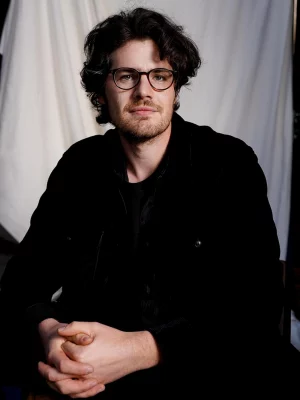
Roher, along with co-director Charlie Tyrell, brought tons of integrity to the film. Where the film could’ve easily implemented computer graphics for data and visual aspects, all effects are practical with hand-built props. The embodiment of AI itself was custom-made using hundreds of interchanging, wooden cubes that shapeshift to other found objects and instruments using the beautiful art of stop motion. Even title cards and voice memos are recreated using the painted pages from Roher’s sketchbooks. The documentary has a viral video style of filming, as if Casey Neistat or NYC artist Tom Sachs had a part in the production.
While the film is beautifully crafted, The AI Doc: Or How I Became an Apocaloptimist is a bit of a waterboard of information. I do like that Roher and Tyrell give both edges of the computer-rendered sword, balancing equal parts. However, when it comes to the raw data and findings, the presentation can be daunting… and maybe that’s the point! It’s the discussion that needs to be poked and prodded, especially after humanity has treated its discovery like they’ve proved God is real. Just like the omnipotent being, AI can represent both nurturer and neutralizer, victor and vengeance, praised by hundreds and feared by thousands. So taking in the research presented to us, it’s in our best faith (and our literal hands) to utilize or deny. As for those tech billionaires and forward-thinking politicians who hold AI on such a high pedestal, it’s about time we put them in check. AI is not punk, yet maybe we should return the conservative favor and try killing it like it was.
 Bonus Reflection on Sundance’s Lasting Impression
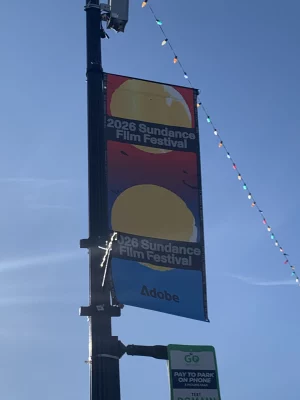
By the time my tread finally came to a halt, the entire city was sleeping off a hangover. Not one of yellowing shield champagne or of extravagant bottle-in-bond whiskey, but of an enchantment not fit for reality. Its historic buildings of cobblestone and masonry ached with a left-on sputter. Main Street was caked in tarry snow and vomit chunks of lobster. The celebrities were gone. The brands had hit the high road. All sense of movie magic was swept up in the pixie dust bin. It seems Park City has officially exorcised its Sundance spectre. Even the marquee had already changed to a new upcoming attraction, as if it had washed its hands of the film festival fiasco. Robert Redford’s death marked the true end to an era — a sickening realization that storytelling comes with a price only affordable to the highest bidder. As for Park City, it’s been reduced back down to what it always was: an overpriced, overrated mining town full of ski bums. Fortunately, before making my descent to the valley, I left with a few souvenirs: patches, notebooks, pamphlets, a button or two, but my favorite was a thumb-sized memento I got at Java Cow — a bronze brothel token. Good for my one-night stand in a town that truly whored itself out… and was left with nothing. —Alton Barnhart
Read more of SLUG’s coverage of the 2026 Sundance Film Festival.
