
SLUG Magazine Presents: 31 Days of Secondhand Givings
Arts
Season’s greetings, my fellow readers! It’s the time for peace on Earth (if we’re not reduced to pieces first), goodwill towards men (yeah right, okay…) and a holiday-appropriate collection of hand-me-down media. As the winter rolls in with its blistering winds of cold, gather around the radiant glow of the box set and don your gay apparel, you little freaks, for a festive installment of Secondhand Screenings!
The Holdovers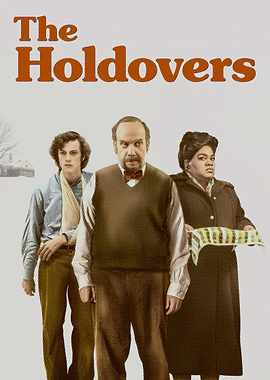
Director: Alexander Payne
Miramax, Focus Features
Released: 10.27.23
I’ve always been a fan of any coming of age film. Add in a time period holiday flick wrapped up in comedy and an instant classic for my Letterboxd top four is born. One might think A Christmas Story is the film that jumps to the top spot. Normally it would be the right answer… for the child in me. The adult side needs something extra added. The Holdovers comes wrapped up much the same way, but includes tangled, complex ribbons and bows that any patient mature adult can unfold.
Set in the 1970s during the holidays at a frigid and snowy Massachusetts boarding school, Paul Giamatti plays Paul Hunham, a curmudgeonly, wall-eyed history professor stuck in life. He is given the punishment of overseeing a group of boys held over at the boarding school during winter break, along with cook Mary Lamb (Da’Vine Joy Randolph), who lost her son and former student to the Vietnam War. One of the boys is Angus Tully (Dominic Sessa), who forms an unconventional bond with Paul and Mary, creating a temporary family to help get through the hardest part of the year.
With five Oscar nominations (and a Best Supporting Actress win for Randolph), this film is exceptionally well-directed by Alexander Payne (Sideways) and well-written by David Hemingson (Nickelodeon’s The Adventures of Pete & Pete). Most of the film is quite melancholy, nostalgic and comforting at the same time, much like listening to Nick Drake’s Pink Moon or a Cat Stevens album. Aside from a wonderful story, the film sets itself apart by meticulously creating a 1970s style with retro title cards, sound recorded in mono instead of stereo, manipulating the image to have dust and scratches and the feeling that it was all pushed through a projector.
After the holidays end and an overload of classic, happy, shiny films with predictable endings have been watched for the n’th time, The Holdovers is a cathartic swing in another direction to help bring your mental state back into balance. —Joshua Joye
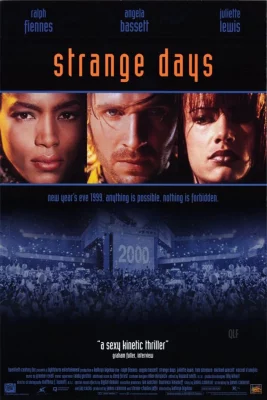 Strange Days
Director: Kathryn Bigelow
20th Century Fox, Lightstorm Entertainment
Released: 10.13.1995
Reddit has saved me from mediocrity once again. The first recent instance was in my search for a not-a-holiday-movie holiday movie about New Year’s and finding a thread listing the 1995 cyberpunk thriller Strange Days. However, thanks to the benevolent forces of the self-serving conglomerates that run this subversive media hellscape, the film is unavailable to stream. So, I donned my skull-n-bones cap and eyepatch and turned to Reddit for a second time, clicking on the first pirated link I could find.
I fended with only minor buffering, while diving from our hellscape into another. Set against a backdrop of a violent and chaotic turn-of-the-millennium Los Angeles, where everyone has greasy hair and ulterior motives, Strange Days follows Lenny Nero (Ralph Fiennes, Conclave), a black marketeer selling access to other people’s memories via a futuristic device that records and replays first-hand viewpoints. Nero, or the “Santa Claus of the subconscious,” says that being “wired up” is “almost as good as the real thing [life] and a lot safer,” which seems true as you see a “real” Santa getting jumped on the street. He wheels and deals while being carted around apocalyptic terrain in a limo by his friend Mace (Angela Bassett, 9-1-1), with whom he has a chemistry that might be the only redeeming aspect of this grimy and gratuitous film. Quite abruptly it turns into a convoluted caper as Nero receives an anonymous threat via his own device, which instigates him trying to save his punk-singer ex (Juliette Lewis, Yellowjackets) from a possessive record executive, murderous cops and herself. The film was written by Jay Cocks and James Cameron, the latter getting his Hollywood start in the ‘80s with such heartwarming films as The Terminator, so I shouldn’t have been surprised by the level of violence and grunge. Still, I got whiplash as it wheeled between pure heartedness and pure wickedness, and groaned at the several instances where someone would embark on an extended exposé explaining the plot.
Now, I have a physical copy in the post. And even if I never watch the film again, I will have the satisfaction of knowing I can if I want to. Happy New Year! May it bring you peace and a revived physical media collection. —Kyle Forbush
Female Trouble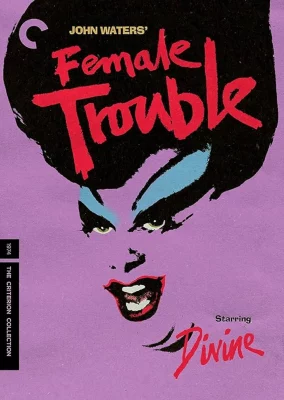
Director: John Waters
Dreamland, Saliva Films
Released: 10.11.1974
If your daughter asks for cha-cha heels for Christmas, you sure as hell better buy her those damn cha-cha heels, lest she storm out of your house and embark on a life of crime! Dawn Davenport (Divine) is a delinquent high school diva who runs away on Christmas morning only to get pregnant by a lecherous alcoholic named Earl (also Divine — this drag queen’s got range), setting in motion a series of perverse events that end with the electric chair. Grotesque and glamorous, filthy and fabulous, John Waters is here to bring the holiday cheer!
Shot in Baltimore on 16mm with a budget of $25,000, Female Trouble’s recurring mantra is “crime is beauty.” It’s hard to follow up Waters’ cult favorite trashy debut, Pink Flamingos, with even more shocks and thrills, but his cast of Dreamlanders are uproarious and endlessly quotable. Underneath all the campiness is a fanged critique of fame obsession and beauty standards, and an assertion that “the world of the heterosexual is a sick and boring one!”
If you are averse to bizarre and disturbing sex scenes, poking fun at physical deformities and a mother repeatedly telling her daughter to kill herself, this movie probably isn’t for you. You’ll find yourself cackling and cringing at the demented behavior of a truly dysfunctional family, and isn’t that what the Christmas spirit is all about? —Asha Pruitt
 Office Christmas Party
Director: Will Speck, Josh Gordon
DreamWorks Pictures
Released: 12.09.2016
Man’s greatest stories start with an iconic tagline. “Once upon a time…” introduced mystical, fairytale journeys of self-discovery and magic. “In the beginning” took a dozen interpretations and rewrites of ancient scrolls to astronomical stories of faith and righteousness. Hell, even “We were somewhere in Barstow when the drugs began to take hold” blasted readers through a hallucinogenic retrospective on a dying era. However, I would say some of my favorite and most memorable (if I could remember them) stories start with one baffling, multi-answered question: “What the fuck happened last night?” Tales of heavy partying, supercharged by spiraling liquors and whatever devilish tab of substance passed around, leading to a beautifully chaotic display of fun-loving anarchy. Few movies have truly captured these types of unadulterated antics like The Hangover or even the cinematic blip of Project X. When it comes to “Rockin’ Around the Christmas Tree,” though, one flick sets that said tree aflame with Everclear and a stolen police-issued firearm. That movie: Office Christmas Party.
When a ball-busting tech company CEO (Jennifer Aniston, Friends) delivers a lump o’ coal decision of closing the branch ran by her party-hard brother (T.J. Miller, Deadpool), he and his team of potentially-terminated employees (Jason Bateman, Olivia Munn, Kate McKinnon) throw a last-minute holiday party to win over a multimillion dollar client (Courtney B. Vance, Grotesquerie) and save everyone’s jobs. As the night goes on and hijinks tread into dangerous territories, the tech branch begins to fire up the true definition of “Work Hard, Play Hard.”
For a film that feels heavily like an SNL skit, the R-rating is absolutely needed for such madness. The humor is raunchy and top-notch, with a cast that works incredibly well together like they actually work in an office for their 9-5 (even if they’re making ten times our wages combined). Plus, the scenes of carnage and destruction is like staring at a Renaissance take of an I Spy page — there’s so much to look at in such a stunning state of utter disorder. Office Christmas Party is the type of holiday film for those who still want to stay festive, but are burnt out on cans of Who-hash and Red Rider BB guns. And trust me: For someone who wanted to set fire to their place of work during the holidays, this movie is surprisingly nurturing to watch. So maybe squeeze Office Christmas Party into your watch history before New Years. 2026 is on the horizon and for me, the party is just getting started… —Alton Barnhart
It’s a Wonderful Life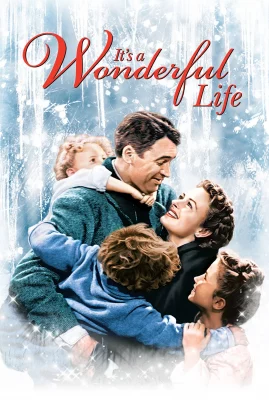
Director: Frank Capra
Liberty Films
Released: 12.20.1946
According to Albert Camus, the purpose of all philosophy is to judge whether or not life is worth living. This comes from a very famous book of his (and often misunderstood by teenage stoics), The Myth of Sisyphus, which posits that all people are similar to the titular Greek character who escapes death and is punished by the gods to roll a boulder up and down a hill for all eternity. George Bailey may have one of the heavier boulders to roll. He spends his whole life dreaming of adventure, only for his good nature to keep him bolted to his hometown of Bedford Falls. He duels with the local miser Mr. Potter, a man with no friends who would like to make Bedford Falls a place of mindless debauchory. After a particularly bad blunder, George Bailey finds himself looking over a bridge into icy depths thinking that he’d be worth more dead than alive.
It’s a Wonderful Life points out how it’s impossible to measure the world without a single man because we live in a world with that man. So when we apply the focal question of philosophy to our own lives, we’re fundamentally incapable of understanding our impact.
James Stewart had just come back from the second World War and wasn’t sure he had the stuff anymore. However, there are moments in this film that will crush you. A particularly tough moment for me comes after his revelation where he screams out, “I want to live!” What a shame that all aspiring actors will watch this and think, “how will I ever top this?”
To call It’s a Wonderful Life the ultimate Christmas film is reductive — it’s far more than that! It’s a Wonderful Life is one of the ultimate films. It will crush you, heal you and prove that no matter how bad things get, your life will always mean more than you know. There are people who are better off knowing you, so you must go on living so that you may do your best for them. We are all connected. Truly loving someone else means that you love yourself. —B. Allan Johnson
 A Kwanzaa Family Vacation
Director: Karlton T. Clay
Victory Productions
Released: 01.19.2024
I kind of feel like this one’s on me for not doing any research beforehand. For God’s sake, I didn’t even bother to watch a trailer and now I’m paying my repentance. This movie was done on a budget, and not in a Blair Witch way. The lighting, sets and composition remind me of an HR training film; however, the writing has its moments. Those moments are not enough to sustain an entire film though. I got about 45 minutes in, at the halfway mark, when I realized that I do in fact have free will and do you know what I did next? Something absolutely unprecedented. I turned this movie off and caught up on a TV show that I had been meaning to watch.
This was an official Cam DNF, which is not common. The film wasn’t so bad it was good, nor was it even that bad. It was just the writing, the visuals and the runtime that made me realize that I truly just had no desire to go on watching this film. I’ve never had to bestow such an honor to a movie before, but if you’re looking for something that truly shoots the pot of being mediocre, this is it. As I said previously about The Bye Bye Man, if you’re looking for a film that looks as though it would be in the background of a higher budget film, this is the one. Don’t take my word for it, though — see it yourself, maybe send me an email and tell me how it ends because God knows I didn’t make it that far. —Cam Elliott
Grandma Got Run Over by a Reindeer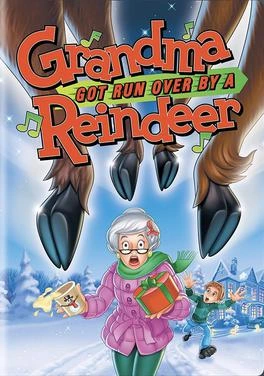
Director: Phil Roman
The Fred Rappoport Company, Inc.
Released: 10.31.2000
Some would say that not every Christmas song needs to be adapted into a movie, but after watching Grandma Got Run Over by a Reindeer, I am convinced that we need more of these. Is it because the song invites moving storytelling and nuanced characters? No. What it does is invite people to get creative and stretch out a three and a half minute song into a movie (and it wasn’t even feature-length). At some point, the creators realized that a song with a title that implies “sleigh-icular grandma-slaughter” probably wouldn’t be able to include all the dark humor of the song if they wanted it to appeal to kids. That isn’t to say that there weren’t any moments in this movie that left me absolutely bewildered. I still have that one song stuck in my head. By the end of it, I was convinced that the writers of Bee Movie took inspiration from this made-for-television film. Wrap it all up in low-budget 2000s 2D animation and it becomes the perfect fruitcake for your holiday viewing pleasure.
In the generically named Cityville, Grandma Spankenheimer (Susan Blu) runs an all year-round Christmas shop with her family. Her and her grandson, Jake (Alex Doduk) are the only two people in Cityville who still believe in the spirit of Christmas and Santa Clause. When Grandma is approached by Austin Bucks (Cam Clarke) with an offer to sell the store she refuses, but the money-obsessed Cousin Mel (Michele Lee) is more than willing to take the offer. The only thing that stands in her way is Grandma, which is a problem that is quickly resolved after she disappears in a reindeer hit-and-run.
It’s easy to see why this movie still does reruns during the holidays. There’s a low-quality charm about the film; it knows what it is and decides it’s going to go completely off the rails with a few okay jokes here and there. —Angela Garcia
Follow That Sleigh!
Director: Dick Codor
Scopus Films
Released: 11.07.1990
You know that one flick from your childhood that felt more like hysteria than a movie? One whose title sits on the tip of your tongue and a poster whose art style is too wacky to be real? Perhaps it was that one unofficial Wizard of Oz sequel with the crazed, disfigured hominids with wheels for hands and feet, taking orders from a ruthless witch that has an interchangeable head. Maybe you watched a Ray Bradbury adaptation of a haunted carnival in junior high. Or maybe you had a nightmare about the Kraft Mac and Cheese dinosaur and now you can’t look at that blue box the same way ever again… or was that just me? However, one film festered inside me so much that I had to search on YouTube to rediscover it. Oh yeah, it’s that one movie — the stop motion animation of the doo-wopping reindeer and a bubblegum pink rabbit narrator that hops into a splat of slime. Don’t recall? Yeah, I didn’t think you would…
At just below 30 minutes, Follow That Sleigh! spins a tall tale of how Christmas was once ruined by two curious children. But you know what they say: Curiosity makes the kitten hijack Santa’s sleigh, while he irresponsibly takes a quick cat nap. While the two children drive the sleigh aimlessly around the globe, it’s up to a cassette-playing slacker reindeer named Elvis to save the holiday! During this claymation rat race, the kids learn a valuable lesson about privilege and a very inappropriate depiction of Mexico made by people who’ve never been south of the border.
As someone who’s spent painstaking hours articulating my own stop motions shorts, I admire the craft. It’s patience and heart that made Gumby’s gelatinous form or the toothy, Wensleydale cheesiness of Wallace and Gromit. However, Follow That Sleigh! was a rough watch with its bootleg execution feeling rushed and unsettling. There’s moments where audio dissipates without warning, which really doesn’t change the quality since our sluggish voice actors sound like they fell asleep during their first script reading. Without even the Christmas movie safety net to save itself from obscurity, Follow That Sleigh! feels less like a holiday episode of The Morph Files and more like a morph pile of yule logs! —Alton Barnhart
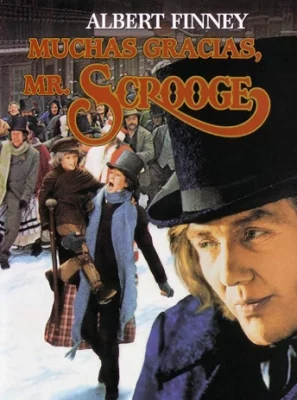 Scrooge
Director: Ronald Neame
Cinema Center Films, Waterbury Films
Released: 11.05.1970
Your favorite adaptation of A Christmas Carol is almost always the version you grew up with. For me, that’s Ronald Neame’s Scrooge. Written, produced and with original score and songs by Leslie Bricusse (Willy Wonka & The Chocolate Factory), Scrooge is a highly-underrated musical version of Dickens’ story where the sets and production design look like a vintage postcard, the music feels surprisingly timeless and Albert Finney (Big Fish) goes full Christmas ham.
While a Scrooge performance like Michael Caine in The Muppet Christmas Carol is lauded for being a grounded and emotional “real movie performance” in the face of Muppets, Finney’s performance stands out because his Scrooge is a Muppet-y performance in the face of somewhat standard stage acting. He starts out miserly enough, but as the ghosts keep coming he quickly heightens into a silly, skittish and whimpering little man gone manic in the face of forces from beyond. Shockingly, despite this character choice, it remains the only version of the story in which Scrooge’s reaction to his past absolutely wrecks me. What’s that? The “Happiness/You” sequence from Scrooge is playing? Alright, guess I’ll sob. While the soundtrack to Scrooge isn’t all bangers (we hate you, Tiny Tim’s song), it’ll still charm you with delightful tracks like “Thank You Very Much” in which Scrooge unknowingly watches the town celebrate his eventual death, and the Ghost of Christmas Present’s absolute banger, “I Like Life.”
The film’s biggest departure from Dickens’ novel follows after the Ghost of Christmas Yet to Come, when Scrooge is sent to actual hell and Marley (Alec Guinness) taunts him with an absolute unit of a chain carried in by a bunch of devils aka sweaty British steelworkers in black ski masks. I’m so serious when I implore you to check out the whole movie for free on YouTube. —Max Bennion
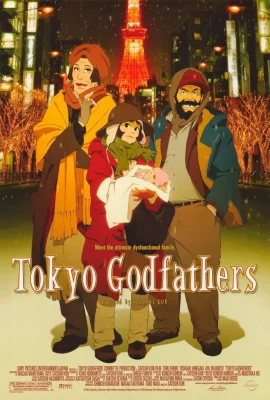 Tokyo Godfathers
Director: Satoshi Kon
Dentsu, Genco, Madhouse
Released: 11.08.2003
A bum, a trans drag queen, a runaway and an abandoned newborn walk into a bar… no seriously that’s the plot of Tokyo Godfathers in a nutshell, and boy is it one hell of a crime-filled holiday sleigh ride. Once again folks, Satoshi Kon (oh y’know, just the director of the little known indie films Paprika and Perfect Blue) proves not only is he one of the greatest artists to grace our decade, but that the East is king when it comes to animation!
Tokyo Godfathers follows a little makeshift homeless family consisting of middle-aged alcoholic Gin (Tôru Emori, Doraemon: Nobita’s Great Adventure in the South Seas, Paprika), former transgender drag queen Hana (Yoshiaki Umegaki, Samurai Fiction) and a temperamental teenage runaway Miyuki (Aya Okamoto, School Ghost Stories, Azumi). While combing through trash looking for Christmas presents for one another on Christmas Eve, the trio stumble upon an abandoned newborn girl with a note attached asking whoever finds this child to take good care of her. They also discover a set of keys with the baby, which kicks off a wild goose chase looking for Kiyoko’s (the nickname Hana gives the baby) parents. This leads our now quartet entangled in lies, rivaling crime syndicates, hostage situations and multiple suicided attempts. What better way to get into the holiday spirit!
All jokes and hyperbole aside, Kon weaves a beautifully heartfelt tale of chosen families and masterfully plays off the saying “no man is an island.” Each character’s backstory interlaces and plays out with the film’s main plot to give us the ultimate satisfying ending to the family we join along the 92 minute way. (Have I mentioned what a master Kon is at filmmaking yet?) And with perfect comedically time quotes like “I am a mistake made by God” spoken at church by Hana during Christmas service, it’s destined to be your new holiday tradition.
So gather the family ‘round the gas range fireplace and queue up Tokyo Godfathers! These are three beautifully animated Christmas spirits you’ll be glad paid you a visit! —Yonni Uribe
The Green Knight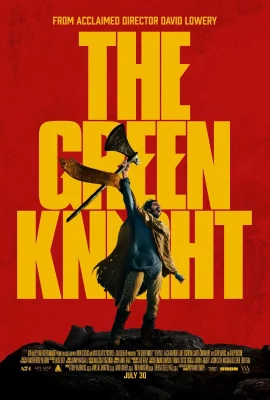
Director: David Lowery
A24, Ley Line Entertainment, Sailor Bear, BRON Studios, Wild Atlantic Pictures
Released: 07.30.2021
The Green Knight may not be the first title that comes to mind when people list their favorite Christmas movies, yet its roots in the season are unmistakable. The film adapts the 14th-century poem Sir Gawain and the Green Knight, a tale explicitly set during Christmastide, when King Arthur’s court gathers for feasting, tests of virtue and midwinter rituals. Lowery leans into the story’s wintry mysticism: snow-dusted landscapes, candlelit halls and a sense of spiritual reckoning that feels perfectly at home beside more traditional holiday tales — albeit stranger and far darker.
The inciting event itself is a Christmas game, offered during a holiday banquet, in which the towering Green Knight (Ralph Ineson) proposes a challenge of courage and consequence. This mixture of festivity and foreboding connects the film to the season’s older traditions, when Yuletide carried not only warmth and generosity but also ghost stories, omens and moral trials. Gawain (Dev Patel) faces a taxing, yearlong journey, a metaphor for reflection and transformation, echoing the way the holidays often force us to measure what we’ve accomplished over the past 12 months and examine who we’ve become.
While The Green Knight isn’t cozy or sentimental, it aligns with Christmas in a more ancient sense: a time when magic brushes against the mortal world, virtue is tested and light must be sought during the darkest days of the year. —Patrick Gibbs
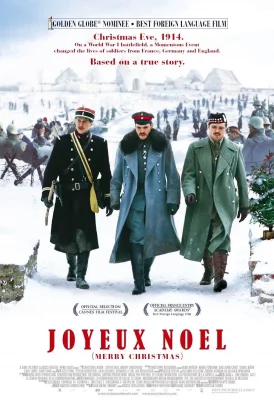 Joyeux Noel
Director: Christian Carion
Nord-Ouest Films, Senator Film, Artémis Productions
Released: 05.16.2005
Harsh critics of humankind must have a terribly difficult time during Christmas. There’s nothing like happy children, the sharing of timeless songs and shameless gift-giving to stave off the notion that humans are selfish. In a debate regarding the general bent of our species, many would probably point to war-mongering to prove that people are cruel, but knowledge of the infamous and true Christmas truce of 1914 demands a more nuanced view. As a lesser heard and at times censored story, it goes that on Christmas Eve 1914, soldiers on both sides of the Western front of World War I agreed on a temporary ceasefire for the holiday. In many places along the frozen trench-laid lines of war, the guns stopped, and they celebrated together, singing hymns, playing football (soccer) and even helping each other bury their dead.
French director Christian Carion said that he wasn’t taught this story in school, only discovering it in adulthood when it became a fascination he would bring to life in his 2005 film Joyeux Noel, which takes place in the German-invaded French countryside. For a war film, it’s surprisingly quaint and sentimental, shot and staged with intense detail, putting the viewer in the trenches where the men’s fathers had sent them. In it, Diane Kruger (Inglorious Basterds) plays a Danish-German opera singer whose singing partner and lover is drafted. She makes it to the front, despite the contrarian attitude of a German captain played by Daniel Brühl (also Inglorious Basterds), who eventually is shown to be a softie himself, and together they sing Stille Nacht for the German troops. Gary Lewis (Gangs of New York) is a Scottish priest and medic who hears this across No Man’s Land and proceeds to harmonize on his bagpipes. From this harmony comes fraternization and a new, radical kind of kinship. Carion clearly made the film with an artist’s lens, rather than a documentarian’s, using fictional characters with depth to show humanity in each trench: German, Scottish and French. The rest is history, or should be, at least. —Kyle Forbush
Last Holiday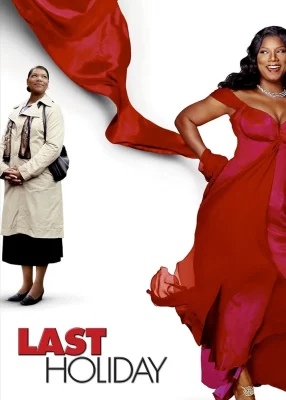
Director: Wayne Wang
ImageMovers, Laurence Mark Productions, Paramount Pictures
Released: 01.13.2006
When the holiday season rolls around, my visceral need to consume an unholy number of romantic comedies becomes borderline feral. Hallmark may be the golden child of seasonal rom-coms, but after four weeks of recycled plots and emotional amnesia, one’s sanity starts to feel clinically questionable. Enter Queen Latifah. The moment I realized she starred in the 2006 remake of Last Holiday, it was official: If anyone was going to rescue me from my Hallmark spiral, she was the only one.
Georgia Byrd (Latifah) puts the classic hypothetical “If you were going to die tomorrow, what would you do today?” to the test when her doctor delivers the unfortunate holiday surprise that she only has weeks to live. Already, the originality of the plot was a welcome relief from the Hallmark haze I was still crawling out of. Georgia is a relatable character, charming in her humility and goofy personality. Having spent her life as a “dreamer,” she doesn’t waste a second upon receiving this news. Although it’s sad to leave her longtime work crush, Sean Williams (LL Cool J), after they finally got their flirt on, she withdraws her life savings and jets off to the Czech Republic. It’s cliché, but deeply satisfying to watch the rich snobs radiate envy as Georgia begins thriving in ways that had me giggling nonstop. She effortlessly dominates everything from BASE jumping to her insanely lucky gambling streaks.
Additionally, with so much whitewashing in mainstream media at the time, it’s refreshing to see a 2006 film featuring such a diverse cast of mostly Black actors achieve such success. Of course, the ending contains no real plot twists: Georgia lands the dream guy, the dream job and surprise, a misdiagnosis courtesy of a severely anxious doctor. Predictable? Absolutely. Heartwarming? You bet. It’s the perfect concoction to any hopeless romantic’s heart. —Heather Homewood
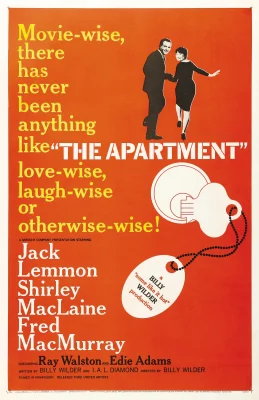 The Apartment
Director: Billy Wilder
The Mirisch Company
Released: 06.15.1960
As far as popular directors go, one seems to have been more forgotten than the rest: Billy Wilder, a Polish immigrant who escaped Nazi persecution by moving to the United States. Wilder’s body of work contains some of the most iconic films ever made. Some Like it Hot, Double Indemnity, Sunset Boulevard, Stalag 17 — These are all great movies, but to get to the heart of them you must see The Apartment. A thesis film of sorts where Jack Kruschen‘s character, Dr. Dreyfuss, speaks from Wilder’s core, “Why don’t you grow up, Baxter? Be a mensch! You know what that means? A mensch — a human being!”
The Apartment is about C.C. “Bud” Baxter, who doesn’t have a family, but his apartment is never empty. He loans it out to his bosses (they like to call him “Buddy-Boy”), so that they can cheat on their wives discreetly. He’s promised promotions at work for use of his bachelor pad and for his cheese crackers, which he forgets to buy. Jack Lemmon is one of my favorite actors, whose body of work is beyond impressive. Lemmon often has to play the loser, as he does here, but I think that’s why I’ve always liked him. He is belittled by his bosses, but it’s all worth it because he gets to see Shirley MacLaine, an elevator girl who’s involved with Bud’s boss, Mr. Sheldrake, played by Fred MacMurray, a clean cut Disney actor. MacMurray is so filthy and deplorable in this film that when he took his kids to Disneyland, an irate mother hit him with her purse and said, “That was not a Disney movie!” Apparently she’d taken her kids to see it.
When all’s said and done, Buddy-Boy finds himself at the top — vice president of the insurance company in an office conjoined to Mr. Sheldrake’s. Sheldrake beckons for the apartment key, so Bud tosses him the key to the executive washroom and says, “I won’t be needing it because I’m all washed up around here.” This is a story about a man who believes he is using when in fact he is being used. The moment he realizes it, he becomes a mensch. Shot in widescreen format, every inch of the apartment is on display. It’s claustrophobic, but no matter how things get, the apartment has moments that warm and open it up. —B. Allan Johnson
Go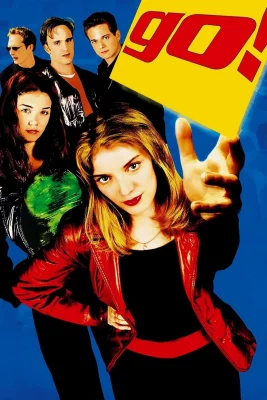
Director: Doug Liman
Banner Entertainment, Saratoga Entertainment
Released: 04.07.1999
Go is not only a Christmas movie but also a coming-of-age movie, a crime comedy movie and an edgy ‘90s drug movie. Told as a triptych anthology with three interwoven perspectives on the same Christmas Eve night, Go is often compared to Pulp Fiction (but it’s better, and I’ve never seen Pulp Fiction).
The highlight of the first tale is a sweaty, ecstasy-induced vision of ballroom dancing to “Macarena” in the grocery store with a mild-mannered cashier. The film lost me for a moment in the middle with a boys-trip-to-Vegas-gone-wrong, starring an annoyingly cocky British drug dealer as he harasses strippers, and chaos ensues. However, the final story brings it home when what looks like an attempted foursome turns out to be a young couple’s ploy to recruit more members for their pyramid scheme.
The young cast is absolutely stacked with talent, including Sarah Polley, Timothy Olyphant, Katie Holmes and Taye Diggs, plus a surprise appearance from Melissa McCarthy in her first film role. Some may say a plot that takes place around the holidays doesn’t necessarily make a holiday film, and I would agree — but let me reassure you that Go hits all of the classic beats of Christmas Eve in the movies: a teenager working overtime, a tense family dinner and a dirtbag in a Santa hat. —Asha Pruitt
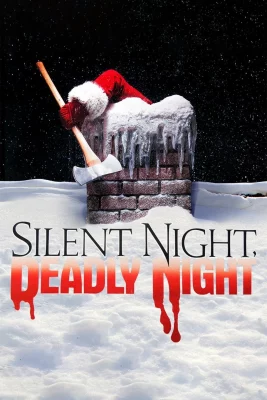
Silent Night, Deadly Night
Director: Charles Sellier
Tri-Star Pictures, Slayride
Released: 11.09.1984
You’ve heard of dashing through the snow. Now, get ready for… SLASHING through the snow! That’s right readers, we’re returning to holiday traditions of yore and telling scary stories ‘round the fireplace this heartfelt Christmas season with the 1984 Santa slasher Silent Night, Deadly Night (not to be confused with this year’s *insert exhausted sigh here* remake).
Silent Night Deadly Night starts off with a fun-filled Chapman family roadtrip to a Utah mental hospital (fun film bro fact: Silent Night, Deadly Night was shot here in our very own Heber and Midvale Utah!) to visit their beloved catatonic grandpa. Our family consists of dad Jim (Geoff Hansen, Don’t Look Under the Bed, The Arrival), mom Denise (Linnea Quigley, The Return of the Living Dead, Night of the Demons), four-year-old Billy (Robert Brian Wilson, Houston Knights, Santa Barbara) and infant Ricky (Alex Burton). When Jim and Denise are pulled away from the doctor to discuss grandpa’s declining health, Grandpa Chapman breaks his catatonia to tell Billy that if he was “naughty” at any point during the year Santa Claus is going to give him a severe punishment. This turns Billy’s Santa fascination into a straight up holly jolly phobia. While on the way home from their holiday visit, the Chapman family runs into a man dressed as Santa Claus who brutally assaults and murders Billy’s parents right in front of him, leaving him and Ricky orphans. Years later, after being raised by a heavy-handed Mother Superior, Billy struggles with PTSD and finally snaps after being forced by his boss at the local toy store to dress up as Santa Claus. Billy leads one hell of a “slay”-ride around time murdering those he deems “naughty.”
Silent Night, Deadly Night was the original Starbucks red holiday cup scandal, leading to the formation of groups like Citizens Against Movie Madness and had critics like Gene Siskel and Roger Ebert verbally decimating the film into smithereen snowflakes. Though I believe the film’s only crime is not reaching its full potential in its 79-minute run time. It has all the hallmarks of a perfect B-Movie: unnecessary topless women in cold weather, over the top child brutality, cops accidentally shooting a deaf priest in front of orphans and memorable quotes like “Staring off into space like some… moon goon.” Though, it just never quite sticks its landings and bumbles its way through what was a promising and unique (for its time at least) storyline about untreated mental illness. To me, dear reader, that just cannot be forgiven.
That being said, it’s still a fun little ride that’ll no doubt get you in the holiday spirit! Holly your jollies and watch Silent Night, Deadly Night before you head to the theaters for its remake! —Yonni Uribe
Christmas in Connecticut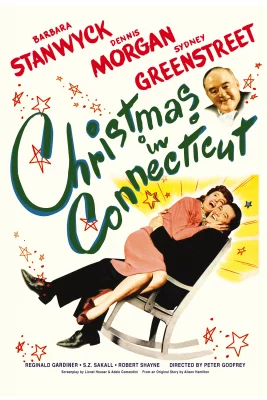
Director: Peter Godfrey
Warner Bros. Pictures
Released: 07.27.1945
Nowadays, the holiday rom-com is a hostage of Hallmark and Netflix. Though many of their stale ingredients find their point of origin in the films of yesteryear, Christmas in Connecticut manages to feel surprisingly refreshing in comparison. When Navy seaman Jefferson Jones (Dennis Morgan) is feeling despondent in the military hospital, his nurse arranges for him to spend Christmas at the picturesque home of beloved home magazine columnist Elizabeth Lane (Barbara Stanwyck). However, Lane isn’t who she claims to be in her writing. She doesn’t have a farm, she doesn’t have a baby and she can’t actually cook those extravagant meals she writes about.
Through a fairly convoluted series of events, Jefferson and Elizabeth get into romantic hijinks alongside her Hungarian chef friend who writes the recipes, her oblivious boss who’s eager for a good meal and the wealthy bachelor who has loaned Elizabeth his farmhouse in exchange for her hand in marriage. As Elizabeth does all she can to avoid actually getting married over the three-day holiday, she finds herself falling deeper in love with Jefferson, much to my delight. I cannot stress enough the degree to which I was giggling and kicking my feet as Elizabeth and Jefferson flirted their way around beautiful faux-snow landscapes, barely restraining themselves as required by the alleged married status of Elizabeth.
If anyone deserves credit for raising this film above its at-times-contrived material, it’s absolutely Stanwyck, who almost single-handedly wills this seasonal story into soaring. From the minute she and Morgan appear on screen together, her performance has you locked in on these two winding up together. Her star performance aside, there’s jokes, there’s sexual tension and there’s gorgeous Golden Age stagecraft. Though I’d never seen it until now, it’s sure to be an annual holiday watch in the years to come. —Max Bennion
 The Broken Candle
Director: Felix Kiner
Lam Media
Released: 2021
As was the case with my choice of Spookley the Square Pumpkin in October, I didn’t know how short this movie was going to be. Where Spookley was a succinct 46 minutes, The Broken Candle movie only clocks in at about nine. Frankly, I was expecting a poorly animated, poorly voiced education on the layout of a menorah (Which I desperately need as the Apfelbaum side of my family rolls in their graves every time I stumble through the prayer on the first two nights of Hanukkah then forget to light the candles until the last night.) What I got was an admittedly charming animation about a poor little broken candle that sneaks its way through quality control and ends up as the shamsash (the center candle on a menorah, don’t worry I just learned that too.) And what I really didn’t expect was the absolutely packed cast for this nine minute animated film. Eugenio Derbez (CODA) plays the box that holds the candles, within the box is Nira (Vanessa Marshal, Star Wars: The Bad Batch) the broken candle, and her pal Bryan who is played by the legendary Tom Kenny of Spongebob Squarepants and Adventure Time fame.
I was even more astounded to learn that the menorah itself is voiced by Tiffany Hadish (Girls Trip) who encourages the candles to shine their brightest. Where this movie got the money or the connections to book actual A and B list voice actors is absolutely beyond me, but it didn’t go unnoticed as this short film either won awards or was nominated at the Brklyn Film Festival, The Florida Animation Festival, the Irish Animation Awards and the LA Shorts International Film Festival. It really goes to show, if you go in with an open mind, you may just be surprised at what you’ll find. —Cam Elliott
Santa vs. The Snowman 3D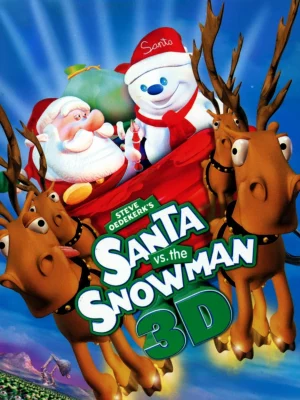
Director: John A. Davis
O Entertainment
Released: 12.13.1997
This might be a bit too niche for our reader demographic, but if you ever watched the Thumb films in your short time here on Earth, we can be friends. The the same mad scientist studio that brought us experimental successors like Thumbtanic and Jimmy Neutron: Boy Genius took the cutting edge computer graphics of the 1990s (somewhere between KidsPix and Lara Croft’s hexagonal hooters) to drop holographic, holiday havoc! What came to be was the CGI nightmare Santa vs. The Snowman 3D, promoted in glamorous, dome-bound IMAX excitement. God, I miss the cinematic theater experience!
The film opens with the inhospitable icebox of the North Pole, as we find “the loneliest snowman in all of the world.” After breaking his icicle flute after being startled by what looks like a shooting star with sleigh bells, the snowman sets off to find a new one. To his disbelief, he comes across Santa’s Workshop bustling to get ready for Christmas. The snowman becomes fascinated by the big guy in red — who is Santa Claus? Why is he so popular? Why does everyone love him? Most importantly, how can the snowman get a piece of the Christmas fruitcake, if you know what I mean? In an act of defiance, our frost-mounded fellow declares war on Santa and his little helpers, turning the North Pole into a winter wonder war zone.
Now, I could see why someone might enjoy watching this feature every December, especially when I first saw it at the Clark Planetarium. The acting is decent and the hilarious depiction of igloo AT-AT’s firing boulder-size snowballs is pretty out-of-the-box thinking. Unfortunately, the dated computerized animation is a bit stiff and unnerving, like Roblox. Plus, the “3D” selling point only holds up if you have red-and-blue glasses. What you’ll get is a migraine from the warped, fish-eyed illusions and the gimmick of objects flying at you, because y’know, IT’S 3D! As a kid, I was worried that I was about to get splashed with scalding hot chocolate. Now, I’m worried that I might’ve grown a brain tumor watching this and ran out of Oxycodone. —Alton Barnhart
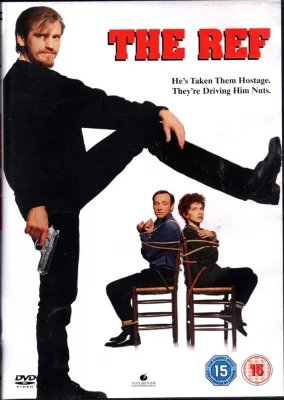 The Ref
Director: Ted Demme
Touchstone Pictures, Bruckheimer Films
Released: 03.09.1994
The tradition of watching Christmas movies during the holiday season feels like something so ingrained into us, that it’s almost ritualistic — like the festive spirit won’t take hold of the household, unless we have It’s A Wonderful Life, A Christmas Story and Elf on rotation 24/7. Who’s to say if this came about organically or, just like every other uniquely American thing, was just another clever tactic to keep the consumerism machine running. While the classics will always have a special place in our hearts, sometimes a tinge of cynicism and a few heaping helpings of dark humor can be a great palette cleanser after all the saccharine flicks. The 1994 film, The Ref is a perfect example of a film that captures all the family turmoil that comes out during the holidays, albeit heightened for comedic effect, and still manages to have the vital ingredients of Yuletide and cozy atmosphere sprinkled throughout.
After a less-than-productive marriage counseling session on Christmas Eve, bickering married couple, Caroline (Judy Davis) and Lloyd Chasseur (Kevin Spacey 🙁 ) are taken hostage by a burglar on the run named Gus (Denis Leary). Even while being tied up with a gun to their heads, that doesn’t mean the bickering takes a pause. Eventually, Gus’ aggression becomes the best means for this hopeless couple to finally start confronting their faults and listen to each other.
This film had me smiling from ear to ear while watching it. The quick whip dialogue and the undeniable comedic chemistry between all three leads were a treat to watch, while also seeing the slow unraveling of the suburban facade. It soon became obvious that the only person with a good head on his shoulders was the burglar. All that and add on the talent of the one-and-only Christine Baranski and you have everything you need for a savory holiday film dish. —Angela Garcia
The Long Kiss Goodnight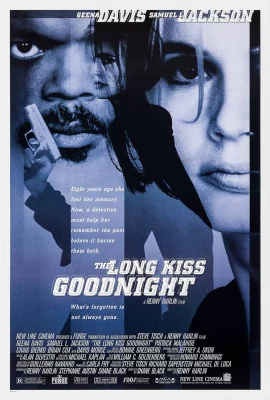
Director: Renny Harlin
Forge, The Steve Tisch Company
Released: 10.11.1996
The Long Kiss Goodnight is one of the great stealth Christmas movies — loud, profane and deliriously action-packed, though still wrapped in tinsel and holiday lights. The story takes place during the Christmas season, as a small-town schoolteacher named Samantha Caine (Geena Davis) who suffers from amnesia and slowly discovers she was once Charly Baltimore, a lethal government assassin. As fragments of her past return, she is “Bourne Again” (the screenplay by Shane Black may predate the Matt Damon films, but it borrows liberally from Robert Ludlum), and she teams up with private investigator Mitch Henessey (Samuel L. Jackson). The two plunge into a conspiracy involving rogue intelligence agents, false-flag operations and the kind of pyrotechnic chaos only a ’90s action film can deliver.
Christmas isn’t just background decoration; it permeates the film’s personality. The contrast between festive domesticity — carols, classroom pageants, family dinners — and Charly’s resurgent killing instincts creates a sharp comedic and thematic edge. Renny Harlin uses the season’s iconography ironically, staging shootouts against glowing holiday displays and turning yuletide cheer into a counterpoint to violence and reinvention.
At its core, the film fits neatly into Christmas tradition: it’s about identity, second chances and rediscovering what truly matters. Samantha’s journey toward reconciling her two selves mirrors the season’s themes of renewal and rebirth. It may be explosive rather than sentimental, but The Long Kiss Goodnight earns its place in the holiday canon with style — and a whole lot of broken ornaments. —Patrick Gibbs
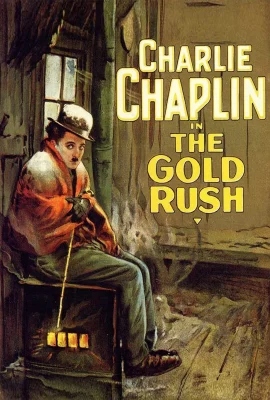
The Gold Rush
Director: Charlie Chaplin
Charles Chaplin Productions
Released: 06.26.1925
Picture this: It’s the roaring ‘20s — the glitzy, champagne-popping era that F. Scott Fitzgerald wrote about in The Great Gatsby. There’s gold glittering in everyone’s eyes, and Charlie Chaplin is at the height of his earthquaking, standard-setting career. So of course he makes a film about a gold rush, but rather than taking us to California, Chaplin’s classic character, The Little Tramp, dons his ill-fitting, patched-up garments and bamboo cane and heads to Alaska for The Gold Rush, a black-and-white silent film.
It turns out that the quest for that little key to paradise (money) is as timeless as the people who did their own questing back then, because everything that happens in that godforsaken tundra (or golden-age-of-Hollywood set) has repeated itself throughout the ages. It’s not the silly, slapstick, Looney Tunes-brand tomfoolery that stands out to me, even though many people associate Chaplin with his pointed, painstakingly choreographed comedic action scenes (and this film has plenty). Rather, as the endearing Little Tramp penguin-walks through Alaska’s frozen landscape, vying with several prominent tropes of dastardly villains, friendly prospectors, misogynistic bullies and the strong-willed girl of his dreams, it’s Chaplin’s masterful subtlety of emotion that you find enrapturing.
Yes, his antics keep it lively, but the plot is thoughtful and real enough to pay close attention to. It’s like one of those Y2K-era Adam Sandler rom-coms, where the unlikeliest emerges victorious, but by purity, grace and goodwill, rather than skill with a golf club. With a frolicking piano score and occasional dialogue and narrative cards to ease you along, The Tramp goes from eating boiled shoes in a frozen cabin on Thanksgiving, to getting stood up on New Year’s Eve (we’ve all been there…haven’t we?), to punching way above his weight in the love department. And isn’t that just the miracle of the holidays! —Kyle Forbush
Batman: The Animated Series – Christmas with the Joker
Director: Kent Butterworth
Warner Brothers
Released: 11.13.1992
It’s Christmas Eve and Joker has escaped Arkham Asylum, singing the iconic “Jingle Bells, Batman Smells, Robin laid an Egg! The Batmobile lost a wheel, and the Joker got away!” After their nightly patrol of Gotham, Batman and Robin return home to watch It’s a Wonderful Life (Batman hasn’t seen it because he “could never get past the title”), only to find the Joker, dressed like Mr. Rogers, broadcasting on every channel a Christmas special revealing he’s kidnapped Commissioner Gordon, his wife and Detective Harvey Bullock. It’s cartoonish and often silly, as were most episodes from the early seasons, but Bruce Timm’s iconic art style and sense of humor are brilliant.
As far as television Christmas specials go, it’s hard to top the iconic A Charlie Brown Christmas or Simpsons Roasting on an Open Fire, but for me, the ultimate Christmas special is Christmas with the Joker. Being the second episode of Batman: The Animated Series, which contains some of the greatest interpretations and performances of Batman’s rogues, Christmas with the Joker introduces Mark Hamill (Star Wars, The Long Walk) as the Joker. The debate of the greatest Joker always defaults to Heath Ledger, which yeah, he’s good, but it’ll always be Hamill, whose chemistry with Kevin Conroy’s Batman (a voice so good I hear it when I read the comics) is dynamite and later brought both characters to insane heights. —B. Allan Johnson
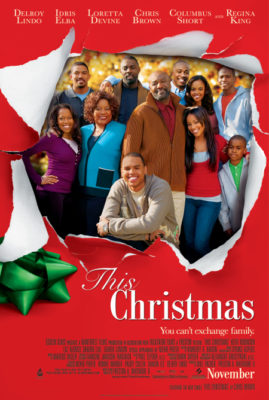 This Christmas
Director: Preston A. Whitmore II
Screen Gems
Released: 11.21.2007
When I choose my titles for Secondhand Screenings, I usually do so in a grab-bag style with little thought. Usually this makes it so I am faced with a movie that I would have never watched before, and likely never will again. Sometimes, though, I find a real gem, and this is one of them.
This Christmas follows the Whitfield family through their Christmas season as they face soap-esque tribulations like “secret pregnant wife,” “cheating husband” and “Uh-oh, unpaid gambling debts!” all whilst dealing with the usual pains of a big family Christmas. And I’ll tell you what, the film does it all really well. I won’t waste my wordcount on the very watchable writing, though, I would like to spend it on what really makes this movie; the cast. Idris Elba (The Wire), Delroy Lindo (Sinners), Regina King (The Boondocks) and the fabulous Loretta Devine (Grey’s Anatomy) turn this from a generic Christmas movie into a family classic that will endure for years to come. I suspect they had a lot of fun on set, and it shines through in the genuine way they interact throughout the film. The chemistry of the cast makes me wish it really was a soap, so I could watch a hundred episodes while sick in bed. It’s also worth mentioning that singer Chris Brown is prominently featured in this movie, but we’ll move past that. If you want a Christmas movie that has drama, laughs and a classic melt-your-heart happy ending, then This Christmas is for you. —Cam Elliott
8 Women
Director: François Ozon
Fidélité Productions, Mars Films, France 2 Cinéma
Released: 09.20.02
When it comes to selecting holiday movies, there is one thing that is of the utmost importance: a cozy atmosphere. It’s the most defining part of the holidays, and for whatever reason I have found that some of the coziest movies in my opinion happen to be mystery films. Knives Out and Gosford Park with their lavish settings, all the characters huddled in a room discussing their live and having terrible secrets be revealed to everyone — it all makes for some shocking and at times comedic reevaluations. In my search for another homey mystery movie to add to my rotation, I happened across a French murder-mystery film called 8 Women. Taking place in the interior of a french chateau, decorated with floral and pastel patterns, and opening with the snowy landscape, the movie immediately puts you in the mood to snuggle up with a blanket and take a sip of hot cocoa as you witness the twists and turns of a delightfully morbid mystery.
The film follows the eight titular women as they get ready to celebrate Christmas. Things go awry when they discover that the patriarch of the house has been stabbed in the back with a dagger. With no evidence of anyone else having entered the house, the only suspects are each other. Secrets are revealed and the facade of each one of these women begins to slip.
Despite being a mystery film, the true twist for me was discovering that this film is actually a musical, and a jukebox musical for that matter. Maybe the pastels and endearingly over-the-top acting should’ve been a dead giveaway. Still, this was a really pleasant watch. If you’ve been trying to get into French cinema or musicals and The Umbrellas of Cherbourg is too devastating for your taste, then give 8 Women a watch! —Angela Garcia
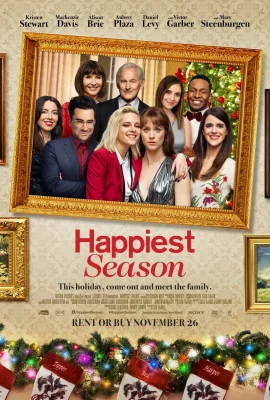 Happiest Season
Director: Clea DuVall
TriStar Pictures, Entertainment One, Temple Hill Entertainment
Released: 11.25.2020
Happiest Season was the first lesbian Christmas rom-com produced by a major Hollywood studio, co-written and directed by the breakout star of But I’m A Cheerleader, who wrote the script inspired by her own experience coming out to her family — that has to be the formula for a queer classic, right? Wrong! It’s not because the movie is brimming with every trope in the book, complete with a “What are you doing in the closet?” joke. Holiday rom-coms are meant to provide comfort and laughs, not reinvent the wheel, and the goofy clichés are actually some of the movie’s most charming moments. It’s because the love interest is so narcissistic and unlikeable that, as many Letterboxd users have pointed out, it comes across more like a lesbian Get Out than a heartwarming holiday tale.
Harper (Mackenzie Davis, The Martian) takes her girlfriend Abby (Kristen Stewart, Twilight) home for Christmas, and conveniently forgets to mention that she’s not out to any of her family. Forced to play the role of Harper’s orphan friend, Abby slowly goes insane, while Harper’s immature and manipulative behavior grows more and more infuriating. A beacon of light appears in the form Aubrey Plaza as Riley, Harper’s hometown ex who connects with Abby — but despite every bone in my body screaming “leave your girlfriend and run off with her instead,” it doesn’t happen. Even Alison Brie as Harper’s competitive older sister and Dan Levy as Abby’s gay best friend as isn’t enough to save the story from snowballing into yuletide tragedy. —Asha Pruitt
The Christmas Letter
Director: Tori Hunter
Scatena & Rosner Films, Bridge and Acorn Entertainment, LAMA Entertainment
Released: 11.12.2024
Every movie is a miracle. The fact that any of them get off the ground each year, especially independent and low-budget projects, is truly miraculous when you consider everything that goes into making a feature film. Additionally, every opportunity for those in local film industries (like the local film industry in Central New York, for example) to get paid to do what they love is a beautiful thing that should be cherished and protected. However in Jordan Peele‘s Nope, OJ Haywood (Daniel Kaluuya) poses the question: “What’s a bad miracle? They got a word for that?” If you ask me, the answer is The Christmas Letter. Writer and co-producer Michael Cunningham spent 13 years writing a script that wasn’t very funny, then got it made with cameos by a few big names. How? A bad miracle!
The story follows Joe Michaels (Angus Benfield), a petty imbecilic father who spends his family’s entire savings on a series of farcical attempts to compete with his childhood pen pal’s annual extravagant end-of-year Christmas recaps. The performances are as flat as the lighting, the exact same rudimentary set-up/punchline structure manufactures every comedy set piece without variation, and it’s only claim to fame — what the back of the DVD called a “reunion” of “Christmas movie icons” Chevy Chase and Randy Quaid — is a FaceTime call between two bored former stars strapped for cash. Worst of all, though, it’s just not funny. The only entertaining aspect of this holiday-themed snoozefest was the anticipation I felt waiting for Benfield’s Australian accent to break through in his line deliveries. (Fortunately for me, it happened often.) It may have been a Christmas miracle for Cunningham, but with an end result like this, it’s a bad miracle all the same. If you see it on the the Salt Lake City Public Library’s shelves, look elsewhere. —Max Bennion
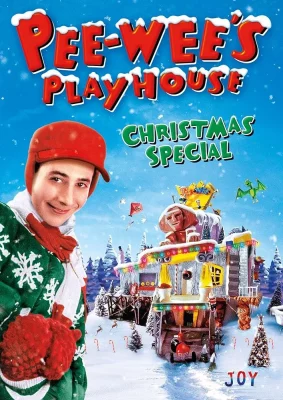
Christmas at Pee-wee’s Playhouse
Director: Wayne Orr, Paul Reubens
Pee Wee Pictures
Released: 12.21.1988
Shamelessly enough, I always fall victim to a good Christmas special. The unsystematic appearances of “remember them” cameos, the mise-en-scène of festive jolliness, a few merry old-time songs throughout the runtime — whatever it is, I eat that snickerdoodle shit up! One Christmas special in particular that eases the soul into Yuletide delight is Christmas at Pee-wee’s Playhouse.
The zany manchild himself (and I mean that in the best way possible) Pee-wee Herman begins setting up for his holiday party after sending a mile-long wishlist to Santa Claus. Through a chaotic mix of ‘80s celebrity appearances and the bizarre antics the playhouse attracts, Herman must make a selfless act that will change the course of the holiday itself. Of course, you’ll have the regular playhouse loiterers like Cowboy Curtis (Laurence Fishburne, The Matrix) and Reba the Mail Lady (the only grounded-in-reality voice of reason), but where else would you find Magic Johnson, Grace Jones, Joan Rivers and even a prime-time Cher share the the same magic screen??
Those who grew up watching this fever dream of a children’s show, or rented each season from Hollywood Video like yours truly, remember the bright colors and eccentric cast of characters. The hallucinogenic program was like traveling through an antique store while overdosing on gas station boner pills. It had all the workings of holiday pudding pie to hypnotize the audience: stop motion animation, drawstring puppetry, a few adult innuendos to catch your parents off guard and just enough Christmas charm to hold the mantle as a holiday classic. —Alton Barnhart
Santa Claus: The Movie
Director: Jeannot Szwarc
Santa Claus Productions Ltd
Released: 11.27.1985
40 years after its release, Santa Claus: The Movie remains one of the most ambitious yet bewildering holiday films ever mounted — a lavish, earnest and entirely too overarching and brazenly commercial attempt to craft the definitive Santa Claus origin story while also functioning as a mammoth ’80s blockbuster in the Superman vein. Time has been both kind and cruel to it, and that paradox is exactly what makes the movie fascinating to revisit in 2025.
The film’s opening act is still its strongest: a mythic, almost storybook rendering of how a humble toymaker (a warm and gentle David Huddleston, The Big Lebowski) becomes the legendary figure. Director Jeannot Szwarc (Jaws 2, Somewhere In Time) leans into a glowing, handcrafted look — giant candy-colored sets, practical-effects sleigh flights and Dudley Moore’s genuinely sweet performance as Patch the elf. But the film’s second half is where the movie unravels, where it shifts to 1980s New York and pits Santa against John Lithgow’s gleefully villainous toy tycoon B.Z. It’s big, noisy and so overloaded with product placement that it starts to collapse in on itself. Lithgow, who took the role only after Harrison Ford turned it down, is none too fond of it, and even when I jokingly mentioned it to him at Sundance this year — at barely 5’4, I felt like and elf standing next to the 6’4 acting giant — he changed the subject as quickly as possible. The performance is still fun, however, and when viewed through the lens of today, the tonal whiplash plays less like a failure and more like an artifact of a decade that threw everything at the screen without hesitation.
Santa Claus: The Movie may not be a great film, but at 40 years old, it has settled into something more enduring: a nostalgic, slightly oddball holiday comfort watch whose sincerity outweighs its flaws, and for it’s an annual tradition that’s as sweet as a little puce candy and as comforting as a Coke and a Happy Meal. —Patrick Gibbs

Tangerine
Director: Sean Baker
Freestyle Picture Company, Cre Film, Duplass Brothers Production
Released: 04.10.2015
Now I don’t know about you, but nothing says “the most wonderful time of the year” and hollies my jollies like a good old-fashioned Christmas Eve hunt for a drug-dealing pimp who’s cheated on his fiance. That’s right, readers — I’m here to open a Die Hard-esque debate on whether or not Sean Baker’s 2015 sleeper hit, Tangerine, is technically a Christmas film. In my humble Senior Staff Writer opinion (which I will prove to you in this review), it is.
Tangerine follows transgender sex worker Sin-Dee (Kitana Kiki Rodriguez), newly released from jail, as she meets up with her BFF and fellow trans sex worker Alexandra (Mya Taylor, Stage Mother). In this sugary sweet (they meet up at a Donut Time) reunion, Alexandra informs Sin-Dee that her boo thang has been out gallivanting with a white “fish” (slang for a cisgender woman) during her incarceration. She thus leads Sin-Dee on a goose chase throughout the streets of LA, where we meet a charming little group of misfit side characters. This includes a chaser Romanian taxi driver named Razmik, who is fond of Ms. Sin-Dee, and is particularly fond of keeping his attraction to sex workers like Sin-Dee a secret from his wife and her overbearing mother.
I am the bigger person and I will admit I didn’t understand the hype, nor necessarily trust Baker’s authenticity, when I first saw his films Anora and The Florida Project. Though after watching Tangerine and becoming engrossed in the shot-on-shot-on-iPhone-5s world, I can say with certainty that that I understand now. I imagine it’s how audiences felt watching Harmony Korine’s Kids for the first time. Baker and co-writer Chris Bergoch (The Florida Project, Starlet) created a wonderfully heartfelt story that captures the true meaning of the Christmas spirit through a queer lens. I could go on, but I’ll let the film do the talking for itself! Give yourself the gift of experiencing Tangerine this holiday season! —Yonni Uribe
Krisha
Director: Trey Edward Shults
Hoody Boy Productions, A24
Released: 03.16.2015
Norman Rockwell had a vision of an American family on Thanksgiving, enshrined in his painting “Freedom from Want” and subsequently burned into our social retinas after appearing on the walls of grandmothers’ kitchens and cookie tins at the same time every year for almost a century. Krisha serves as an alternate interpretation to this lofty image. In what was Trey Edward Shults’ directorial debut, Shults paints his own family portrait, telling an autobiographical story about a real kind of Thanksgiving (warts and all) using real family members as actors in several roles.
Shults wrote, edited and acted as himself for the film, while his estranged mother Krisha is played by Shults’ real-life aunt, Krisha Fairchild. Shults’ fluid camerawork follows the nervous, aged and frizzy-haired hippie as she re-emerges into a family that’s hesitant to accept her back. She proceeds trying to make amends with the son she left with her sister, Robyn (played by her real sister and Shults’ other real-life aunt, Robyn Fairchild), a decade earlier, but the façade of holiday-imposed niceties is palpably thin. It nearly shatters entirely when Krisha’s own mother, played by the actress’ real mother, doesn’t recognize her. An anxiety-inducing score takes up residence seemingly in Krisha’s brain, heightening the tension as the camera stays on her, warped-angle shots indicating her declining mental state. One dropped turkey later, the family’s attempt at reunion begins to deteriorate badly, leaving you with a growing feeling of futility.
Krisha isn’t a horror, but it hits home in a way that’s probably unsettling for some people. Shults was certainly affected enough to make the film at all, and in doing so he masterfully captured the fragility of the modern family at the simultaneously most celebratory and most potentially isolating time of year there is. —Kyle Forbush
Stay patient, my friends! More Secondhand Screening reviews will be coming soon…
Read more Secondhand Screenings:
SLUG Magazine Presents: 31 Nights of Secondhand Screenings
The Saltiest Pseudo-Saints of Secondhand Screenings
