SLUG Magazine Presents: 31 Nights of Secondhand Screenings
Arts
Direct your eyes to your computer screen or smart device. The cold air freezes the summer skies in amber hues, a dark, malicious storm is rolling over the Salt Lake Valley. For the next 31 nights, no one will be ready for the most terrifying, spine-chilling events. Your only salvation glows in the neon lights of the theater marquee. So, lock the doors, then grab some popcorn, check your candy, and be very afraid… This is 31 Nights of Secondhand Screenings!
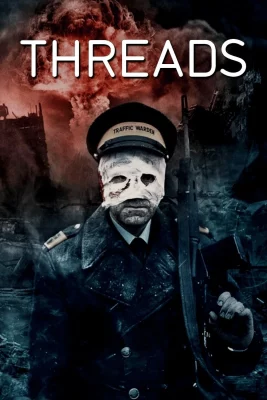 Threads
Director: Mick Jackson
BBC Network
Released: 09.23.1984
Let’s start the spooky season right… with some existential horror of the atomic holocaust! In the middle of global tensions at the height of the Cold War, Threads follows the Britannia city of Sheffield. The growing metropolitan area is a cut-from-reality replica, as we follow a young English couple in the midst of starting a life together. However, the dread of nuclear annihilation hangs in the balance, especially with news reports, and radio broadcasts squawking about conflicts in the Middle East. Soon, the city of Sheffield collapses into destruction and anarchy after a nuclear air strike destroys a nearby airbase showering a toxic cloud of fallout across Britain.
My apologies to my apocalypse-prepping readers, for the film is not all Nuka-Cola and Thunderdome brawls. Threads’ bleak and straight-to-the-facts tidbits that flash on-screen feel like a documentary of an event that has actually happened. Add this to the grim, ambiguous storytelling and it makes for a disturbing watch to sit through. It’s the hammered-in message to remind viewers that if nuclear war were to happen, no one is making it out. One minute, you’re hiding in the basement eating canned beans. The next, stray dogs are dragging your rotting corpse out of your bombed-out loft. —Alton Barnhart
Hangman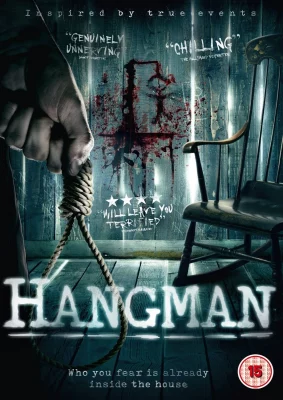
Director: Adam Mason
Hiding in the Attic
Released: 03.14.2015
Do you hear that? Is that… a low whispering in the chilly autumn wind? In true spooky noughties fashion, that is exactly how the 2015 sleeper horror flick Hangman found me. After hearing brief accounts of Hangman through secondhand (insert winky face here) testimonials and a smattering of quick honorable mentions on the interwebs, I had to dive deeper than just a quick Google search to find exactly what movie had freaked my close personal ghouls and goblins out. Hangman opens with a disturbing 911 call playing over some truly horrifying found footage of the aftermath of a home invasion, involving a young mother and her infant child. It quickly switches to the unknown assailant of our aforementioned crime, stalking couple Aaron (Jeremy Sisto, Clueless) and Amy (Kate Ashfield, Shaun of the Dead) and their two young children after they return home from a family vacation. Chaos ensues when the gang returns home and find that their home has been broken into while abroad. Unbeknownst to them, the Hangman (who never actually is named such), is frogging in their home waiting to strike while surveying the foursome with hidden cameras.
Hangman feels all too familiar to the type of sick, hidden fantasy type of student films I had to peer review from my creepy male peers during my college years. And no, that’s not a good thing. Hangman’s obscurity and difficulty locating was intriguing and enticing to me at first, though it has very little plot and falls into ignorant depictions of mental illness. Despite having some well-executed chilling moments, this flick really has nothing going for it (despite having dreamboat Sisto as its lead). Save yourself the time and effort and just watch The Strangers again. —Yonni Uribe
 Climax
Director: Gaspar Noé
A24, Vice Films
Released: 03.01.2019
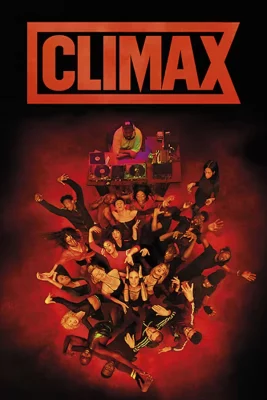
While not technically a Halloween-adjacent horror film, Climax rolls out vivid, gut-wrenching scenes that are likely to result in either a lot of half-finished streams or emotionally scarred viewers. The film takes place over one fateful night during which a troupe of French dancers gather to rehearse in a strangely decorated, warehouse-like building. Each of the dancers are shown to be naïve, self-obsessed artsy kids in their early 20s, who cavort, spin, gyrate and crump across a dirty, smudged, red concrete floor, while a glittering French flag decorates the background. Their side conversations are all about sex, drugs and, for the males, dominance. They revel in their youth and freedom, but the LSD that someone laces their sangria with quickly unveils the perils within. From the first mention of “I feel weird,” an already fragile atmosphere starts to unfold.
While this might be meant to show how quickly camaraderie inspired by fleeting sexual feelings can turn to aggression, mistrust and violence, I don’t think the film had much of a purpose besides holding up a twisted mirror to the audience and testing their stomachs. It teases you with potential meaning, hinting at concepts, but never exploring them enough to justify itself. The awe-inspiring nature of shock-auteur and creator Noé’s camera work and use of color may be enough incentive for him, but to me, it proves even more that he’s just as self-obsessed as the characters in Climax are with themselves at the beginning. Don’t do drugs, kids. –Kyle Forbush
 Veneno para las hadas
Director: Carlos Enrique Taboada
Instituto Mexicano de Cinematografía
Released: 10.02.1986
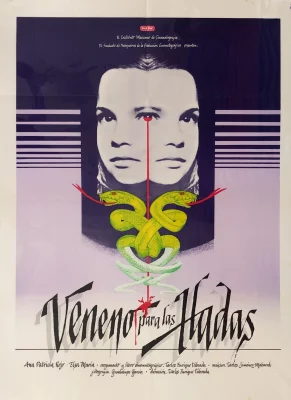
The world of Mexican cinema (and Mexican horror, more specifically) is one that rarely gets its flowers. Sure, people heap praise for films like Y tu mamá también and Amores perros, but outside critical darlings like Alfonso Cuarón, Guillermo del Toro and Alejandro González Iñárritu, you don’t hear much about other Mexican directors specializing in different genres. Carlos Enrique Taboada, for example, was known as “el duque del terror” amongst the Mexican film community. His mark on the genre has been so influential that even directors like del Toro have cited him as a source of inspiration, and some of his films like Hasta el viento tiene miedo have been remade. However, what has been considered his magnum opus is Veneno para las hadas — a film I struggled for years to find, and for some reason, is now available on Tubi.
The movie follows two girls, rich-girl Flavia (Elsa María Gutiérrez) and the pathological liar, Verónica (Ana Patricia Rojo), who claims to be a witch in disguise. The two form an uneasy friendship, as Verónica pushes the timid Flavia around to help with spells and gather the ingredients to create a poison for fairies. The film in some ways reminded me of a tamer Heavenly Creatures, especially when it comes to the friendship of the two girls, albeit way less obsessive. Taboada also makes the artistic decision not to show the faces of the adults, only revealing them for shocking moments. There is a certain cheesy charm to this movie. The acting is only slightly better than La rosa de Guadalupe, and while not at all scary, perhaps the true horror comes from the unhealthy dynamic of this controlling friendship. Although, it does have quite a shocking ending and some cool visuals, too. Seeing how Taboada plays with lights and shadows showed me why he is so well-regarded. —Angela Garcia
 Phantom of the Paradise
Director: Brian De Palma
Harbor Productions, 20th Century Fox
Released: 11.01.1974
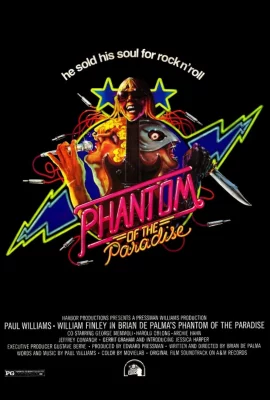
I used to direct movies (videos is the right term) in high school. I hadn’t seen a single film by Brian De Palma, which is why I was so bad at it. I firmly believe that if you want to be any good at making movies, you have to love De Palma. His horror style is addictive. He’s as exploitative as Bob Fosse and can build tension that would make Hitchcock puke. I could be talking about Body Double or Carrie or Blow Out, but I’ve picked Phantom of the Paradise because it’s a smart mashup of old, campy horror stories. It’s often forgotten because Rocky Horror Picture Show is the definitive musical parody. If I’m being honest, though, the music is better — how do you compete with Paul Williams?
The story is more engaging and digs deeper into the history of the macabre, and somehow, it’s more visually iconic. Phantom of the Paradise is about Winslow Leach, a music writer trying to get his rock-opera adaptation of Faust in front of music titan Swan (Williams), who takes Leach’s work and has him framed for copyright infringement. Months later, a masked, semi-mechanical man haunts Swan’s new theater, The Paradise, slowly killing off members of his new production of Faust. What I love about De Palma, and about this film in particular, is how campy he is. He loves making things silly and overblown. Don’t be confused, though, for this isn’t unintentional campiness. We’re not excusing bad filmmaking by calling it campy. De Palma wrote a love letter to camp! —B. Allan Johnson
Tucker & Dale vs. Evil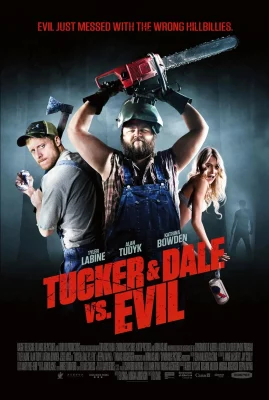
Director: Eli Craig
Eden Rock Media, Kintop Pictures, Urban Island, Looby Lou
Released: 01.22.2010
Horror comedies get a bad rap. It’s hard to make your audience laugh and scream and laugh again, but both genres are all about slowly building up tension and then suddenly releasing it — and when it’s done well, it’s divine. Most people know classics like The Cabin in the Woods, Shaun of the Dead or more recently, Bodies Bodies Bodies. But to me, the quintessential slasher parody is Tucker & Dale vs. Evil.
Two hillbillies (Tyler Labine, Alan Tudyk) are just trying to enjoy a relaxing vacation in their new West Virginia cabin when a group of clueless college kids camping nearby start to believe the pair are maniacal killers. The elements of deception, disputes, mistaken identities and slapstick humor all centered around two young lovers overcoming obstacles make the plot downright Shakespearean. It is equal parts silly and smart — each character is charmingly dumb, with the exception of the ferociously hateful Chad (Jesse Moss). Allison (Katrina Bowden) is a refreshing heroine whose effort to reconcile the two paranoid groups is valiant and amusing. More than just a hilarious take on horror tropes, the bromance between Tucker and Dale is surprisingly tender, and the satire on how political prejudices can lead to fatal misunderstandings is biting. —Asha Pruitt
 The Wave
Director: Alex Grasshoff
ABC Network
Released: 10.04.1981
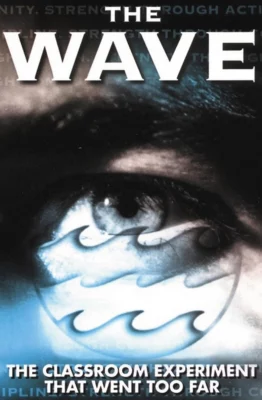
I’m not a big horror fan, and part of the reason for that is that since I’ve been an adult, I have had a very hard time getting scared by movies. This was not the case when I was young, however, and The Wave terrified me. A made-for-television movie based on real life events, The Wave stars Bruce Davison (The Crucible, X-Men) as Ben Ross, a social studies teacher who wants to show his class how ordinary Germans were so easily caught up in the fervor of the rise of Hitler, and we’re not only able to embrace fascism but allow or even participate in atrocities. He creates “The Wave,” a classroom movement built on strength, unity and discipline. At first, it feels like a game — slogans, salutes and sense of common purpose and belonging. But soon, students start policing each other, shunning outsiders and surrendering their individuality. What began as a lesson quickly spirals into fanaticism, and even Ross struggles to rein it in.
While the melodramatic and even cheesy tone of The Wave hasn’t aged very well, the subject matter is not only as riveting as it was then, it’s a good deal more so. There are no supernatural forces at play — only teenagers, swept up in the intoxicating feeling of power and belonging. Watching ordinary kids morph into zealots is more disturbing than any Hollywood horror, and as sobering as it was in the ‘80s as a cautionary tale, it’s flat out terrifying today. In an age of political polarization, social media echo chambers and rising authoritarian movements, The Wave resonates as both prophecy and warning that we either missed or simply forgot. It captures the fragility of democracy, the seductively reassuring power power of conformity and how quickly freedom and decency can be abandoned in favor of a well-packaged, trumped up lie. —Patrick Gibbs
Spookley the Square Pumpkin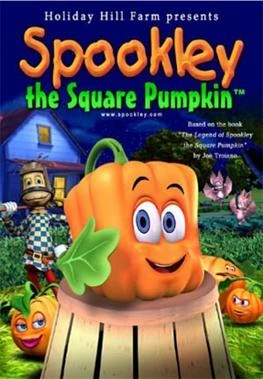
Director: Bernie Denk
Holiday Hill Farm
Released: 10.30.2004
This movie came to my attention at a pre-game before a Big Time Rush concert (yes, I am just that cool). I was chatting with my friends Paige and Sheldon when I noticed that there were not one, but multiple stuffies on their dining room table in the shape of a square pumpkin. When I asked, “What is this?” I got a look like I just asked them who Michael Jackson or LeBron James is. It was quickly explained to me that the small creature in my hands was, in fact, Spookley the Square Pumpkin. “You know, Spookley of the attached book and movie series fame.” I sat there and had a long look at myself and said, “I don’t know, but now I certainly would like to!” The runtime of this movie is a succinct 48 minutes — not exactly a Martin Scorsese feature — and has a story that consists of three main components:
- Spookley is ostracized for his unusual shape.
- Spookley is given a lesson in body acceptance by three spiders, Edgar, Allan and Poe.
- A storm blows all the roundies towards the river and only Spookley is able to save them because of his unusual shape.
Again, not a Scorsese film, but more tenable than pretty much anything from Steven Seagal. I would say that this movie was just simple, clean, family fun. Would I buy multiple plushies as well as a DVD for it? Not exactly, but it does make me nostalgic for that classically poor 3D animations of the early 2000s, and that counts for something. —Cam Elliott
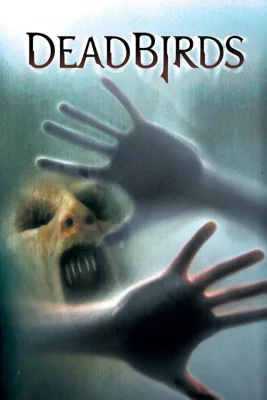 Dead Birds
Director: Alex Turner
Silver Nitrate, Dead Birds Films
Released: 02.13.2005
Plucked from the horror bargain shelf at the back of the Taylorsville Graywhale Entertainment, Dead Birds initially got my attention for its star, Henry Thomas (E.T. the Extra-Terrestrial), and the heinously vague tagline: “There are worse things than dying.” What I didn’t know was that it also starred Michael Shannon (The Shape of Water) and was shot by one of my favorite cinematographers, Steve Yedlin (Knives Out). Unfortunately, not even their talents could save what was to come. Dead Birds follows a ragtag group of thieves posing as Confederate soldiers amid the Civil War. After robbing a bank on the reused sets of Big Fish, the group holes up in an old plantation house only to find it full of ghosts, demons and ghost-demon creatures. (Their taxonomy is unclear.) What unfolds is a story made up of some chilling moments that ultimately result in a baffling amount of nothing.
Dead Birds feels like it’s made for your friend’s dad to watch on TNT in 2006 between commercials for Carl’s Jr., and I kind of mean that as a compliment. Isaiah Washington plays his part with enough badass gravitas to endear you to him. (Until he gets jumpscared and becomes magic wisps. Nobody else became wisps. I could not reasonably explain to you why he became wisps.) Also, Donna Biscoe steals the show in one scene as the ghost of a tortured enslaved woman, providing the film its best performance and its best scare. As for the titular stars… well… I’ll be real with you: There’s only one dead bird. In all, though, while there may be things worse than dying, watching Dead Birds isn’t technically one of them. —Max Bennion
Skinned Deep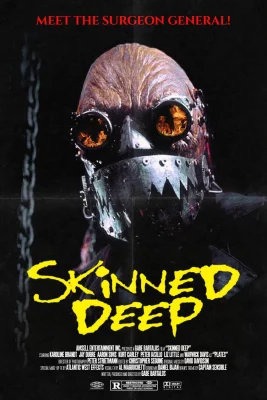
Director: Gabriel Bartalos
Center Ring Entertainment
Released: 02.14.2004
My initial pick for Secondhand Screenings was going to be Netflix’s Velvet Buzzsaw. Although I would love to give a full synopsis of the film and how the art world milks every creative mind bone dry, it was only when I took a quick jaunt around the dollar store that I reconnected with this lost slasher from my teenage years. I first discovered Skinned Deep in a hamster cage bedroom, during a 3 a.m. double feature after watching Fair Haired Child. I remembered its B-grade filmmaking was laughably gut-bursting and its phantasmagorical, grindhouse visuals made me feel (and I’m using the correct verbage on this) “fucked up.” However, does the film hold up after all these years? Wellllllll….
Skinned Deep focuses on our plank-of-wood lead, Tina Rockwell (Karoline Brandt). What starts out as a family road trip across the country hits a dead end when her parents and brother are slaughtered by a family of deranged maniacs. The cast of killers is absolutely bizarre, with the looming bear trap-masked “Surgeon General” and Warwick Davis playing a jittery psychopath whose weapon of choice is a stack of dinner plates. The whole movie honors the exploitative campiness of ‘80s flicks, with the DIY house of horror looking like H. H. Holmes’ hotel if he worked at Dreamscapes. So if you can withstand a few deadpan performances and a couple of jokes that have aged poorly, I could compare it to the likings of Troll 2. Nonetheless, Skinned Deep has disappeared into obscurity. —Alton Barnhart
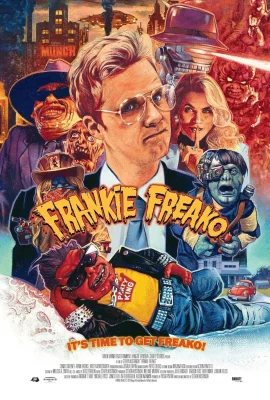 Frankie Freako
Director: Steven Kostanski
Hangar 18 Media
Released: 10.04.2024
1-800-SLUGFRK, How can I assist you today? Oh, you’re looking for 85 minutes of pure ‘80s nostalgia and gremlin, goblin, lil’ freak bitch fun? Well caller, do I have the Secondhand Screenings pick for you! Frankie Freako is a fun little chaotic exercise of a throwback by Astron-6’s very own Steven Kostanski (The Void, Psycho Goreman).
This flick follows Conor (Conor Sweeney, V/H/S/94, Psycho Goreman), the epitome of a milquetoast white man, left alone at home for the weekend after being berated by his employer and his “cool ‘80s artist” wife for being a boring work yuppie. Deciding to prove the haters wrong, Conor calls a party line he’s seen ads for late at night. Little did he know that this would invite a plethora of unwanted, ugly little house guests over for the party of a lifetime! Let’s not forget the regime-overthrowing and fart jokes galore that follow. While Kostanski usually shines in the FX department when he’s not directing, Frankie Freako is without a doubt his best screenplay to date (yes, even better than The Void. Yes, even with the fart jokes). The story is woven together immaculately, despite its one downfall being that lull you find in most films from the time period it draws inspiration from. However, Frankie Freako feels like it teleported straight from the ‘80s into 2024 and should be the blueprint for anyone who wants to make their own nostalgia-inspired flick. So treat yourself and let your freak flag fly, baby — watch Frankie Freako on the nearest streaming platform to you! —Yonni Uribe
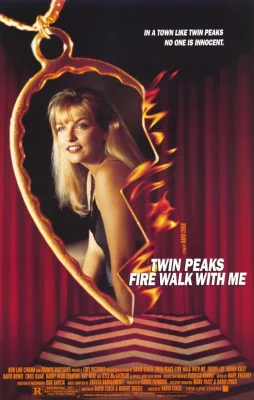 Twin Peaks: Fire Walk with Me
Director: David Lynch
New Line Cinema, Twin Peaks Productions
Released: 08.28.1992
I recently finished the original two seasons of Lynch’s made-for-television opus, Twin Peaks. It was maybe my fifth watch-through, and this time was with my sister Julia, who hadn’t ever seen all of it. Of course, I urged her along because to not experience that series finale is a missed opportunity for anyone who’s ever started the show. It launches you head-first into a metaphysical, purely Lynchian realm bursting at the seams with indecipherable symbolism, terrifying in its incomprehensibility. Up to that point, it had merely skirted dangerously along the backdrop of an otherwise near-harmless soap opera about a small town and the cycle of events that a homecoming queen’s murder catalyzed.
That final episode, as it turns out, was just scratching the surface of Lynch’s nightmarish vision. The prequel, Fire Walk with Me, is a reckoning with loose ends, as he tells a more complete story that becomes simultaneously more difficult to grasp. The film’s ensemble cast includes Kyle MacLachlan as Dale Cooper, late Lynch favorite Harry Dean Stanton, Frank A. Silva as the freakish demon Bob and David Bowie as a Southern gentleman for some reason, among others, but no one has as much screen time as Laura Palmer (Sheryl Lee). Pursued by demons of the trauma-induced kind and the supernatural variety (or both at the same time), Laura’s story is heartbreaking, and culminates in a mind-bending climax of horror that humbled me in a way that only Lynch, with his unnerving art, has ever been capable of. —Kyle Forbush
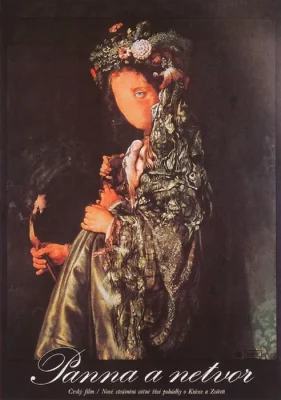 Beauty and the Beast (Panna a Netvor)
Director: Juraj Herz
Barrandov Studios
Released: 03.1978
Fairy tales and horror just go hand-in-hand. The fantastical elements, the naïveté of the characters, the dark situations they find themselves in — all in the favor of teaching some sort of twisted lesson. Perhaps it is the horror, just as much as the fantasy, that allows these stories to endure and be adapted over and over again. Beauty and the Beast is one such example. With so many adaptations, it was only a matter of time before someone honed in on the more terrifying aspects of the story (I’m glad it happened way before all these cheap slasher movies that are using public domain Disney characters.)
In 1978, Slovak director Juraj Herz released his gothic reinterpretation of Beauty and the Beast. The story is the one we all know. A merchant (Václav Voska) stumbles upon a decrepit enchanted castle after getting lost in the woods. He is given shelter and jewels, but while trying to pick a rose for his youngest, loveliest daughter Julie (Zdena Studenková), he angers the Beast (Vlastimil Harapes) of the castle. The Beast allows the merchant to return home and complete his affairs. Upon hearing of her father’s ordeal, Julie goes to the Beast’s castle in her father’s place. It is there that an Eros-and-Psyche-esque romance blooms.
To start off, this film is gorgeous. The sets are lavish, yet they feel dilapidated and haunted, adding to the gothic element. Not surprising considering Herz was a scene designer. The costumes are extravagant, but I have to highlight the makeup for the Beast. The detail and texture is both grotesque and remarkable. It is a wonder to look at and the design is so unique as well. Opting to make the Beast more bird-like helps to distinguish him from other adaptations like Cocteau’s more feline-adjacent design. This film truly shows both the beautiful side and the beastly side of fairy tales. For fans of films like The Ugly Stepsister, this film will definitely deliver on fantasy horror. —Angela Garcia
Re-Animator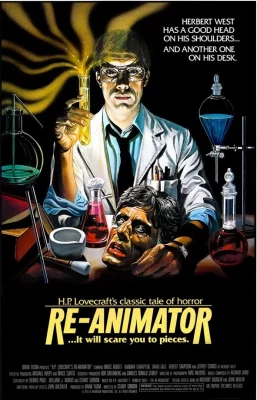
Director: Stuart Gordon
Re-Animator Productions, Empire International Pictures
Released: 10.18.1985
Horror-philes have it rough. Every Halloween they get a new line up of shit because horror fans (more so than any genre of fan) will endure low-budget, low-risk, exploitative, jump scare-riddled films performed by the worst of the C-list for a chance of finding a hidden gem. Sometimes — once every 20 years or so — they find a pretty fun, junk film. Re-Animator is one such junk film. Based on the magazine serial by H.P Lovecraft, Re-Animator is about a mad scientist who discovers a serum that revives the dead, only the dead’s not too happy being reborn (“Birth is always painful,” says Herbert West).
Lovecraft reportedly hated working on Re-animator, only doing so because the magazine Home Brew was giving him five bucks for each installment. While the original work is regarded as a racist, poorly-written, generic man-is-monster story, the 1985 adaptation is thought of more favorably. It’s stuck in terrible ‘80s sexism. The lead female character is there to scream helplessly and be stripped nude, but looking past that, there’s a pretty iconic, trashy horror film. Herbert West, played well by Jeffery Combs, carries around glowing, plastic vials of his reagent, likely inspiring the titular substance in The Substance from last year. A man is brutally decapitated and is reanimated, forcing the body to carry around the head and refill his tray with blood. Mutilated, naked corpses throw around our protagonists. All of it is practical — reportedly using 24 gallons of fake blood and an actual dead cat. It is a wild film that really picks up in the second half. Fortunately, it’s only 89 minutes long, so you won’t have to wait long to see the wildest scene in the film — a scene so outrageous it led to the divorce of actor David Gale. —B. Allan Johnson
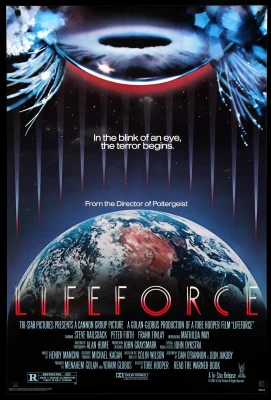 Lifeforce
Director: Tobe Hooper
The Cannon Group, Tri-Star Pictures
Released: 06.21.1985
Few films swing for the fences with the audacity of Lifeforce. Directed by Tobe Hooper (The Texas Chain Saw Massacre and Poltergeist), this 1985 sci-fi horror film begins with astronauts finding alien beings aboard Halley’s Comet and ends with London engulfed in vampiric Armageddon. Along the way, it serves up lots of gratuitous female nudity, some gothic horror, more female nudity, zombie mayhem and an extra helping of female nudity for good measure.
At its heart is Mathilda May as the mysterious alien “Space Girl.” She spends nearly the entire film completely nude, drifting through scenes with an eerie calm that is seductive, uncomfortable and just plain weird. Her performance, paired with the film’s overblown seriousness, makes for a hypnotic cocktail.
Camp thrives on excess, and Lifeforce delivers: Shakespearean speeches about cosmic destiny, Patrick Stewart possessed by a space vampire, corpses exploding into showers of blue energy and a finale where London looks like the Book of Revelation illustrated like a heavy-metal album cover. It’s wild, chaotic and completely unafraid of looking silly.
That’s the secret of its enduring appeal. Horror fans love it for the apocalyptic dread, sci-fi fans revel in its pulp grandeur and fans cherish its unintentional comedy and bizarre attempts at drama. Lifeforce isn’t just a film — it’s an experience, the kind that makes you laugh, gasp and wonder how on Earth (or in space) this ever got made.
Nearly 40 years later, it lives on because few films so boldly dare to mix absolutely nothing with too much of everything. Gloriously over-the-top, Lifeforce is a cult classic that proves sometimes the best way to confront our fears is to embrace the absurd. —Patrick Gibbs
The Bye Bye Man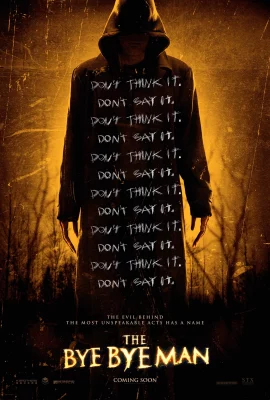
Director: Stacy Title
STX Entertainment
Released: 01.13.2017
Wowie — this was a difficult one to sit through. Not because of the gore, not because of any sub-par shot composition, but sheerly because of how boring it was! The Bye Bye Man (with its incredibly stupid title) is best described as a horror movie that you’d see in the background of another, better horror movie. From beginning to end, it is as predictable as a film gets, and not because it follows in the footsteps of the masters but because it follows the structure of a story told by a misremembering boy scout at the fireside. It follows three college kids who move into a house together outside of Madison, Wisconsin (as if the Midwest isn’t scary enough). Elliot (Douglas Smith, Ouija, Die Alone) and his girlfriend, Sasha (Cressida Bonas, White House Farm) move in with Elliot’s childhood friend John (Lucien Laviscount, Emily in Paris). The house is immediately shown to be decrepit and scary, and weird happenings eventually lead Elliot to find the words “The Bye Bye Man” written on the underside of a drawer. The whole schtick is once you hear (or read) his name, he haunts you and tricks you into murdering the people around you.
The Bye Bye Man himself is dumbfoundingly played by the legendary award-winning Doug Jones (The Shape of Water, Hellboy), which actually kind of makes sense because I think they could only pay for the five minutes of screentime he lends the film. The movie itself looks fine, even pretty good at times, but the writing and the acting just leads it to a point of bad-past-ridicule. At least when I have reviewed the dreadful makings of Steven Seagal in the past, I was half-entertained by watching that apish man pretend to be a tough guy. The most entertaining part of this movie was when my friend called me in the middle of watching it and I told him that I would have gotten more of a thrill out of breaking both of my legs. Some movies are so bad they’re good, others are so bad that they’re so bad… this is one of them. Save yourself the time and watch Spookley the Square Pumpkin. —Cam Elliott
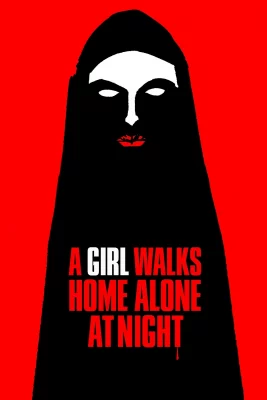 A Girl Walks Home Alone at Night
Director: Ana Lily Amirpour
SpectreVision, Logan Pictures, Black Light District, Say Ahh Productions
Released: 01.19.2014
Premiering at Sundance in 2014 at the height of the vampire craze, A Girl Walks Home Alone at Night takes every bloodsucking stereotype and turns it on its head, subverting the expectations of the title. Sheila Vand is an unnamed vigilante known as The Girl who prowls the streets of Bad City, killing the bad (the ruthless, drug-dealing pimp Saeed) and sparing the good (the hardworking — and hot — blue collar man Arash).
Influenced in equal parts by spaghetti Westerns, neo-noirs, Iranian New Wave cinema and teen rom-coms, A Girl Walks Home Alone at Night examines the mythology of the vampire, toying with the relationship between fear and desire. It’s a bizarre pastiche of genres, but when you see a woman skateboarding down the dark street of a ghost town, her chador billowing in the wind as Federale plays, you understand why it works. In one scene that feels specifically engineered to go viral on Tumblr, tension builds between The Girl and Arash (ironically dressed as Dracula after a costume party) as the needle drops on her record player and we hear “Death” by White Lies, culminating in an almost-bite that feels more like an almost-kiss. Both earnestly romantic and explicitly political, A Girl Walks Home Alone at Night oozes everything I love in a film. —Asha Pruitt
The Lights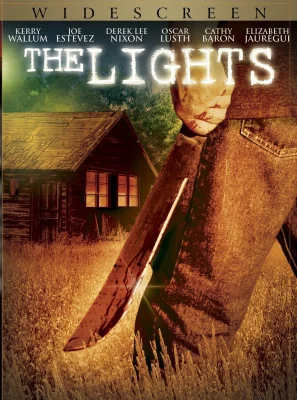
Director: John Sjogren
Fast Talk’n Productions, Illustre Entertainment
Released: 12.08.2009
The Lights kicks off with a husband throwing some spaghetti in the face of his cheating wife, seemingly killing her, as he begins a new career in serial murder. Is it because of his wife’s confession? Because of the titular mysterious lights that may or may not drive people bananas? Unclear. But every great slasher is only as good as its cast of victims, right? Unfortunately for The Lights, the victims feel more like high schoolers in their performance quality rather than convincing us they’re actually high schoolers. Though it’s clear that Derek Lee Nixon‘s Brad and Cathy Baron (Justified)’s Madison will be our final survivors from the beginning, they make far less of an impact than Oscar Lusth (Survivor)’s Steve Saunders whose unconvincingly delivered “smart guy facts” are consistently the one source of entertainment the film has to offer. (“Look at that sunset! You don’t see that everyday!” says Kelly. “It’s hard to see that any day in Austin, due to the density of the buildings in the downtown area,” remarks Steve.) Once Steve is killed, it’s kind of game over… if it weren’t for the film’s not-so-secret weapon. B-movie darling Joe Estevez plays a wacky sheriff whose “police car” is a shitty green sedan with a siren on top. He’s the kids’ only chance at rescue — and the film’s only chance at fun — until he’s killed off, too. Bummer!
The Lights is a direct-to-video slasher with all the visual stylings of an early YouTube video and it only gets more dull once the killing starts. I doubt even the sickest of B-movie sickos would find this cheap stab at horror worth a watch. In the meantime, I’ll continue to seek my bad 2000s horror movies from the studio side. —Max Bennion
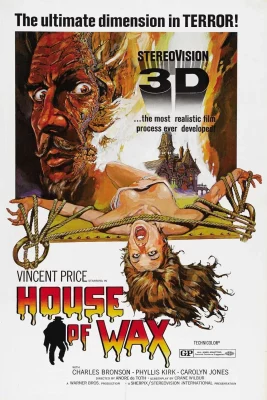 House of Wax
Director: André De Toth
Warner Brothers
Released: 04.10.1953
House of Wax has been labeled as a horror movie classic by critics, and I (in the limited critical capacity that I have) agree wholeheartedly. The film follows sculptor Henry Jarrod, played by Vincent Price (Edward Scissorhands), who begins the film by expressing a deep love for his wax figure museum. His business partner, Matthew (Roy Roberts, Tumbleweed), says the museum is a money pit and burns down the museum with Henry inside of it for the insurance. In the fire, Henry loses his sculptures, his museum and his mind. He emerges disfigured in a Phantom-of-the-Opera manner and seeks revenge on those who wronged him, as well as to rebuild his museum. He does both by killing his enemies and turning them into wax figures, MUAHAHA! His ultimate obsession is getting back his statue of Marie Antoinette, who looks precisely like leading lady Phyllis Kirk (Crime Wave) — and he is, of course, thwarted by the gruff Detective Brennan (Frank Lovejoy, The Hitchhiker).
Although the acting can be a little stiff or rushed at times, the story itself is really just a classically chilling concept with a perfect execution to match. This film doesn’t rely on the cheap tricks and bloody surprises; it relies on good set design, well-executed stunt work and great writing. Price plays the perfect deranged lunatic, and he’s so convincing while explaining his scheme that you may think, “Why not let this little weirdo have his museum?” This movie is just a thrilling watch all the way through, with writing that sticks the landing 60-odd years later. If you have an extra hour and a half this Halloween season, and you don’t care to watch another naked-teen gorefest, this movie is absolutely worth a watch. —Cam Elliott
MirrorMask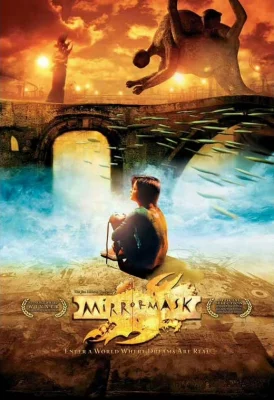
Director: Dave Mckean
Destination Films, The Jim Henson Company
Released: 09.30.2005
Once upon a midnight dreary, while I pondered, weak and weary, over many a quaint and curious volume of forgotten lore, MirrorMask came gently rapping (or is it tapping?) at my chamber door! In layman’s terms, dear reader, my beautiful dumbass cat, Edgar Allan Purr, knocked over my stack of DVDs (long missing their original cases) off my bookcase. Amidst the chaos upon the floor, the forgotten spiritual sequel to Jim Henson’s 1986 “fun for the family” pedo-fantasy Labyrinth gleamed up at me, sparking an instant re-watch and now this subsequent review!
MirrorMask started out as The Jim Henson Company’s attempt to make an actual, canonical sequel to Labyrinth. However, the direction changed as writer Neil Gaiman (insert sounds of disgust here) and director Dave McKean hopped aboard. Using Labyrinth as their guiding light for a new story they wanted to tell, MirrorMask follows a young girl named Helena (Stephanie Leonidas, Snatch) who has been dragged along by her parents to work at the circus. Every child’s dream, right? Think again! Helena finally gets her chance at leading a normal teenage life when her mother Joanne (Gina McKee, Phantom Thread) is required a hospital stay for a life-saving surgery. Though this doesn’t last long as her first night at Grandma’s leads to her entrapment in the City of Light. Assisted by a juggler named Valentine (Jason Barry, Titanic) Helena must find the MirrorMask and defeat the Princess of Shadows if she wants to return back to the real world and restore life to, not only the City of Light, but to the Queen of Life herself.
If you thought the original Labyrinth was a fever dream, MirrorMask cranks it to 11. The film has delicious, unintentionally horrific CGI paired with a Nine Inch Nails music video backdrop to form one of the most interesting worlds I’ve ever seen in the “dark fantasy” genre. Every frame looks like an actual Sandro Botticelli painting making this flick one hell of a visual treat, especially for something that came out 20 years ago! That being said, where the design soars and carries the film, the plot and pacing are kind of left in the dust. While the story itself isn’t as big of a clusterfuck as the synopsis makes it sounds, there’s just some heart that MirrorMask can’t recreate when compared to its spiritual predecessor. Though I can say with certainty, there is a Lynchian style of fun in its 101 minutes. —Yonni Uribe
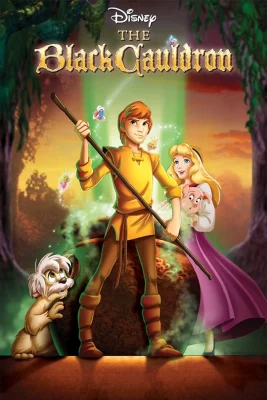 The Black Cauldron
Directors: Ted Berman, Richard Rich
Walt Disney Productions, Silver Screen Partners II
Released: 07.24.1985
Based on a children’s fantasy book series called The Chronicles of Prydain, The Black Cauldron is truly a Disney outlier. It follows Taran (Grant Bardsley), a bright-eyed kid who’s a total, generic knock-off twin of Peter Pan, dreaming of warriorhood. Taran is entrusted with the care of an oracular pig named Hen Wen, but he fails in his duties, as Hen Wen is traumatically pig-napped early on for her magical seer powers by a subhuman, self-styled monarch, The Horned King (John Hurt), the freakiest looking villain in Disney’s vast archives.
Taran embarks on a winding journey to rescue Hen Wen and vanquish the Horned King, adding outcasts and oddballs to his crew like a poorly thought-out D&D party. The first to join up is a small, furry, unclassifiable creature named Gurgi (John Byner), whose garbled voice and cowardly nature is unmistakably similar to Gollum. They also recruit a heroic, sharp-witted princess, a disgraced bard and several fairies, while going on to encounter bargaining witches, goblins, dragons, drunken, murderous grunts and an army of the dead.
Due to its bland protagonist, silly-at-best antics and stereotypical hero’s journey arc, I can see why this one may have gathered dust for some. But it has an irrefutable art to it, and a poignant mysticism expressed through gorgeous, gothic animation and dark magic colored by intense purples and deep burgundies. It definitely falls outside the typical bounds of secular Disney with its high fantasy and pagan imagery, and maybe that’s why it’s been somewhat forgotten: the suburban “Satanic Panic” it probably caused when the film came out. I’d say that’s more reason to give it a go. If you do, please let me know what you think Gurgi is. He plays a pivotal role near the end, yet I remain stupefied. —Kyle Forbush
Vampire Hunter D: Bloodlust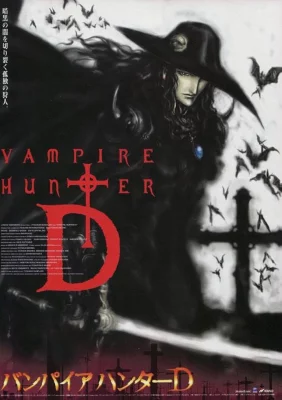
Director: Yoshiaki Kawajiri
Madhouse, BMG Funhouse
Released: 04.21.2001
Vampire Hunter D: Bloodlust is every dark romance fan’s gothic dreamscape. Adapted from an entry in Hideyuki Kikuchi’s still-ongoing light novel series, Vampire Hunter D, the film brings to life all the dark and decadent aspects that have made the concept of vampires so thrilling and enticing, while still adding its own little Western sci-fi and Lovecraftian twists.
In the far post-nuclear future, the world has mostly become a wasteland. Vampires, humans and supernatural creatures of all kinds exist in this world. One night, a vampire known as Baron Meier Link kidnaps a young woman named Charlotte Elbourne. Her father hires renowned vampire hunter, D, a dhampir — a half-human, half-vampire hybrid — to bring Charlotte back, whether that be dead or alive. Accompanied by the wise-cracking, exposition-dumping homunculus that dwells in his left hand and his cyborg horse, D sets off in search for the girl encountering supernatural creatures and haunted castles, while simultaneously being pursued by a rival gang of hunters who are also after the reward.
Blessed with all the beauty and strengths of vampires and none of their weaknesses, D’s curse is that he can never be fully accepted by either humans or vampires. It’s the cliché tragic story that we are all too familiar with, but these themes of isolation do give the story a soul. I also can’t talk about this movie without giving props to the English dub and noting that this film was originally released in English as the first language, which helps in make the voice acting and dialogue feel natural. However, what truly entrances the audience is the stunning animation, the deep reds, obsidian blacks and marble whites held together by the delicate and intricate linework are a sight to behold especially when we enter Carmilla’s castle. While we may never again experience the beauty of Madhouse’s stunning hand-drawn cell animation, we can only hope that the recently announced Phantom of the Opera anime can at least capture half of the darkly romantic atmosphere this film has. —Angela Garcia
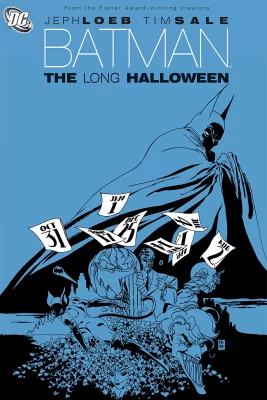 Batman: The Long Halloween
Writer: Jeph Loeb
Illustrator: Tim Sale
DC Comics
Released: 12.1996
I was in high school when I started reading Batman (I wasn’t very popular) and I started where everyone tells you to start: Frank Miller’s Batman: Year One. Year One isn’t really a Batman comic, though. Sure, it’s about Batman, but it’s emphasis is on a gritty, film noir origin story where Gotham’s mafia is the threat as opposed to a killer clown or a big crocodile. So where do you go to get an “authentic” Batman story? Look no further than Jeph Loeb and Tim Sale’s Batman: The Long Halloween, the (kind of) year two — don’t worry about Mike W. Barr’s Year Two, just watch Mask of the Phantasm.
DC needed a bridge between Miller’s gritty Batman to a Batman that can have a Robin and fight the Joker, and Loeb delivers just that. The book starts at the wedding of the Falcone crime family where Carmine Falcone (played by John Tutoro in The Batman) strikes deals in a smoky back room. It’s a total riff on The Godfather that becomes a year-long murder mystery. Someone is bumping off members of the Falcone family on holidays, and it’s up to Batman, James Gordon and a weary Harvey Dent to figure out the identity of the Holiday Killer. Loeb is famous for his heavy use of narration, and his inner monologue for Batman is spot on. Meanwhile, Sale might be the greatest artist to ever grace Batman. His style is cartoonish and iconic, famous for his two-page spreads. Pages switch from perfect color to black-and-white film noir as Holiday paints the scene with crimson blood. Sale has since passed, but his work on this series and on Superman For All Seasons has set him firmly as my favorite comic book artist. Without Sale, Batman would be less. —B. Allan Johnson
Marble Hornets: The Complete Series 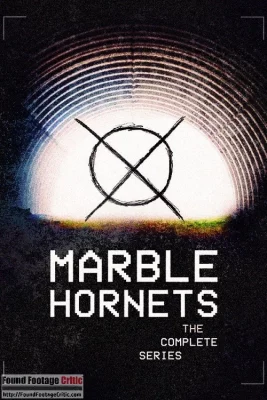
Director: Joseph DeLage, Troy Wagner
THAC
Released: 06.20.2009
As a child, what I feared most was the Universal Studios Backlot Tour and my basement (I have recordings that proves it was haunted). As an adult, it’s the existential dread of never living up to my full potential in a dwindling society, built off a system designed to physically, emotionally, mentally and financially eat you alive… ANYWAY! However, as a teenager, as strong and mighty as a young adolescent can pretend to be, what feared me was Slender Man. From collecting the mad ramblings of scribbles in the PC game Slender: The Eight Pages to keeping myself up late reading Creepypastas, the faceless, eldritch horror in a suit and tie gripped me with his many whipping tentacles. He was the new-age Boogeyman, right before the peak of killer clowns showing up in neighborhoods around the country. And the only sense of media that added fuel to this paranoid fire was the collection of “found footage” known as Marble Hornets.
This short web series consisting of 87 video entries, not including the revamped Rosswood or the many spinoff channels like totheark, centers around a student film gone off the rails. When the creator abruptly ends production and disappears without any mention, his friend Jay begins an investigation with the answer lying somewhere in the reels of the unfinished film. What follows is a malevolent entity known as “The Operator” that continues to stalk and attack the young man for his malicious entertainment. With a do-it-yourself guerilla filmmaking style and moments of sheer intensity, the series still sends a chill down my spine every time I watch it. It’s less about gore and more about the unnerving feeling that you’re always being watched… by a evil presence with no eyes. ⦻⦻ —Alton Barnhart
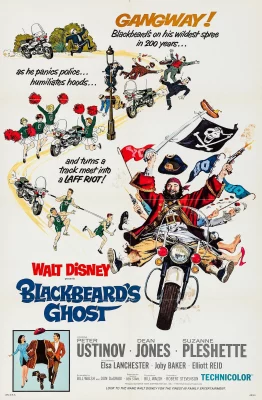 Blackbeard’s Ghost
Director: Robert Stevenson
Walt Disney Productions
Released: 02.08.1968
Blackbeard’s Ghost is a long time favorite that starts off with just enough spooky atmosphere that it gave me chills as a kid, but this lighthearted Disney flick provides far more laughs than scares. Dean Jones plays Steve Walker, a track coach who takes a job in the coastal town of Godolphin. Soon after arriving, he checks into the local inn, ran by a group of kindly elderly women. The inn, however, is under threat from a crooked developer who wants the land. While exploring the inn, Steve accidentally summons the ghost of the notorious pirate Blackbeard, played with gleeful energy by Peter Ustinov.
Unlike his fearsome reputation, this Blackbeard is a bumbling, blustery spirit cursed to wander until he performs one good deed. Invisible to everyone but Steve, Blackbeard complicates his life with wild antics, rowdy drinking songs, and chaotic interference at a track meet. Despite their constant bickering, the two form an unlikely alliance, with Steve trying to keep his sanity and Blackbeard determined to help the old ladies save their inn. Filled with slapstick comedy, ghostly tricks, and classic Disney charm, Blackbeard’s Ghost thrives on its top notch comedy duo, as Jones’ affable straight-man performance is the perfect foil for Ustinov’s larger-than-life comic turn. —Patrick Gibbs
An American Haunting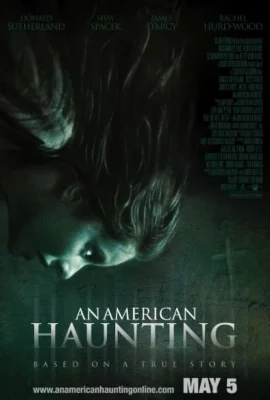
Director: Courtney Solomon
After Dark Films, Allan Zeman Productions, Midsummer Films, Remstar Productions
Released: 05.05.2006
The 2000s were a hotbed for bad horror. These horror films range from “so bad they’re good” to “so bad they’re unwatchable,” but it seems an unlucky few are of the kind that leave a bad taste in your mouth for hours after the credits roll. An American Haunting is one of those few. Directed by Courtney Solomon (Dungeons & Dragons — not the good one), the film unravels the story of the Bell family, some old rich Southern types in 1818 Tennessee. Donald Sutherland (Pride & Prejudice, Invasion of the Body Snatchers) and Sissy Spacek (Carrie) play John and Lucy respectively, parents to Betsy (Rachel Hurd-Wood) who’s being haunted by an invisible spectre that may or may not be the result of a local witch’s curse.
But it’s not exactly The Exorcist we’re working with here. When Betsy gets dangled in the air and slapped a dozen times by one or two repeating sound effects, you don’t feel horrified so much as humored. Worse yet, much of the movie’s scares take place in that same bedroom with that same set of poltergeist hijinx, all based around Betsy. Perhaps if the editing wasn’t so jarring, the pacing so confoundingly unclear, it would feel less like the audience is in some sort of dull purgatory, but alas… With shockingly weak performances from Sutherland and Spacek and a catastrophic attempt at a Shyamalan-esque twist based around Betsy’s sexual trauma to round out the story, I can think of practically no redeeming quality to the film. No, not even the carriage flip in the film’s third act. Color me astounded that An American Haunting stayed in the top ten films at the U.S. box office for six weeks. —Max Bennion
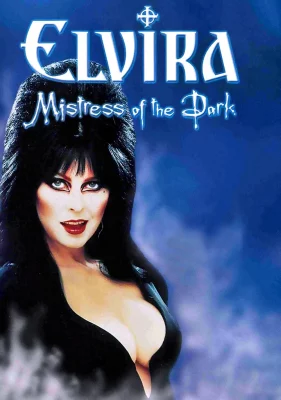 Elvira: Mistress of the Dark
Director: James Signorelli
New World Pictures, NBC Productions
Released: 09.30.1988
Legendary horror host Elvira, created by the ingenious Cassandra Peterson, is the sexy goth girl bimbo blueprint. Her debut film Elvira: Mistress of the Dark is a raunchy comedy with boob jokes for days, overflowing with corny one-liners and over-the-top visual gags. When I saw that my favorite body horror comedian Sarah Squirm called it a “perfect movie” on Letterboxd, I added it to my watchlist immediately, and boy did it deliver. Elvira inherits a haunted house and recipe book (surprise! it’s a spellbook) from her deceased great-aunt, a closet witch, and must defend herself and her powers from the conservative town members and her nefarious great-uncle.
The film garnered Peterson a Razzie Award nomination for Worst Actress, though the consensus today is that her performance was brilliant and hilarious — somewhere between a gothic Amelia Bedelia and a crass Pee-wee Herman who summons a swamp creature in a casserole dish and stuns her enemies with a stiletto to the forehead. But it wouldn’t be a camp classic without the cast of incredible character actors, including Edie McClurg (Ferris Bueller’s Day Off) as the prudish town council leader Chastity Pariah, Kurt Fuller (Scary Movie, Psych) as the cartoonishly slimy realtor Mr. Glotter, and the miniature poodle Binnie as Algonquin, Elvira’s familiar affectionately nicknamed Gonk. —Asha Pruitt
Blade 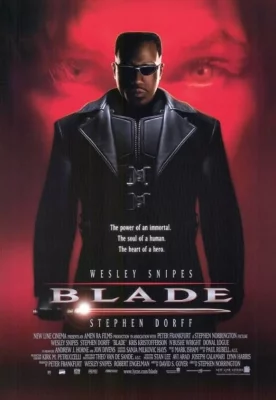
Director: Stephen Norrington
New Line Cinema
Released: 08.19.1998
A film dripping with ‘90s goth nostalgia and a hint of cyberpunk vibes is where you find a protagonist adorned in Oakley hater-blockers and a leather trench coat. Instead of reaching for a blue or red pill, this sword-wielding day walker was pulled from the half-toned pages of Marvel comics into the silver screen a year earlier than the “chosen one.” What’s black on black and spills red all over? BLADE, of course! Wesley Snipes plays a hybrid vampire-human with all of the strengths of a vampire but none of their weaknesses, allowing him to walk in daylight like a normal human — here to tell us, “You better wake up. The world you live in is a sugar-coated topping. There is another world beneath it. The real world.” His only Achilles heel is brought forth by a thirst for blood while out hunting down, slicing, stabbing and turning vampires to smoldering ash with weapons: His gruff, hard-edged, human father figure Abraham Whistler played by the country artist and lesser-recognized Highwayman Kris Kristofferson.
I could go on about the plot of the film, but honestly it’s a kick-ass vampire hunter flick with enticing twists and turns piled upon one or two new vampire story concepts. I’ve watched Blade every two or three years for about two decades and it always holds up, despite the horde of one-liners. Has time forgotten that Blade is not only a vampire movie? The film’s veins run deep with great martial arts (Snipes had trained since he was 12) and a top-notch soundtrack featuring a mixture of electronic music by Aphex Twin and hip-hop (I’m looking at those of you who have seen the blood rave scene). Don’t believe me? Watch the trailer, or better yet, just watch the film. Bonus: As Contributing Writer Angela Garcia said, if you’re a fan of Guillermo del Toro, then watch Blade II, since it was directed by him. Heed my warning, though: The third film can be skipped. —Joshua Joye
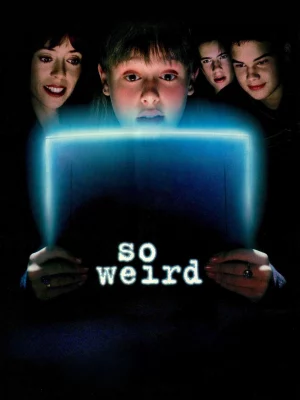 So Weird
Creator: Tom J. Astle
So Weird Productions, Sugar Entertainment Ltd., Disney
Released: 01.18.1999
It’s time to do The Skeleton Dance today, dear readers, as we take a look at the good ol’ Disney Channel for today’s spook-alicious Secondhand Screening. Disney (specifically the Disney Channel) has been no stranger to questionably dark, made-for-TV movies throughout the years. There’s rarely been a series to come from the powerhouse family programming network that traverses that same plane. Yes, I know one example might quickly come to your mind, but before Alex Hirsch graced our screens with Gravity Falls 12 (yes, we’re old now) years ago, Disney tried its hand at the “kid meets urban legends” genre before with the 65-episode series run of So Weird. The series follows little weird girl Fiona (or Fi, which she goes by for the duration of the series) as she and her brother follow their mother around on her rock and roll revival tour. Throughout all their stops, Fi encounters some sort of paranormal/supernatural entity that she must learn about from the web (as they called it in days of yore) and find a solution for whatever kid it’s currently tormenting. Think the Kidz Bop version of The X Files. This series covers everything, including more obscure and thought-provoking cryptids and phenomenons like a tulpas, will-o’-the-wisps, astral projection and even wormholes.
Watching this my first time through, I was jealous that little Yonni didn’t have this show growing up. What kid doesn’t want to learn how to use thought-form manifestation to conjure up a new best friend? All that being said, the only downside to So Weird is that it completely falls apart in its third season. Behind the scenes, issues led to the series losing its main actress and having to abandon all its overarching plotlines it set up in the first two seasons, leaving so many questions and leading to really just an overall boring and mind-numbing children’s show. However, don’t let that deter you from checking out the first two seasons of a decently made “fun for ages” TV show on Disney+ (insert vomiting and shitting emoji here). Viewer beware: You may be in for a mousey scare! —Yonni Uribe
Hellraiser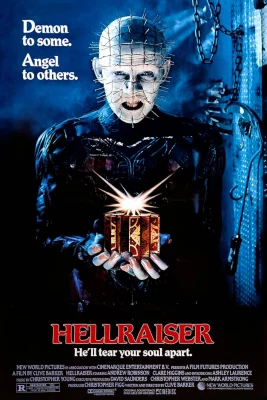
Director: Clive Barker
New World Pictures, Cinemarque Entertainment, Film Futures, Rivdel Films
Released: 09.18.1987
Hellraiser walked so The Substance could run. A film praised by Stephen King when it came out as “the future of horror,” the original is nowhere near as frightening by today’s standards. While it was likely inspirational to many creators, its cheap gore and quirky monsters are more like what you’d find in the already rifled-through and deserted back aisles of a Spirit Halloween these days. What carries the film is its originality — the type that only comes when inspired by a book. I read the novella by Clive Barker, The Hellbound Heart, during last year’s spooky season, and it’s far scarier (score one for the human imagination). But Barker also wrote the screenplay and directed the film, so not all was lost in translation. There are several fascinating concepts at work, including an examination of masochism through Frank Cotton (Sean Chapman), a darkly handsome, good-for-nothing drifter and sexual deviant who uses an evil Rubik’s cube (or mysterious puzzle box) to summon the Cenobites, demons who prey on mortals by fulfilling their urge for pleasure through pain. There’s also lust and betrayal in Julia (Clare Higgins), whose clandestine pining for her brother-in-law Frank reaches literally murderous levels of amorality. Then there’s Julia’s stepdaughter Kirsty (Ashley Laurence), the only innocent one, who gets unwittingly tangled in the dangerous web of violence woven by Frank and Julia. These are actual characters, not hollowed-out, two-dimensional crash test dummies that populate many modern, made-for-mass-consumption horror flicks.
I am somewhat disappointed that the film didn’t unravel more of the actual supernatural events guiding the plot, but I see how a little bit of mystery works as a plot device. The unknown is as scary as the fate of Julia’s hapless victims. You find yourself wondering how anyone will make it out alive and if death is really the worst that can happen. With a few memorable one-liners like “Jesus wept” thrown in for good measure, Hellraiser is campy and enjoyable, a deft intertwining of pain and pleasure, much like the sadomasochistic torture that the Cenobites themselves enjoy so thoroughly. —Kyle Forbush
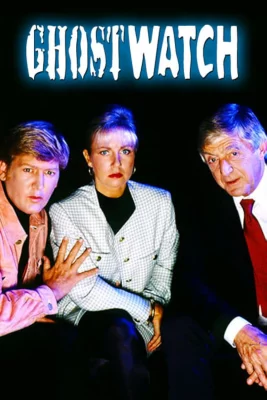 Ghostwatch
Director: Lesley Manning
BBC Network
Released: 10.31.2025
According to urban legend, on October 30, 1938, hysteria swept through the country as a then 23-year-old Orson Welles directed a live radio broadcast of a reading of H.G. Wells’ War of the Worlds. Utilizing a large cast and fake radio failures, listeners who had not heard Welles’ disclaimer of the reading being a work of fiction believed that Martians had actually come to Earth. Despite calls from the public, the broadcast continued to the end. In Great Britain on October 31, 1992, history would repeat itself with the broadcast of Ghostwatch.
Based partly on the real-life Enfield Poltergeist case, the Ghostwatch follows real-life television presenters Michael Parkinson, Sarah Greene and Mike Smith as they investigate the haunting of the Early family, consisting of sisters Suzie and Kim and their single mother Pam. At first, all seems normal with a few fakeouts to ease the edge and phone calls from viewers who have experienced supernatural phenomena. However, as the film unravels more and more unexplainable occurrences begin not only in the house, but across the country.
Just like Welles’ War of the Worlds radio show, many viewers of this television film mistakenly believed that they were in fact watching a live broadcast. An estimated 1,000,000 people across the UK called in fear of the horrors they were witnessing. Of course, who can blame them when they see well-known news and television personalities presenting this as one of their segments? The thought that all the spooky stories you had convinced yourself weren’t real were now being documented. It’s a surreal and terrifying experience. Even without the real-world drama and backlash it caused, the film still manages to be plenty creepy and frightful. It’s a slow burn, but once the scares start, they don’t let up. While never fully showing the evil entity, the fear that is that it will appear out of nowhere is enough to stress anyone out, and its unearthly voice chills you to the bone. It’s the type of film that reminds you that the human imagination can oftentimes be the scariest thing. —Angela Garcia
Read more secondhand film reviews to prepare for this Halloween:
Ten More Secondhand Screenings for the Spooky Season
The Saltiest Pseudo-Saints of Secondhand Screenings
