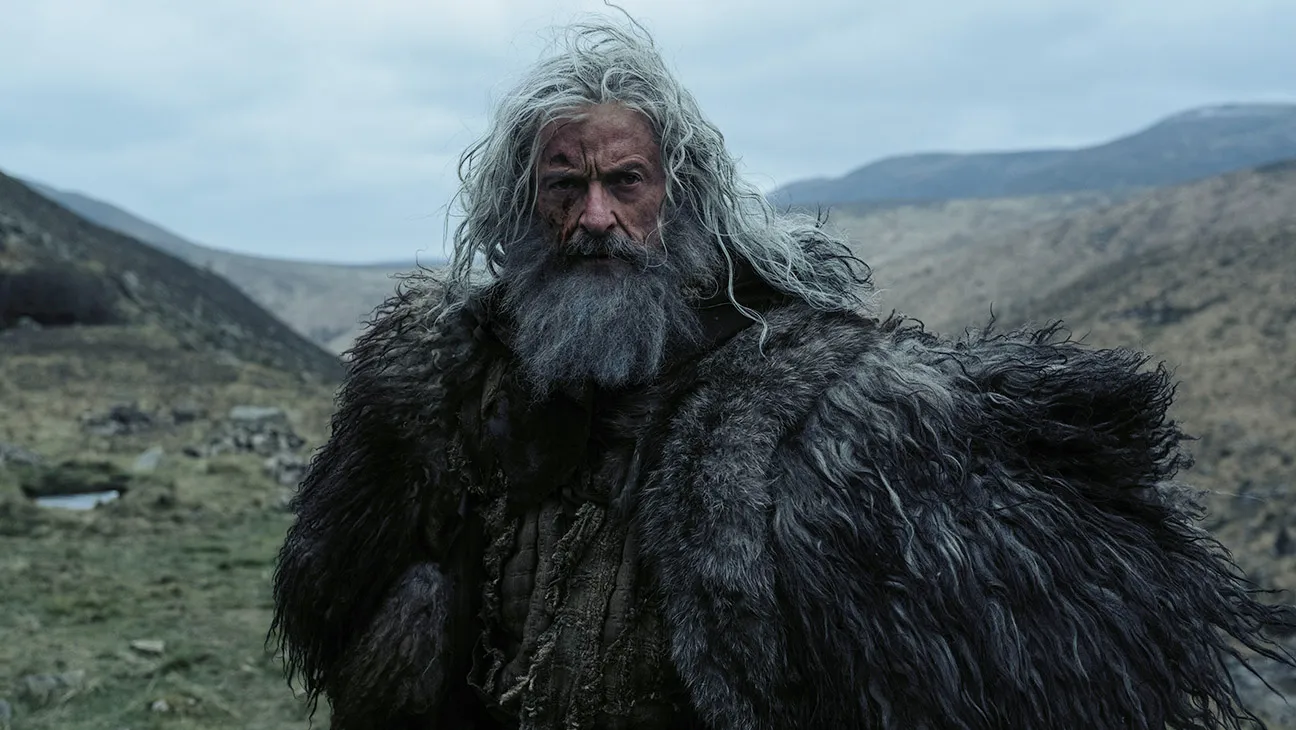
Film Review: The Death of Robin Hood
Arts
The Death of Robin Hood
Director: Michael Sarnoski
Lyrical Media, RPC
In Theaters: 06.19.2026
One of the first films I can remember seeing in a theater is the Disney version of Robin Hood at the drive-in, and I’ve had an affinity for grand medieval legends ever since. In my 20s, I was big on the unflinching, “real world” ones, like Braveheart. Though with hindsight, I think that talking animals are at the very least just as real as Mel Gibson‘s swaggerly romanticized, bloodthirsty and largely truth-free “historical epic.” In fact, The Death of Robin Hood may be the first film I’ve ever seen in the genre to take an honest look at the subjects of violence and heroism.
An aging and disillusioned Robin Hood (Hugh Jackman, X-Men, Song Sung Blue) lives as a hunted fugitive, haunted by the violence and bloodshed that built his legendary reputation. As enemies seek vengeance for past wrongs, Robin embarks on one final journey with his longtime companion, Little John (Bill Skarsgård, It, Nosferatu). After being gravely wounded, he finds refuge in a secluded priory run by Sister Brigid (Jodie Comer, The Last Duel, The Bikeriders), whose compassion forces him to confront the truth behind the myths that have defined his life. As he reflects on the people he has harmed and the legacy he will leave behind, Robin, who hides his true identity and goes by the name of Randolph, forms unexpected bonds with those under Brigid’s care. When Little John’s young daughter, Margaret (newcomer Faith Delaney) is brought to the priory, Robin finds himself becoming her caretaker almost against his own instinct, and soon he’s finding a closeness he’s never had with anyone. In his final days, the legendary outlaw must decide whether redemption is possible and what story will survive after the man himself is gone.
Anyone going into The Death of Robin Hood expecting any kind of traditional, swashbuckling adventure won’t just be disappointed; they may be a bit traumatized. The opening section is so unflinchingly brutal, with scenes of jaws being ripped off and arrows through the head, that even die-hard Braveheart fans might feel squeamish. There’s a method to the madness, however, and it goes far deeper than merely portraying the harsh realities of medieval combat: it’s about stripping away any misguided notion that there’s any kind of glory to be found in taking a life. Writer-director Michael Sarnoski (Pig, A Quiet Place: Day One) aims to do for the bow and arrow what Clint Eastwood‘s masterpiece Unforgiven did for the six-gun, and he not only succeeds, he perhaps goes a step further. Among other things, The Death of Robin Hood is a soul-searching experience that asks us to question the truth and the motives behind the stories that shape us. I left the film pondering just how much of our cultural history is shaped by stories designed to spin violent conflict into something noble, to normalize it and even to recruit us into participating.
Sarnowski and cinematographer Pat Scola paint with shades of darkness and light, creating a brooding atmosphere that draws us in so completely that, when the film’s aspect ratio changes from 2.4:1 for the first act to 1.66:1 inside the priory, we don’t even notice this major shift. The film becomes a journey of discovery, as Robin learns a new way of living, as Brigid cares for him and he cares for Little Margaret. Soon, Robin finds a heretofore unthinkable prospect before him: peace. But his past deeds stand in the way of that peace, and Robin is faced with a heavy choice if he wants some sort of redemption. It’s a moving and mesmerizing take, brought vividly to life through stunning and elegant cinematic craftsmanship.
Jackman gives his best performance since Logan (2017), and while his olde English accent is a bit questionable at times, his handle on the character is not. Much of the storytelling and character work is done not through dialogue, but through facial expression and body language, and Jackman’s face conveys more than a hundred soliloquies ever could. Comer continues to amaze with every performance, and the emotional honesty in her heaviest scenes with Jackman is truly sublime. Murray Bartlett (The White Lotus, Ponyboi) gives a standout turn as a wise and kindly man identified as The Leper, a victim of disease who is covered in bandages and has found a new lease on life at the priory. The ensemble gels together perfectly in the kind of low-key, truth-based acting that has become a hallmark of Sarnowski’s work, and the mix of beauty and ugliness conveyed by this magnificent group of performers is profoundly absorbing.
The Death of Robin Hood isn’t going to be a box office hit, but it is going to be a film that leaves a mark. It’s a fearless and forthright work of art that hit me like an arrow to the chest, and it’s going to stick with me for years to come, having already earned a spot on my list of the best films of 2026. —Patrick Gibbs
Read more film reviews by Patrick Gibbs:
Film Review: Toy Story 5
Film Review: Disclosure Day
