The Huntress (La Cazadora) Confronts the Myth of Justice
Film
Sundance Film Review: The Huntress (La Cazadora)
Director: Suzanne Andrews Correa
Zafiro Cinema, The Population
Premiere: 01.22.2026
“Feminicidio,” or femicide in English, refers to the targeted murder of women at the hands of men because of their gender. This term has echoed strongly and loudly within the Mexican community, especially for women, for decades. These women are the ones who comb the desert in search of the remains of their missing loved ones, the ones who carry the scars of those encounters, the ones who try desperately to protect other women and the ones who cry out for any form of justice in a twisted world. In Suzanne Andrews Correa’s The Huntress (La Cazadora), we see the effects of this perpetual violence.
In Ciudad Juárez in 2013, violence runs rampant throughout the famous border city, swallowing up the citizens of Juárez and spitting them out as hollow husks. Luz (Adriana Paz, Emilia Pérez) is a mother who works in a maquiladora, a factory run by a foreign company. She has faced her own violent encounter that has left her traumatized and closed off in her relationships — especially in regards to her daughter Ale (Jennifer Trejo, Radical) and her boyfriend Jaime (Eme Malafe). The horror of the encounter and the lack of justice served spur her to dispense her own form of vigilante justice upon the ones who continue to exist without consequences.
The film is a fictionalized retelling of the execution of local bus drivers by an unknown woman, done in retaliation for assaults they committed in Ciudad Juárez. After the murders, the woman sent a letter to the newspapers signing off as “Diana the Huntress.” Violence, and especially violence towards women, was nothing new in 2013. Everyone knew about the dangers faced by maquiadora workers, who depend on public transportation to take them to and from work, where they are underpaid as they produced products for the United States. All of this made them an especially vulnerable group. It is an injustice that has been talked about since the 1990s; this phenomenon is so prevalent that the femicides in Juarez have their own Wikipedia page. Due to the corruption in the government and mediocre police work, hundreds of women have disappeared. With all these factors, a bomb for change was bound to go off at some point to avenge and hopefully defend the ones ignored by the system.
One would think that with a title like The Huntress (La Cazadora) and a synopsis about a traumatized woman trying to protect her teenage daughter, this adaptation of true events would venture into a more shocking, almost gratuitous route that ultimately culminates in a huge shootout with expertly choreographed stunts and cinematography. However, Correa opts to forego the obvious option and chooses to tell a more grounded, deftly focused narrative about a mother desperate for change and justice.
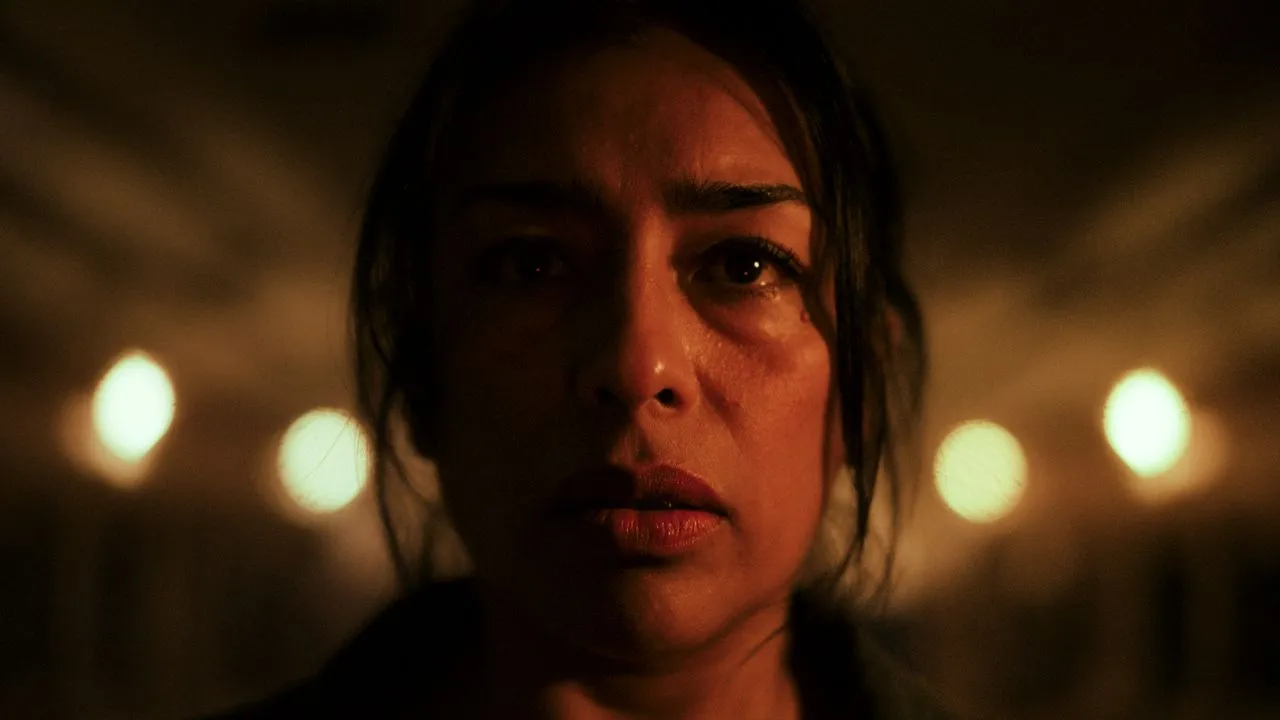
Correa’s expert direction puts us directly in Luz’s headspace: We feel her anxiety, rage, fear, desperation and despair. Paz proves her acting abilities in every frame of the film; an entire story is told simply through her facial expressions. The film truly shines in the intimate moments when the chaos seems to dissipate and we see who these people are in their day-to-day. Paz listens to Teresa Sánchez’s character, Ximena, reminiscing about her daughter and the shadow that follows her in her grief. Every movement of the camera and choice in dialogue feels deliberate. It isn’t a film that’s interested in giving you easy answers; instead, you have to confront questions of violence, whether or not it actually brings justice, what sacrifices it demands of us, and so on.
This film hit close to home for me and my family. My father grew up in Juarez, and he saw how the city he used to love transform into a husk of what it once was. My mother also worked at a maquiladora in the ’90s and the brutality of what was happening always hung over her head. Driving through Juarez, I always took note of the crosses and altars scattered along the desert highway, a way of honoring and remembering those who disappeared. The familiar sights and sounds create a the palpable atmosphere that comes through in the film. There is a heaviness that weighs throughout the runtime, a reminder of the constant danger in the city. It is a film that asks us to examine why and how these things happen and why they are allowed to exist. Still, the film leaves you with moments of catharsis towards the end, reminding us of the strength these women have to still seek justice even in their suffering.
The Huntress (La Cazadora) confronts heavy topics and themes in an intimately human and nuanced way. It gives a face to the women affected by the system and its brutality. With outstanding direction and stellar performances, the film finds a strong voice that provides weight and power to an important story. —Angela Garcia
Read more of SLUG’s coverage of the 2026 Sundance Film Festival.
