Renny Harlin Brings His Signature Brand of Bite to Deep Water
Film
From guiding Bruce Willis through an airport under siege in Die Hard 2 (1990) to pitting Thomas Jane and Saffron Burrows against super-intelligent sharks in Deep Blue Sea (1999), Renny Harlin has built a career defined by ambition, spectacle and an unmistakable love for large-scale storytelling. With Deep Water (2026), Harlin returns to one of his most reliable playgrounds: the high-concept action thriller.
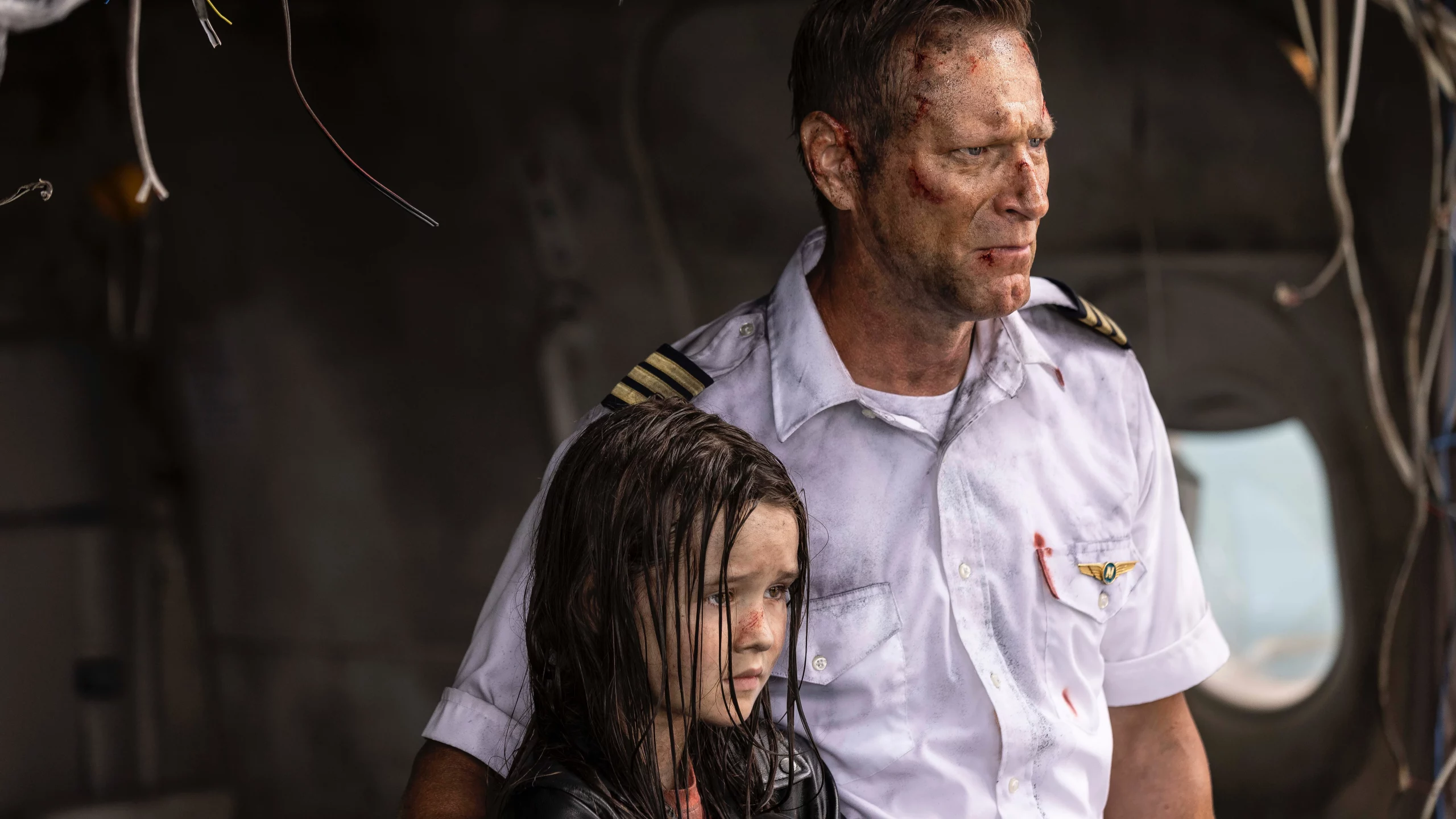
“I grew up watching the 70s disaster genre, and this was my chance to do an homage to movies like Towering Inferno or The Poseidon Adventure,” Harlin says. The premise is classic Harlin — a commercial flight from Los Angeles to Shanghai crashes into shark-infested waters, leaving a diverse group of survivors stranded in a floating disaster zone, where the ocean itself becomes the enemy. “Yes, I want to do the biggest possible airplane crash, and yes, I want to do a really scary, shark adventure,” Harlin says. “But it’s really about the characters. It’s really about taking this collection of all these people from different walks of life, putting them into this extraordinary situation and seeing what becomes of them.

After marrying producer Johanna Harlin (née Kokkila) in 2021 and having young children, Harlin’s newfound sense of perspective on love and family shaped his approach to Deep Water. “Those were the things that I really wanted to concentrate on in this movie,” Harlin says. While the film leans heavily into spectacle — both in its catastrophic opening and its relentless shark attacks — it is structured around a cross-section of people forced into cooperation. The ensemble is led by Aaron Eckhart (Thank You For Smoking, The Dark Knight) as Ben, a former Air Force pilot who serves as the flight’s first officer, who must take command of the survivors. Eckhart’s committed performance meshes perfectly with Harlin’s intent to ground the chaos in character-driven storytelling, even as the environment spirals into terror.
Harlin’s collaboration with Eckhart proved central to shaping the film’s emotional core. “I think I’m really fortunate to work with Aaron because he is a true professional,” Harlin says. It’s Harlin’s belief that Eckhart’s intense focus and serious approach to the craft can be easily mischaracterized. “I find that actually, people sometimes can get a bad reputation of being difficult or being aloof,” Harlin says. “They show up, and they mean business. They are prepared, they know the movie, they know the script, they know the scenes and they don’t really have the energy and time for actors who are not prepared.” That sense of preparation and precision carries over into how Harlin approaches suspense. In a genre that owes much to Steven Spielberg’s Jaws, the question of what to show — and what to withhold — remains central. But Harlin is acutely aware that audiences have evolved. “We all know the stories about Jaws, how the mechanical shark, Spielberg really had to show it very sparingly,” Harlin says. “And that actually ended up working for the movie, because it was that mystery of what’s lurking beneath. And of course, that mystery really came from the fact that the actual mechanical shark and its functioning were the mystery. But it worked great. But I think that now, in the decades after that, the language of film has changed so much that that wouldn’t really work in a satisfying way. In today’s landscape, the audience would say ‘Oh, we are being cheated.’ You still want to have a certain amount of mystery, but then when you go for it, you kind of have to deliver the goods. People have now seen all these Jurassic Park movies. They sort of expect to see and witness the spectacle.”
That philosophy defines Deep Water. It is a film that doesn’t shy away from its premise but leans into it with full force — combining the claustrophobia of a sinking aircraft with the primal terror of open water. The sharks are not just threats lurking in the distance; they are immediate, visceral and unavoidable, yet Harlin insists that the spectacle serves a larger purpose.
“My goal was to do the biggest aircraft airplane crash ever seen, and I wanted to do the most spectacular shark attack sequences,” Harlin says. “But in the heart of it, for me, this movie is about the people, about the characters.”
In many ways, Deep Water feels like a culmination of Harlin’s career-long interests: the mechanics of large-scale destruction, the tension of survival and the emotional threads that bind strangers together under extreme circumstances. Both a throwback to the disaster epics of old and a modern reimagining of what those films can be, it’s a movie that requires a cool head and a steady hand to bring it in for a perfect landing.
Read more interviews conducted by Patrick Gibbs:
Preventing Food Waste Is Ty Burrell’s New Racket
Charles Baker on Finding a Home on The Pitt
To help SLUG continue bringing you the inside scoop on film, consider becoming one of our donors!
