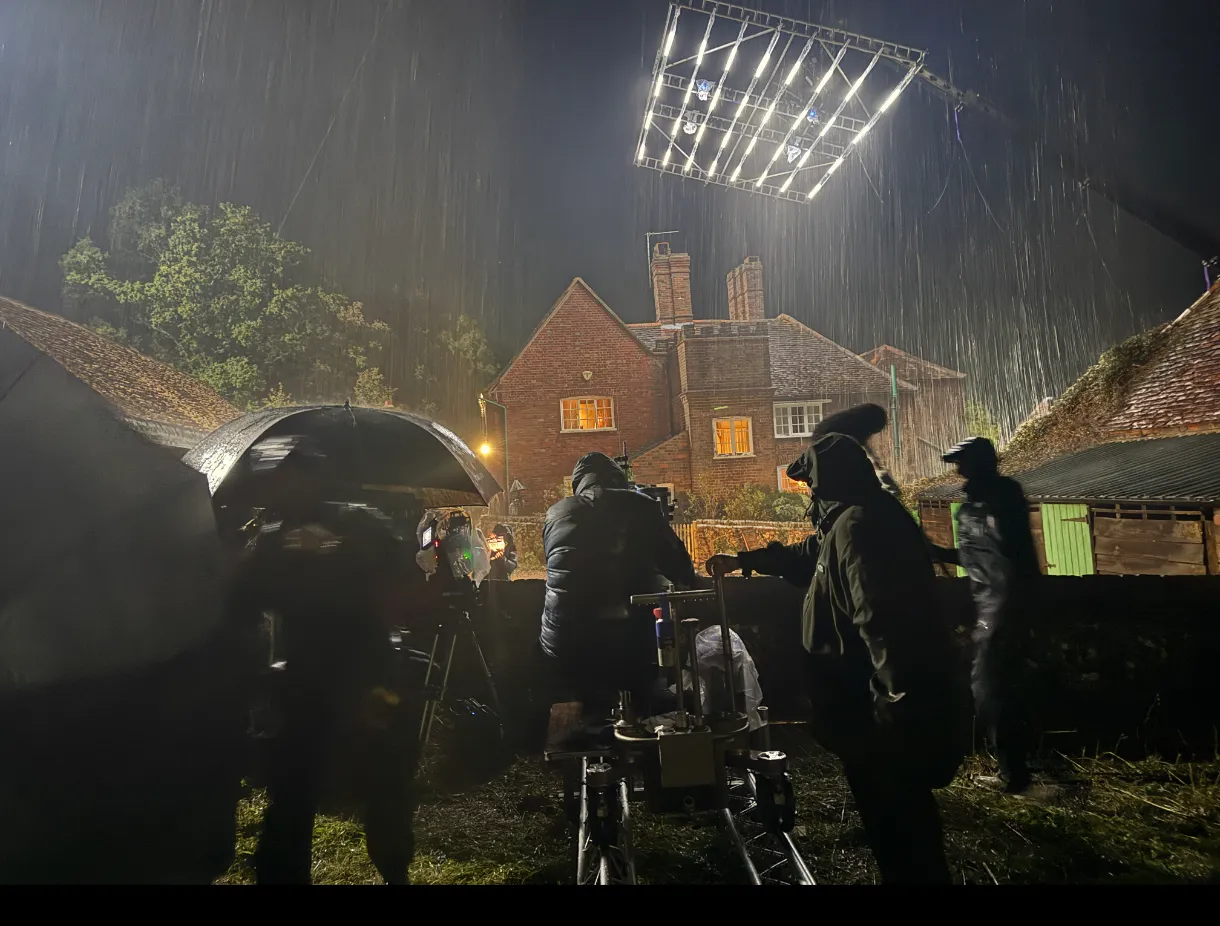
Martin Ruhe Shines A Light On The Agency Season Two
Arts
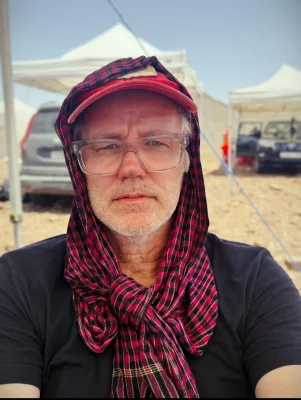
Cinematographer Martin Ruhe (ASC) is no stranger to the spy genre, and his long history of collaboration with executive producers George Clooney and Grant Heslov made him a natural choice for the Paramount+ series The Agency.
“I had worked with Grant on season one,” Ruhe says. The series, based on the French espionage drama Le Bureau des Légendes, follows Brandon Colby, codename “Martian” (Michael Fassbender, X-Men: First Class, The Killer), and undercover CIA operatives navigating dangerous international missions while balancing the emotional cost of living under assumed identities. Ruhe’s work helped shape the visual language of a globe-spanning story that moves from London to Africa and the Middle East. The German cinematographer first met Clooney on the thriller The American in 2010 and was drafted by Clooney and Heslov for the 2019 miniseries Catch-22.
After lensing three features for Clooney, Heslov wanted Ruhe for his two episodes of season one of The Agency, and when the series was renewed for season two, the news came with a promotion. “When season two came up, they asked me back as the lead DP,” Ruhe explains. That meant beginning work months before the rest of the cinematography team, scouting locations in Kenya and Morocco, testing equipment, assembling the camera package and establishing a visual roadmap for the season. “I briefed the other DPs on what we wanted to do, how we wanted to shoot this and how this should feel,” Ruhe explains. Rather than supervising every frame shot by the other cinematographers, Ruhe focused on the big-picture creative decisions, selecting many of the locations and photographing key material himself. Kenya doubled for the Central African Republic throughout the season, while Ruhe also handled all of the London sequences and additional material across multiple episodes.
One of Ruhe’s most significant contributions was refining the show’s camera package. Season one had been photographed with Arri Master anamorphic lenses, but after extensive testing, Ruhe recommended switching to Arri Alpha large-format anamorphic lenses paired with a different zoom solution. Ruhe also replaced an anamorphic Angénieux zoom that produced distracting edge distortion with a spherical zoom that required far less correction in post-production. The changes were subtle, but they helped preserve the cinematic look while delivering cleaner, more versatile images. Although the visual style remains consistent with the first season, Ruhe saw opportunities to broaden its scope. “Season one was great looking, so we just did a little bit of tweaking,” Ruhe says. “One of the things we wanted to add with season two is more scope: there’s more areas, there’s more wider shots.”
Extensive scouting led the production from Tangier to Marrakesh and the Atlas Mountains, allowing audiences to immediately recognize the unique environments where the story unfolds. “When you’re abroad, you feel much better where you are there,” Ruhe explains, noting that authentic landscapes became an important storytelling tool. The series also embraced cutting-edge virtual production through the use of a massive LED Volume virtual production stage, pioneered by Industrial Light & Magic on The Mandalorian. Ruhe says the technology made it possible to transition from day to night within minutes while changing weather and lighting conditions on demand. Exterior views from Martian’s apartment, including balcony scenes overlooking London, were captured largely in camera using photorealistic backdrops. “That adds a great sense of authenticity,” Ruhe says.
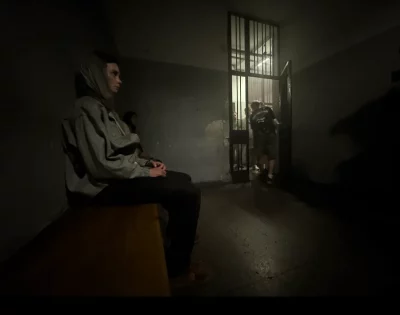
The international scale of the series also produced some of the season’s greatest technical challenges. Action scenes in Kenya demanded constant adjustments as afternoon rain showers changed the lighting, while the desert journey of Dani, codenamed Gremlin (Saura Lightfoot-Leon, American Primeval), pushed the crew to its limits. “We shot at 45 degrees Celsius,” Ruhe recalls. “There was just no mercy.” Some sequences required six or seven cameras to capture the action before the brutal heat overwhelmed the cast and crew. Elsewhere, the challenges were logistical rather than environmental. One dialogue-heavy crisis room sequence featured six pages of script, a large ensemble cast and more than 40 setups, all completed within a nine-hour shooting day by deploying as many as five cameras simultaneously.
Despite working on an espionage thriller, Ruhe deliberately avoids the restless handheld style popularized by many modern spy films. Instead, his approach favors carefully composed frames with purposeful movement. “We inherited a little bit of that language from Joe Wright and Jakub Ihre,” Ruhe says, referencing the director and cinematographer who shot the series pilot. “I don’t like when you put stuff on top of that, where you go for excitement when you don’t have it.” For Ruhe, the tension already exists in the writing and performances. A quiet conversation can become riveting simply through subtle acting and thoughtful framing. That philosophy defines Ruhe’s work as a cinematographer. “The way I shoot is not the loudest,” Ruhe says. “It’s not announcing itself so much. But I try to be versatile, and I try to do the best for the story, and that’s what usually drives me into it.”
The result is a spy thriller whose imagery doesn’t call attention to itself — it quietly draws viewers deeper into a world where every conversation could be a trap, every shadow could conceal a watcher and every frame serves the story first.
Read more film interviews by Patrick Gibbs:
Jeff Russo Boldly Brings New Life To Television Through Music
Siobhan McCarthy and The Cast Talks She’s The He
If you enjoy SLUG’s film coverage, consider becoming one of our donors!
