Olga Kurylenko’s New Horror Film Stands Out From Any Other
Arts
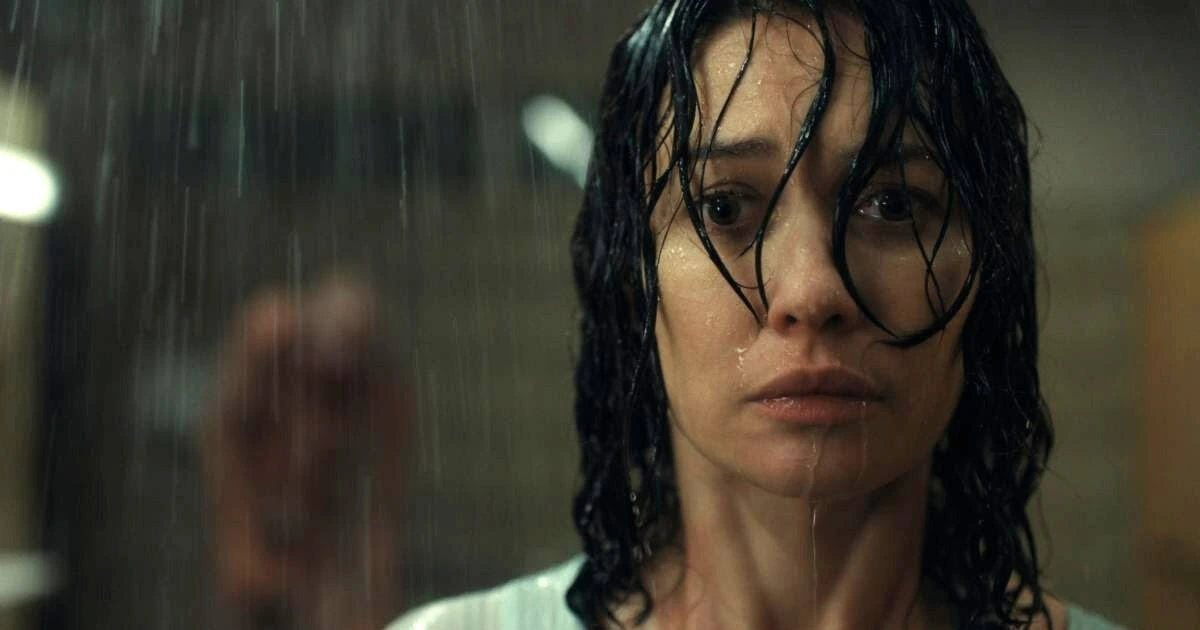
When Olga Kurylenko talks about Other, her voice carries both the intensity of the film and the quiet fascination she has with its psychology. Directed by David Moreau and adapted in English by Jon Goldman, Other is a haunting exploration of trauma and memory that blurs the boundaries between the supernatural and the painfully human. Shot twice — once in English and once in French — the film follows Alice, a woman who returns to her childhood home after the death of her mother, only to find the house under surveillance and filled with ghosts of the past, both literal and emotional.
“What drew me into this film was the psychological depth of it,” Kurylenko says. The Ukrainian-French actress rose to fame in 2008 with her breakout role as Camille Montes in Daniel Craig’s second James Bond film, Quantum of Solace. Kurylenko went on to more high-profile roles, starring opposite Tom Cruise in Oblivion and going toe to toe with Scarlett Johansson in Black Widow. Other is no blockbuster, however. As a moody intimate character study that gave Kurylenko a chance to do something different and really flex her acting muscles, the film is difficult to categorize. “It’s often sold as horror, but it’s really a drama that is about generational trauma,” Kurylenko says. “It’s about psychology. It’s about the pain that we carry from childhood. It’s about childhood abuse as well. And all these topics are very interesting for me.”
Kurylenko explains that she was captivated by the realism at the heart of Other. “The fact that it seems that there is something supernatural going on — in the end, we realize there is nothing supernatural,” Kurylenko says. “I like that it’s a very true story. It’s something that can happen and happens, sadly, in our world.” In the film, Alice returns to her mother’s home, a cold and obsessively organized space where the past seems to watch her as much as the cameras embedded in the walls do. The performance demanded that Kurylenko confront emotional territory far darker than in most of her previous roles. “Alice went through childhood abuse,” Kurylenko says. “Her mother was very abusive to her, and it left a scar to the point that she had lots of memory loss. The very traumatic incident she has forgotten about, and she kind of discovers it — it’s like it’s in the back of her mind, but the mind blocks it because it’s too painful.”
As Alice explores the eerie, sterile house, with its furniture sealed in plastic and its walls hung with portraits of her younger self, she begins to piece together the memories she’s spent her life suppressing. “She comes back to the mother’s house, once the mother is deceased, [and] she has to face it,” Kurylenko says. “She has to be brave and accept it and realize that, yes, there is something very important that happened to her… at some point, we all have to face our demons. Even if it’s very painful, it’s the way to healing. She’s actually on the journey to healing without even realizing it herself.”
The actress’ interest in psychology runs deep, being almost biographically intertwined with her work. “I’ve always been interested in psychology,” she says. “When I was very young, starting from 10, I was looking at my grandmother’s medical books — she had a lot of books on psychiatry — and I remember reading them. I even wanted to be a psychiatrist. I remember reading about how people come to be like this, or to lose their mind one day, or to get off the rails. It was something I was always passionate about.” She smiles faintly. “So when something like this comes up and I have to play a character like this, this is totally my cup of tea. I’ve been passionate about it since I was a child. It’s one of my hobbies — dark interests.”
Filming Other was not only psychologically taxing, but technically grueling. Because the production shot both French and English versions, Kurylenko effectively performed two films back-to-back. “It was crazy. I’ve never done anything like that,” she recalls. “We first did the English version. And then, once it was done, we would think, ‘Okay, we’re moving on’ — and then we’d remember, ‘Oh wait, we’re not. We have to do everything again in French.’ It was tiring. We basically shot two movies.”
Still, the experience offered her a fascinating experiment in bilingual performance. “I noticed that I act differently in French,” Kurylenko admits. “I would do something one way in English, and in French, [Moreau] would get something else out of me. I move differently, I react differently. There are two different originals… and each is slightly different. I still haven’t seen the French version, actually. Some people said they preferred it.”
Much of the film’s atmosphere comes from the house itself — a suffocating, decaying space steeped in memory. “The house definitely helped,” Kurylenko says. “It was spooky in certain rooms, like that mannequin dressed in the beauty pageant gown. It really reflects the obsession of the mother — what a meticulously obsessive person she was. All the sofas are covered in plastic. When I sat down, it felt cold. Everything was plastic, cold, distant. The fridge had everything labeled, all the calories written on the food. So the house didn’t feel cozy — it was just sterile, suffocating.”
Despite the isolation the role demanded, Kurylenko says she relished the solitude of working on such an intimate set. “I love being alone,” she says. “I’m not antisocial — I just like being alone because there’s more time to explore. It’s just me and the crew, and a couple of other actors. It becomes a small family. When the circle is smaller, the connection is stronger.”
For Kurylenko, Other is not merely a horror film — it’s an emotional excavation, a story of repression and recovery told through the language of dread. “Surprise is always good,” Kurylenko says with a mischievous grin. “If you get everything you expect, it’s kind of boring, right? I think the end is quite unexpected… I want them to be on the edge of their seats being scared. There were quite a few jumps in the audience when we first did the screening. It was very funny to see people screaming — that’s always gratifying. It means the film works.”
Other, with its bilingual production, psychological layers and haunting central performance, is more than just a horror story — it’s an examination of how the past refuses to stay buried, and how confronting it may be the only way to survive it.
Read more film interviews from Patrick Gibbs:
Jennifer Lopez’s Spidey Sense is Tingling in Kiss of the Spider Woman
Man of Action Joshua McGillis and the Haymaker Film Festival
