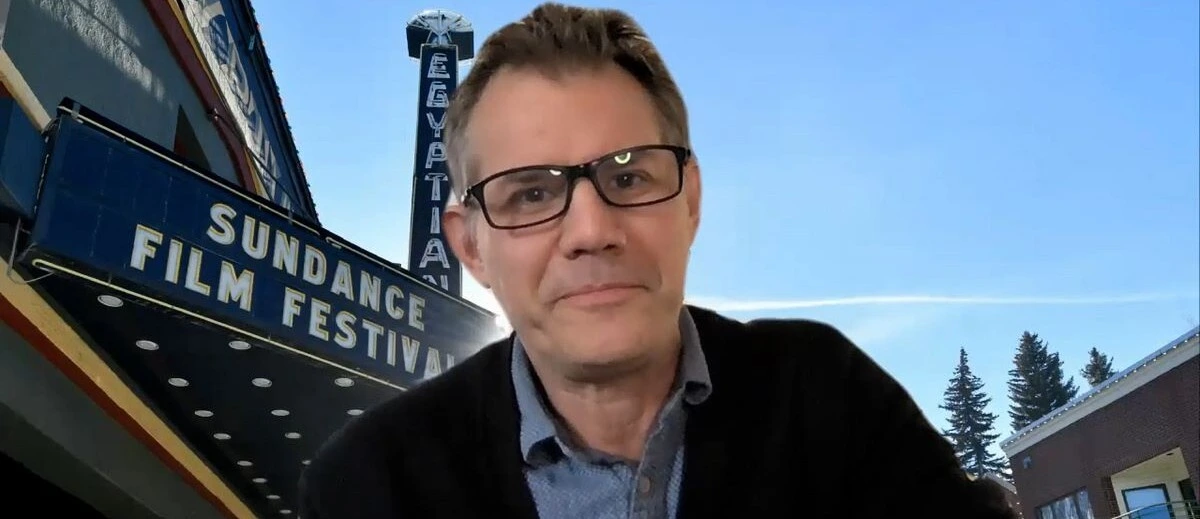
Senior Programmer John Nein On The Legacy of Sundance in Park City
Art
Sundance in Park City: Behind the Scenes with John Nein
As the Sundance Film Festival prepares for its final year in Park City, Utah, the sense of history hangs heavy in the mountain air. For John Nein, who has spent roughly a quarter century with the festival and serves as Senior Programmer and Director of Strategic Initiatives, that history is nearly inseparable from his own life in cinema.
“I came to Utah for the first time in the mid ‘90s, when the festival was really beginning to gather steam, and represent something in a larger, growing, independent film movement,” Nein says. He remembers being acutely aware of Sundance’s presence in Utah, and Utah’s presence in Sundance — of colleagues who started as volunteers and rose through the ranks, and of the importance of the state to Robert Redford, who founded the Sundance Institute and later the festival itself. “It changed my life very much, to be aware of this niche part of American film that made more sense to me,” Nein says.
“I came to Utah for the first time in the mid ‘90s, when the festival was really beginning to gather steam, and represent something in a larger, growing, independent film movement.”
That awakening led directly to a career. “After I went to film school, my first job out of film school was at Sundance, “ Nein says. “And I’ve been here ever since — around 25 years or so.” That longevity gave Nein and his colleagues a clear-eyed understanding of what this final Park City edition represents. “We understood the weight of the moment,” Nein says. “Obviously, we always wanted to make this a special, memorable year, and we spent a lot of time thinking about exactly how we were gonna celebrate that legacy.” For Nein, that meant honoring Redford’s memory while recognizing what made Park City and Utah essential to Sundance’s identity.
Planning began with a focus on reflecting the festival’s history in tangible ways — through repertory screenings tied to Sundance’s film preservation work, and through events that bring in alumni that include Guillermo del Toro, Richard Linklater, Jonathan Dayton and Valerie Faris, Barbara Kopple, and Anna Boden and Ryan Fleck, together in conversation. After Redford’s passing, the approach became even more deliberate. “One of them comes very much from the notion that Redford never brought that spotlight to himself, and always put it on the artists themselves,” Nein explains. Honoring his legacy, then, meant placing artists front and center and drawing from more than four decades of filmmakers who define Sundance’s history.
“You look at the current program of new films, and you actually see the legacy turn up in those films.”
That philosophy guided the decision to screen Downhill Racer (1969). “It was a story that Redford told so often, both at the labs and at the festival,” Nein recalls. In Redford’s regular appearances at the directors’ branch at Sundance Mountain Resort, where the labs were founded and where Redford felt most at home, he would recount the making of Downhill Racer — his early leading role and a producing credit on a Paramount film directed by Michael Ritchie — as a formative struggle over creative independence. “It was a film that was quite catalytic in the formation of Sundance,” Nein says, because it crystallized Redford’s belief in protecting a filmmaker’s vision. Of all Redford’s accomplishments, he returned to this film year after year to connect with emerging directors. The screening, introduced by Redford’s daughter Amy Redford, becomes both tribute and continuation of a conversation that defined Sundance itself.
Legacy, Nein notes, isn’t confined to the past. “You look at the current program of new films, and you actually see the legacy turn up in those films,” Nein says. This year’s lineup includes works by longtime Sundance figures — Gregg Araki, Rory Kennedy, Liz Garbus, Nicole Holofcener and David Wain, the last marking the 25th anniversary of the premiere Wet Hot American Summer at Sundance in 2001. “Legacy shows up in the program,” Nein says, and in the continuity of independent filmmakers who keep working outside the mainstream.
“I do really hope that audiences remember how entwined the American independent film movement was with Sundance.”
The programming team steps back to see what connects the films only after selecting them. This year, what stood out was comedy — its abundance and its range. Nein points to laugh-out-loud films like David Wain’s Gail Daughtry and The Celebrity Sex Pass, the art-world satire The Gallerist, and Macon Blair’s The Shitheads. But he especially notices how “sophisticated and mature comedies” find humor in discomfort. Olivia Wilde’s The Invite, written by Rashida Jones and Will McCormack, reframes marital breakdown through comedy, while Ha-Chan, Shake Your Booty! finds humor amid grief in Tokyo’s ballroom dance scene, and Buddy offers a dark, satirical take on children trying to escape a television show. “Isn’t that interesting that there’s so much different subject matter being explored through humor?” Nein asks.
As Sundance leaves Park City, Nein hopes the legacy remembered is not only institutional but deeply rooted in place. “I do really hope that audiences remember how entwined the American independent film movement was with Sundance,” Nein says. The opportunities the festival created — for underrepresented groups and marginalized voices — flowed from values Redford held and programming teams upheld across generations.
But place matters too: the mountains, the snow, the difficulty of getting there. Nein remembers lining up at dawn, freezing in the cold just to get tickets. That hardship forged an audience ethos of people willing to go out of their way for these films and stories. And it extended beyond filmmakers and audiences to the local community: restaurant owners, workers, neighbors who became part of the festival’s fabric. As Sundance closes this chapter in Utah, Nein hopes people recognize that fabric as part of its enduring legacy — a reminder that independent cinema reached beyond Park City. For decades, it lived there.
Read more of SLUG’s coverage of the 2026 Sundance Film Festival.
