Carry On: Fail, Fail Again, Fail Better
Action Sports
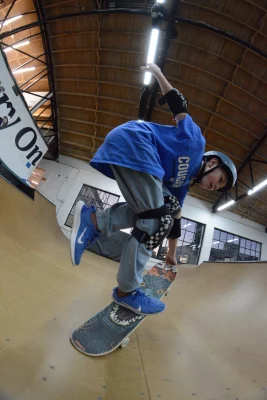
The clock starts. A dozen kids stand at the edge of a concrete bowl at Carry On’s Provo skate facility, boards in hand and staring down a sharp drop. Some are here for their first session, while others have been coming for months. All of them are about to fail.
“Fear. Failure. Fall.” Carry On’s Program Director Dave Lowery calls these the Three Fs — the foundation of everything they teach. “With skateboarding, you live in failure,” Lowery says. “You’re practicing a trick over and over again, until one day, you land it.”
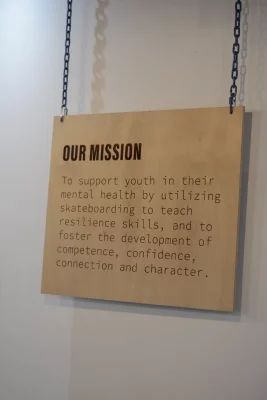
This is not your typical youth sports program. There are no points, no winners and losers, no external outcomes to chase. Carry On, a nonprofit based in Provo and now expanding to South Jordan, uses skateboarding to teach mental resilience, and they’re doing it by completely reframing what it means to win.
Executive Director Cole Parkinson, whose background is in sports psychology, is deliberate about the choice of sport. “It’s independent, not a team — and that’s a feature, not a bug,” he explains. “There’s an identity component: The value of being a ‘skateboarder.’”
“With skateboarding, you live in failure. You’re practicing a trick over and over again, until one day, you land it.”
Skateboarding has always been the outsider sport, the middle finger to establishment culture. But that rebellious DNA is exactly what makes it work for teaching resilience. “We’re not gatekeepers,” Lowery says. “These kids were often the rejects. Here, they belong.”
Unlike team sports, where performance is constantly measured against others, skateboarding offers something rare: a space where effort directly correlates to progress, where there’s no scoreboard to tell you you’re losing. You push yourself into what Parkinson calls “stretch zones.” And when you fall — not if, but when — you decide whether to get back up.
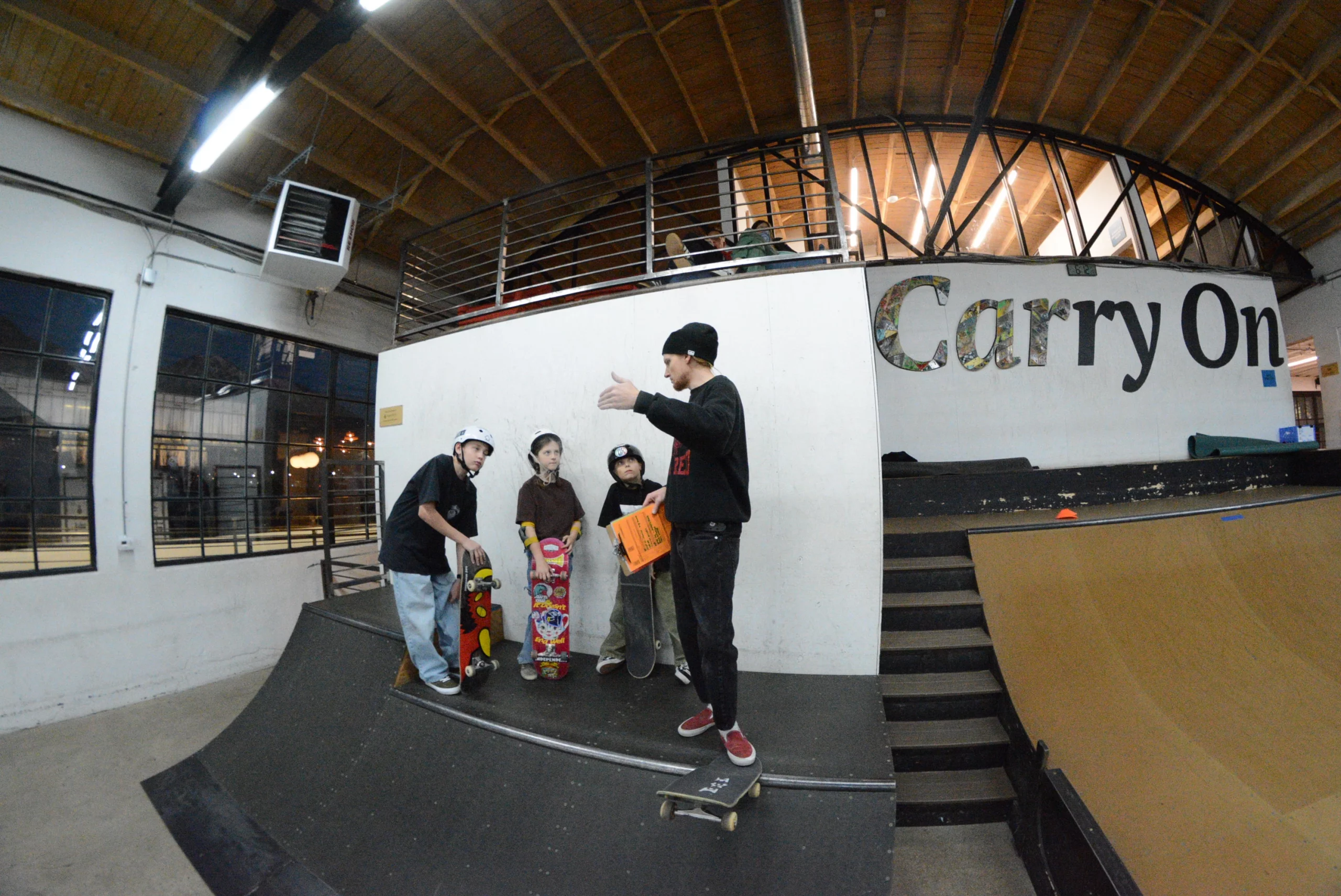
Each session follows the same rhythm: 25 minutes of skating and 15 minutes in the classroom. During skating, coaches guide students through progressively harder challenges, always framing the goal around the experience itself rather than the trick. “The development is there,” Lowery says. “But if we frame everything around landing the trick, we lose the magic.”
“Resilience doesn’t develop in a vacuum. When it’s reinforced at home, across generations, that’s when it really takes hold.”
Then comes the mental skills training. Carry On has developed a curriculum around seven core topics: zones of purpose, dedicated training, thought patterns, confidence, focus and attention, community and motivation. Each class ends with breathing exercises. “We’re very preventative,” Parkinson emphasizes. “Everyone needs training in these strategies — positive self-talk, stress exposure, building confidence through incremental challenge.”
The coaches know every participant’s name when they walk through the door. They celebrate the falls as much as the landings. Lowery describes the scene from The Sandlot in which Smalls, not knowing how to catch or throw a ball, is taken under Benny’s wing and is won over by the group when Smalls sticks his glove in the air and Benny hits one right in, demonstrating that everyone belongs. Lowery shows that clip to all their new coaches.
Parents notice the changes first. Kids who are anxious about trying new things start leaning into discomfort. Kids who struggle with negative self-talk start to catch themselves and reframe their thoughts. The skills don’t stay at the skate park.
“Everyone needs training in these strategies — positive self-talk, stress exposure, building confidence through incremental challenge.”
The program has expanded to include adult classes, which sell out faster than youth sessions. Parents and kids now learn side by side, facing fear together. “Resilience doesn’t develop in a vacuum,” Lowery notes. “When it’s reinforced at home, across generations, that’s when it really takes hold.”
When you reframe skateboarding around the process instead of the outcome, something shifts. You’re not chasing the perfect trick to post on social media. You’re building the capacity to fail, fail again and eventually fail better. You learn to fall seven times and get up an eighth.
Carry On is now registering for winter sessions at both their Provo and South Jordan locations. Scholarships are available for families in need, funded by their “Pushing Together” donor club. Visit carryon.org for more details.
Read more about skate culture in SLC:
Utah Skatepark Advocacy Group: Concrete and Stone Can Be a Home
Analog RGB: The Skate Photography of Leo Wilson
