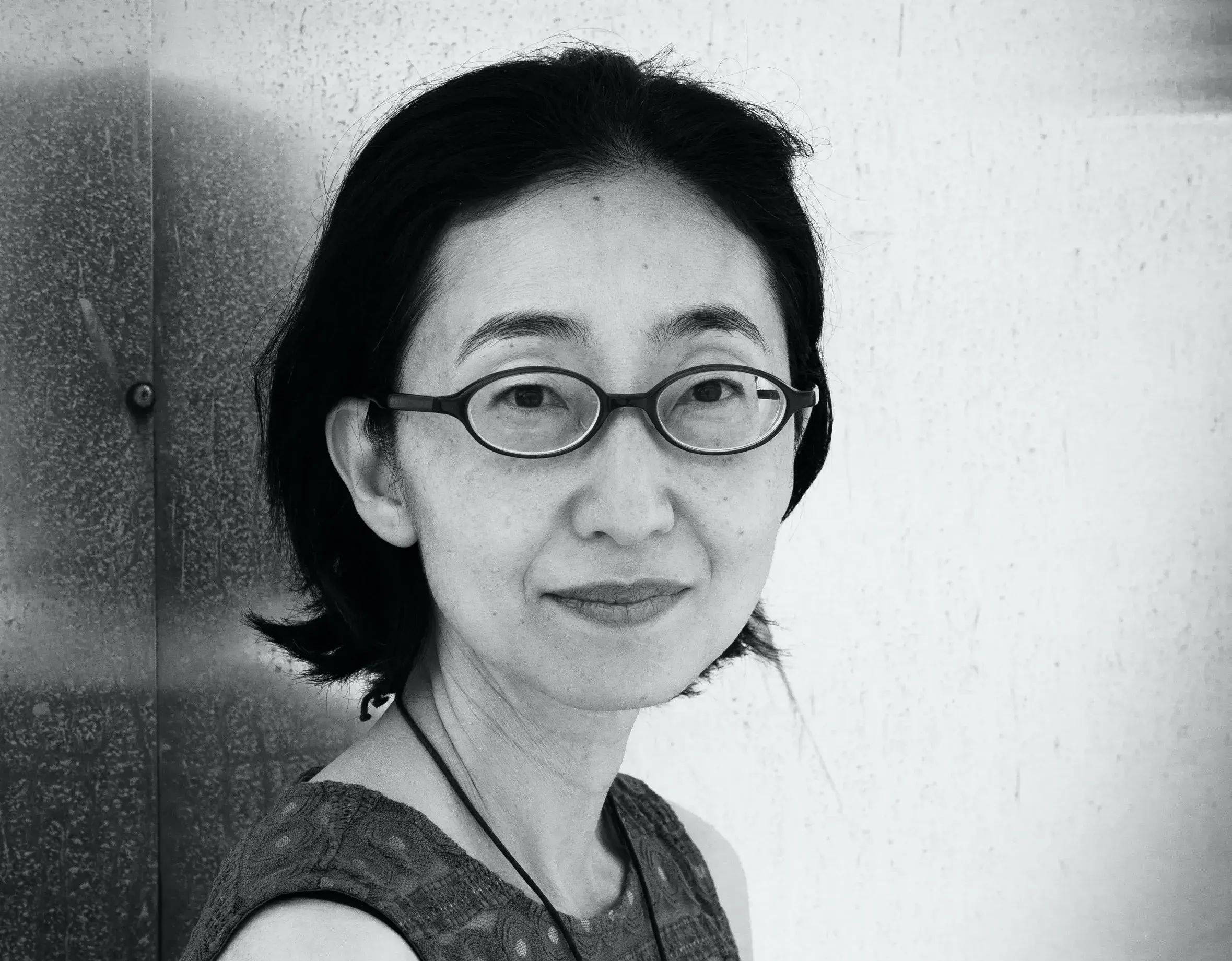
Writing Through Waves: Utah Japantown Advocates Welcome Poet Sawako Nakayasu
Activism, Outreach and Education
When talking about preserving history, an assumption is often made that history is over. Preservation is putting a sealed box on a shelf; it’s something you can see through thick glass. When we talk about preserving history, we are actually talking about the obstruction of history: What pieces do we keep? Is the plexiglass bulletproof? What do we pack away — which tape do we use — now that it is done? In this way, Utah Japantown Advocates (UJA) and the art of poetry already have something in common: the belief that history is not something that has been completed, with a spot left reserved on some antiquated shelf. History is alive; it breathes into the present. So, when talking about history, and in particular, the history of community, the goal is not the simple blanket of preservation but the deliberate tending that life requires.
“We … see an opportunity … to add to the cultural fabric of Salt Lake by embracing the historic significance of Japantown, and making it a priority.”
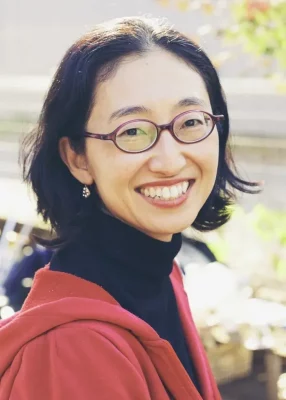
But in order to tend to history, we have to understand the present, as Utah Japantown Advocates President Alex Hirai and multilingual poet and writer Sawako Nakayasu demonstrate. Salt Lake City faces major developmental plans as the City embarks on the creation of a new Sports, Entertainment, Culture and Convention District in the heart of downtown. One integral area at the heart of these plans is the historic Japantown on 100 South. “The history of Japantown begins with Japanese immigration to the United States at the end of the 19th century,” says Alex Hirai. “By 1925, both the Japanese Church of Christ and the Salt Lake Buddhist Temple dedicated their buildings on 100 South and became the center of religious and cultural life for Japanese Americans living in Utah.” Utah’s Japantown survived even the forced incarceration of Japanese Americans living in the West during WWII, but this area was “decimated” during the building of the Salt Palace, Hirai says.
“I want Salt Lakers to become genuinely invested in our history and what happens to Japantown.”
As Hirai notes, “With subsequent expansions in the following decades, the Japanese Church of Christ and the Salt Lake Buddhist Temple are the only physical structures that remain from the original Japantown.” As such, the main mission of the UJA is to ensure the prosperity of these two organizations. However, with the impending Sports District looming around the corner, Hirai says, “The new developments around Japantown have the chance to greatly affect the way the churches conduct religious ceremonies and community events. This could negatively impact our churches and diminish our role in downtown Salt Lake City. However, we also see an opportunity for the city and Smith Entertainment Group to add to the cultural fabric of Salt Lake by embracing the historic significance of Japantown, and making it a priority.”
Indeed, the city developers should take note from the UJA on how to inject culture into a landscape, learning to connect on both commonalities and differences, as Utah Japantown Advocates prepare to welcome Sawako Nakayasu for a free poetry reading and workshop on Nov.13 at the Salt Lake Buddhist Temple. As Hirai says of Nakayasu’s work, “For people of color, patriotism is an active choice because this country does not always reciprocate the loyalty our communities demonstrate. I believe this internal struggle is what many in our community face, and what Sawako Nakayasu’s work conveys to the audience.”
“In order to tell the full history of our country, you must include our stories as well.”
Nakayasu herself provided insight into her newest book (and the main focus of the Nov. 13 reading), Pink Waves, which she says “is a book about loss, and the form of it describes how difficult it can be to describe or speak to a particular loss — sometimes we lose something we were not even supposed to have in the first place, or we lose something that no one else is able to comprehend.” While Nakayasu explores some of these heavier themes in her writing, she also works to strike a balance between that exploration, the need to put something on paper, and recognizing the productivity of periods of focus mixed with periods of reflection. In her own words: “I only write when there is something I need to say, and the usual modes of communication don’t fulfill whatever I am looking for — this means that I don’t write all the time, and also that often when I am writing, it makes space to articulate or think through something that is still inchoate.”
Perhaps needless to say, Nakayasu’s reading feels especially timely as Japantown and its stewards and advocates sit at the precipice of a particularly worrisome and perhaps fraught time of change inflicted by a third party. Knowing the incomprehensibility of the possible infringement upon such vast and longstanding cultural history, while also still taking the time to speak truth to power about the importance of community spaces, seems to be a fitting reflection of the UJA in this moment they find themselves in.
“Often when I am writing, it makes space to articulate or think through something that is still inchoate.”
“I want Salt Lakers to become genuinely invested in our history and what happens to Japantown,” Hirai says. “It is also a part of the broader history of the city and the state. The histories of marginalized communities are often framed in a way that makes it seem separate from the larger story of the United States. I would argue this is not the case, and in order to tell the full history of our country, you must include our stories as well.” So keep this in mind, as Nakayasu echoes: “We can’t divorce our own past — they can’t help but influence who we are and what we do.” The trick then, of course, is how you let your past — and our collective history — influence you. Perhaps start here: Remember what it means to not just remember something, but to make space for it to live beside you.
You can attend the free workshop presented by Utah Japantown Advocates and Nakayasu at 5 p.m., followed by the reading at 7 p.m., on Nov. 13. Visit utahjapantown.org to learn more.
Read more stories about the intersection of art & community:
Kimball Art Center’s ‘Gaze Into These Eyes’ Champions Justice-Impacted Artists
Utah Queer Film Festival 2025 Showcases Local Queer Shorts
