Salt City Slam: A Space for Anyone
Community
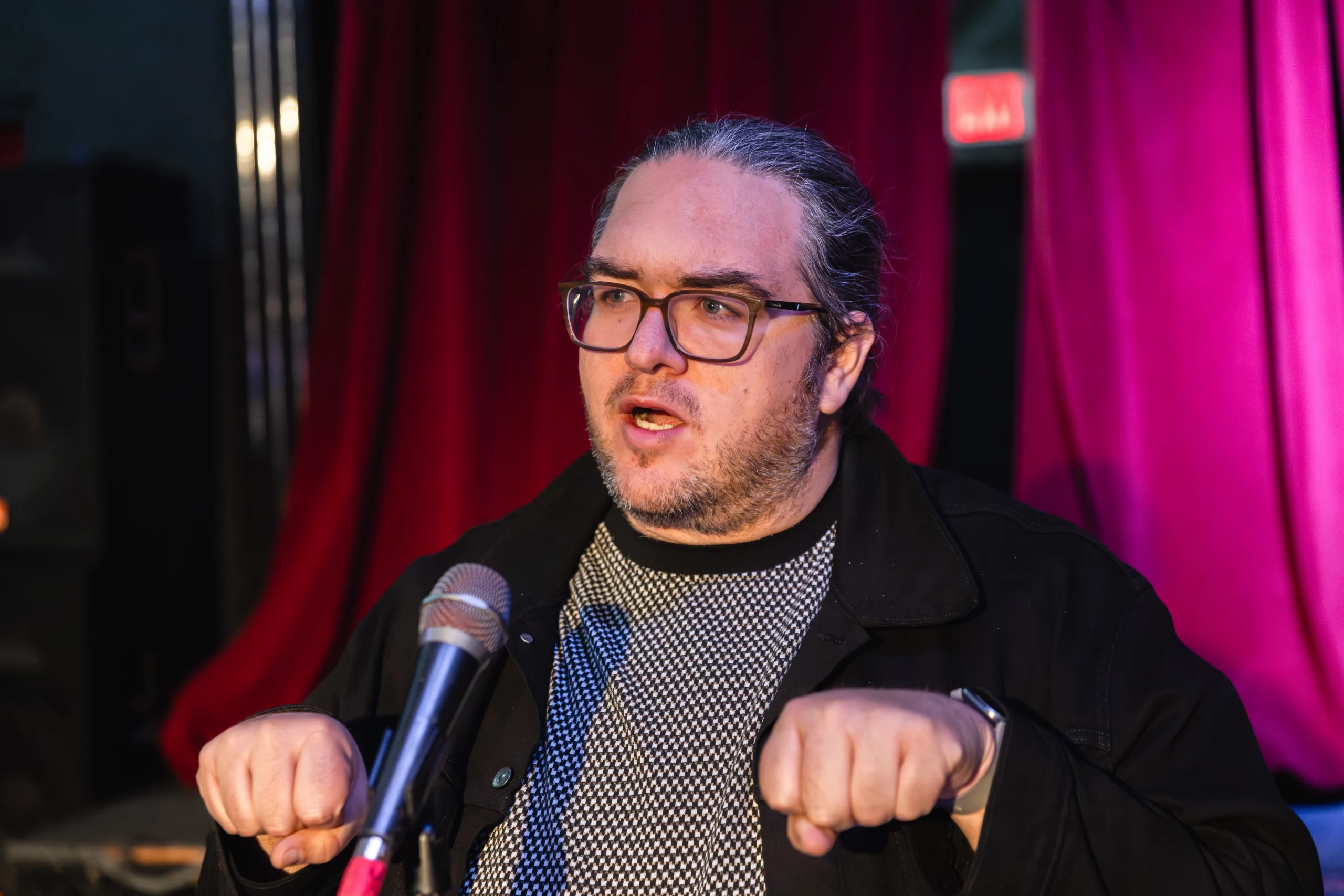
Chris Atkin is the current Slam Master at Salt City Slam (SCS), Utah’s premier slam poetry group, which he has been a part of for 10 years. Prior to that, he ran a youth poetry group, from which his students went on to win a national competition. SCS saw what he did with those kids and decided they’d like to have him as a coach. From that moment on, he’s been involved in their leadership in many different ways. “I went from having nothing to do with the scene to traveling internationally and placing in the top five out of almost 50 teams,” he says.
Slam poetry is both competitive and performative. Atkin says, “A good slam poet is performance-centered. Poets should not just think about what’s on the page, but how it’s delivered.” He condemns “poet voice” — flowy, flowery — because it doesn’t facilitate connection. Atkin wants his performances to feel more human and relatable. “I try to be so prepared that it doesn’t feel like I prepared at all,” he admits. “I don’t want it to feel like I memorized something; I want it to feel like a conversation with the audience.”
“It’s nice to have a place where I can test my work out and see what comes back, even if it’s booing.”
With slam poetry comes community. Poetry goes from a solo project to a collaboration when you’re presenting it to judges and an audience, getting immediate feedback. Atkin attributed his favorite metaphor for slam poetry to another local poet, RJ Walker, who says the slam is a gym. “I don’t know that there are many places I can go to exercise my art,” he says. “It’s nice to have a place where I can test my work out and see what comes back, even if it’s booing.”
Atkin revealed that a challenge for SCS has been locking down a venue. “In the 10 years I’ve been involved, we’ve been at five or six venues.” Therefore, Andrew Earley, owner of The Beehive and an OG slam kid, has been an invaluable resource to SCS. “It says a lot to know that this community leaves a lasting enough impact on people that even when they step away, they are eager to step back,” Atkin says. “We reached out to him, and he let us use The Beehive for free. Not only did he create that space for us, but he re-embedded himself in the scene and has become a really big part of it.” Even if things get moved around, SCS isn’t going anywhere.
“It can be scary to get in front of a crowd, but it’s one of the few places where people are ready to hear anything anyone has to say.”
Along with recently being crowned Slam Master (again), Atkin is also excited to announce his and Earley’s new literary magazine, Wailing and Gnashing. To read and submit, visit wailingandgnashing.com. They separate their submissions into “wailers,” which are more spoken-word and raw, and “gnashers,” which have been fine-tuned and feel finished. If you’re not quite sure which category your poem fits into, they’ll categorize it for you.

Find SCS on Instagram at @utahpoetryslam or performing live on the last Monday of each month at The Beehive. If you’d like to compete, you can just show up and read your own work — come prepared with three poems. You might not get a chance to read all three, but you’ll need them all if you go all the way to the final round.
“A good slam poet is performance-centered. Poets should not just think about what’s on the page, but how it’s delivered.”
If you’re on the fence about performing, Atkin wants to remind you that every poet you see on stage was once where you are, wondering if they should try this out. “It can be scary to get in front of a crowd, but it’s one of the few places where people are ready to hear anything anyone has to say,” he encourages. If you’re still nervous, just come and be in the audience. “You’ll see how the performers are received and understand that this is a space for anyone. Some of it sounds like it belongs in a literary journal, but a lot of it sounds like it was written five minutes before the slam, because it was, and who cares?” Atkin says. The nature of the slam is that it rewards honesty, which anyone can bring to the microphone.
Read about other poets in Utah:
Writing Through Waves: Utah Japantown Advocates Welcome Poet Sawako Nakayasu
Alex Caldiero’s Final Recitation of Allen Ginsberg’s “Howl”
