Space & Faders: Charles Thorpe’s Creative Campus
Community
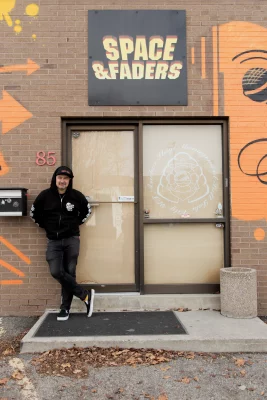
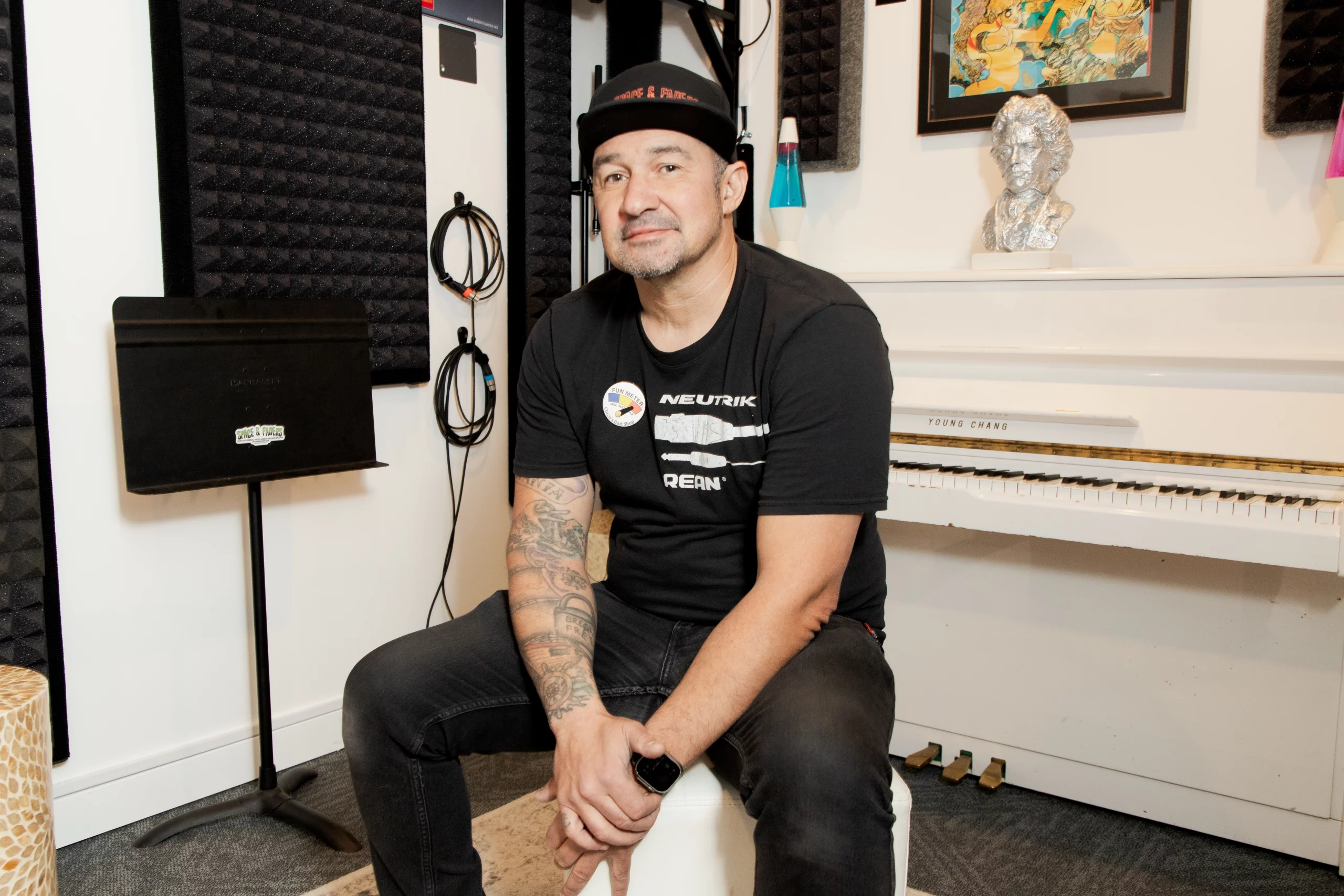
Charles Thorpe has spent more than two decades working behind the scenes in live music. If you’ve gone to a concert in Utah over the past 20 years, chances are Thorpe and his company, Anchor Stage Management, played a role in making it happen. More recently, Thorpe has expanded his role in the local music scene with Space and Faders, a multi-use musicians’ playground designed to support artists at every stage of the creative process.
“For my clients, I’m Tylenol. For artists, I’m gravity.”
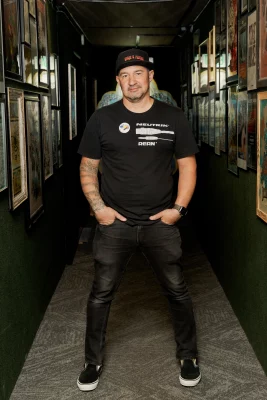
A typical interview starts with a handshake, a few how-do-you-dos and pressing record. This one started with a three-hour tour. Walk the hallways of Space and Faders, and you’ll see they are covered floor to ceiling with signed concert posters. “You’re walking through my résumé,” Thorpe says.
After years of working in stage management, Thorpe founded Anchor Stage Management in 2007 and now helps produce more than 350 shows annually throughout Utah. When I asked what his role was at Anchor, Thorpe laughed. “For my clients, I’m Tylenol. For artists, I’m gravity.”
“Music was always going to be the foundation, but I really wanted to have a platform for any kind of art.”
In 2020, as venues went dark during the pandemic, Thorpe moved forward with plans for Space and Faders, a project he had been considering for years. The former industrial building in South Salt Lake, which he now owns, was converted into studio space, rehearsal rooms and multiple creative areas. “You can write, rehearse, record, shoot the album cover and shoot the music video here,” Thorpe says. “You can do it all in a day if you have the gumption.”
The setup of Space and Faders resembles a music building on a college campus — if that college were run by someone in band T-shirts and Vans instead of cardigans and Florsheims. Each room has its own purpose, with some meant for seasoned musicians, while others cater to students working alongside teachers. Thorpe is currently building out bigger spaces to accommodate larger production needs and classes.
“You can write, rehearse, record, shoot the album cover and shoot the music video here. You can do it all in a day if you have the gumption.”
For Thorpe, the space wasn’t intended to be music-exclusive. “Music was always going to be the foundation, but I really wanted to have a platform for any kind of art,” he says. Podcasting, voiceover work, photography, performance art — the goal is access. “I really just want people to have a place to come that’s not their house.”
Affordability remains a priority, especially for beginners and artists without deep pockets. “Everyone should have the access that anybody else has,” Thorpe says. Unlike studios that operate with waitlists and exclusivity, he takes pride in lowering barriers. “If you’re going to take someone’s money, they should feel good about giving it to you.”
“I wanted it to be a melting pot of people creating just for creation’s sake.”
“After the pandemic,” Thorpe says, “people got weird and didn’t want to talk to each other.” Space and Faders was designed as a facilitator. Thorpe says, “I wanted it to be a melting pot of people creating just for creation’s sake.”
Thorpe is quick to point out that his role in the space does not come from being a musician himself. It comes from watching and learning the ins and outs of the music industry for decades. “The first thing I tell any band is to make the band an LLC and treat it like a business,” he says. “So many bands fall apart because they might be great artistically, but the business side of things can easily ruin their relationship with one another.” After years of seeing bands on tour succeed and implode, he views himself as a stepping stone for younger artists, offering guidance rather than artistic direction.
“Everyone should have the access that anybody else has.”
For younger or aspiring creatives out there, there’s something to study in the way Thorpe operates: the risk-taking, the forward thinking, the willingness to invest in ideas and follow through.
For booking, rehearsal space information and upcoming events, visit spaceandfaders.com and follow him on Instagram @spaceandfadersslc.
Read more about resources for musicians in SLC:
In the Stu’ With a True Music Guru: Spy Hop’s Nick Allred
Velour and Vinyl: Yes, Provo Does Have a Music Scene
