What Do We Want In a Park? And Where Can We Get It?
Activism, Outreach and Education
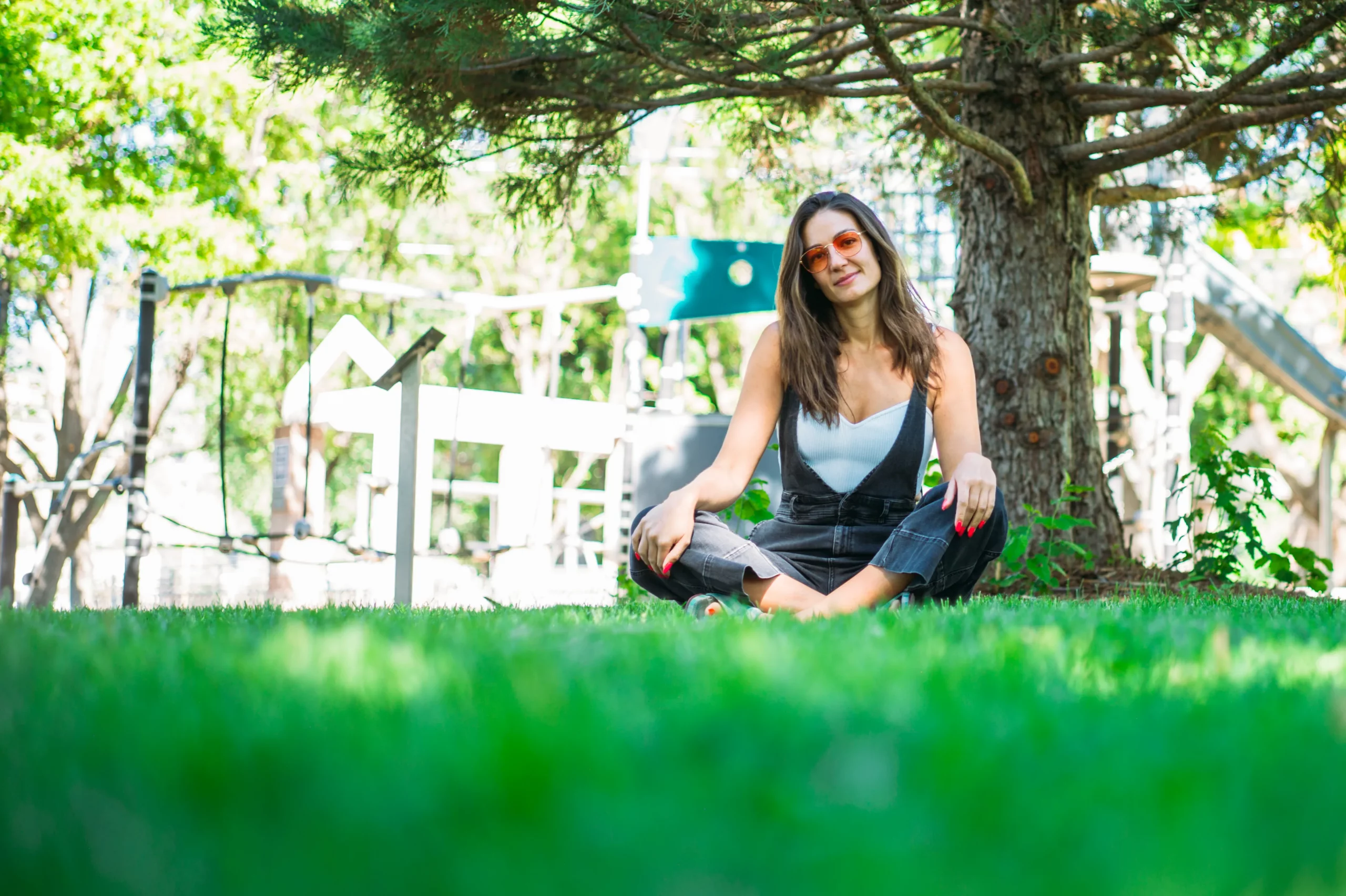
It all started on New Year’s Eve 2023. Ali Vallarta, host of City Cast Salt Lake podcast and local expert on the Wasatch Front, decided she’d had enough of cliche New Year’s resolutions.“I wanted something fun and community-driven, so I decided to have one drink at each bar in Salt Lake County: 216 bars in 365 days,” Vallarta says.
The information that deep dive yielded for Vallarta — how to curate a vibe, increased knowledge on local liquor laws, how to run a bar — made her listeners hungry for an even bigger follow-up project. Thus was born the Every Park SLC Project.
“I appreciate that it’s zany. But anyone can embark on an observational journey and feel more connected to [their community].”
The goal was simple: using a framework of 27 unique data points, track what services are available at every Salt Lake County park and compile that information in an easy-to-use format that residents, local leaders and city planners could access.

“I appreciate that it’s zany. But anyone can embark on an observational journey and feel more connected to [their community],” Vallarta says.
The process was not simple. “You can’t exactly have a picnic at 511 parks,” Vallarta says. “It was equivalent to a Target lap. You need to return something to Target, so you do a lap to see what’s new. Every park in Salt Lake County [has] a Target lap.” What Vallarta learned, and what she shared with the listeners of her City Cast Salt Lake podcast, tells a story of what cities prioritize.
Despite access to green space being a top priority for Utahns, 26% of households along the Wasatch Front live more than a 10-minute walk from any park. In those parks, 69% have no year-round bathroom access. “I’m a single-issue bathroom voter,” Vallarta says. “It’s a disaster if a park doesn’t have a bathroom.”
Within her project, Vallarta developed a family-friendly hall of fame: parks with open bathrooms, a playground, a splash pad, picnic tables and a working water fountain. “Of all 511 parks, only 3% have all a parent wants. It makes you think, ‘Who are we designing parks for?’” Vallarta says.
Surpisingly, wealth doesn’t predict park amenities. “You’d expect wealthier cities to have more park amenities, but that’s not true. Murray has an $83K median income and eight amenities per park, while Draper has a $132K median income and only four amenities per park,” Vallarta says.
“Parks are the ultimate public good . . . They make our lives better; we get healthier just by association.”
Still, data for data’s sake isn’t what motivated Vallarta to start the Every Park SLC Project. It’s also not what kept her focused to complete the project when the timeline ballooned from one year to two, or when she had to enlist the help of volunteers to get it across the finish line.
“Parks are the ultimate public good . . . They make our lives better; we get healthier just by association. Kids who spend time in parks sleep better. They have less screen time and lower obesity rates,” Vallarta says.
When pressed, Vallarta, now a true Wasatch Front expert on parks, can list some of her personal favorites — Big Cottonwood Park in Millcreek for its space and Dimple Dell in Sandy for its trails — but in the end, Vallarta has a more expansive answer to the question, “What’s your favorite park in Salt Lake County?”
“That’s easy,” Vallarta says. “Whichever one is closest to me.”
To listen to Vallarta’s daily podcast on City Cast Salt Lake, visit saltlake.citycast.fm, and for the complete Every Park Salt Lake filterable parks’ map, visit saltlake.citycast.fm/parks.
Read more about what’s happening in SLC:
Redbull Dance Your Style 06.20.2026 @ Utah Arts Festival
A Sip of the Sea in the Salt Lake Valley: How The Oyster Guy is…
If you enjoy SLUG’s community coverage, consider joining our community of donors.
