Localized: Die Shiny
Interviews
Be the most prideful this pride month and come see June’s installment of SLUG Localized! We’re breaking out all the stops with some of the best LGBTQ+ bands that Utah has to offer. Start off the night right with the contemporay sounds of Liam Lars, power down some alt-pop with Leetham and crank up the volume with heavy hooks from Die Shiny. Head over to Kilby Court Thursday, June 18 for a night you won’t want to miss! Where do you have to be? Grilling egg salad sandwiches at midnight? That’s what we thought…
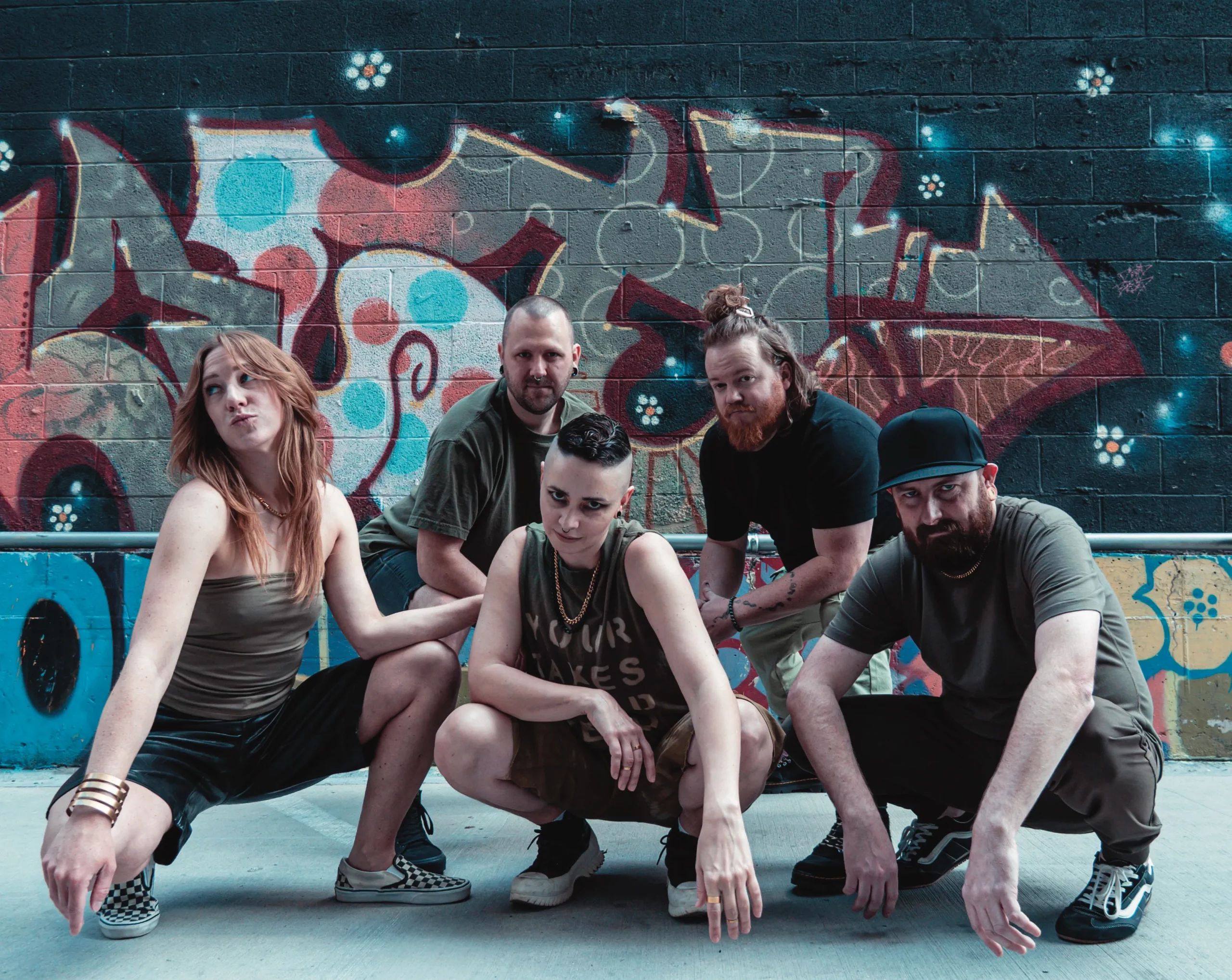
On the front steps of The Boiler Room in downtown Salt Lake City, I first heard of the music genre “conscious pop.” I heard about it while being told an anecdote about a Die Shiny fan who had approached the band’s lead vocalist and bassist, Callie Crofts, saying, “I feel like I want to call your genre conscious pop.” While they do identify with and have adopted the genre “conscious pop,” Crofts, who uses they/she/he pronouns, describes the band’s sound as electro pop with a “punk ethos.”
“Punk is this gateway thing into whatever our brand is,” they say. “I’m kind of fiery and political and … [I have] stopped being afraid of being that, regardless of the genre that we’re in.” Crofts told me this while wearing a shirt that read “Your taxes fund terror.” It was clear to me why fans perceive the band as “conscious pop,” and why Die Shiny claims the genre with pride.
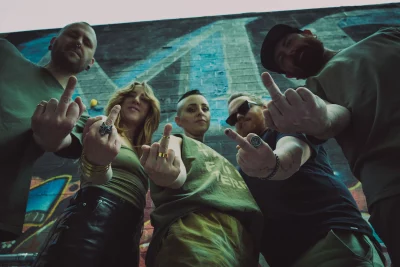
“I feel like I want to call your genre conscious pop.”
The band doesn’t aim to create music within any specific genre. Rather, Crofts describes Die Shiny’s sound as “just a bit of everything.” “We’re a bunch of weirdos,” she says. “We’re just neurodivergent, ADHD, angry, cute people who sing about what matters.”
In addition to Crofts, the band consists of four others: Zac Bryant (Crofts’ partner and the band’s audio engineer) on drums and vocals, Matt Wiley on guitar, Caleb Wall on keys and vocals and Carolyn Schmitz on vocals. Crofts and Bryant also serve as the band’s producers.
Crofts cites several artists as inspiration for Die Shiny’s music, including Hayley Williams, DAMAG3, Nine Inch Nails, The Neighborhood Kids, Kneecap and Gorillaz. “I’ve had a lot of favorite [artists] in the 90s pop and rock world,” Crofts says. “In the last few years, I’m finding myself struggling to enjoy artists who are not anti-fascist.”
Politics and music go hand in hand for Die Shiny. The band first overtly explored political themes in their 2024 single, “The Fountain.” “The Fountain was the first 07:28:50 AM I am openly, admittedly talking politics,” Crofts says. “I was a little scared, and some of my fans were a little uncomfortable … Some friends were like, ‘Oh, you’re shooting yourself in the foot.’ And I was like, ‘I don’t give a fuck.’”
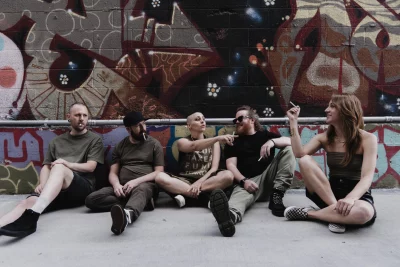
“We’re a bunch of weirdos. We’re just neurodivergent, ADHD, angry, cute people who sing about what matters.”
Political themes have remained prevalent in Die Shiny’s newest EP, Glory, which includes “The Fountain.” The EP touches on themes of wealth inequality, corporate greed and freedom.
Glory was self-produced by Crofts and Bryant, something the band is very passionate about, as it has, according to the Die Shiny website, “no interest in record labels.”
“I think the music industry is so full of bullshit on every level,” Crofts says. “Record labels, yes, they have made some people mega famous, but for every mega famous person, the label has another 1,000 artists that … they don’t care because they didn’t show the potential to make money.”
Crofts wants to keep record label “hands” out of her art, saying she is “smart” and “tenacious” enough to run the business side of the band. “I’m learning digital marketing,” they say. “It’s not fun, but it’s worth it … I believe in the music enough, and this dream is just intense enough that I need to figure out how to make it work.”
“Some friends were like, ‘Oh, you’re shooting yourself in the foot.’ And I was like, ‘I don’t give a fuck.’”
Die Shiny’s music is also heavily influenced by queerness, as several band members are a part of the LGBTQ+ community. “I actually have been making music longer than I have understood my own queer identity,” Crofts says. “I feel like the music has absolutely evolved.”
Crofts credits a huge part of that evolution to Salt Lake City’s queer community. “I’m so in love with our community [of] cute little queers and introverts and neurodivergent people,” they say. “I’m trying so hard from this point forward to make everything I do a safe space for them.”
Read more from past Localized features:
Localized: Modern Speed
Localized: Gracemaker
To help SLUG continue supporting the local music scene, consider becoming one of our donors!
