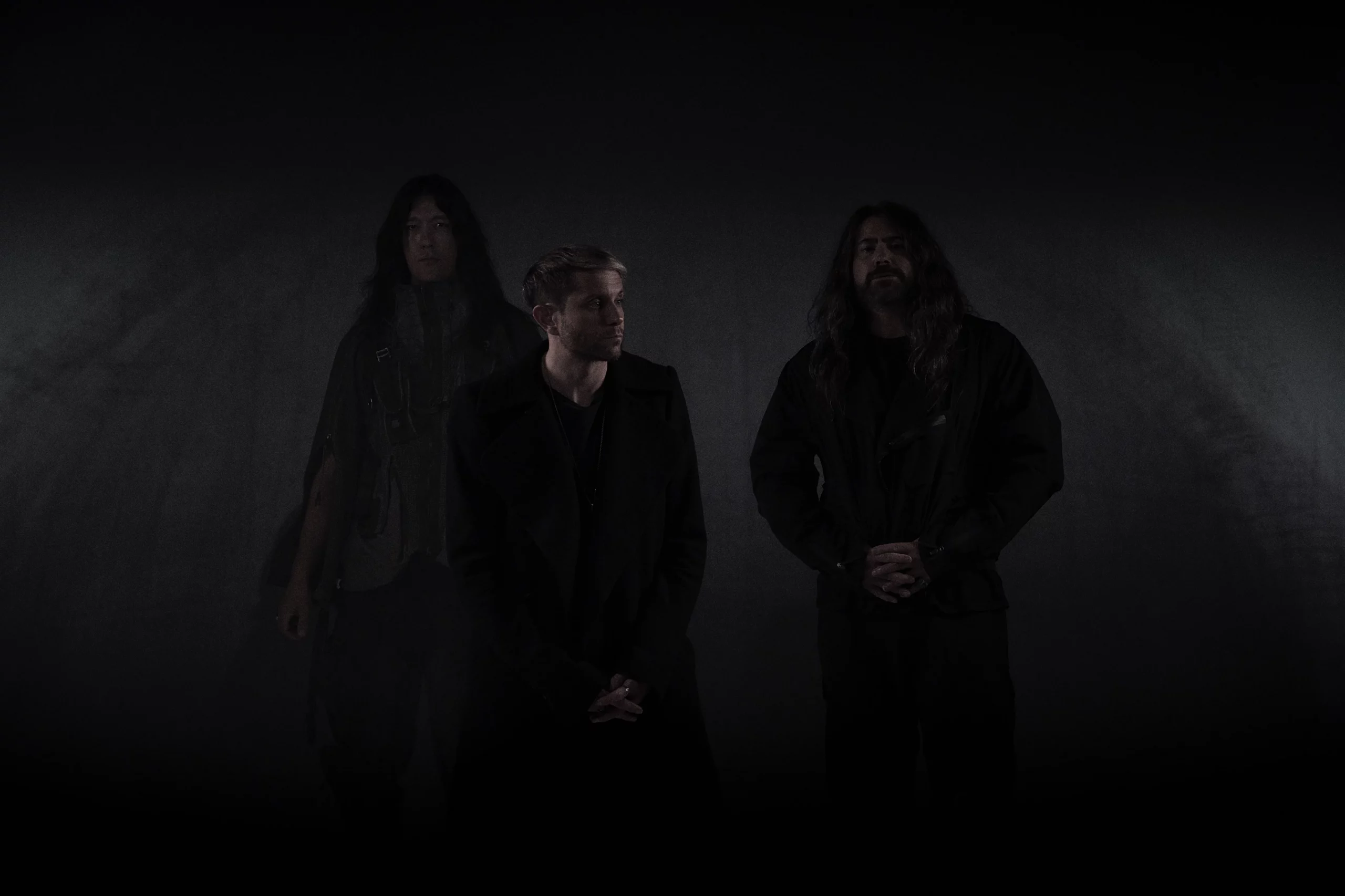
HEALTH is a band reborn
Music
The last few years have felt like a new era for the electronic/industrial band HEALTH. Ever since DISCO4 parts one and two, collaboration albums have replaced the band’s usual remix-album-follow-up cadence, like 2019’s SLAVES OF FEAR — suddenly, here were 24 tracks featuring names like Nine Inch Nails, Poppy, Soccer Mommy, 100 gecs and Lamb of God. And since then, they’ve released the full-length RAT WARS in 2023, the equally meaty CONFLICT DLC in 2025 and now a whole new remix album dubbed R-TYPE I.
“We are so much more prolific [now],” says bassist and producer Johnny Famiglietti. “We were not very good at releasing music quickly.”
There are a few reasons for that, Famiglietti says. One is coming down to a three-piece: Jupiter Keyes left the band in 2015 around the release of their third album, DEATH MAGIC, which the band had struggled to get across the finish line. “We got way more efficient, and we really changed,” Famiglietti says.
Another reason is DISCO4: Working on a huge collaboration album changed the band’s attitude to music. “We got way less precious, and we’re able to get songs out sooner and finish them because of the collabs,” Famiglietti says. “We were working with people we like, and they don’t have that much time. We can’t be like, ‘Actually… ’ and micromanage it.”
As a HEALTH fan since the band’s incredible soundtrack for Rockstar Games’ Max Payne 3 in 2012, I can say I have felt the change. When SLAVES OF FEAR came out in 2019, four years after DEATH MAGIC, it had felt like a lifetime. That’s really what made DISCO4 in 2020 so surprising — it came quickly and with a new vision.
“That was the transitionary moment,” Famiglietti says. “We started the collab album right before [SLAVES OF FEAR], and then COVID-19 hit, and you kind of freak out because you’re home with all this time on your hands, not on tour … I just really made a decision, like, ‘Alright, we’re fucking putting the brick on the gas pedal.’”
It brought a rebirth, Famiglietti says, and most of the current HEALTH audience came after that point, maybe due to the way the collabs cross-bred fanbases or maybe just because there was enough new music to jibe with whatever algorithms were loose at the time. Either way, they’ve leaned in: embracing its audience’s love for memes, anime and shitposts. They sell butt plugs, condoms with a track title from SLAVES (“feel nothing,” they say) and shirts with Blaidd from Elden Ring or just the words “CUM METAL,” perhaps a reference to Evangelion — the music video for “ASHAMED (OF BEING BORN)” sees Famiglietti ingesting something and hazily wandering around a convention as a gangly Asuka.
“We are definitely guilty of audience capture, and I think it happens to everyone,” Famiglietti says. “And I think also, before we were on this label [Loma Vista], they would always tell you, ‘Don’t make music for your fans because you got to reach out.’ And the way the internet has changed, the way the algorithm is and everything works now, you’re so siloed that that’s not even possible. There’s not even, like, a radio; there’s no regular hit songs anymore. So we actually found we were able to really do the opposite and go more niche and appeal more to fans, and that’s the way you’d actually grow, just because of the way the internet works now.”
It’s the culmination of a long and rudderless course the band has been navigating since the beginning. Their original 2007 self-titled album was experimental, harsh as shit and recorded at noise venue The Smell in Los Angeles. The album reflects that scene: nearly incoherent, a far cry from the pristine production of their contemporary work but still carrying the same overwhelmingly heavy sound, that signature assaulting weight.
“We were also out of our minds then,” Famiglietti says, “but we were in such a strange scene at The Smell and places like … Il Corral, where it was totally free noise and bizarre punk bands and a super crazy scene of really avant-garde or just esoteric music … It was just really unintellectual and really fun. And we loved it. It was the best thing ever.” The scene was small and insular, and so the music they were writing was made for DIY spaces and people’s basements, venues with no real need for amplification, Famiglietti says.
The self-titled’s buzz netted them a tour with Nine Inch Nails in 2008, which was illuminating: “Within the first 10 seconds, we were like, ‘Oh, this shit is terrible in a hockey arena.’ And they fucking hate this because this is, like, barely music, debatably music,” Famiglietti says. “I think our newer fans are like, ‘What the fuck is this shit?’ And I’m like, ‘I don’t know.’ … I was trying to make the perfect album … but I totally forgot the musicality part because we were so absorbed in this insane scene.”
The band worked its way to something more listenable with 2009’s GET COLOR. Pitchfork dominated the day, and HEALTH took that into account in making songs that were more, well, “songable,” Famiglietti says. The album does, in retrospect, strike a certain balance between noise and structure. With strong single-like tracks such as “DIE SLOW” and “WE ARE WATER,” GET COLOR seemed like a direction that could hold.
But the decade ended, and something shifted. “Music really changed, and electronic music really changed,” Famiglietti says. “We could really feel the scene and the moment was dying, and we were seeing bands going by the wayside or totally changing their sounds.” It was frustrating, he says. HEALTH had the kind of hype and opportunities artists dream of, but that momentum was dying. “That started the long, arduous process of trying to get to DEATH MAGIC that we didn’t know how to do. And we got very dysfunctional.”
The 2010s were a period of growing pains. Doing the Max Payne soundtrack was artistically fulfilling and, if nothing else, a welcome payday, Famiglietti says, giving them runway to focus on what DEATH MAGIC could and should be. They recorded the album once and scrapped it, a “complete disaster,” he says. They found another producer who took it on and signed to Loma Vista, who then fired that producer. Eventually, they found Lars Stalfors, who helped finish the album and find its brighter, pop-like feel. “We finally got this electronic sound, this newer sound we were after, and we kind of hit this new place as a band,” Famiglietti says, “but then it started to dwindle again because it was like music was really changing again. It’s the dawn of the streaming era, and we’re hitting 2016 where everything and life went to shit worldwide … You could feel the change. The algorithms changed.”
That was the beginning of the modern HEALTH era; the band always had a darker sound and played hardcore-leaning shows, but they had also positioned themselves as part of an indie scene to which they never really belonged, selling pink and green T-shirts at shows with people wearing mostly black. “Who do we really make these records for? And like, we don’t fucking know. And [SLAVES OF FEAR] was like, ‘All right, we’re going to intentionally try to market ourselves to people in the heavy music scene,’ which at the time seemed like the dumbest idea in the world, and people we were working with were like, ‘You guys lost your mind. This is not going to work.’” Famiglietti says. But Famiglietti, who had always worked the band’s merch table, knew what the band’s audience was like: “They were like, guys in a fucking Tool shirt or something, a Converge shirt, you know. It was just like, ‘Hey, there’s something going on here.’”
The Hail Mary seems to have paid off. The shift positioned them to make RAT WARS from a place of strength, Famiglietti says. “We were confidently making a record for our fans and [knew] what they were gonna like and what the reaction [would be] … not even trying to do singles, just like, ‘This is the record.’ That’s the statement. And we’re like, ‘This is gonna be our biggest record.’ And it was, and we were right.”
Now, with a well-defined audience and sound, HEALTH have charted a way forward: “The current meta is remix album, collab album, studio album,” Famiglietti says.
But first, a tour. Catch HEALTH with Carpenter Brut and Desire when they stop in Salt Lake on April 7 at The Union Event Center.
Read more national music interviews:
Electro Light Parade: Erasure’s Andy Bell Comes to Park City
Meredith Marks Spins Her Way in Salt Lake
