You Can’t Put Hotline TNT in a Box
Music Interviews
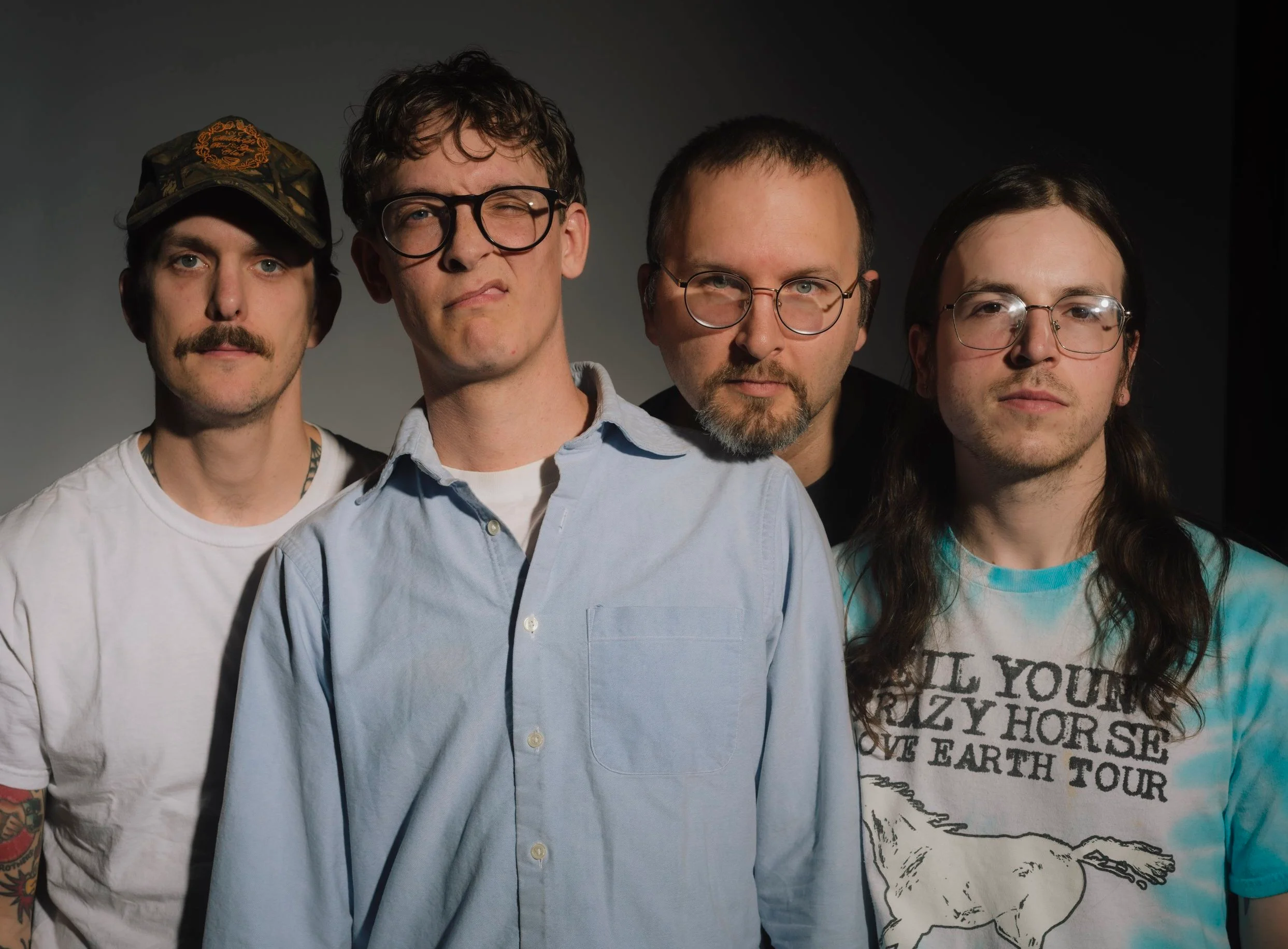
Hotline TNT is on a bit of a heater. Fresh off their breakout sophomore album, Cartwheel, the band recently released Raspberry Moon to rave reviews. The new LP still brings the same melodic-yet-distorted-all-at-the-same-time wall of sound that fans of the band are accustomed to, but Will Anderson, founding member and lyricist, takes the hooks to a new level.
From the “na na na” chorus of “Julia’s War” to the opening refrain of the lead track, “Was I Wrong,” you’ll have a hard time getting the songs out of your head. No lie, I’ve been subconsciously humming the latter since I first heard it, which is a welcomed reprieve from Bonnie Tyler’s “Total Eclipse of the Heart,” which normally occupies that space.
I caught up with Anderson while he was on break from touring in support of Raspberry Moon. Like any good Midwesterner (Anderson was born in Chippewa Falls, WI and grew up in Minneapolis), he was in line at Culver’s in the middle of ordering a ButterBurger. I guess you can take the boy out of the Midwest, but you can’t take the Midwest out of the boy. Over the course of our conversation, we talked about consistency in the band’s live lineup, how Anderson describes the band’s sound, and his feelings about the former Jazzman and current Timberwolves center Rudy Gobert.
“This was the first time I had a solid band touring for the last year before we went into the studio.”
For the first time in the project’s history, there is consistency in studio musicians and the touring band, resulting in a more polished, professional sound. It’s not that Hotline TNT has given up the grit and grind, DIY nature of their previous efforts — it’s that the consistency has them operating at their peak powers.
“[It was the] same approach,” Anderson says. “Whoever’s available is going to be on the record, so this was the first time I had a solid band touring for the last year before we went into the studio, and that’s just what the circumstances led to.”
While Anderson admits it’s impossible to know what album a different set of musicians would produce, what he does know is that the continuity led to a more collaborative effort in the studio. Because the group was comfortable with each other, the musicians weren’t afraid to speak up and offer suggestions and criticism.
Raspberry Moon is a natural evolution for the band that, since its inception, has been saddled with the shoegaze label, even if Hotline TNT’s approach to get that sound is vastly different than shoegaze mainstays like My Bloody Valentine, Lush, Ride or Slowdive. First off, there is no eponymous gazing of the shoes. The number of pedals the band utilizes is minimal to none, relying instead on distortion from the amp and bending notes by literally bending guitar necks. Gear is not a top priority. Ultimately, the band hits you over the head with three guitars and a cloud of dust.
“I didn’t try to make a shoegaze band or a shoegaze record, but that’s what people call it.”
Second, as Anderson has grown as a songwriter, he’s felt more comfortable letting his lyrics move to the forefront so the vocals aren’t buried as deep in the mix, making them more prominent than before.
“I didn’t try to make a shoegaze band or a shoegaze record, but that’s what people call it,” Anderson says. “We’re kind of outsiders in the movement of shoegaze bands. I don’t think we sound that much like the other bands [in the genre] … that are included in the articles. It’s just an accident that I’m totally comfortable with.”
He acknowledges that there could be some similarities in shared ethos, a moment in time, DIY/home recording and making loud music with soaring melodies, but that’s where the similarities end. But the primary reason this album stands out from the others is how it was recorded.
“I think it’s the most professional studio session we ever had as a band,” Anderson says. “That’s probably another aspect of why it sounds a bit more like straight-ahead rock music rather than like a hazy, grunge shoegaze band, you know.”
If you ask me, Raspberry Moon is the heir apparent to Hüsker Dü and The Flying Burrito Brothers, distilled through the hazy June gloom of Los Angeles right when the sun starts burning off the clouds. I know that sounds like a stretch, but hear me out: Hüsker Dü is often cited as the bridge between the hardcore movement and alternative music as we know it today, but Bob Mould’s iconic guitar tones are what is most resonant in Anderson’s sound. There’s just something about those three guitars roaring toward you like a runaway train that is exhilarating.
“[Raspberry Moon was] the most professional studio session we ever had as a band.”
Much like Hotline TNT, The Flying Burrito Brothers were outsiders at their inception. Somehow they weren’t rock enough for rock ’n’ roll or country enough for country music radio. In today’s parlance, though, they were disruptors. They created cosmic country or country rock whole cloth out of nothing and their influence can be seen all over the music industry today, from Tyler Childers to Brandi Carlile and even to MJ Lenderman and Waxahatchee. You probably still don’t think I’m going to land this plane, but stick with me.
While there’s nothing overtly country about Hotline TNT, harmonies are a key component of both bands’ sound. The Flying Burrito Brothers were defined by the melding of Gram Parson and Chris Hillman’s voices. The ethereal harmonies are the glue holding Raspberry Moon together and contribute heavily to the chill vibes of the record, which are prevalent throughout.
When I ask directly about how his influences manifest themselves during the writing and recording process, Anderson notes he’s not overtly trying to reference particular artists. But through years of listening to certain bands, those influences started to permeate into the band’s aesthetic like osmosis.
“In retrospect, when I go back to listen to my records and then go back and listen to the records I love, it’s kind of like, ‘Oh, it borrowed heavily from that thing’,” Anderson says. “Sometimes I will hear something that sounds like a Teenage Fanclub song, and I’ll say, ‘I gotta use that for sure, but twist it and put it on its head in a new way.”
“I do want to make songs that are going to get stuck in your head.”
While the new album might seem like a departure from the previous records, one constant is catchy lyrics that stick with you and are meant to sing along with. Not everyone can write “Wonderwall,” but when you write a chorus consisting of some “na na na’s,” even audiences unfamiliar with your music can quickly catch on and level up the energy of your live show.
“I do want to make songs that are going to get stuck in your head,” Anderson says. “And having the words ‘na na na’ be the chorus of a song is like, maybe a little bit of a cheat code [to] get the whole room singing.”
As our conversation winds down, there was still one topic I was dying to ask about — the Rudy Gobert trade. Like any good Brooklyn-based indie rocker, Anderson is a huge NBA fan and supports the Minnesota Timberwolves, who acquired Gobert in a much-maligned trade three years ago. As someone who experienced the highs and lows of Gobert during his time in Utah, it was nice to commiserate with a fellow traveler of the Stifle Tower experience.
“It’s undeniable that it’s helped the Timberwolves just looking at the numbers and looking at our success, it’s gone up,” Anderson says. “We’ve made the Western Conference Finals the last two years. And I don’t think we would have done that without Rudy Gobert. Having said that, he’s the biggest failure on the eyeball test I’ve ever seen. I just hate watching him play basketball.”
And it’s not just his on-court presence that Anderson quibbles with. Gobert’s off-court antics can be problematic as well (i.e. his cavalier behavior at the beginning of the pandemic, crying about not making the All-Star team, his ongoing beef with Draymond Green, the list goes on). Despite the noticeable improvement, Anderson is counting the days until Gobert’s contract runs its course or they find a trade partner to take him off their hands.
The 2026 NBA season officially kicks off on October 21, but you can catch Hotline TNT live on September 17 at Kilby Court or stream Raspberry Moon on all major platforms.
Read more recent coverage of Hotline TNT:
Review: Hotline TNT — Raspberry Moon
