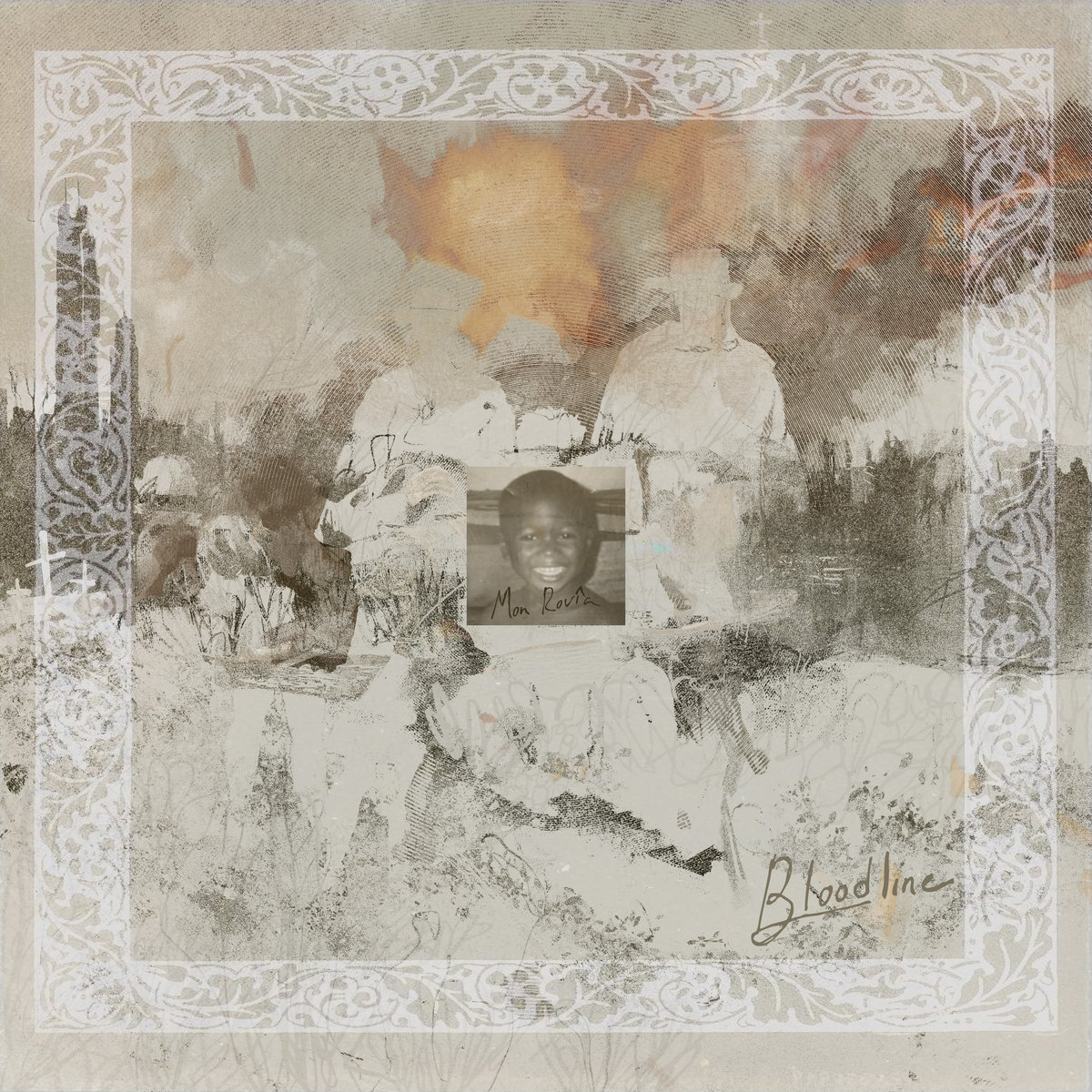
Review: Mon Rovîa — Bloodline
Music
Mon Rovîa
Bloodline
Nettwerk Music Group
Street: 01.09.2026
Mon Rovîa = The Mountain Goats + Lauryn Hill + Of Monsters and Men
Janjay Lowe (AKA Mon Rovîa) is a Liberian folk artist who grew up during the West African civil war and was adopted by a white family in Tennessee. He started out making R&B, but began incorporating his inspirations of Bon Iver and Fleet Foxes and introduced ukulele in his sound. I can’t help but feel a tender sweet spot for the longforgotten millennial tradition of hopecore that was shown in music like Mumford & Sons and The Lumineers. Over time, he blossomed into a spot within the Afro-Appalachian music ecosystem. The roots of folk and country music sprouted from Black Americans inhabiting the countryside. Many Black and Brown artists are reclaiming the style of Americana, for evidence look no further than the last two years of Super Bowl Halftime shows or Beyonce’s country album. While it’s no secret that all American genres are traced back to Black artists, folk and country have been viewed as by and for white people. This reclamation made by an individual who is not native born but is American raised is refreshing, it offers perspective that ties in an understanding of war and violence that is often missed by artists who haven’t had to witness such subjects firsthand.
The exchange of interaction and attention is one that can be both liberating and diminishing. If you aren’t favored by the algorithm, nobody sees what you’re putting out there. However in comparison to the old ways of the industry, this is theoretically much more democratized. So how did we get from Bob Dylan to Jesse Welles? The answer Lowe holds is an earnest belief in one’s self and a better future. One of the most consistent ways he went viral was by posting his songs alongside some variation of the caption, “What radicalized you? I thought war was dumb as a child.” This seemed to resonate with people who are all witnesses to political and economic structures crumbling before their very eyes. Somewhere in between grassroots efforts and digital footprints, there is very real room for widespread mindset shifts about what is possible in terms of collective peace. Lowe has had to make a name for himself the same way many independent artists do in this day and age–online with short clips to catch a prospective audience’s attention.
Lowe chose his stage name after the capital of Liberia. We hear a sample of a newscast at the beginning of “Pray the Devil back to Hell” which eases into divine strings and a soft balladry describing a young Lowes memory of his home country. The lyrics, “The gun strap and boots that don’t fit right / The kids left to fight the war again,” reveal the heartbreaking reality of violence in living spaces. “A Foreshadowing” covers the mind like a soft blanket of fog, the layered vocals during the bridge sound like a chorus of ghosts warning you about the past recreating itself. Inching along the tracklist, “Little by Little” uses guitar finger strumming and violin to paint the air with hope. The song itself tells of how change doesn’t come in a day but slowly over time, both in ourselves and in the greater world. The most nostalgic sounding of the album, “Whose face am I” gives more insight into Lowe’s feelings about being diasporic from a young age. Not knowing his birth parents before adoption has clearly left a mark on his soul and memory and the song comes from his heart regarding said topic. The haunting yet angelic track, “Somewhere down in Georgia” starts out with the lyrics “Cotton fields turned parking lots / Steel and stone can’t hide these stains / History still grows in the cracks when it rains.” The rest of the lyrics play around with the notion of Southern culture and shine a light on the covert cultural impacts from its history. My personal favorite, “Code of many colors,” makes clever world play out of an old Bible parable and reference to Dolly Parton’s story. The coat of many colors represents hardship being given in the form of a vibrant gift. Lowe’s talent, while it creates the ability for him to make beautiful music about living in a difficult time period, also comes with the cost of divisiveness. Lastly, “Heavy Foot” is most likely the song you are familiar with as a stomp-clap anthem about disillusionment and panic, as well as about the alternative ways to respond to the distress. The lyrics discuss homelessness, war, false media, institutionalized racism and corrupt politicians yet presents these heavy topics with an air of optimism.
The resurfacing of politically charged folk in this new context is strange and exciting. When the day-to-day interaction with social media is often floating between sweet videos of dogs, horrific news about the current administration, violence being incited on civilians, silly hot takes on pop culture and people asking viewers to donate to their gofundme, you’re bound to feel disillusioned and angrily hopeful. The digital landscape has taken the place of the neighborhood boulevard. We are connected with no one and everyone, we know everything and nothing, our visions are blurred by a pseudo-reality that ends up impacting our real lives. Have you ever scrolled Instagram or TikTok and come across one of those videos of a musician saying something along the lines of, “stop and give a small artist a chance.” The reincarnation of “did I just make the song of the summer!?” clickbait is usually not a great sign of an upstanding artist. But in a world of surviving humiliation rituals by posting online for the sake of exposure and hope for fame, there are some true gems. This is exactly how I came across Mon Rovîa and I feel grateful for the serendipity of algorithmic luck. —Marzia Thomas
Read other national album reviews from SLUG:
Review: The Horse — The Horse
Review: Dry Cleaning — Secret Love
