Tony Hawk
SLUGmag
Take a man of unspeakable talent and determination, put him in the environment that he was born for and what you get is pure phenomenon… pure Tony Hawk. On September 15, 2001, Tony will be putting on a demo for the Zumiez skate shop in the Fashion Place Mall (6191 S. State St.) parking lot to show all non-believers just how sick he really is.
Now, if you don’t know who Tony Hawk is, you’ve got problems. If you do, don’t consider yourself cool yet. Tony has become a household name over the past decade through all kinds of TV coverage, printed press and word of mouth, so just about every living being has heard of him. Skaters have been witness to what the man is capable of pulling off the 900, the loop, the kickflip McTwist, and winning more contests than anyone else (while making up more vert tricks along the way than anyone in history) for years now. With Tony being the busiest person in the skate industry, he’s pretty hard to get a hold of. After months of waiting, the SLUG crew and I finally got some questions together for an interview.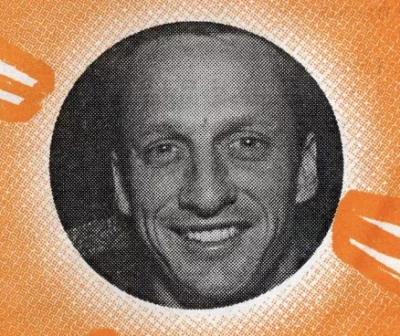
Very few people know that Tony’s father Frank Hawk invented the National Skateboard Association in the 1980s. The NSA, as it was called, was responsible for contests that helped skateboarding and skateboarders’ progress. People instantly thought that Tony was getting preferential treatment as he won contest after contest, even though his dad wasn’t a judge, and had basically nothing to do with contest results. After being pro for Powell-Peralta for over eight years, winning almost every contest that he entered and having some of the most memorable board graphics ever, Tony decided to leave Powell-Peralta and start his own company. So in 1992, Tony and ex-pro freestyler Per Welinder (also a Powell-Peralta pro) got together and started Birdhouse Projects. With a lineup of pros like Heath Kirchart, Jeremy Klein, Bucky Lasek, Steve Berra, Willy Santos and Brian Sumner, you know Birdhouse ain’t fucking around. According to Tony, they’re working on a new video, but it probably won’t be ready until late next year. With Tony’s success, more and more kids look up to him as a role model instead of the typical basketball and football kooks. When I ask if he was glad to see this change, he says, “Yes. Parents now see skateboarding as a positive influence on their children’s lives, exactly as they should.”
All the new cement skateparks popping up are like a flashback to the late ‘70s and early ‘80s. Tony says that he hasn’t skated in all of the new parks. “I’ve skated some of them and they are a blast,” he says. As far as the old parks, which rapidly became extinct throughout the ‘80s, Tony misses Del Mar the most “mostly because of the community I found there.” Tony almost lived at Del Mar throughout much of his childhood. On a more recent note, I ask what Tony thought of Bob Burnquist’s switch loop ride at the Tampa 2001 skate contest (go watch the video). “Only Bob could consider such a feat,” he says. “He is truly a pioneer of vert skating.”
Tony is always willing to talk about other skaters who have come and gone over the decades, and give them their props. When I ask how it was growing up always being in the spotlight, Tony replies, “Always? Nah. I’ve never been caught up in trying to be famous — I just wanted to improve my skills.” Although he might not think about always being in the spotlight, Tony has had his share of fame, both positive and negative. From the start, Tony pushed himself and the limits of skateboarding. The skaters who drove Tony to seek perfection on a skateboard were Eddie Elguera, Steve Caballero, Dave Andrecht and Stacy Peralta (just to name a few). Speaking of the old school, when I ask what he thought about the Dogtown and Z-Boys documentary film (read the February 2001 issue of SLUG), Tony replies, “It’s a very important film. Anyone interested in skating should see it so they can understand our history.” As he progressed, he was almost solely responsible for the evolution of skateboarding from old school to new school. This change earned him as many enemies as it did friends.
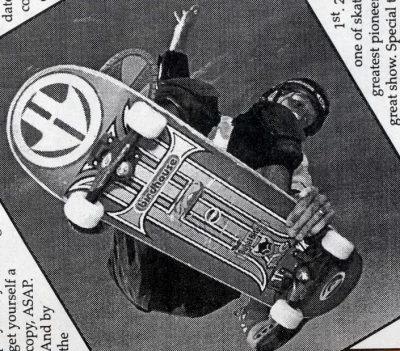 Tony has been pro for nearly 19 years and officially stopped competing in 1999. At 33 years of age, eating well and skating regularly keeps him healthy. When the question of whether he pushes it as hard now as when he was pro comes up, Tony replies, “Almost, but on a different level. Having a family and business to manage, I can’t spend all day at the skate park anymore.” When you ride skateboards, injuries are part of the game, although he says “learning how to fall is the best way to avoid getting hurt.” Tony has knocked out his front teeth, had a few concussions “before the days of good helmets,” fractured a rib and broken his elbow. Oh yes, the pleasures of skating. To keep injury-free, Tony swears by Boneless, a pad company based in Utah.
With skateboarding becoming more and more popular and accepted in mainstream culture, Tony has taken advantage of the hype and used his name to make “much more than I ever thought possible.” He only endorses products that he actually uses or believes in, so don’t think he’s some sell-out corporate whore. The man has got to make a living, and Tony deserves the cash and recognition that have come his way. You might have noticed that damn skateboard video game that everyone has been playing Tony Hawk’s Pro Skater. Yes, the best skateboarding video game, and depending on who you talk to, quite possibly the best video game ever, period. If you haven’t played it yet, then go get yourself a copy ASAP. And by the way, Tony Hawk’s Pro Skater 3 is coming out in October 2001 for all you junkies. I ask Tony about the positive response from people about the game. “It has been very surprising,” he says. “It’s amazing that a video game finally makes the general public understand the technical aspects of skating.” 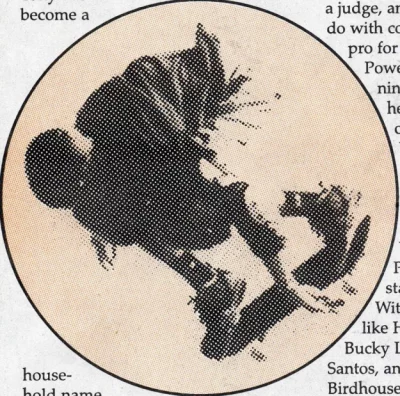
On a final note, if there are still some burning questions left in your mind, go pick up Tony’s book. Titled Hawk: Occupation: Skateboarder (Regan Books), this book fills in some important gaps in the history of skateboarding. It also talks about some of the low points and incredibly funny things that happened along the way. Look for this book at independent bookstores and skateshops. Fuck the corporate giants.
So, once again, Tony Hawk is coming to Salt Lake. This time he’ll be doing a demo for Zumiez at Fashion Place Mall instead of at Real Ride like last year. Why? Because they anticipate a bigger crowd than the skate park can accommodate. Be sure to come to the demo on September 1, 2001 and see one of skateboarding’s greatest pioneers put on a great show. Special thanks go out to Amy Campion at Zumiez and Jeff Taylor and Kevin Staab at Atlas Distribution for making this happen.
