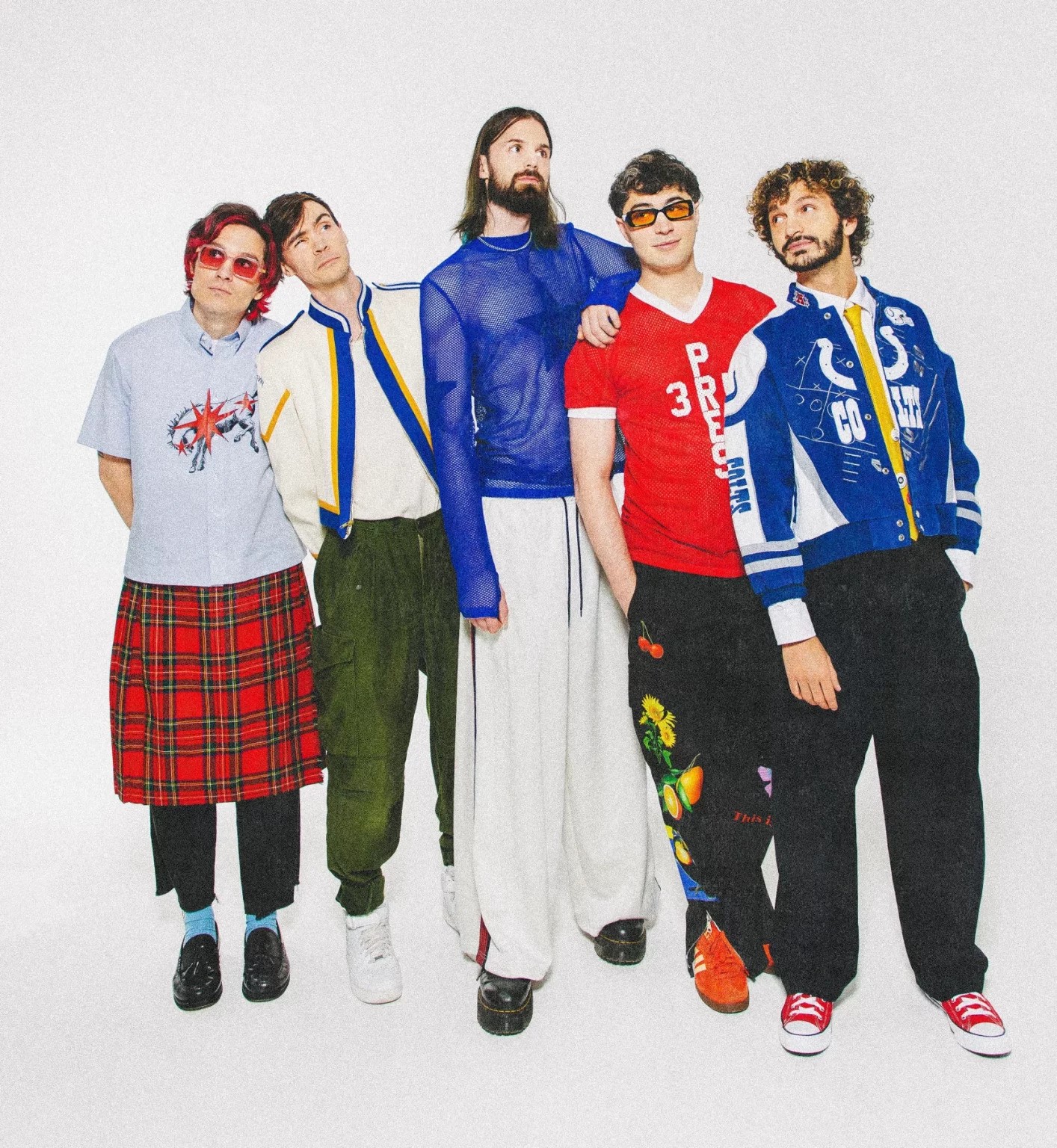
Backstage with Michael Kozakov from Good Kid
Concert
Michael Kozakov, bassist for the Canadian indie rock band Good Kid, says that touring is the point. He’s a veteran of, he guesses, six major tours covering North America and the UK. I’m meeting him backstage at The Complex in Salt Lake City amidst what is perhaps Good Kid’s largest and most important soiree yet: the ongoing 40-stop tour promoting their debut album, Can We Hang Out Sometime?
“All the work that you do is so you get to go on stage and connect with real humans,” Kozakov states emphatically. “Everything else is isolated: you’re working by yourself, maybe with your friends. But this, what we’re about to do tonight, is for me. I’m reaping the benefits of all the work I did for the last year.”
It’s no coincidence that the album Kozakov helped write consists of themes almost entirely concerning human connection and the delicate complexities of human relationships. As we sit in the backstage production office a couple hours before the concert, Kozakov allows some emotion in reflecting on the 10 songs they recorded at a studio in L.A. last year, at the same time as the January 2025 wildfires.
“People were getting evacuated,” he recalls. “We were monitoring this app that was showing us a circle getting smaller and smaller around the studio and our Airbnb.” While the band’s accommodations were just down the street from the studio, he says even that short walk was difficult and contained an element of impending danger and doom.
“We’re walking, and there’s literally ashes falling from the sky, and you’re like, ‘That’s somebody’s house,’” Kozakov says with a note of incredulity. It’s the familiar kind of near shock that many if not most young people share about the state of the world today. A shared dread though, can be salve on a wound that connects like-minded individuals experiencing the same or similar existential consequences. Luckily, Kozakov and the band weren’t alone during their time in L.A.
“I think the theme of the album came together because all these people, other musicians and friends, were getting evacuated, and we’d be like, ‘Come to our Airbnb,’” Kozakov remembers. “We were dealing with the unimaginable pain everybody around us was going through by saying, ‘We just got to stick together.’”
Never having lost or gained a member, Good Kid has always built strong bonds within and without. Kozakov tells me he first met lead guitarist Jacob Tsafatinos in a German class at The University of Toronto. “He used to bring his guitar to class because he was going to practice with his other band, and I would bring my bass,” Kozakov says. Thanks to these obvious identifiers, Kozakov and Tsafatinos inevitably caught each other’s attention, connecting deeply over music and their desire to play, write songs and perform. Kozakov also recruited Nick Frosst, who he’d already met in computer science; guitarist David Wood, who was studying film but agreed to take some programming courses; and drummer Jon Kereliuk, who transitioned from math to computer science as well.
“It was just like, so many people who love playing music, had just moved to a new city and were going to a new university,” Kozakov says. The freshly founded group began releasing music quickly after settling on a name, Good Kid, and the last 11 years have since been filled with dozens of singles and EPs, as well as gorgeously animated music videos populating a lively YouTube page. They even created a browser-compatible video game called Ghost King’s Revenge, which stars Nomu Kid, an animated character that grew out of the cover art for the band’s first single, “Nomu.” The art was done by Gabriel Altrows, an artist and childhood friend of Frosst.
“We knew we wanted to do an illustration, and we were really inspired by Gorillaz,” Kozakov explains. “We reached out to Gabe and said, ‘We just came up with a band name, we’re going to be called Good Kid,’ and we showed him the song, and he came to us with this character. That got us all so hyped and inspired that we decided we wanted to do in-depth storytelling with characters, all because of that first album cover.” Altrows has gone on to draw and design the cover art for all Good Kid releases.
Although they didn’t start touring until 2021, Good Kid is already a massive act. They continue to engage online audiences with their consistent releases and by allowing their music to be shareable across the internet, strike-free. Nowadays, they manifest connections on tour through VIP experiences, audience interaction and the themes of friendship and community that describe the Good Kid concert experience.
When I ask Kozakov if the band’s computer programming background helps them connect with fans, he says that it’s almost more important internally for the band’s creative health. “Being in a band requires spending a lot of time with people in the most vulnerable position you can imagine,” he says. “So, whatever you can find that binds you, you really need to use that, because there’s going to be things that tear you apart.”
Regardless, he insists, “The point of learning music is to play with other people. Otherwise, it’s like learning a language and speaking it to yourself in a room. That’s crazy.” He remembers what allowed him to gel with other musicians early on: choosing the bass, where he could become proficient enough at his favorite Weezer, Green Day and Red Hot Chili Peppers songs to play them with others fairly quickly. When engaging with fans, Kozakov says he most enjoys hearing from people who have just started learning music, especially bass players: “The thing I tell them is, ‘Learn the bare minimum, and start playing with another human.’”
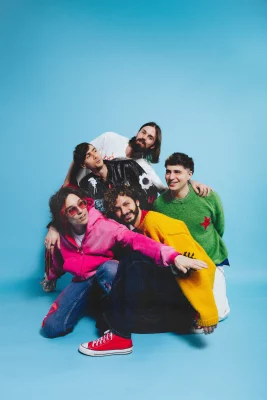
After speaking with Kozakov backstage and getting a peek at Good Kid’s highly involved VIP experience, I watch as the rest of the crowd begins to swell inside the Rockwell, the largest indoor venue at The Complex. Many fans also eagerly head over to fill a robust, zig-zagging merch line. Last time Good Kid was in town, they played at The Grand, a much smaller venue directly across from Rockwell. Now, The Grand is used only as their dedicated merch area, equipped with a pen pal writing station and an arcade console version of one of Good Kid’s original video games.
Around me flock both kids of all ages and adults of all ages, kids with adults and adults with kids on their shoulders. There are young couples, queer couples, siblings bearing the same beard and glasses look, large, giddy friend groups and people who probably on most days feel like certified loners. In a room with this many like-minded individuals, though, no-one looks too lonely tonight.
The opener, San Antonio-based INOHA, takes the stage at 8 p.m. on the dot and launches into a loud, 40-minute, ska-heavy set. I’m stationed toward the back wall, watching as people start to dance. In front of me is a rollicking sea of pink and purple hair and multicolored propeller hats, with at least one tall, blue mohawk that sticks out above everybody else. The rest of the happy mob is accented by floral T-shirts, Deathly Hallows tattoos, mobility aids, furry cat ears and handmade props. When Good Kid finally takes the stage with their exuberant, highly orchestrated yet still off-the-cuff showmanship, the crowd is near feral but in a safe and friendly kind of way, if that’s possible.
Good Kid’s sound is deep and full compared to INOHA, and you can feel the bass and drums in your chest. Frosst, who has the Nate Ruess-like frontman look, cavorts on stage in a black leather jacket and sleeveless white tee. At one point, he borrows a fan’s tan, ten-gallon cowboy hat and struts around in it for a whole song. When not shredding on guitar and head-banging his curly wig around, Tsafatinos entertains the audience with clever jokes about dirty soda, gives fun facts about the band and even attempts (and succeeds at) several “setlist pranks.” For instance, during one song they pull a fan named Jacob up to play Guitar Hero on a TV screen they rolled on stage, while the band plays the song in real time alongside him. Jacob finishes the song with an over 80% score. They let him keep the Guitar Hero guitar as a prize. The crowd eats it up.
Kozakov gets in on some of the unhinged antics as well, not to mention his energetic presence when playing bass on stage. On two separate occasions, for no apparent reason, he leads the crowd in singing the chorus of “I Want It That Way” by the Backstreet Boys.
After a brief exit from the stage, rhythm guitarist Wood returns to play a solo acoustic song he wrote for his father called “Staying Warm,” and suddenly there isn’t a dry eye in the room. Kozakov follows Wood with a stripped-down first verse of the song he contributed lyrics to for the recent album, “Ghost Keeper,” stopping to explain the song’s origin story before singing. It’s about loving someone who pulls away, he says. “I can look back at that time… and that push and pull? That’s not love,” he tells the audience with a sage-like aura. “Chasing after someone who doesn’t want you back can be devastating, but it’s not love, and this isn’t a love song.”
Near the end of the show, during one of Good Kid’s actual love songs, two fans at the front get engaged. Tsafatinos stops the show to congratulate them.
Whether you’re Michael Kozakov, sharing pieces of yourself on stage in front of rabid, adoring thousands while standing side-by-side with your best friends, or you’re the happy couple at the front of the crowd now planning your wedding, Good Kid tours bring new community to life at each stop, and it’s clear that everyone belongs at a Good Kid show.
Read more music coverage from Kyle Forbush:
Review: Good Kid — Can We Hang Out Sometime?
Review: War Child Records – HELP(2)
If you enjoy SLUG’s music interviews, consider joining our community of donors.
