Jamie D. Ramsay Works Well Under Pressure
Arts
In the tense 72 hours before D-Day with the fate of the free world hanging in the balance, Pressure follows General Dwight D. Eisenhower and Captain James Stagg as they face an impossible choice: launch the largest and most dangerous seaborne invasion in history, or risk losing the war altogether. Bringing that pivotal moment to the screen required a visual approach that could bridge dramatic storytelling and historical authenticity, a challenge embraced by cinematographer Jamie D. Ramsay.
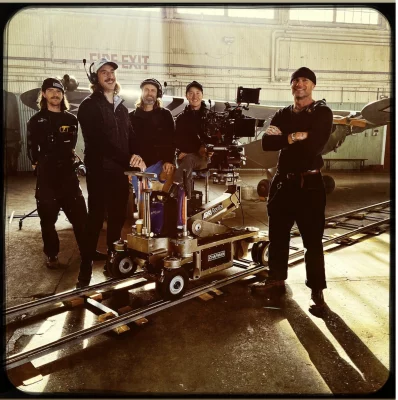
“From a very young age, I was more an observer of life, rather than a kid that would have their head buried in computer games or books or things like that,” Ramsay says. He recalls spending countless hours simply watching the world around him and becoming fascinated by everyday life. After being diagnosed with dyslexia and ADHD as a child, he and his family realized his mind processed information differently. A turning point came when his grandfather gave him a simple camera at age 12. “That was taking 360-degree observations and honing it into a square box and exploring the micro-narrative that exists in the bigger picture,” Ramsay says. Traditional schooling never felt like a natural fit. Instead, Ramsay found his calling after attending film school in Johannesburg, South Africa. Having already been exposed to film sets as a child actor in commercials, he was drawn to the energy and creativity of production. “Within the first few months, I realized that cinematography was the language that made sense to me, and it had been the thing that was inside of me and part of how I saw the world for my whole life,” Ramsay explains.
That lifelong fascination with images proved invaluable on Pressure, where Ramsay and director Anthony Maras sought a visual language rooted in classic cinema and documentary realism. The production was photographed on the Alexa Mini, a choice driven by both creative and practical concerns. “The acquisition format was hugely based on the upcoming creative journey that Anthony and I wanted to go on, which was almost an ode to the cinema of the old school,” Ramsay explains. Because the film incorporates a substantial amount of restored World War II archival footage, the modern photography needed to blend seamlessly with historical material. “A master acquisition style couldn’t be so alien to the analog restored footage that we were gonna be using; otherwise, you could really stand out in the edit,” Ramsay says. The team studied how wartime documentary cinematographers worked, embracing deeper focus, functional camera placement and crisp imagery that could coexist naturally with archive material.
Ramsay notes that those filmmakers were focused on efficiently capturing history as it unfolded. “The position and the width and the way the camera moved was really about telling as much story as you could in as little amount of time and effort as possible,” Ramsay says. Integrating archival footage also influenced the film’s lighting design. The production relied heavily on colorized black-and-white footage, prompting Ramsay to closely analyze how those images were processed. “One of the big things I realized with the re-colorization was that there’s a huge amount of midtone in the image,” Ramsay says. As a result, Pressure was lit to preserve generous midtones throughout the frame, allowing newly photographed material and archival footage to sit comfortably alongside one another. “The way that we lit and filmed this movie, it would need to be quite generous on the midtone,” Ramsay says.
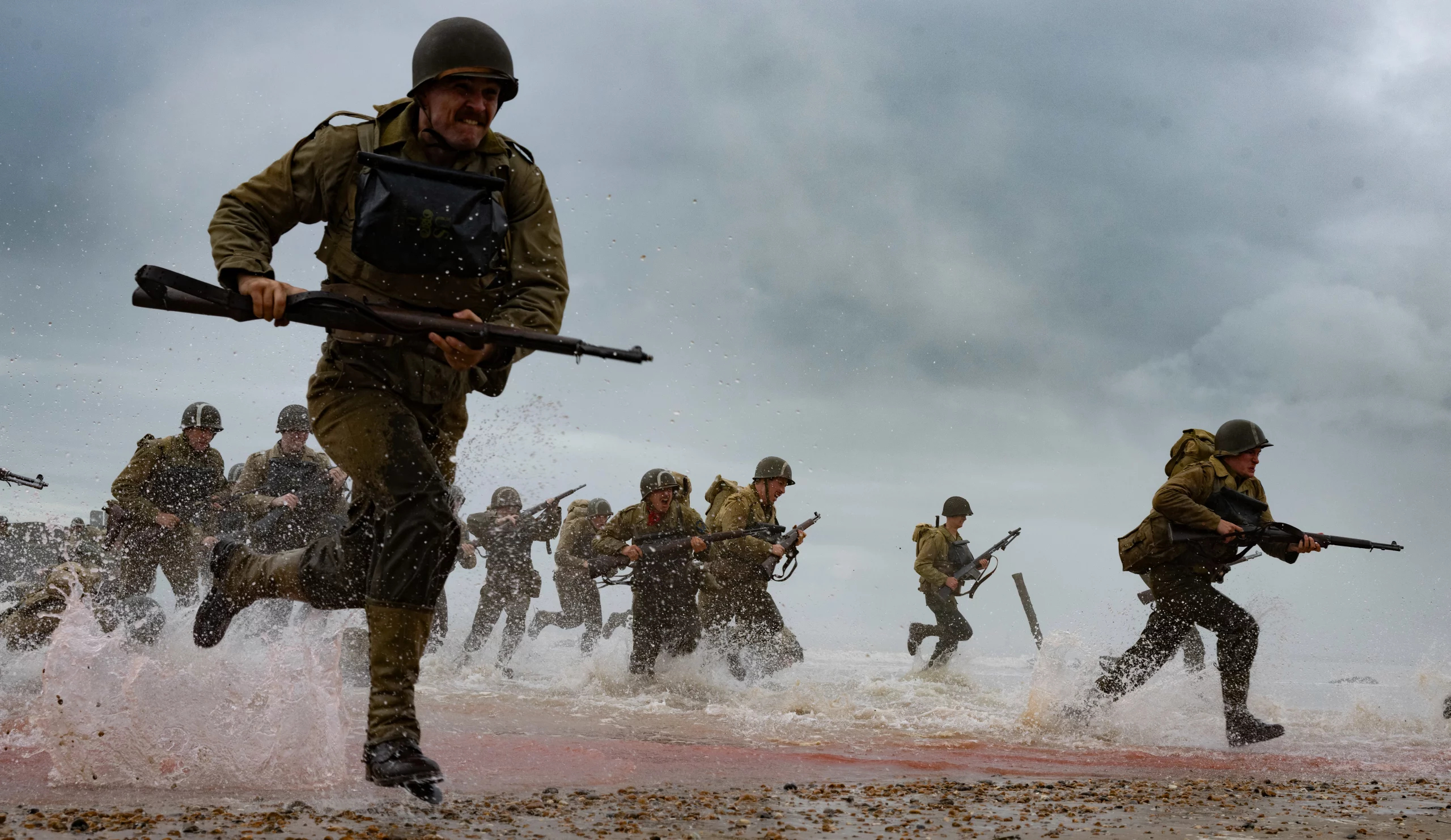
Ramsay drew inspiration from photography, studying how image-makers such as Saul Leiter and Vivian Maier composed scenes and worked with available light. “They would always position themselves in a way that would find good, general, generous, natural lighting,” Ramsay says. Alongside archival footage and classic war films, these photographic influences helped shape a visual world that felt authentic without becoming trapped by imitation. One sequence presented a particularly unique challenge: depicting the D-Day landings themselves. For that, Ramsay and the filmmakers naturally turned to one of the most influential war films ever made. “For the beach landing, obviously we watched the iconic Saving Private Ryan,” Ramsay says. “I think nobody’s ever done it as well as they have in terms of creating a very subjective visceral experience of the hell that must have been.”
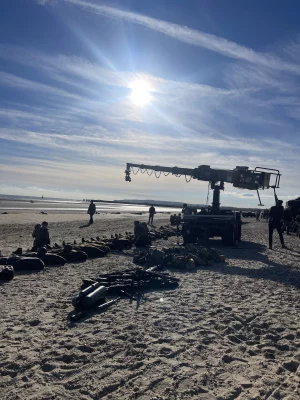
The goal was never to recreate Steven Spielberg‘s 1998 film, but to understand how it achieved such emotional immediacy. “We wanted to create the same sense of intimacy and chaos and terror. Our tools were different. But perhaps the feeling is similar,” Ramsay says. One aspect where filmmaking and warfare face the same challenges is in finding the right weather conditions, and maintaining continuity of weather when shooting in the UK was quite a task. ”It was really also about judging light direction and weather pattern, trying to bracket certain scenes in certain light,” Ramsay says. “It’s so interesting how life always imitates art and vice versa. Whenever I’m doing a film with a strong subject matter, I always feel like there’s this mimicry of the experience, to the subject matter in a strange sense —whether or not that’s coincidence, because your focus has become sharpened on a certain point or whether it really happens. But we certainly experienced some pretty wild weather.”
Ultimately, Ramsay’s work on Pressure reflects the same instincts that first drew him to photography as a child: careful observation, attention to detail and a desire to find stories within larger historical moments. By blending modern filmmaking with the visual language of wartime documentation, he helped create a film that places audiences alongside the leaders and soldiers, confronting one of history’s most consequential decisions.
Read more from Patrick Gibbs:
Phil Arntz Takes Aerial Cinematography to New Heights
Bill Dubuque and Karen Campbell on Finding The Story Behind M.I.A.
If you enjoy SLUG’s film coverage, consider joining our community of donors.
