More Than the Minimum: Disability Access and Beyond in SLC
Activism, Outreach and Education
A wheelchair-accessible projection booth. Audible traffic signals. A rebuilt city website that works with screen readers. Behind each of these accommodations is someone who fought for it. On July 27, Salt Lake City marked its inaugural ADA Day, celebrating that work and the people behind it. For these people, advocating for accessibility is not just about accommodations for disabled people, it’s about creating a system that continually elevates quality of life and allows everyone to fully participate.
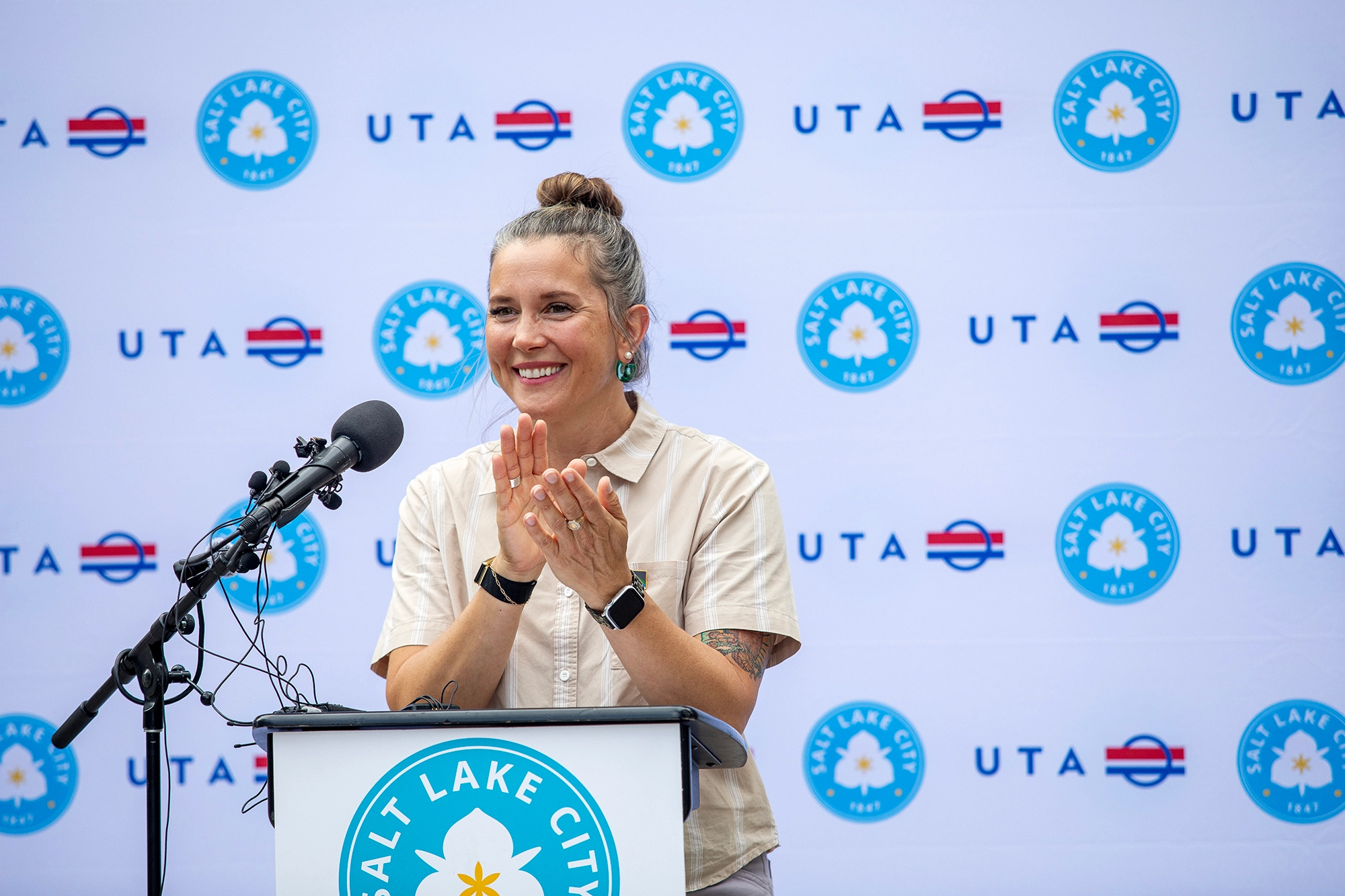
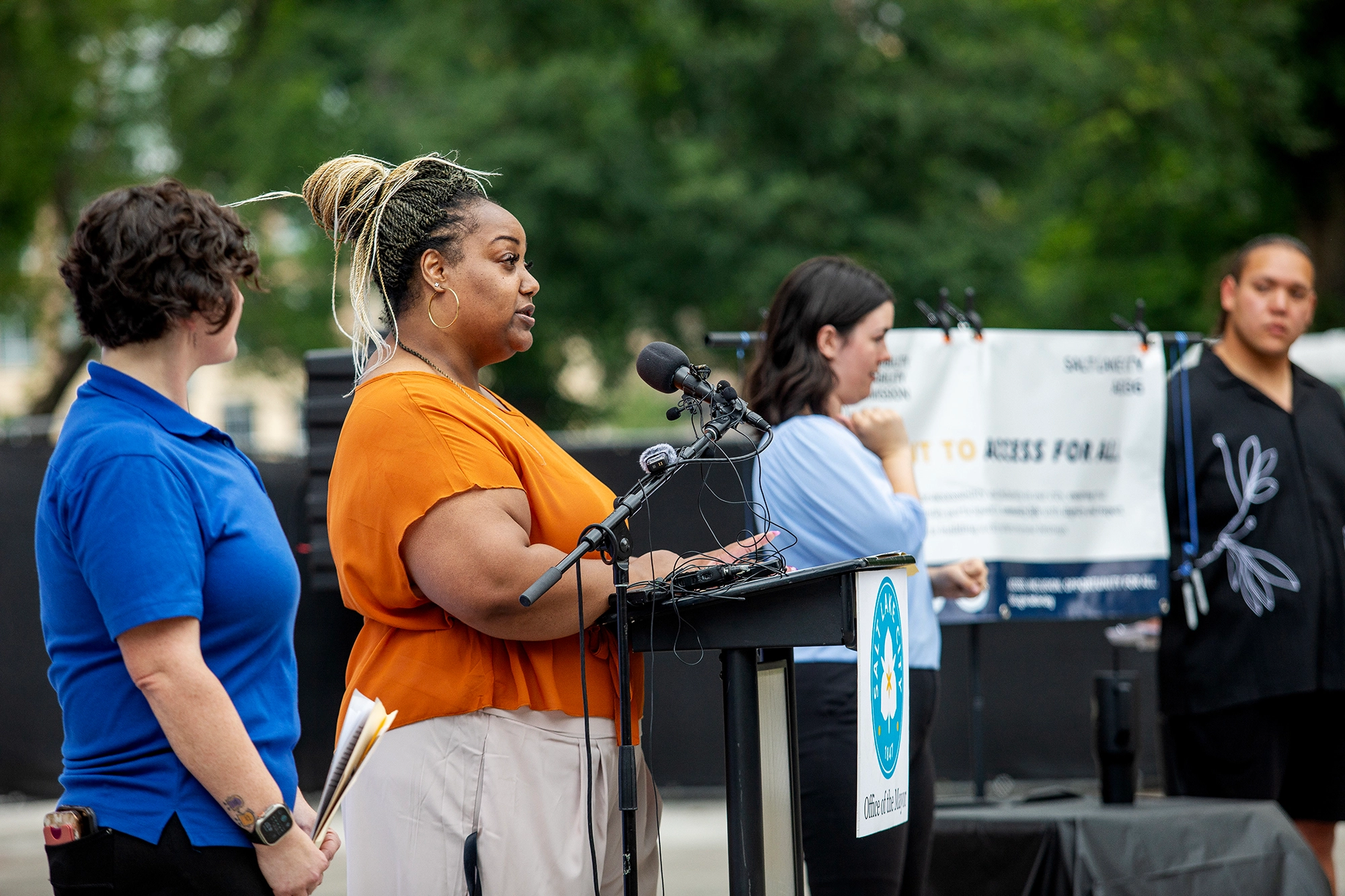
The event was held on the 36-year anniversary of the passage of the Americans with Disabilities Act with the Mayor’s office, the Office of Accessibility and Disability and the Utah Transit Authority coming together to honor advocates working to advance accessibility in Salt Lake City. “Today is a chance to celebrate the progress we have made and recommit ourselves to building a community where everyone belongs,” says Pamela Mower, the city’s accessibility and disability commissioner.
The Americans with Disabilities Act, passed in 1990, was designed to prohibit public and private discrimination against persons with disabilities. However, the advocacy surrounding its passage stretches back much further to community organizers who fought for decades to allow disabled people to participate fully in work, access goods and services and engage as members of their community. The legacy of this advocacy is reflected in the work of community members who continue to push for access and elevate the standard of accessibility. “ADA Day provides an opportunity to recognize these community individuals,” says ADA Manager Angela Haylock.
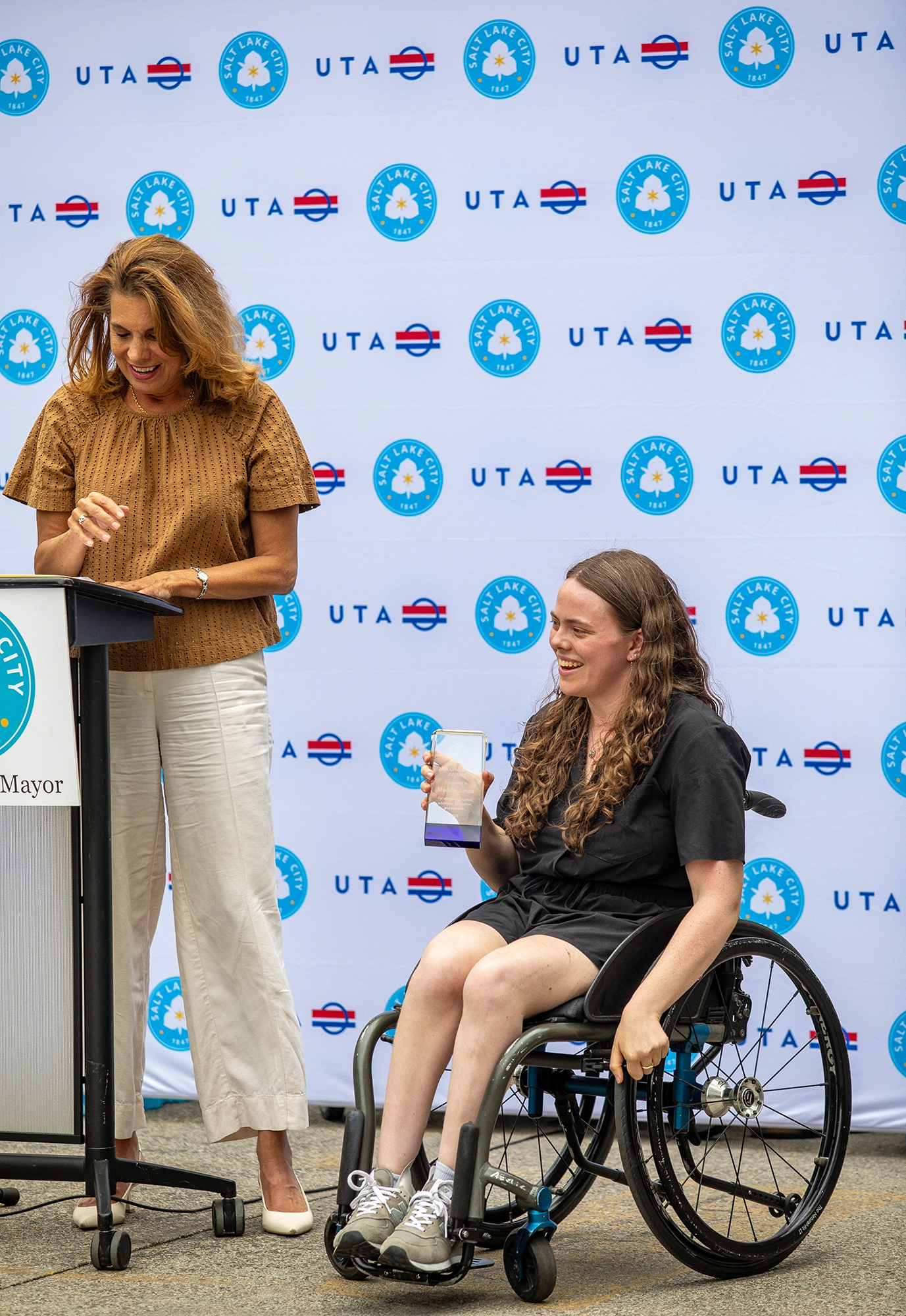
One community member honored was Maddie Jones, who received the 2026 ADA Champion Award for her work advancing accessibility in Utah cinemas. “Maddie has transformed the way accessibility is viewed at the Salt Lake Film Society,” says Kristy Chambers, chair of the Salt Lake City Accessibility and Disability Commission. Jones helped launch the Unstoppable: On the Road tour, bringing films created by disabled filmmakers, and celebration of disabled culture, to audiences across the country. She led efforts to make Broadway Theater the first cinema in Utah to provide sensory accessibility accommodations to patrons. She even championed better accommodations for disabled employees of local theaters, succeeding in making Tower Theater the first theater in the region with a wheelchair-accessible projection booth.
While advocating for accessibility helps those who are living with a disability, there are real benefits for people of all abilities when cities advance universal design and build a public realm that is accessible. “The curb ramp that makes it possible for a wheelchair user to cross the street also helps a parent pushing a stroller, a traveler pulling a suitcase or someone recovering from a foot injury,” explains Mayor Erin Mendenhall. While increased accessibility may benefit the whole community, that’s not the motivation behind the city’s efforts, Mendenhall clarified. “We do it because everyone belongs in Salt Lake City.”
Whether through snow removal policies that allow for easier passage through the city’s streets, wheelchair-accessible buses or high-contrast signage that’s visible to someone with impaired vision, UTA and the City of Salt Lake have committed to creating a city where everyone can enjoy access to parks and green space, safe movement through streets and public transportation. Beyond physical accommodations, the city’s Information Management Services department has even made updates to city websites to increase digital accessibility.
The cooperation of transit authorities, city offices and individual residents serves as a reminder that the work of advancing accessibility does not fall to one individual or community, but to everyone. Speakers urged attendees to sign a “We Commit to Access” community pledge, joining a public commitment to support full inclusion and universal design, making accessibility a standard rather than an afterthought.
One of the greatest strengths of the ADA, Chambers argues, “is that it challenges us not to ask ‘what is the minimum required,’ but rather ‘what is possible?'” Despite tremendous progress, city officials and disability advocates alike echo calls to continue accessibility efforts. “The Americans with Disabilities Act gave our country a powerful civil rights foundation 36 years ago, but it was never meant to be the end of the work,” Mendenhall says. “I hope each year we have new reasons to celebrate the progress that we’ve made.”
Read more interviews by Sara Milano:
Quotidian Ragazine Offers A Wrinkle in Time With Enduring Fashion
How Craft Lake City’s Scholarship Helped One Artist Reclaim Her Craft
To help SLUG continue its coverage of important events like ADA Day, consider joining our community of donors!
