
Stage musical Little Shop of Horrors to play remodeled Murray Theater
Art
Spooky season continues with a sit-down interview with Nolan Mitchell, director of Murray Theater’s production of Little Shop of Horrors, the musical by Howard Ashman and Alan Menken.
Mitchell and I spent an hour discussing the production over food and amid the mid-afternoon atmosphere of Murray’s Ice Haüs. Here’s a taste of our conversation, edited for length and clarity.
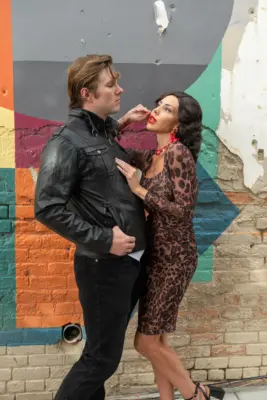
SLUG: I’m a kid of the ‘80s, so my introduction to Little Shop of Horrors was the 1986 film. What was your introduction to it?
Mitchell: Mine was pretty much the same as yours. I saw the movie with Steve Martin and those guys, and it was funny and great. But then several years later I was able to see the musical, and I like that better. I’m just a live theater type person. So, I’ve seen Little Shop done many, many, many times. A lot of them were learning experiences because of the things that they may have done wrong or the things they did right trying to tell that story.
SLUG: I hadn’t realized how much of a core audience it still has.
Mitchell: It really does have that following. It’s kind of like The Wizard of Oz; it’s a multi-generational type of show.
SLUG: Popularity does kind of have a dark side in that there are expectations.
Mitchell: I think a lot of times people forget what the story of Little Shop is. And yeah, it’s about the plant, but it’s also about the other characters and how they relate to the plant, and how do they relate to each other? That’s what I focus on. Yes, the plant is going to eat [people]; there’s no getting away from that.
In several of the shows I’ve seen, the director has tried to mimic the movie. And the script doesn’t really lend to that mimicking. Or they’ve decided they want to do something that’s totally, completely different, like, “we’re going to do it as a Western theme.” For me, I like to leave my mark by having a good, high-quality production, not “we’re doing this show in a subway car.”
SLUG: I grew up in Murray. As a kid, I went to the Murray Theater and saw lots of movies there. I vividly remember Raiders of the Lost Ark and walking out and being like, “I just saw a guy’s face melt!” My mom was like, “What did I just take you to?” I haven’t been since the remodel, so this is kind of also interesting to me from that perspective.
Mitchell: For a lot of people in the cast, it’s kind of a coming home thing. This is where I grew up. Back then we had the Murray Theater, or we had the Vista Theater. This really is a coming home for me. Just to be walking into that space and going, “This is where we’re going to do this show. This is so cool.”
SLUG: You talked about how you, over the years, have developed a vision of what you wanted this to be. How much did that evolve once you had done casting?
Mitchell: I always figure out what the final vision of my musical or play is going to be once I get it cast. Because in community theater, who you get to come to auditions is usually who you cast. So, I take my vision and move it a little bit this way or that way to make sure we’re still telling the story. This one was a little surprising when we got to the final decisions on casting. As soon as one thing was decided, it was just like everything fell into place.
SLUG: Having seen, performed, and directed Little Shop of Horrors, are there still new revelations for you when you see it?
Mitchell: There always is. A lot of times it’s just the way that the characters play their part or something that they do kind of sparks something in the back of my head and I’m like, “Hmm, we’ve got to do this.” Or one [of my actors] will come to me and say, “Hey, I would like to try this, what do you think?” And I’ll say, “We’ll play with it and let’s see where that takes us.” I want the audience to do the same thing. I want them to come in and see things just a little bit different than the other places that have done Little Shop.
SLUG: Even if the play hasn’t changed, we do, and we bring something new to it just simply by our own experiences.
Mitchell: We look through different lenses wherever we’re at in our lives. I want people to identify with our cast. For whatever reason, they see themselves somewhere in one of our cast members. Are they getting beat up like Audrey was? Not that we want to go in those dark places, but some people are going to identify with that, because that was their life or part of their life.
Or they see themselves in Seymour as the everyman who just keeps saying, “yes, yes, yes, yes, yes,” until he’s so deep he can’t say, “no.” And there’s times where he could have said no and stopped and moved on, but he didn’t.
I identify with that. I say, “Yes, I’ll do that, yes I’ll do that, yes I’ll do that,” and all of a sudden, I’ve got too much on my plate. I want some people to look at that and go, “Oh yeah, I’m where I’m at, and I really just need to stop.”
SLUG: But it does get dark. This is Little Shop of Horrors not Little Shop of Flowers.
Mitchell: Right. But the show can’t always be down low and sad and heartbreaking over and over and over again. Otherwise, your audience tunes out. They don’t tell people to see it. You have some levity to bring it up and then to come back up and down. I mean, that’s just our lives, that’s human nature. We wanted to make sure that there are some really campy things that are in there. We have to make sure we have people laughing even in those sad moments.
SLUG: I hear you might have a live band?
Mitchell: We have a 12-person orchestra. It’s going to be awesome because that changes the whole dynamic of the actor’s ability to portray their parts. In the moment, they can decide they want to go a little bit slower, because they’re feeling something, or they need to push through something because it’s an angry scene and they want to get through it.
[At the rehearsal] I just sat there the whole time, just going, “Oh my God, this is so cool. I can’t wait to get it on stage. I can’t wait for these people in costume. I can’t wait for the plant to be on stage moving and being part of our cast.”
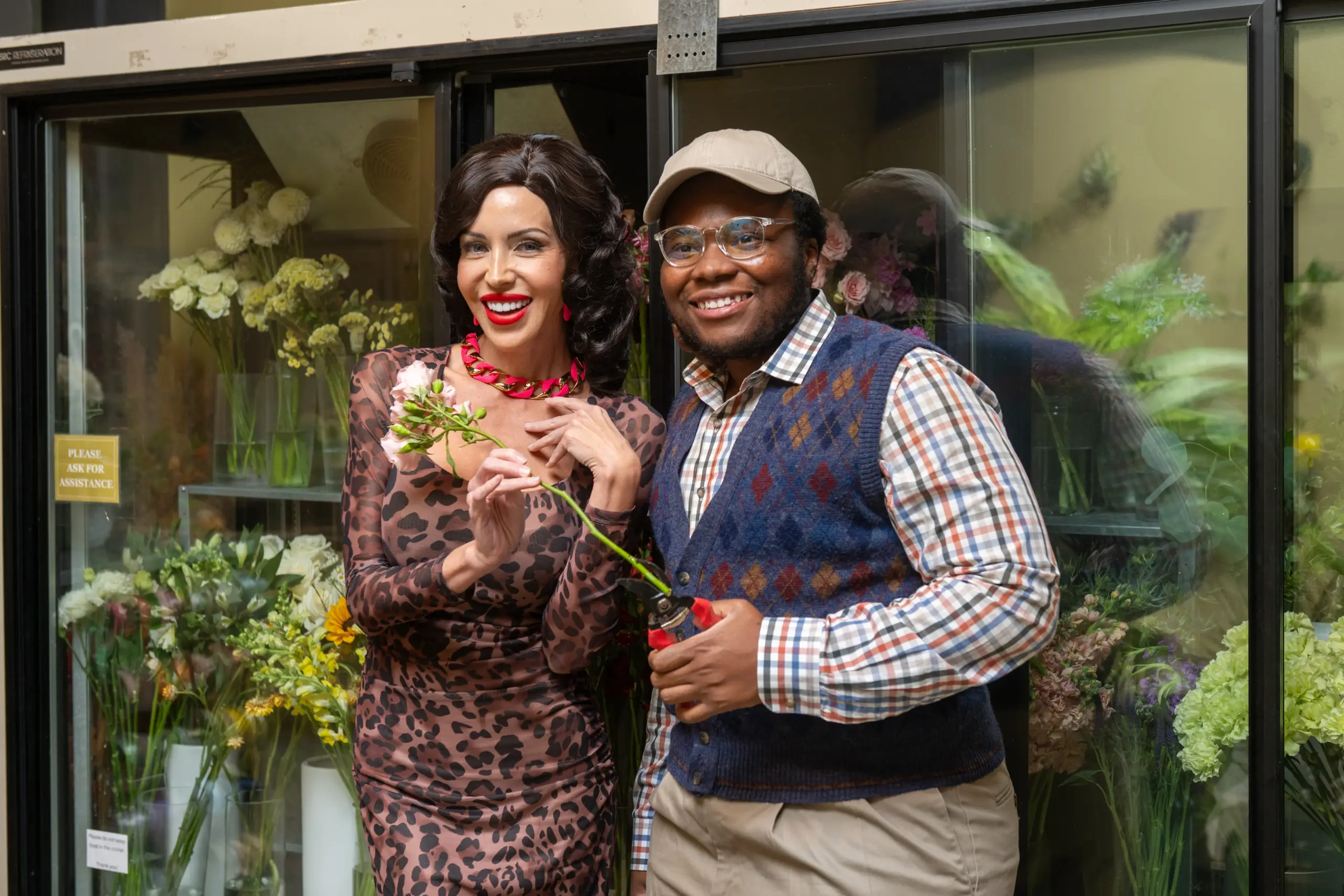
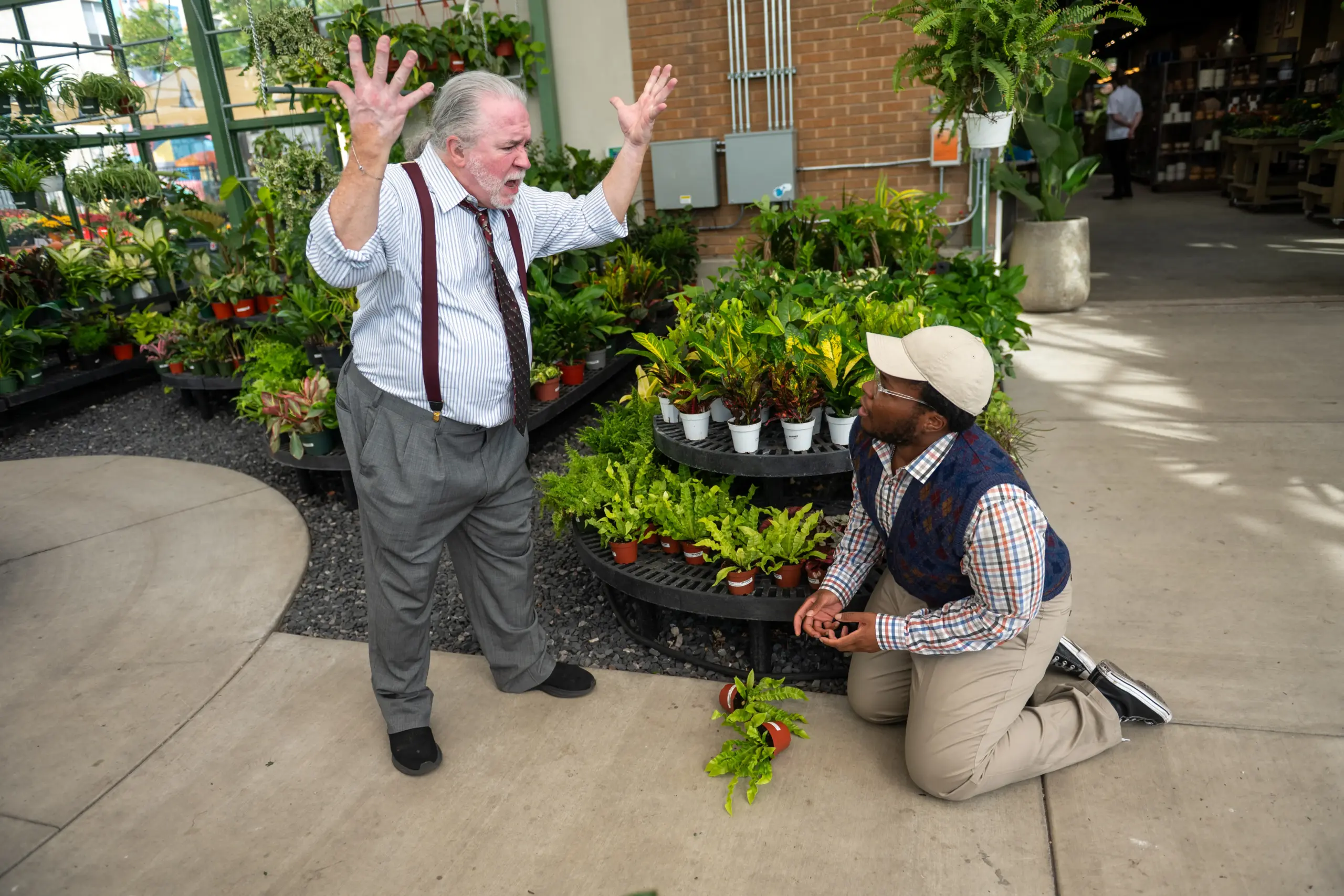
SLUG: When I heard that you had a live orchestra, that got me interested. It’s not that I dislike when people perform to a track, but I prefer it live. There’s just an intangible quality there.
Mitchell: There’s something about live theater that envelops the audience into the story. It’s such a cool feeling both on stage and in the audience to know that you’re part of this story that is being told that night and if you were to come tomorrow it would be a little different.
Little Shop of Horrors is playing at the Murray Theater Oct. 23-30, 2026. For tickets and information, visit showpass.com.
Read more interviews by Ryan Michael Painter:
Local Goth legends Redemption to reunite at the Dark Arts Festival
Tea in the Tear Garden: Legendary Act Tour For The First Time
If you enjoy SLUG’s coverage of local theater, consider joining our community of donors!
