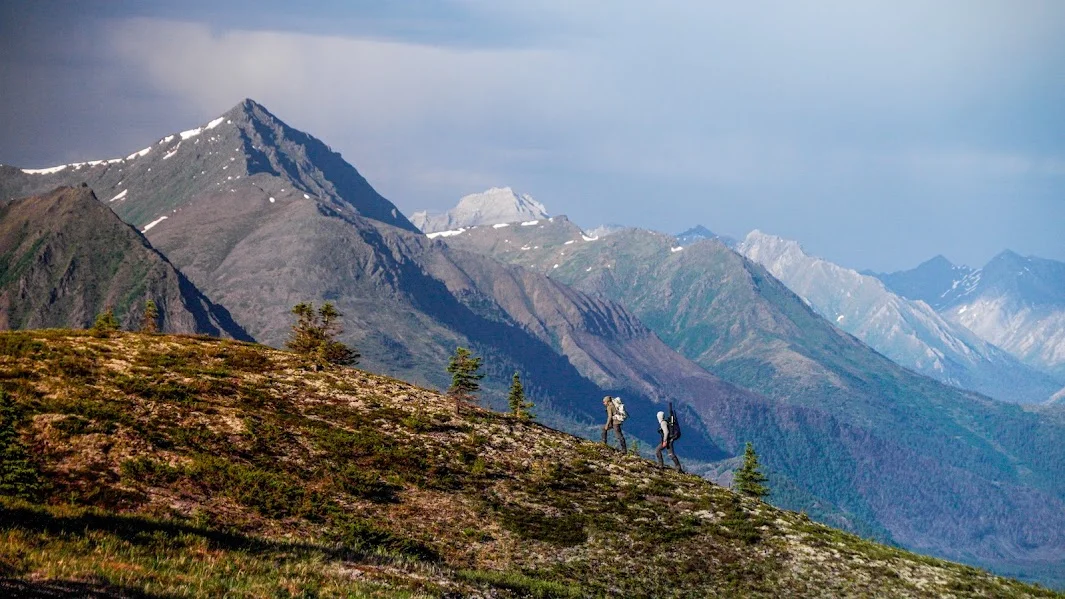
Local Film Review: Roadless
Film
Roadless
Director: Robert Lester
The Wilderness Society
Released on YouTube: 11.27.2026
“You’re about to learn a lot about me,” says director Robert Lester as he shakes my hand outside of the Kaysville Theater auditorium. He was standing behind a merch table, personally welcoming audience members to the screening of his documentary Roadless: the first in a series of screenings across the Pacific Northwest leading up to the film’s release on YouTube. As seemingly one of only a few strangers in the audience, I was indeed curious to know more about the director and his motivations.
Lester, a 29-year-old outdoorsman and second-time filmmaker, explains in the film that growing up in Butte, Montana showed him firsthand the consequences and devastation that can come from open-pit mining. Upon learning of the proposed Ambler Road mining project in Northern Alaska, which threatens the largest swathe of “roadless land” in the United States, Lester sets out to inform Americans of what’s at stake by walking all 212 miles of the proposed path. Joined by his friends Bill Craig and Ben Kaden, the men are immediately faced with difficult conditions, including mosquitoes and hard-to-traverse tussock grass (colloquially known as “troll heads”). It’s hard to tell what the men were expecting, but they clearly weren’t ready. Just six days into the journey, Craig bails on the expedition. Lester and Kaden are forced to rethink their objective.
The film never really recovers from this early shift in trajectory, and it seems Lester knows it, admitting a sense of failure. (Is the title an intentional play on words addressing this sense of lost ambition?) A brisk explanation from Lester informs us that the two remaining travelers won’t walk the 212 miles and have opted instead to simply capture the stunning Brooks Range in all its glory, informing audience members of what’s at stake. While not dissimilar from the previous goal, the movie doesn’t shake the sense of aimlessness the change creates. Fortunately, cutaways to interviews with topographical experts and the Native American Tribes members whose way of life is at risk go a long way to provide form, credibility and a human touch to the messaging.
From a craft standpoint, Lester’s strength as a filmmaker lies primarily in his eye for locked-down horizon shots. The rhythm of the edit keeps us moving along smoothly, as well, even if the Noah Kahan-esque needle drops and their unrelated lyrics pull attention from the gorgeous vistas Lester is trying to show us. As a documentary whose stated goal is to show us how wrong-footed the mining proposal is, it’s interesting to see Roadless try its best not to point fingers. (Aside from the “foreign mining companies” who will profit.) The film is cautious in its lack of politics, avoiding any direct criticisms toward the Trump Administration who have endorsed the devastating project nor the Biden Administration’s rejection of it. But if leaving out President Trump’s approval of the project allows for otherwise blindly loyal supporters to consider speaking out, then perhaps Lester has made the right call.
On day 25 of the trip, a starving and exhausted Lester lets out a sigh: “Yeah, we’re…kinda at the end here.” You can’t help but feel the movie mirror his shrugged resignation after such a fraught attempt. Though there are moments of beauty worthy of the big screen, and the boys’ earnest cinematic efforts are admirable, my ultimate takeaway is that this piece will find its place on YouTube, where similarly crafted content has an audience ready and waiting. All in all, I wish Roadless only the best, and I encourage readers to learn more and speak out against the Ambler Road. —Max Bennion
Read more film reviews:
¡Feliz Quinceañera, FILMéxico!
Film Review: The Devils
Want more coverage of local filmmakers? Consider joining our community of donors!
