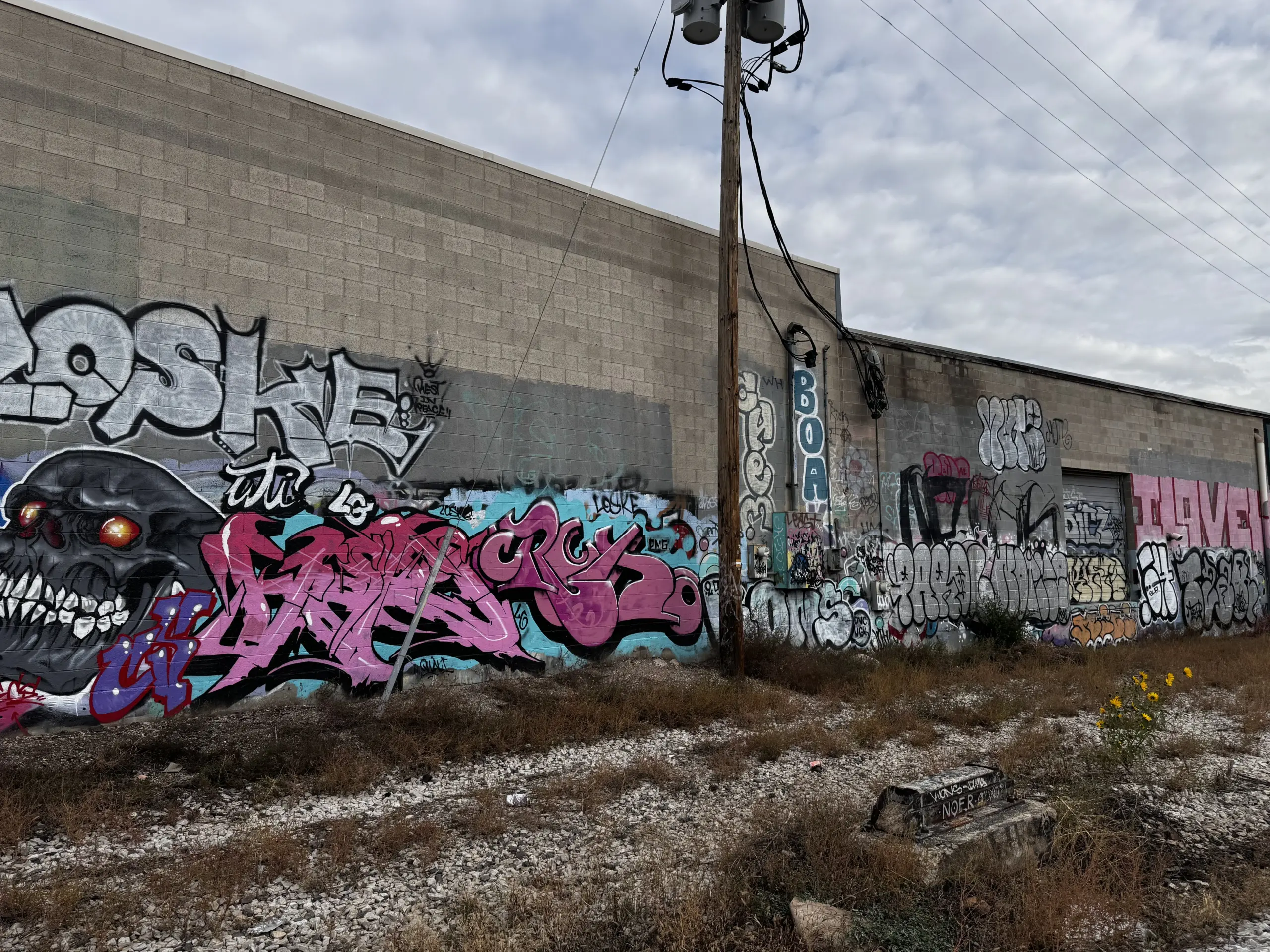
A City That Keeps Painting Over Itself
Art
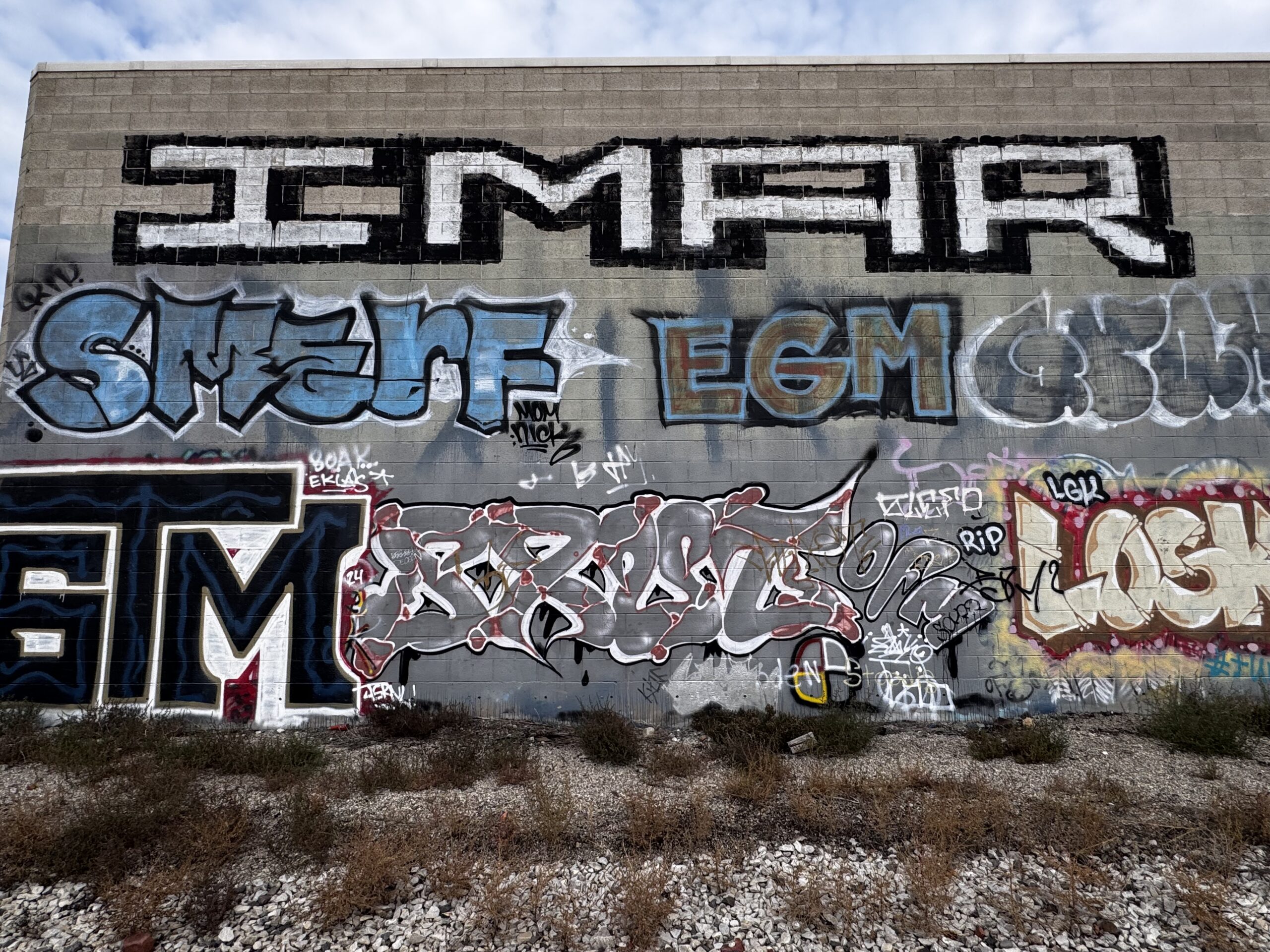
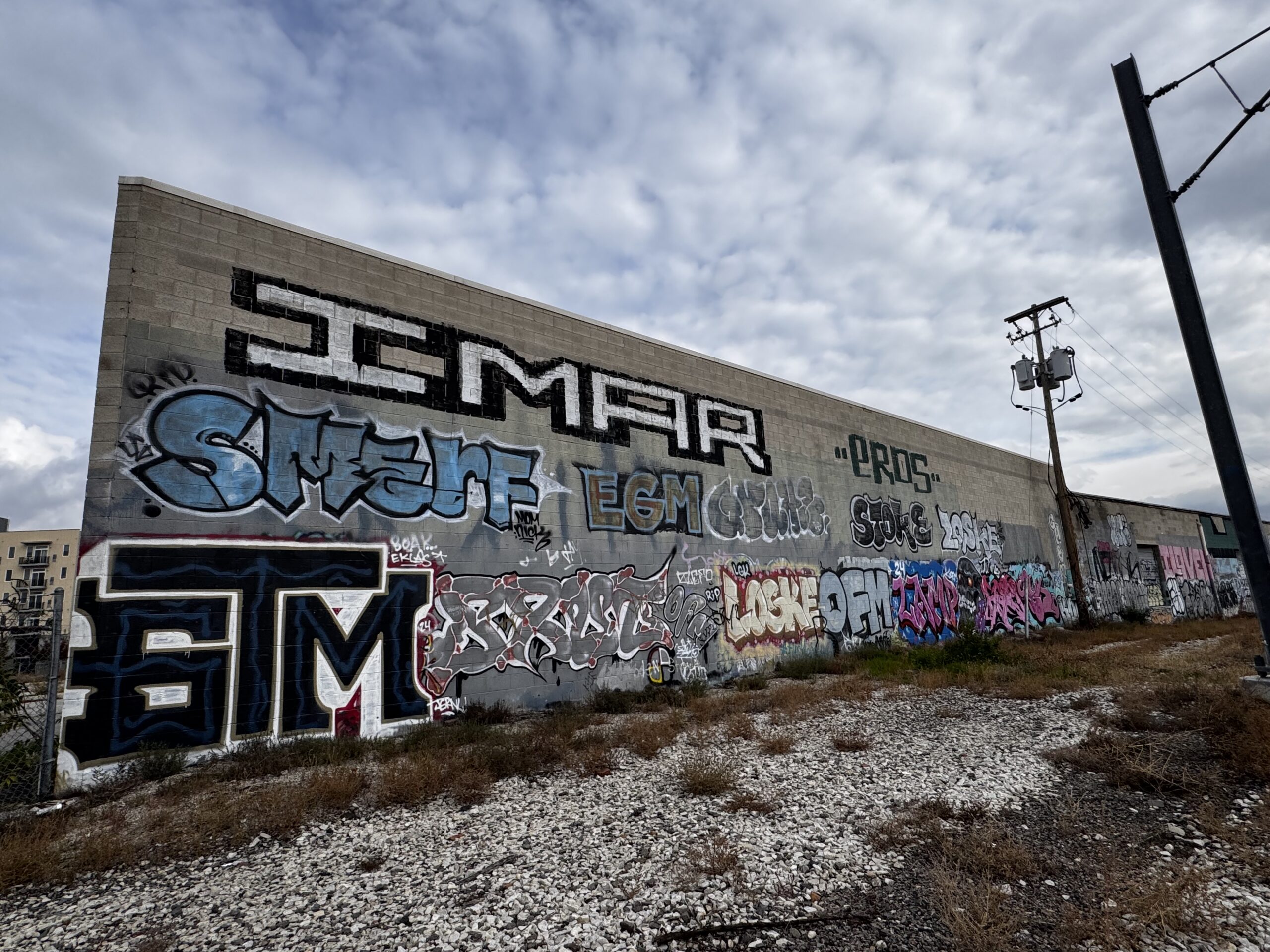
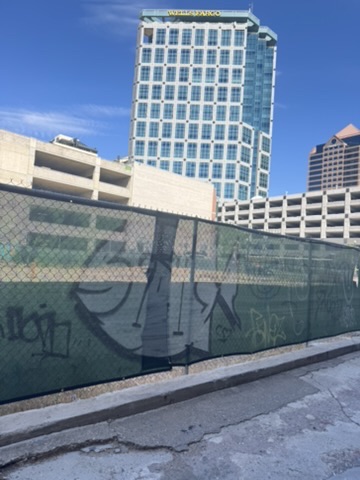
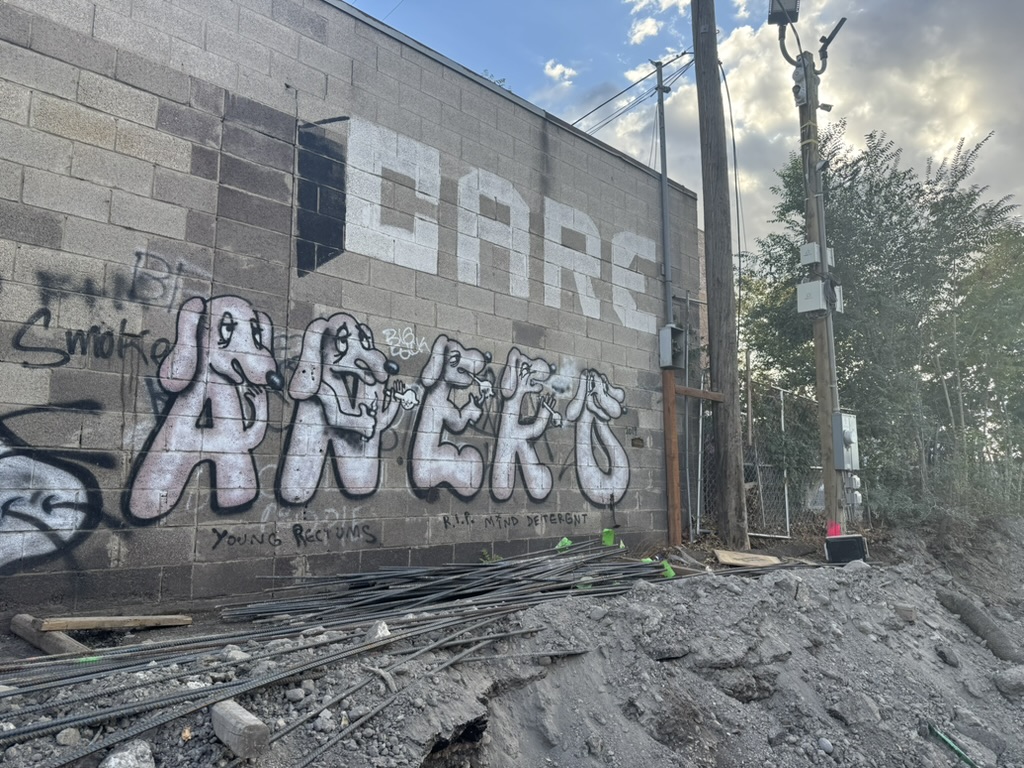
I’m snapping a picture of a piece of graffiti on a wall hidden behind a chain-link fence when a police camera sounds an alarm. “You are being recorded and your activities are being monitored,” a robotic voice says, coming out of a speaker next to the camera.
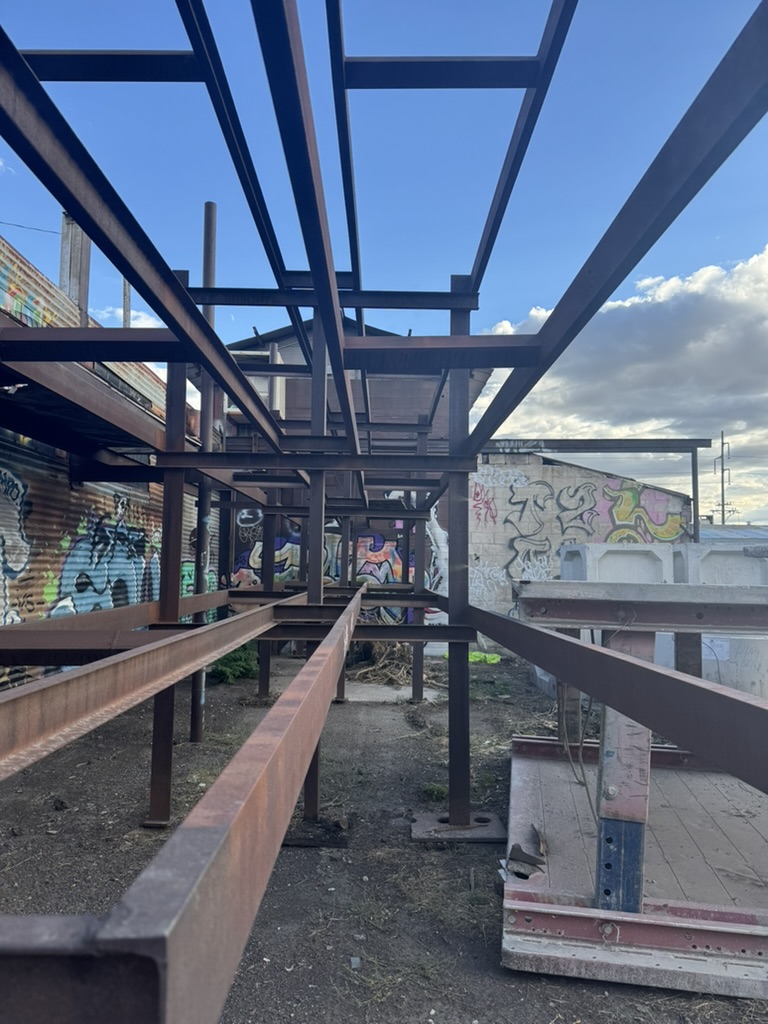
My friend and I look at each other. I take a few final photos before we leave through a hole in the fence, the way we came. As we’re leaving, I notice that the wall in question is surrounded by new development. This is the reality of much of the central Salt Lake City area. New growth is approaching and encroaching on historic buildings. People are moving here. Graffiti and street art are changing and growing.
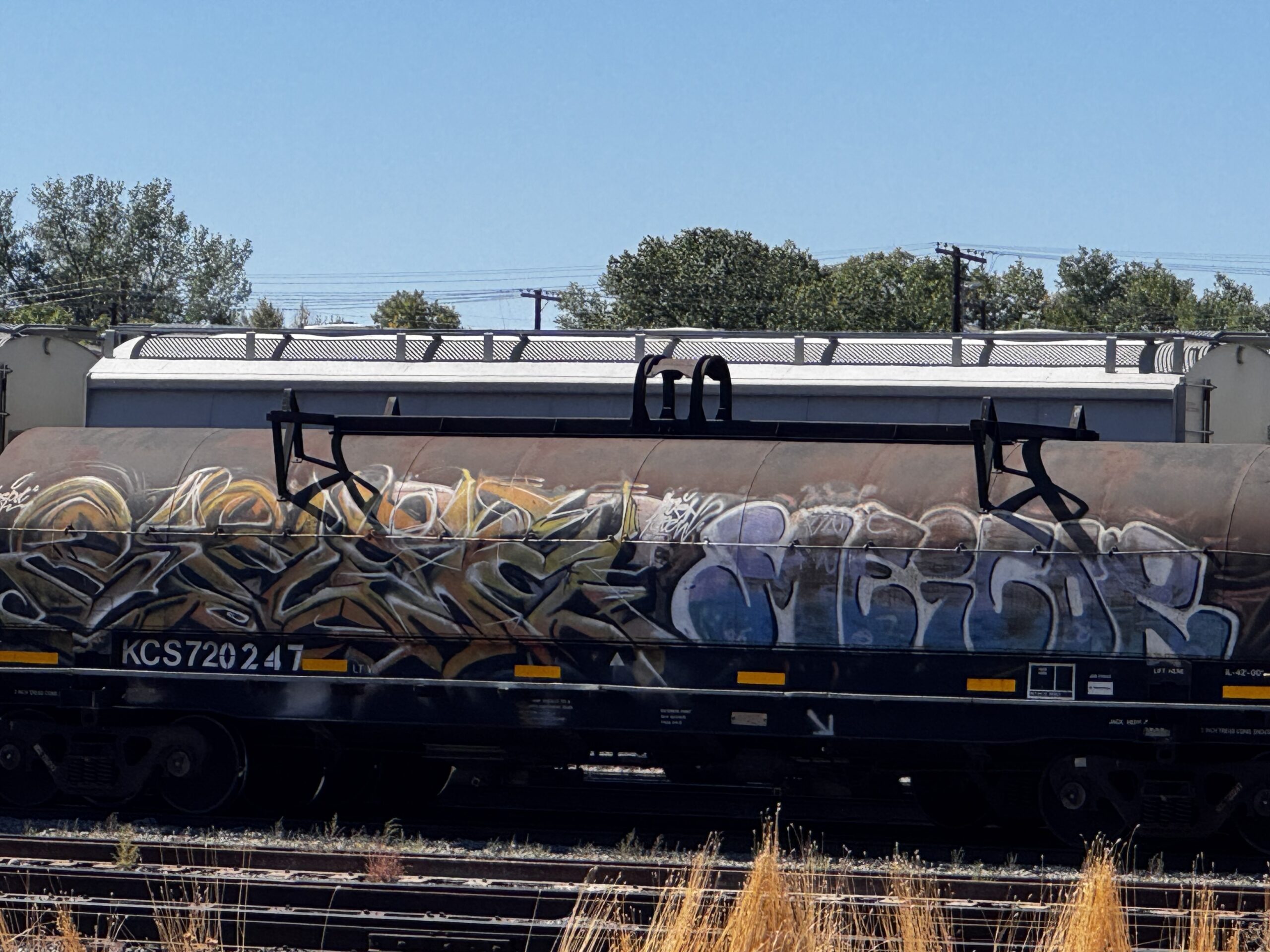
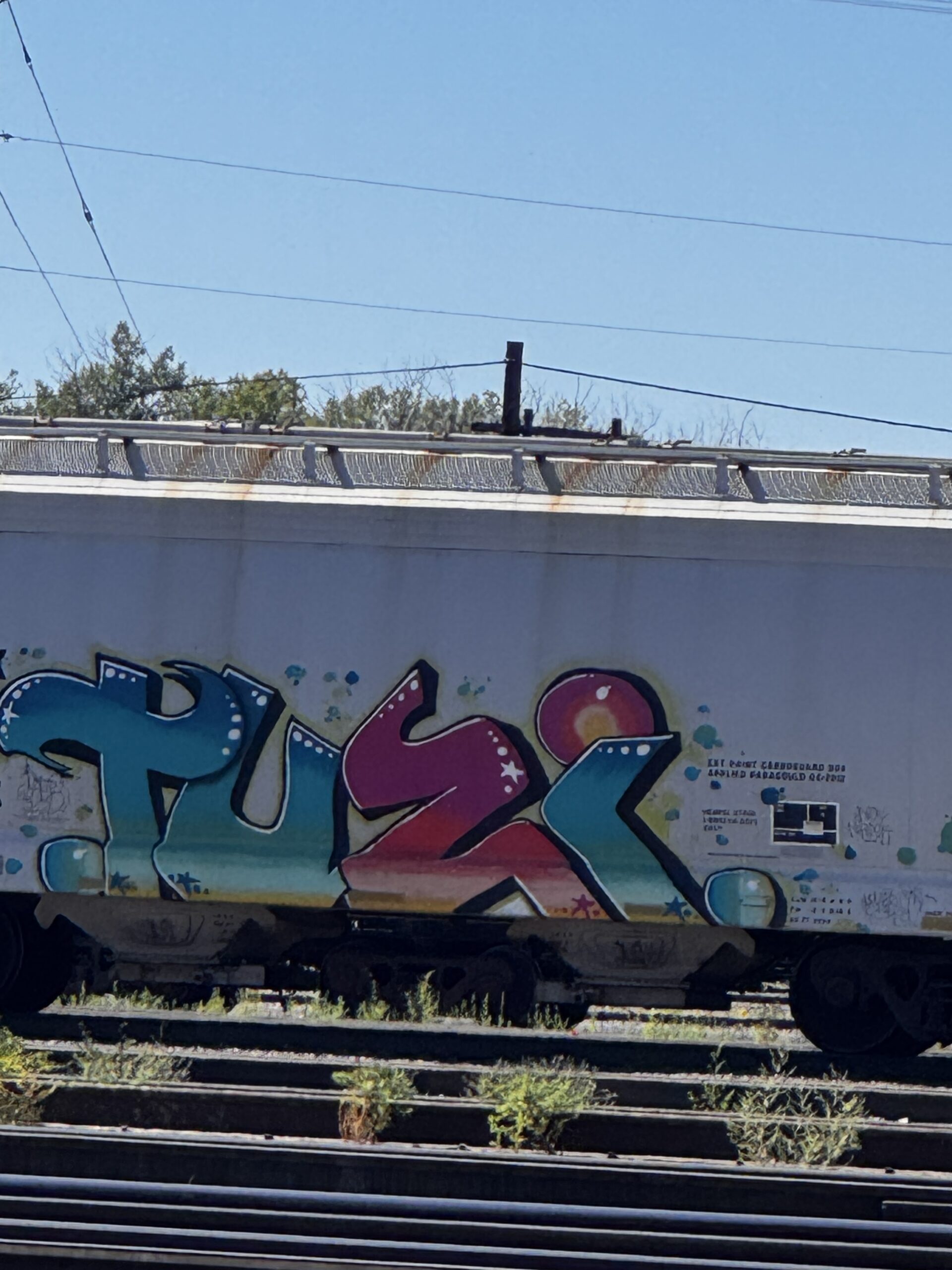
I lived in the Salt Lake City area for 11 years, and over that period of time, I’ve watched the graffiti scene change dramatically. Pieces and tags used to be buffed or taken down more quickly before the pandemic. It seems like there were a few people who were participating in the hobby, which I grew to love as an observer, going to college in New York City and living on the East Coast. Now, I see pieces come up in prominent places and stay for months. Railroad hot spots are filled. Billboards are getting tagged where they never were before.
I went into Uprok on a cloudy weekday to chat about the graffiti scene in Salt Lake City and to see if the changes I’ve witnessed check out with the experts. Located at 1594 S. State Street, the shop sells spray paint, markers and other art supplies while supporting local artists and community art. “I’d say that we’ve always had a very heavy graffiti scene here in Salt Lake, starting in the early ’90s with a lot of hardcore music, up through now, where you’ve seen different generations of graffiti come and go,” a shop employee told me.
Now, SLC is a city in flux. There’s no denying there’s been change. According to the U.S. Census Bureau, the area grew from around 199,700 residents in 2020 to 218,428 in 2025, a 9.4 percent increase. The last year was slower, with just 594 more residents between July 2024 and July 2025.
With that influx in population and change in resident makeup, buildings have disappeared, some of which were graffiti hot spots. The Fleet Block in the Granary District was one of the most visible losses. Five city-owned buildings carried 29 murals honoring people killed in encounters with police. The murals went up in the wake of George Floyd‘s murder in 2020. In March 2025, the buildings were demolished.
The 337 Project turned a building scheduled for demolition into a temporary art space featuring work from more than 100 artists. In the mid 2000s, the building came down. Near 1300 South on State Street, artist Ralphael Plescia built his own world at the Christian School, filling it with strange religious sculptures and artwork for more than 50 years. After his death, the building was slated for demolition, and volunteers worked to save what they could. An old mattress factory near West High School hosted studios and exhibits as Odd Star Studios, but that was demolished in 2024 as well.
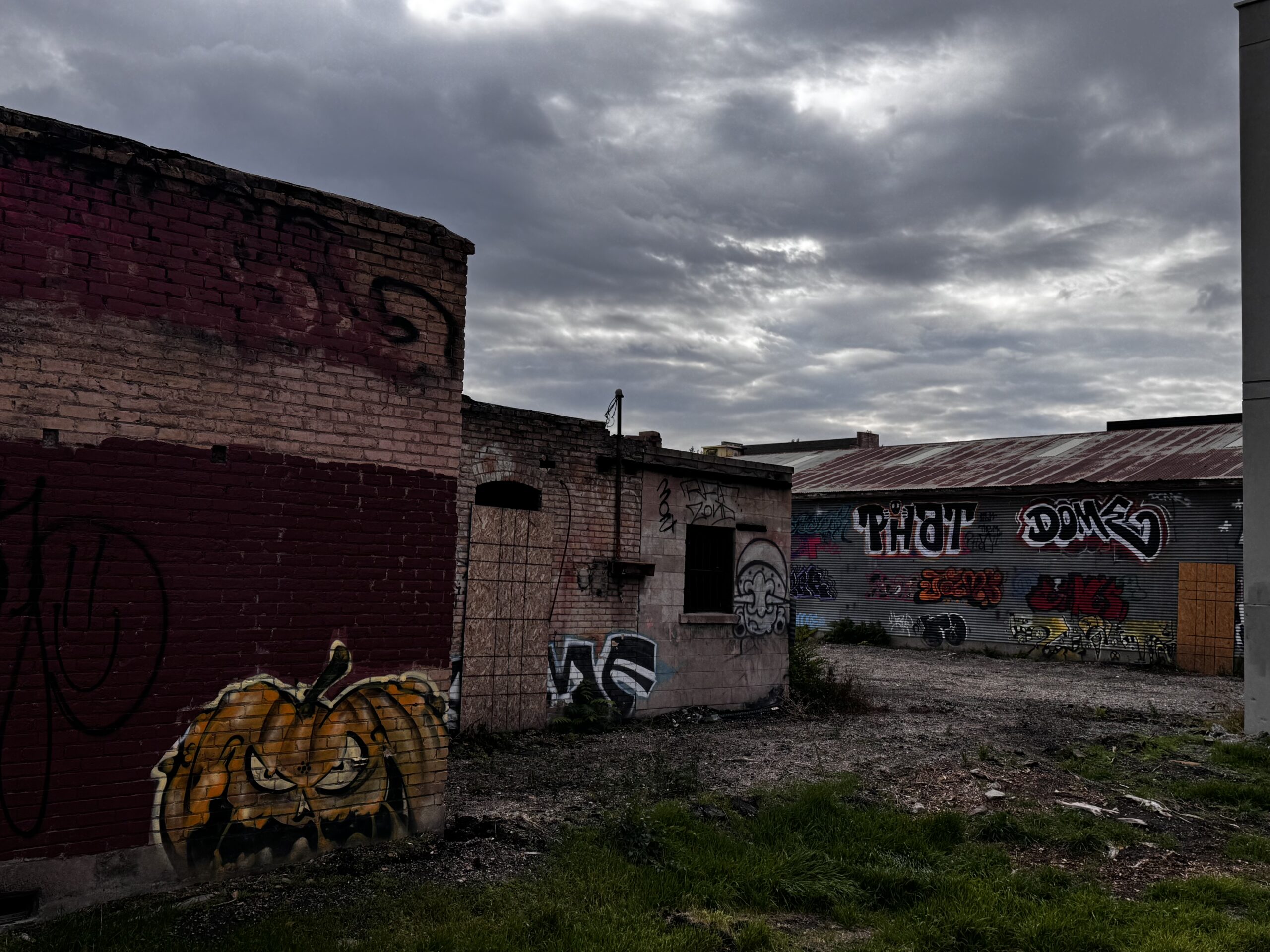
That’s the issue. Some of the buildings I’ve loved in downtown Salt Lake City have vanished, taking the legal graffiti murals with them. As the city smooths out its wrinkles, it’s also losing much of the industrial character and aesthetic that first made me want to live here. Warehouses are being replaced by multi-story apartment complexes. Entire industrial campuses, with their distinctive buildings and architecture ranging from Brutalist concrete to classical details and brickwork dating to the early 1910s, have disappeared. In their place is a sea of sameness. Downtown may look cleaner, but its personality is lost.
It’s only natural that while walls disappeared, graffiti artists looked elsewhere, and because of the nature of graffiti and the love of the outlaw spirit that comes with it, more walls became fair game. “I mean, when it comes to getting up, it’s all about just finding your spot and finding your canvas, per se, or finding your medium, whatever speaks to you, where you want to put your mark on,” the Uprok employee said. “Legal or not? Doesn’t matter.”
One night, I shadowed some artists as they looked at the pieces they had painted the night before. We scootered around the Granary District and the Ninth South area. They showed me some hot spots, but were too timid to tag, calling the area “hot,” meaning there’s an increased police presence in the area.
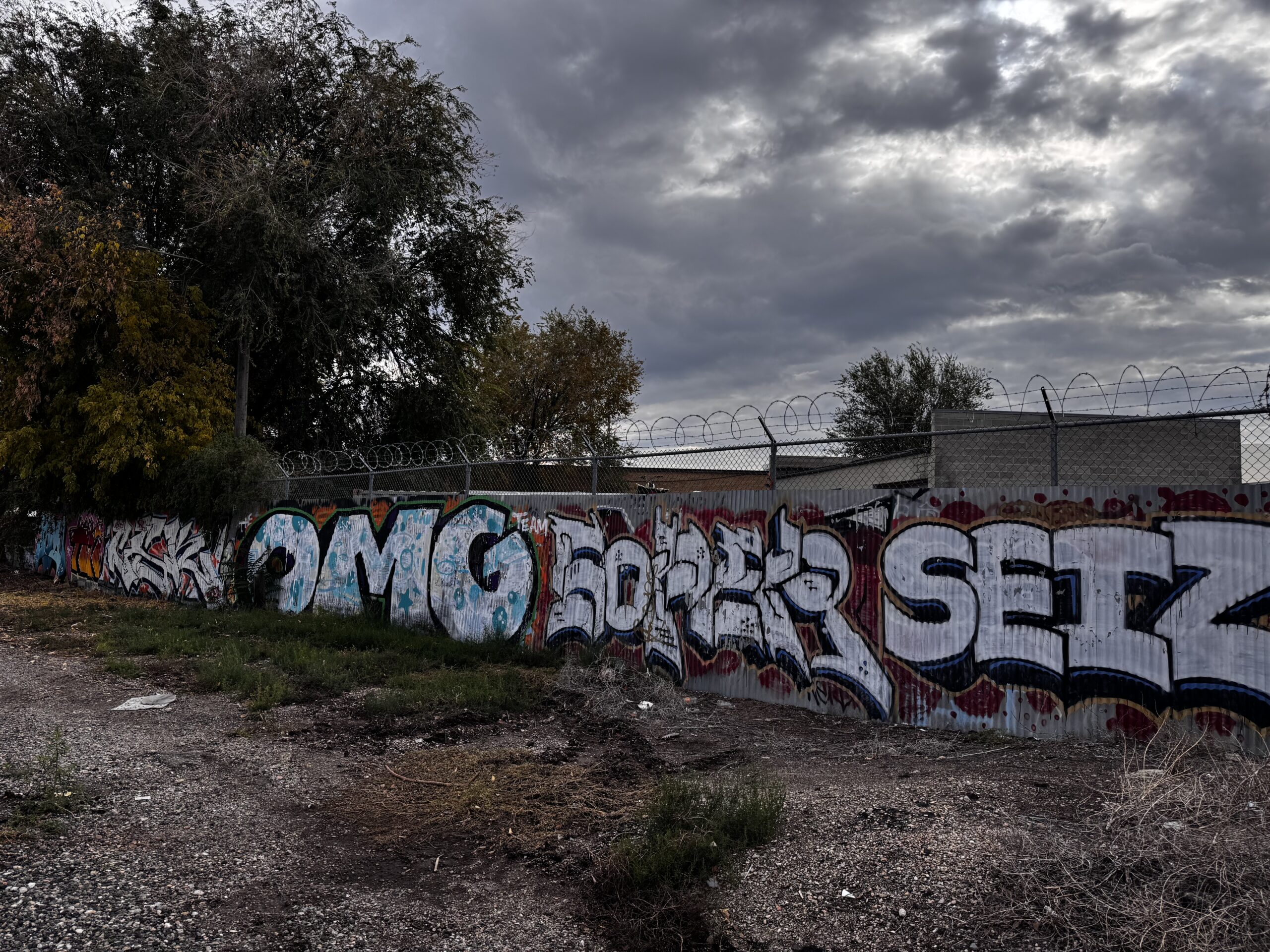
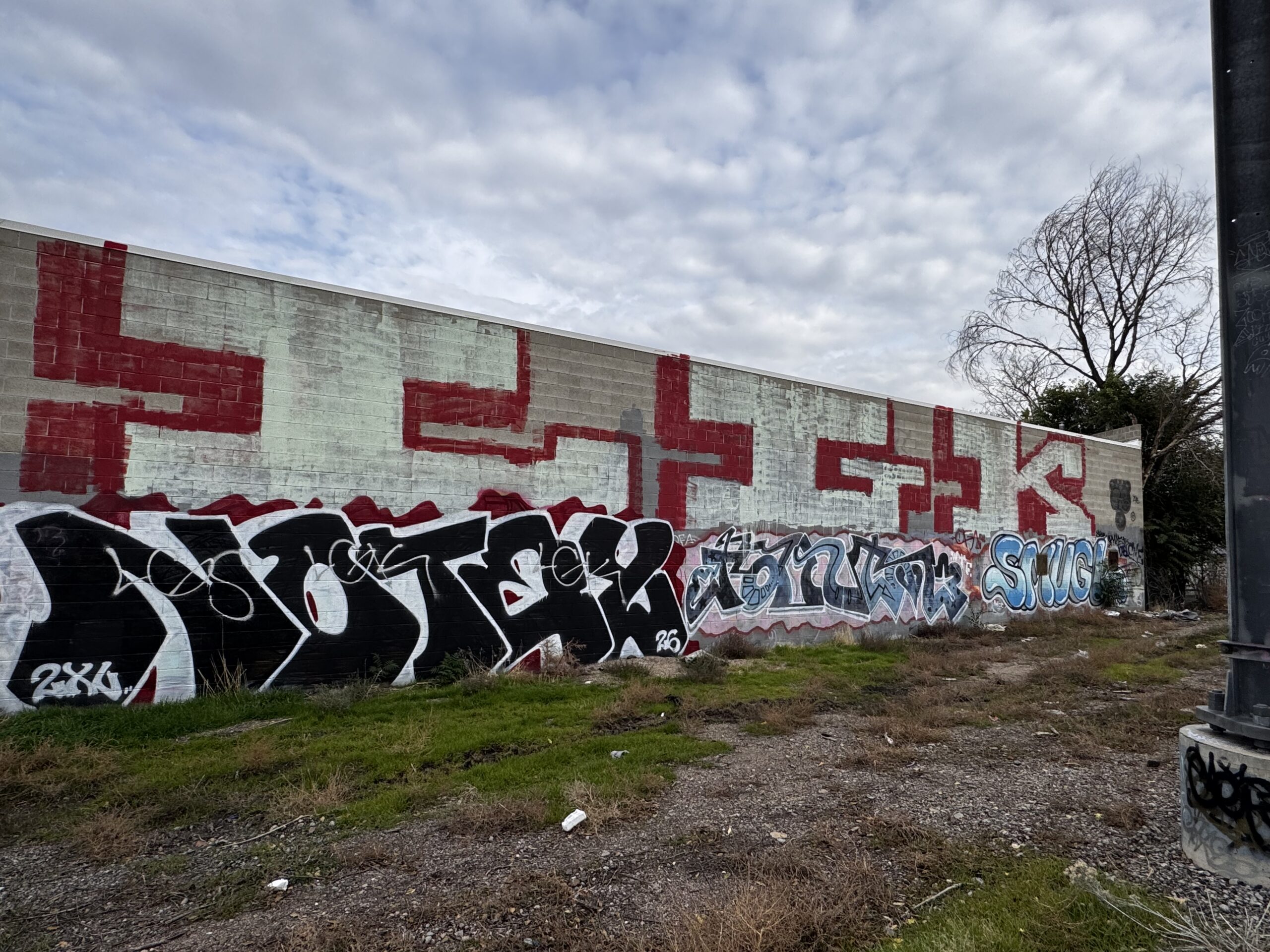
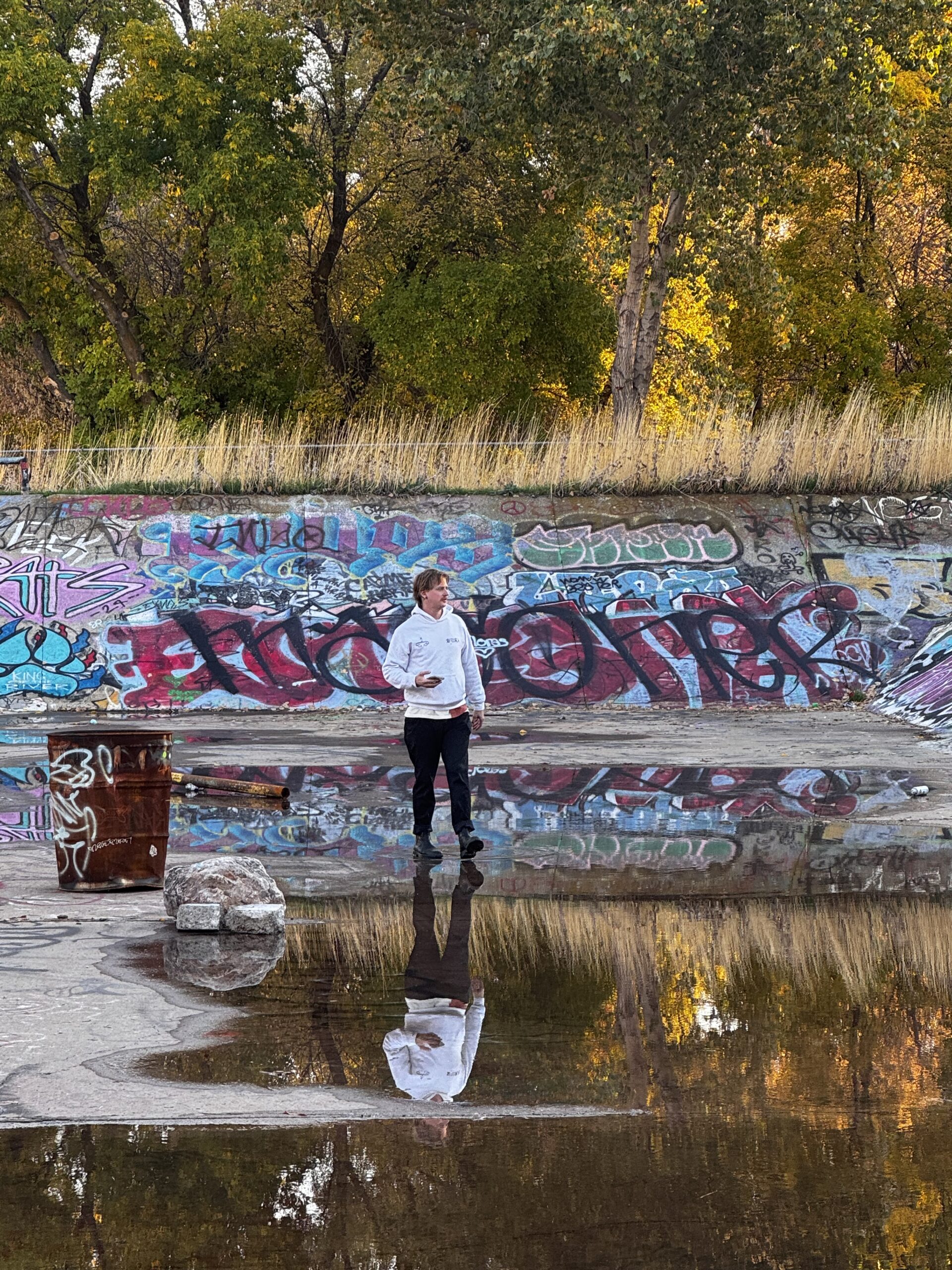
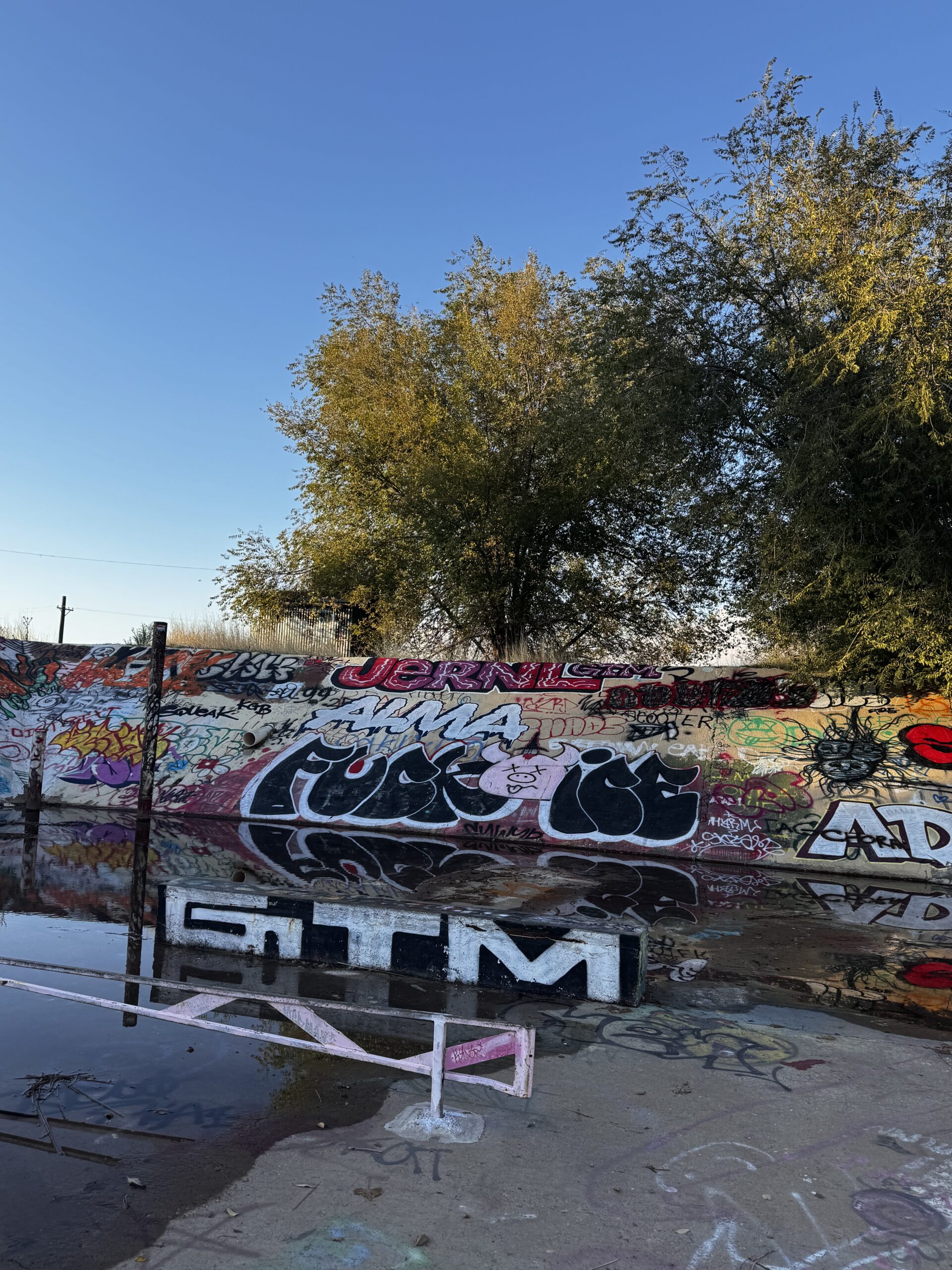
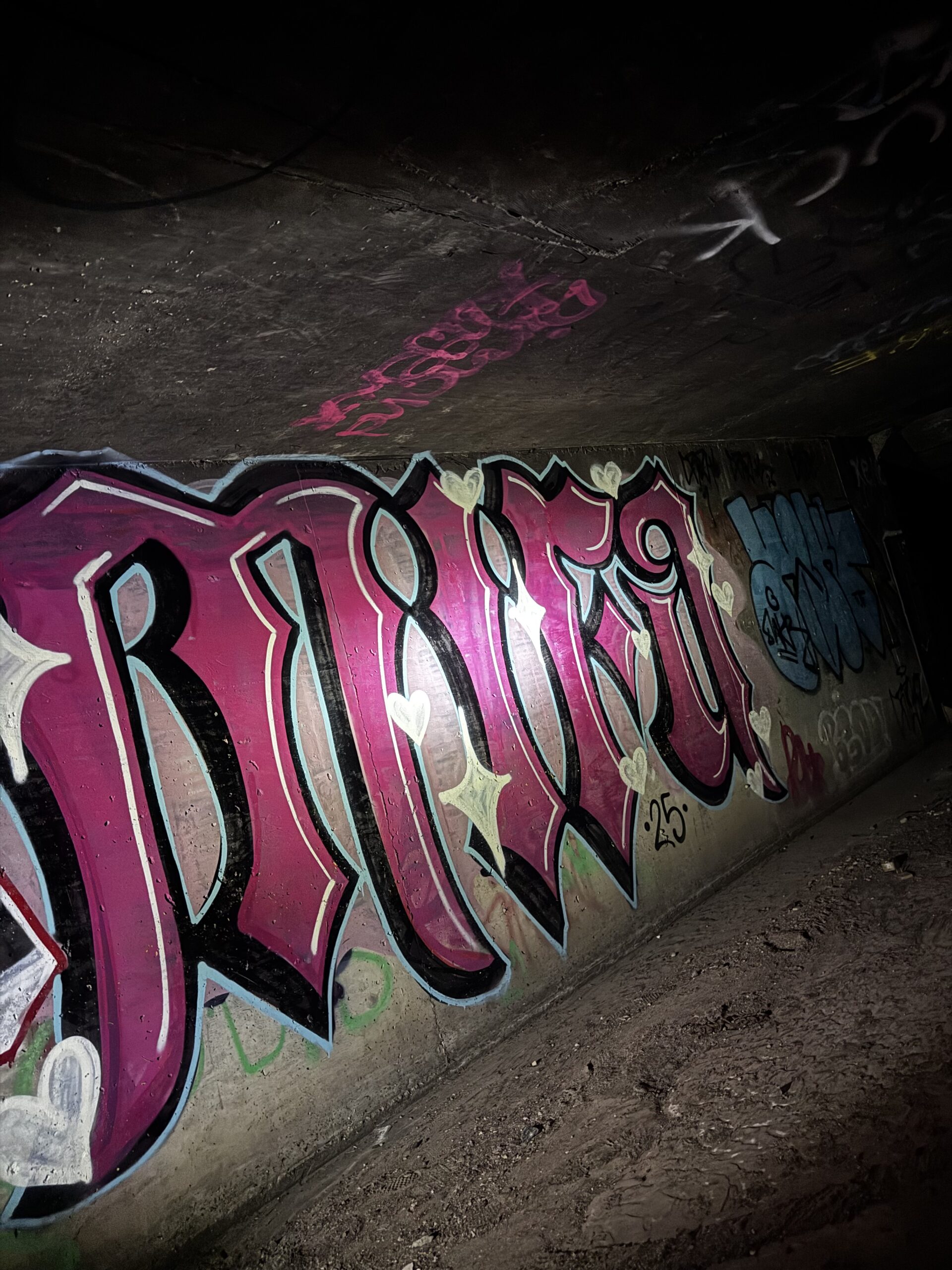
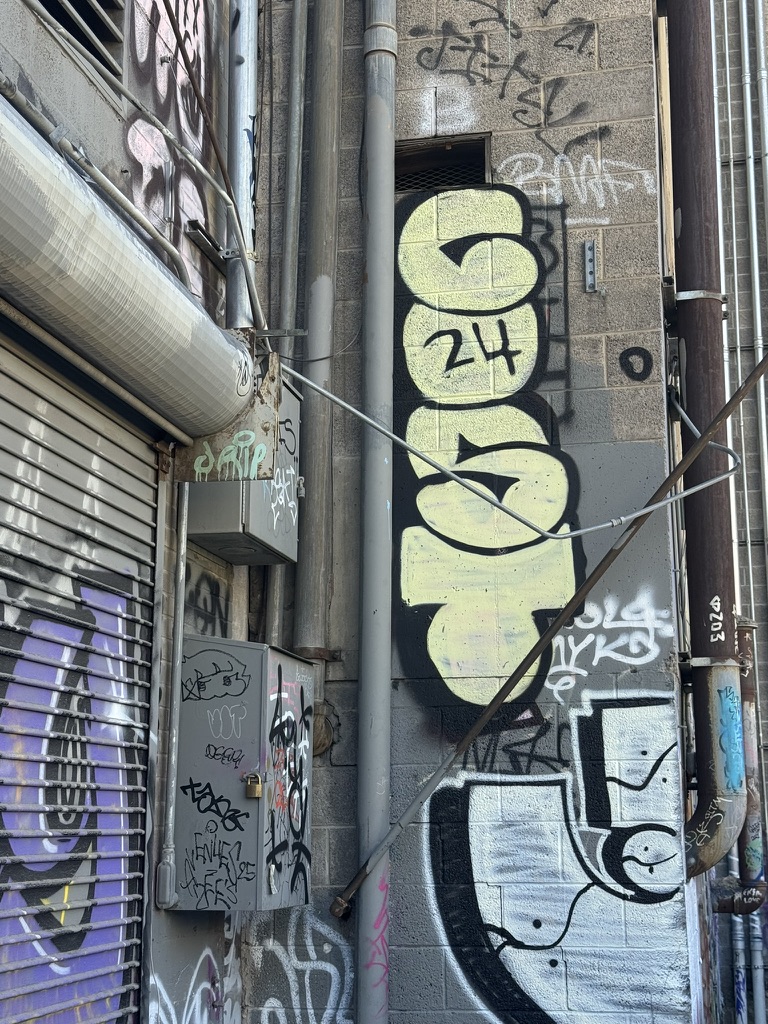
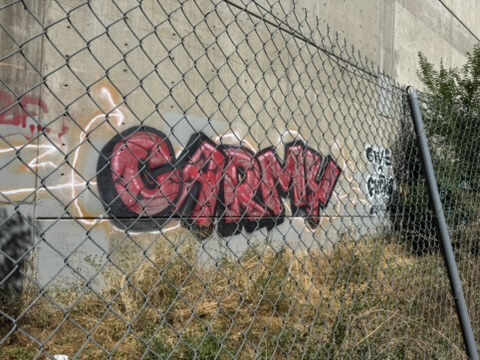
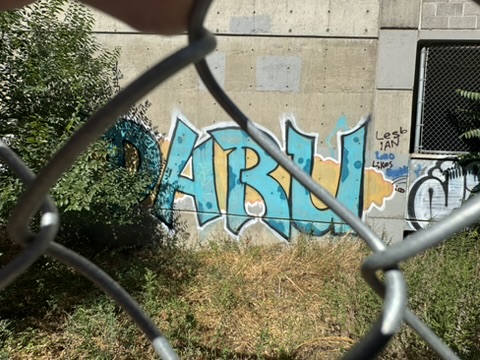
The underside of bridges is a massive place where people go and tag. Areas around abandoned railroad tracks or around railroads are huge hot spots in SLC as well. The Central Ballpark area is still one of the spots that hosts some of the most active graffiti walls in the area, with beef and wars taking place. Near the VFW off 300 West, a small rail spur exists where graffiti stretches hundreds of feet in each direction and two stories above the ground. The graffiti is in a multitude of styles in Salt Lake, though the city itself stays fairly traditional. In Ogden, where I currently live, I’ve seen an explosion of anti-style graffiti, but that’s for another day.
Artists in Salt Lake love to use color. They also love to design their tags prior. Characters appear regularly in large pieces. Murals are color-coordinated between artists, but that may be changing. “I will say, though, that the quality of graffiti over time, not only in Salt Lake, has dropped to where it’s not as good as it used to be,” the employee told me. “You didn’t have to meet a standard like you used to.”
Hot spots typically host multiple tags, but around the city most tags are singular: one person putting one piece up and then bailing. Notorious graffiti artists in smaller communities like Utah are hard to come by. What happens is the artists get arrested, and they’re discouraged to continue going. Graffiti is a revolving door, a young person’s sport, something built for somebody who’s willing to take a risk. That risk tolerance goes down over time. While there are some real veterans, they tend to go legal. With that being said, there are still some very notorious artists. Zoot has appeared in Salt Lake City but is also in numerous other cities.
People can look at graffiti, and they can see a nuisance, a scourge on the community and a sign of a struggling area. As Salt Lake City grows, as its culture changes and as more artistic people move into the city, I would like to challenge that idea. Graffiti is a raw, pure form of human expression. It’s about getting up and expressing ourselves. It’s a lesson in impermanence – that nothing lasts forever, that a beautiful piece can be buffed just as quickly as it took to be created. I think graffiti is a sign of a vibrant community and a vibrant art scene, with people who feel safe to express themselves and safe to get a little wild.
Photos by Taylor Hartman:
Read more about street artists in UT:
Beto Conejo’s Road to Creating Utah Day of the Dead
Tacos and Graffiti: An Interview with Anthony Ortega
To help SLUG continue its coverage of underground art, consider joining our community of donors!
