Emmy Nominee Tal Anderson Talks Authenticity and Representation
Arts
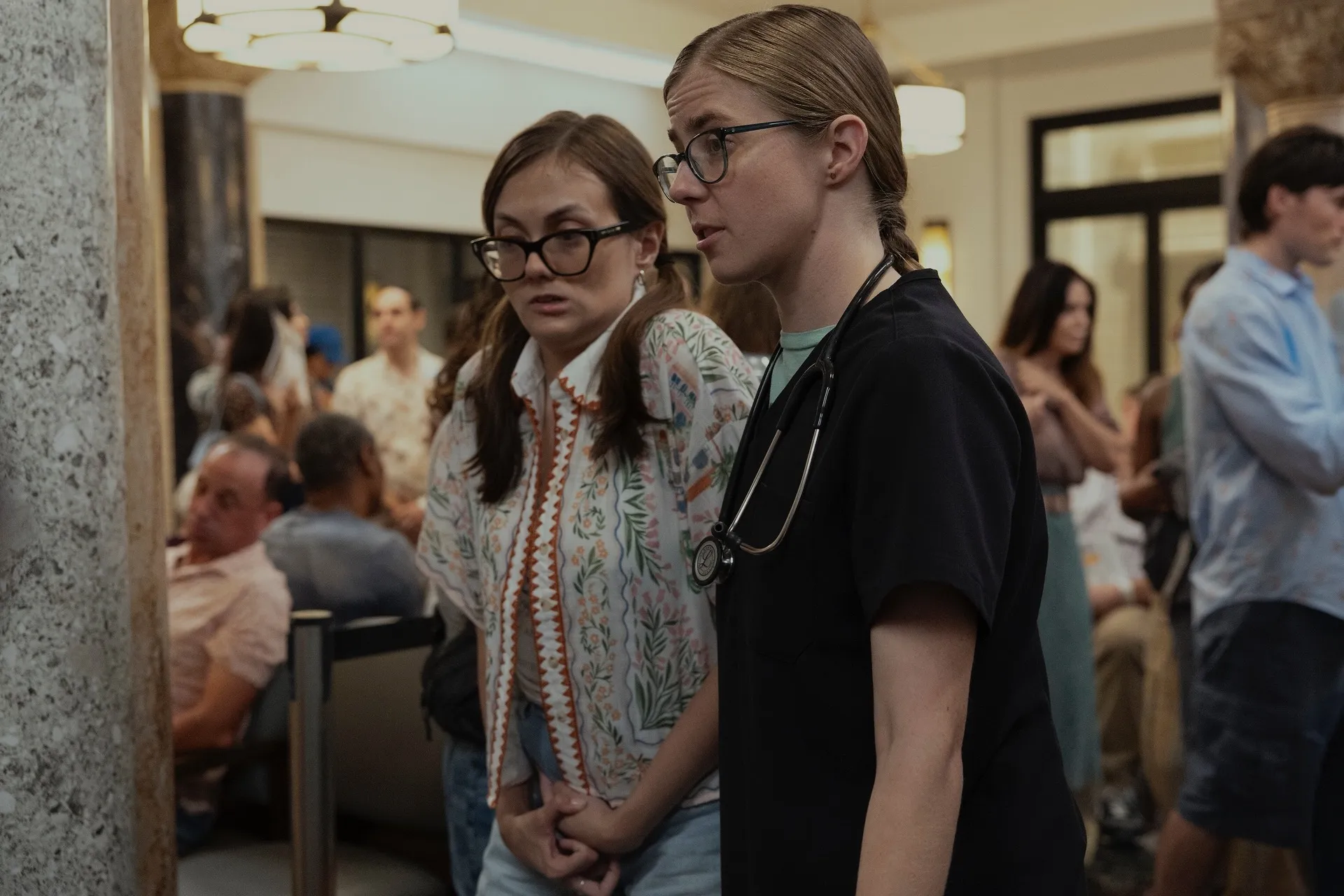
Tal Anderson’s road to becoming an Emmy-nominated actress began long before she was cast on The Pitt. As Becca King, the autistic twin sister of Taylor Dearden’s Dr. Melissa “Mel” King, Anderson has become an important part of the show’s commitment to authentic representation. Anderson’s performance has now earned her an Emmy nomination for Outstanding Performance by a Guest Actress in a Drama Series, as well as an Astra Award win, giving the actress another opportunity to celebrate a role that means so much to her.

“I was so honored just about the possibility of a nomination, and now I’m just shocked,” Anderson says. “I’m most excited now about being at the event with my Pitt family and celebrating everybody’s accomplishments.” Anderson adds that the recognition makes her think about “that little girl who wanted to be seen” and says she is grateful to the Television Academy and everyone who voted “to elevate my voice this way.” Anderson’s journey into acting began when she was a child. “I was pretty solitary,” Anderson says, explaining that she was non-speaking until she was around four years old. She found other ways to express herself creatively, filming everything on a little video camera and recording her thoughts on Panasonic voice recorders. “I think I was always a storyteller,” Anderson says. Acting initially provided a way for Anderson to learn social skills. “At first, it was a way to learn to interact with people more appropriately,” Anderson says, explaining that she learned through improv techniques. “But then I fell in love with it.” After film school, she moved to Los Angeles, where she worked as a video editor while pursuing acting. Anderson’s breakthrough came when she joined the cast of the Netflix series Atypical. “I got to authentically play an autistic character for the first time,” Anderson says.
The audition for The Pitt was relatively conventional, although it required some improvisation of its own. Anderson received the audition through her agent and had to submit a self-tape while traveling. “I remember feeling that there was something different about the scene and about Mel and Becca’s relationship,” Anderson says. “I remember being really, really excited about that.” That relationship has become one of the most important elements of Anderson’s work on the series. Anderson and Dearden’s chemistry proved to require little effort. “Taylor is just super easy to get along with,” Anderson says. “She really put me at ease. She cracks a lot of jokes, and she’s hysterical.”
The show itself has also been a markedly different experience from Anderson’s previous work, as The Pitt’s serious subject matter and constantly moving camera create an unusually immersive environment. The authenticity and truth of the stories is a hundred percent not up for interpretation.” That commitment to authenticity is particularly important to Anderson because of her experiences as an autistic actress. “It has improved, but we have a long way to go for representation to truly be meaningful,” Anderson says. “What we see on screen has to reflect what we see in the world. There’s such a wide spectrum of stories and perspectives within the autistic community, and the only way to give a voice to those who haven’t been represented is just to tell those stories.”
Anderson is particularly interested in seeing autistic characters who exist outside the stereotypes that have dominated screen portrayals. “I’m just tired of seeing autism portrayed from the two extremes,” Anderson says. “Either the character is completely incapable, or they are savants.” Anderson appreciates that Becca occupies a more complicated middle ground: She has high support needs, but she is also capable of making decisions about her own life and standing up for herself. “I think this type of character is closer to the truth,” Anderson says. That authenticity has become especially meaningful through Becca’s season two storyline involving bodily autonomy. Anderson says disabled fans of the show had a “collective roar” when they realized where the storyline was going because the issue is an ongoing struggle for disabled people. The storyline, she says, allowed The Pitt to make “millions of disabled adults feel seen and heard.”
Looking ahead, Anderson has plenty of ideas for Becca, including some decidedly chaotic ones. “I’ve imagined all kinds of wacky scenarios for Becca to wind up in the Pitt again,” Anderson says, joking about car accidents and gas explosions because she would love to work with the show’s stellar special effects, makeup and props departments. But beyond the spectacle, Anderson hopes Becca can continue exploring the very real challenges autistic adults face. She would like to see Becca pursue fulfilling employment, while confronting “how difficult it is for autistic people to find gainful employment, even with appropriate training and education.”
For Anderson, the Emmy nomination and Astra Award win are personal triumphs, but they also amplify the voices and shine a light on the experiences of many important and too often marginalized members of society, people who have as much to offer and express as anyone else if they are given a chance.
Read more interviews about The Pitt:
Jeff Kober’s Big Moment
Emmy Hopeful Cathryn Dylan Ortiz on Falling in The Pitt
To help SLUG continue bringing you interviews with the skilled artists of the film industry, consider becoming one of our donors!
