Burt’s Tiki Lounge: Where Salt Lake City Got Loud, Weird and Off the Wall
Community
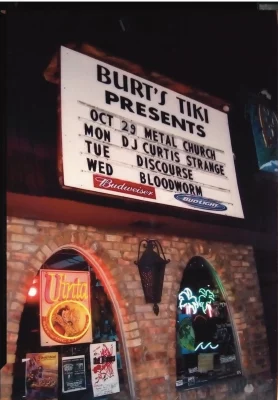
There are bars you remember because they were beautiful and bars you remember because they changed the trajectory of your life. For me, Burt’s Tiki Lounge fell squarely into the latter category. From the late 1990s through the mid-2000s, the brick façade and dimly-lit marquee at 726 South State Street were iconic. The joint was quietly one of the most important cultural rooms in town. It wasn’t glamorous or polished, but for a generation of locals, it was home.
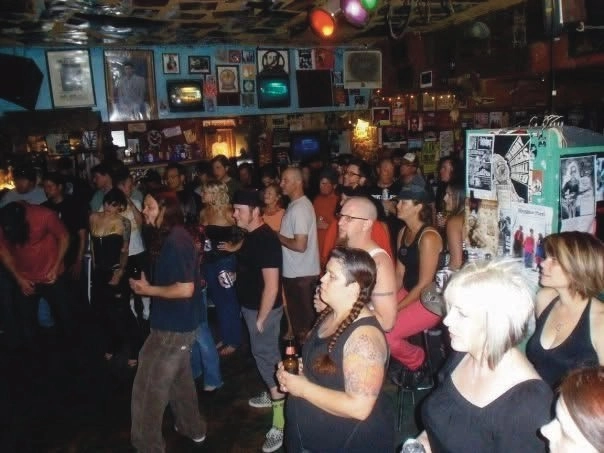
Despite the name, Burt’s wasn’t really a tiki bar. The “tiki” aspect felt ironic at best. Aside from palm fronds hung from the ceiling, there was little connection to a tropical fantasy. Inside, the mood was pure dive: low lighting, sticky floors and walls layered with flyers and photographs. One image loomed large: “Burt” himself, nude on a beach with a beer resting on his endowment, wearing a smug grin that told you this was a place to let it all hang out. (There was no real Burt.) The décor told stories not of paradise, but of last night’s show and last year’s scene. Burt’s didn’t pretend to be anything it wasn’t, and that was the point.
At a time when Salt Lake City nightlife could feel restrained or predictable, Burt’s offered an alternative. It was loud, messy and unfiltered. As you walked through the door, you were greeted by Netty Slaughter (rest in peace), her gruff voice reminding you to pay the cover and leave the bullshit outside. She was wary, hilarious and uncompromising — an exact reflection of the bar itself.
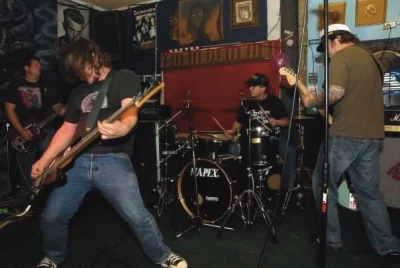
Live music was the lifeblood of the lounge. Burt’s stage hosted an endless rotation of local and touring acts. Punk, metal, garage rock, rockabilly, ska — if it was loud and raw, it passed through Burt’s. Touring bands often didn’t know what they’d booked until they arrived, but once they hit their first note, they knew it was the real deal. Acts like Deadbolt, Jucifer and Captured! By Robots delivered shows that felt intimate, chaotic and electric — where the line between performer and audience dissolved by the second song.
What made Burt’s special, though, was the people. The bartenders and staff were the center of the universe. They kept the bar alive, sometimes using their own money to do so. Scotty Kerbein, Shannon Barnson (rest in peace) and Jeremy Sundeaus did everything they could to keep the freight train on the rails. Their masterful mixology brought forth the “Cerebral Assassin” cocktail that fueled countless blackout nights. Regulars became fixtures, as much a part of the décor as the faded photographs. Conversations, fist fights and even fire-breathing spilled into the street, driven by cheap beer and shared exuberance. Burt’s could be intimidating at first, but once you were in, you were in.
There was magic in how unpolished it all felt. Burt’s didn’t chase trends or clean itself up for wider appeal. That authenticity earned recognition beyond Utah, including being named one of America’s top dive bars in the early 2000s. Comedian Dave Attell filmed Insomniac there, but even that felt beside the point. Burt’s wasn’t trying to be iconic; it just was.
As the 2000s rolled on, Salt Lake City changed. Development reshaped downtown, nightlife shifted and spaces that nurtured underground scenes grew scarce. Burt’s held on as long as it could, but when it finally closed, it felt less like a business shutting down and more like the end of a chapter.
Today, Burt’s exists only in memory — in old photos, faded flyers and stories told by people who swear the shows were louder and the nights longer. Mention its name, and you’ll see the smile and pause of recognition. Burt’s wasn’t perfect, but it didn’t need to be. It gave Salt Lake City something rare: a place to be unapologetically itself. And long after the lights went out, it left behind an echo — loud, distorted and unforgettable.
Read more Community stories:
Velour and Vinyl: Yes, Provo Does Have a Music Scene
Live From Smoking Nun: Alex Cutler’s Art of Live Recording
