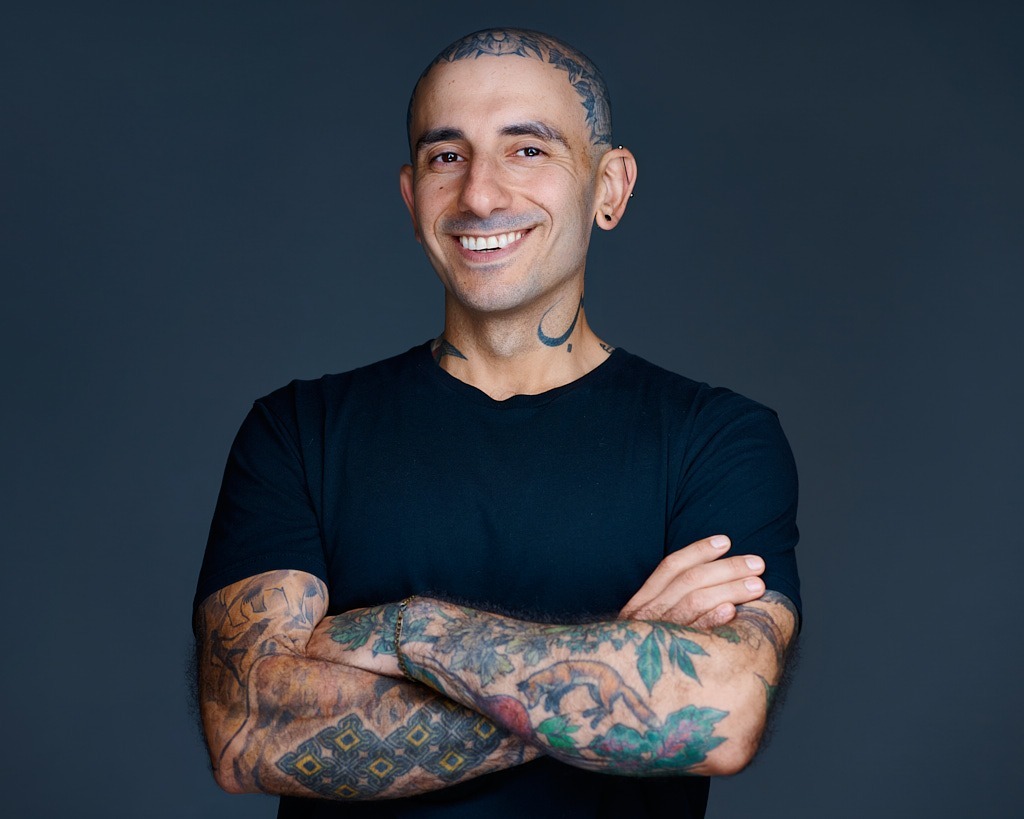
Habibi Means Beloved: Moudi Sbeity’s Journey from Evacuee to Equality Pioneer
Community
“Growing up as someone who stuttered severely,” says Moudi Sbeity, author of the new queer memoir Habibi Means Beloved, “writing was a way to express myself… In order to avoid stuttering on a word, I’d make sure I had ten words to substitute for each one. I paid attention to language and sound and how our words create our reality.”
While poetry and language have always been a big part of Sbeity’s life, he didn’t pursue writing professionally until around 2020. For that reason, a lot of Salt Lakers are more likely to know him as one of the co-founders of Laziz Kitchen, a local Lebanese restaurant (and one of my personal favorites). On the flip side, our friends in the queer community may be more familiar with his efforts as a plaintiff in Kitchen v. Herbert, the landmark case that brought marriage equality to Utah. While these experiences are certainly part of the constellation that makes up Sbeity’s memoir, you’ll be surprised to find that they’re far from being the biggest stars.
Sbeity arrived in Utah at 18 years old as an evacuee. Among the many inspiring and poetic stories from his past life in Lebanon, he recounts his first encounter with a man at 16 years old in the bathroom stall of a local cinema. Sbeity was raised religious and, at that time, would carry in his pocket the first seven verses of the Quran as a measure of good luck. “In that moment I had to reconcile,” he says. “I just did this thing that was so against my faith… What I had chosen was to be gay rather than be a Muslim. So I left that bathroom stall, walked out of the theater, tore up the verses and threw them away.” He emphasizes that ripping up a holy text is among the highest degrees of sin in Islam, then adds, “But I couldn’t bear having it on me, so I chose to break up with God.”
But like many people in the Salt Lake Valley, Sbeity is on a path of reclaiming his faith without all the rules, baggage and trauma. His current spiritual practice incorporates elements of both Sufism and Buddhism. When I ask if he considers Sufism — the mystical side of Islam — as something separate from the mainstream religion, Sbeity laughs and says, “Well, luckily I don’t have to delineate between the two because my family is quick to do that for me.”
Much like Sbeity, I reclaimed my spirituality through Sufism, and my family had their own set of reservations. Persians and Lebanese folks seem to have a similar relationship with the Sufi path. It’s kind of like the way people in Utah view drum circles and astrology. “They think we’re kind of crazy,” Sbeity says. “I grew up with God being this sort of judge that would punish you if you did the wrong things… It was a very strict way of living with the teachings.” But now his spiritual practice allows him to love and accept his truest self without having to, as he says, break up with God.
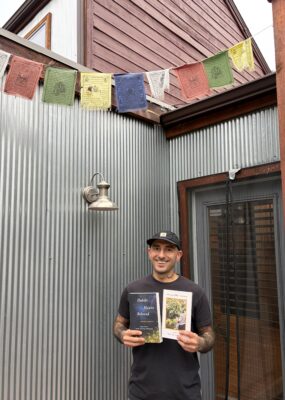
Sbeity is currently living in Boulder, Colorado, but frequently makes his way back to Salt Lake City and considers it a home away from home. He held a moderated conversation at last week’s first annual Salt Lake Book Festival alongside Erin Geesaman Rabke to discuss his latest book, which was published by the University of Utah Press this September. Habibi Means Beloved is a queer memoir on war, stuttering and belonging. It weaves together personal narrative, Sufi mysticism and Lebanese heritage. It’s available at The King’s English Bookshop, so be sure to stop by and grab a copy to support one of Utah’s very own equality pioneers.
Read more about the Queer community here:
Finding Community on the Trail: SLC Sapphic Hikers – SLUG Magazine
A Happily Gay Romp to Downtown SLC’s Gay Bars – SLUG Magazine
If you enjoyed this interview, consider joining our community of donors!
