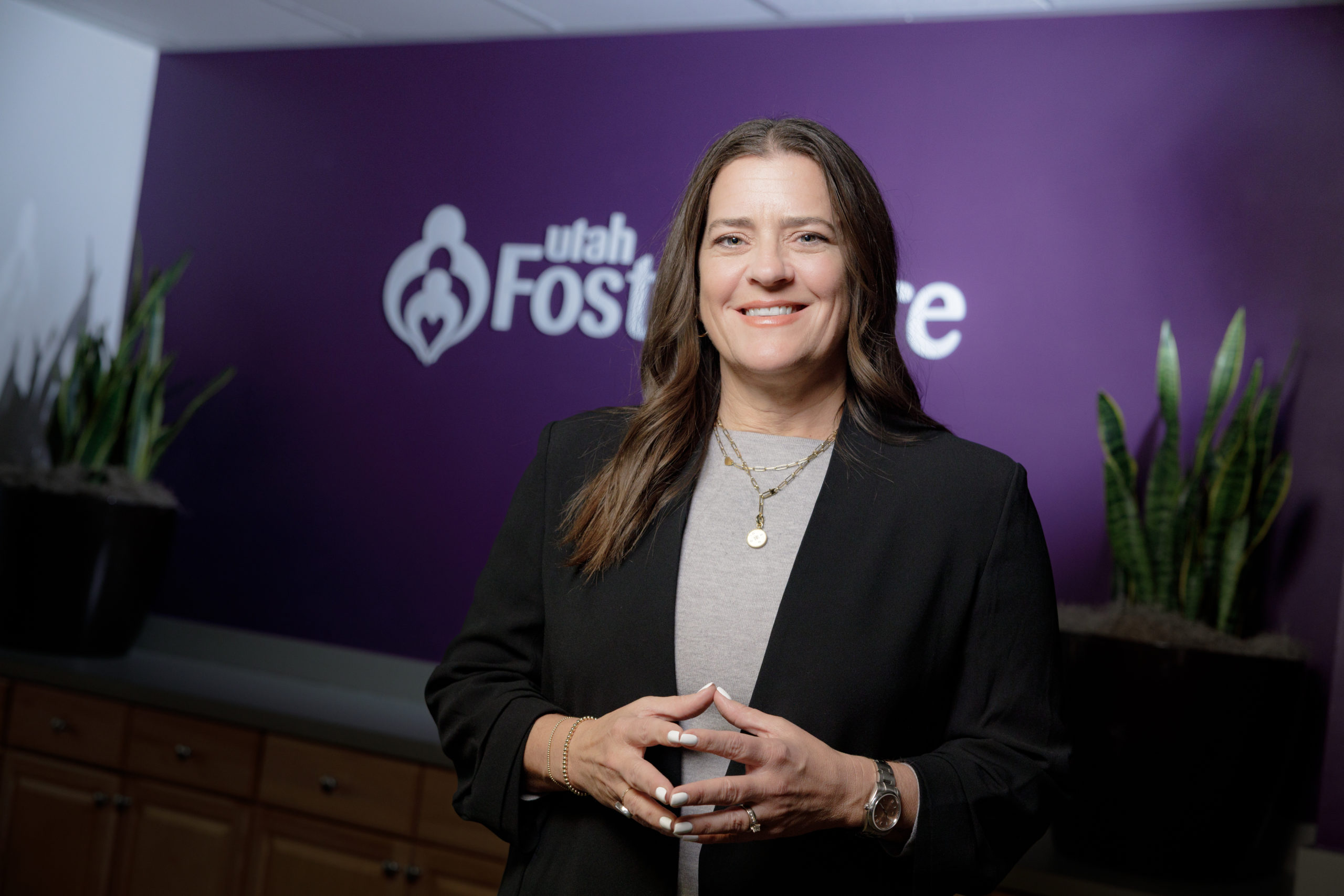
Utah Foster Care: Creating Community and Caring for Utah’s Most Vulnerable
Community
What started as a creative solution to the challenges within Utah’s child welfare system has blossomed into an organization that cultivates community and supports some of Utah’s most vulnerable residents. Utah Foster Care is a local non-profit created by the state’s Legislature and former Gov. Mike Leavitt in 1999. It was born out of the determination to protect and advocate for youth in foster care. Fast forward 27 years, and the organization has recruited and trained more than 16,650 foster families, working with 417 new foster families in 2025 alone, according to Utah Foster Care’s 2025 Annual Report.
Utah Foster Care CEO Nikki MacKay said they work with foster families to ensure the foster care system can be a “safe place to land” for children. “That’s why we do this work,” she says. “It’s about creating opportunities for people to get involved as foster parents, volunteers, mentors or community partners and to become a safe, steady presence in the lives of kids who need it most.”
She has been involved with the organization since its inception, describing the work as “emotionally challenging” and complex. “It feels sacred and deeply meaningful,” MacKay says. “It’s all of those things woven together.” Despite the complexities, the organization’s staff is committed to their work. “We’re fortunate to have an incredible staff who truly understand the mission and are deeply passionate about what we’re trying to accomplish,” she says.
Many staff members have an intimate understanding of foster care, as 40% of them are foster parents, MacKay says. Getting more people interested in becoming foster parents is an important part of the organization’s mission. “We have teams in all of our offices who are always happy to hop on a phone call, talk with people and answer any questions they have about foster care,” MacKay says.
“It’s recruiting families that match the needs of the kids, and when we can’t do that, educating families.”
She emphasized that people from all walks of life can become foster parents. “One common misconception is that single people can’t be foster parents, and that’s simply not true,” she says. Both heterosexual and LGBTQ+ single people and legally married couples may be foster parents. Additionally, a foster parent may be a homeowner or a renter. It all starts with an initial consultation held at the prospective foster parent’s home or at Utah Foster Care’s office. From there, prospective foster parents do several hours of training, a background check and a home study. However, a person must be licensed through the State of Utah to become a foster parent.

Utah Foster Care heavily advocates for keeping children connected to their culture. In MacKay’s words, that means, when possible, “finding families that represent” the kids they serve. “Sometimes that’s about speaking the same language. Sometimes it’s about sharing those cultural traditions,” she says. “It’s recruiting families that match the needs of the kids, and when we can’t do that, educating families.”
A resource Utah Foster Care utilizes to do this is “cluster” or support groups. These groups are built to offer community. Sometimes they’re organized geographically, and other times based on cultural needs. There are cluster groups for Native American families, for Spanish-speaking families and for families of LGBTQ+ youth.
Utah Foster Care also hosts events for families and youth in foster care throughout the year. “BOSS Bus” sticks out to MacKay. “BOSS” stands for belonging, opportunity, support and success. The event focuses on educating teens in foster care about the workplace and involves several organizations. “Every company opens its doors to the kids and really rolls out the red carpet,” she says. “They make them feel important. It’s wonderful to see the kids get excited and start to believe they can be anything they want to be.”
Utah Foster Care encourages anyone interested to learn more about foster care and what it takes to get involved to visit utahfostercare.org.
Read about local superheroes helping Utah’s vulnerable populations:
Kimball Art Center’s Gaze Into These Eyes Champions Justice-Impacted Artists
Rasa Legal: Clearing Records, Changing Lives
