Film Review: Angel and The Badman
Arts
Angel and the Badman
Director: Julio Quintana
Strong Island Entertainment
In Theaters: 10.09.2026
On the surface, the beloved 1947 John Wayne classic Angel and the Badman makes a lot of sense to be remade as a Christian-niche market movie. It’s got a rugged protagonist who finds redemption through the love of a good woman and a god-fearing lifestyle, and it’s in the public domain due to a failure to renew the original copyright, which has made it ripe for opportunists. As such, the power of the right material in the wrong hands is immeasurable, and Angel Studios, along with producers Zachary Levi and Neal McDonough, make for a powerhouse team of the wrong hands, the wrong cast, wrong thinking and just plain wrong in every respect.
Quirt Evans (Zachary Levi, Shazam!, Harold and the Purple Crayon) has spent his life as a gunslinger, but when a bullet leaves him bleeding on a remote ranch, he assumes his story is nearly over. Someone is watching over him, however, and the ranch belongs to the Worth family: Irene (Jean Louisa Kelly, Yes Dear, Top Gun: Maverick), grandmother Harriet (Melissa Chambers, Ransom Canyon); the comely maiden, Penny (Meg Fraser, Bloody Hell, One Perfect Match) and her precocious little brother, Johnny (Barrett Ellis-Luca). Penny acts as an angel of mercy, tending Quirt’s wounds along with introducing him to a quiet, decent way of life that seems almost alien to him. Quirt begins to wonder whether he can leave his violent past behind, but his reputation has consequences.
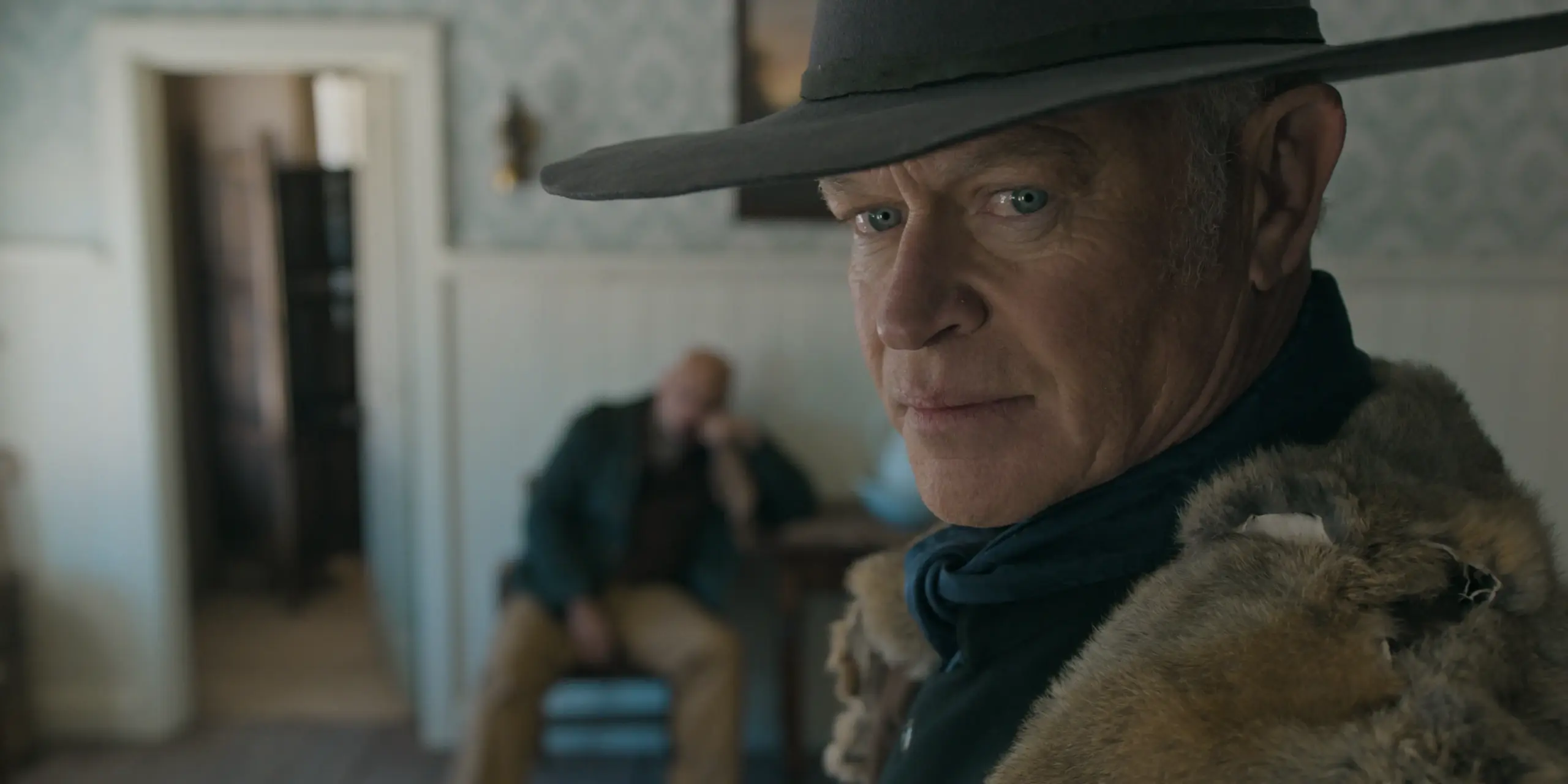
With the law pursuing him in the form of Marshal McClintock (Tommy Lee Jones, The Fugitive, Lincoln) and a scheming gunman named Lardeo (Neal McDonough, Minority Report, Captain America: The First Avenger) looking for a fortune in Confederate gold and willing to kill anyone who stands in his way, Quirt is forced to choose between the life he knows and the man he might become.
The original Angel and the Badman played Penny and her family as Quakers, people who were devoutly pro-God and anti-violence, who had no use or tolerance for guns and won Quirt over to their peaceful way of life. Here, the screenplay has too many cooks, and two of them were producers on the right-wing propaganda fantasy Sound of Freedom (2023). The result is that this version has not only chosen to play the family as generic Christians, but it chooses to make at least as big a moment of Quirt teaching young Johnny how to use a gun — which results in the little boy’s first heroic, stand-your-ground kill — as it does any clear messaging about faith, hope and charity.
The Worths ultimately learn more about how to use violence to stop intruders than Quirt does about coming to Christ, and the result is a film based on politics, not faith. In the original, Quirt gives up his gun, and the film ends with McClintock uttering the immortal (and powerful) line: “Only a man who carries a gun ever needs one.” This hamfisted remake is being careful to play to audiences who firmly believe that the Lord has an open carry permit and an AR-15.
In addition to the off-putting political pandering, Angel and the Badman also suffers from tentative direction by Julio Quintana (Blue Miracle), slow pacing and downright silly dialogue. Johnny’s cheesy, sitcom kid lines — which are entirely the fault of the script, not the inexperienced young actor who does his best with what he’s given — left me waiting for him to say, “You got it, dude!” or even “Whatchou talkin’ bout, Willis?” Even more problematic than the dialogue is the constantly misfiring performances, chief among them the perennially hammy Levi, who couldn’t be more ill-suited to this role. The former Chuck star adopts a self-conscious impression of Tommy Lee Jones, adopting his accent and cadence. Straight-up mimicry of an Oscar-winning legend is a questionable choice under the best of circumstances, but when said Oscar winner is in the film with you, it’s an objectively bad choice.
I waited until the end of the film for a twist revealing that McClintock was Quirt’s father, yet it never came, though the ending is clumsy and abrupt enough that it’s possible it was left on the cutting room floor. Fraser counters Levi’s mugging with a flat and lifeless portrayal that fails to make any kind of impression. Jones does a better Tommy Lee impression than Levi does, and that’s all that he’s required to do here. Still, he’s one of the greats and certainly a highlight.
It may be a little harsh to call Angel and the Badman one of the year’s worst, though you will be hard-pressed to find a more meager and unsatisfying big-screen offering. The only memorable moment comes in the ending credits, as McDonough sticks up the audience at gunpoint and tells them to scan the QR code and buy a ticket for someone else, in Angel Studios signature “pay it forward” campaign. Props to the distributor for, at long last, acknowledging that ripping off audiences is the essence of their business model. —Patrick Gibbs
Read more film reviews by Patrick Gibbs:
Film Review: The Weight
Film Review: The Fix
If you enjoy SLUG’s film reviews, consider joining our community of donors!
