Chef’s Choice: Lost in the Sauce
Community
As political tensions rise to heights we haven’t seen in generations and the temperatures in Utah’s winter plateau as we transition to spring, why don’t our taste buds join in on turning up the heat? We asked five talented local chefs how they would use a local hot sauce in their restaurant’s dishes. With vast cultural representation across each dish, could the thing that fixes the damage done to our melting pot be a little hot sauce?
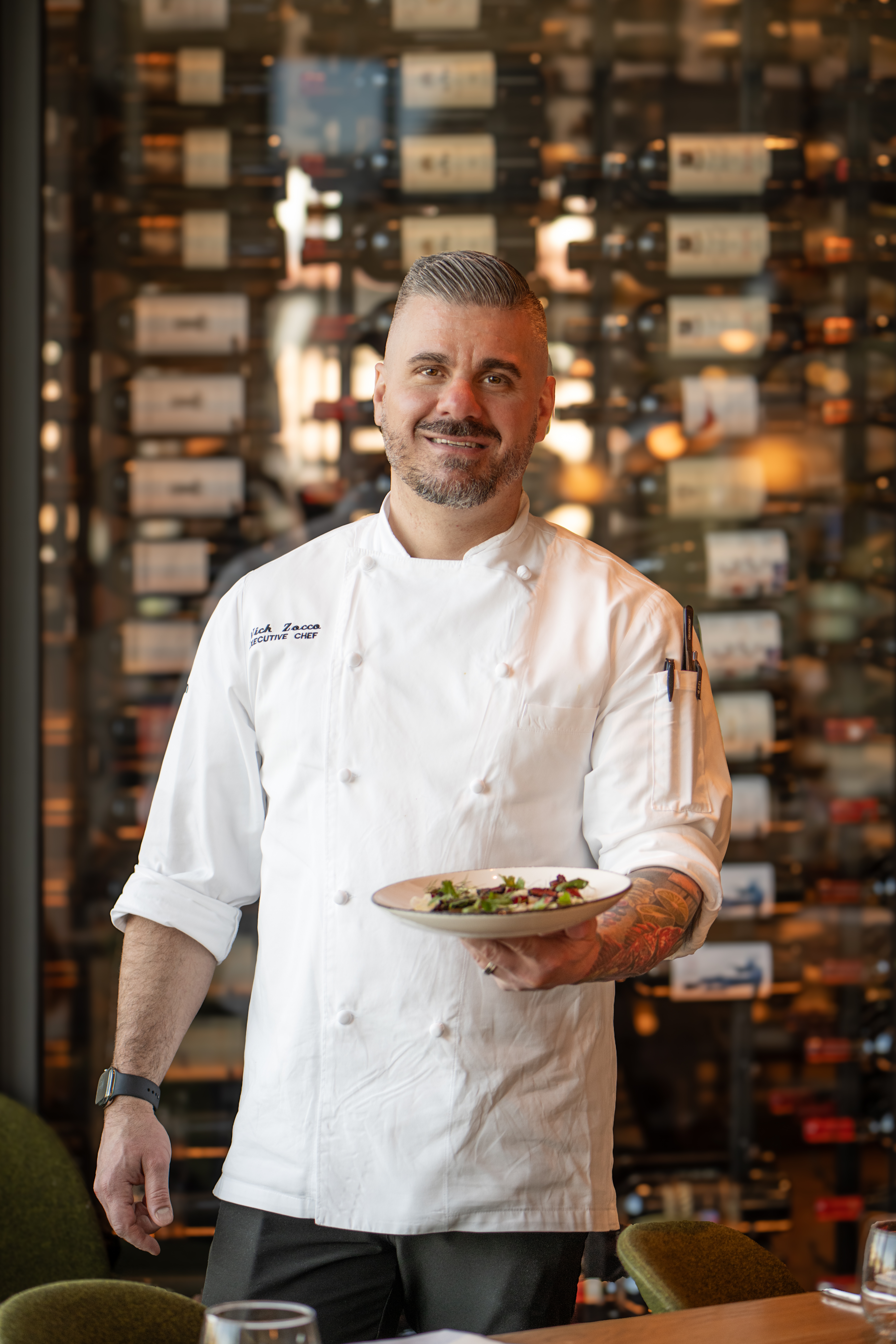
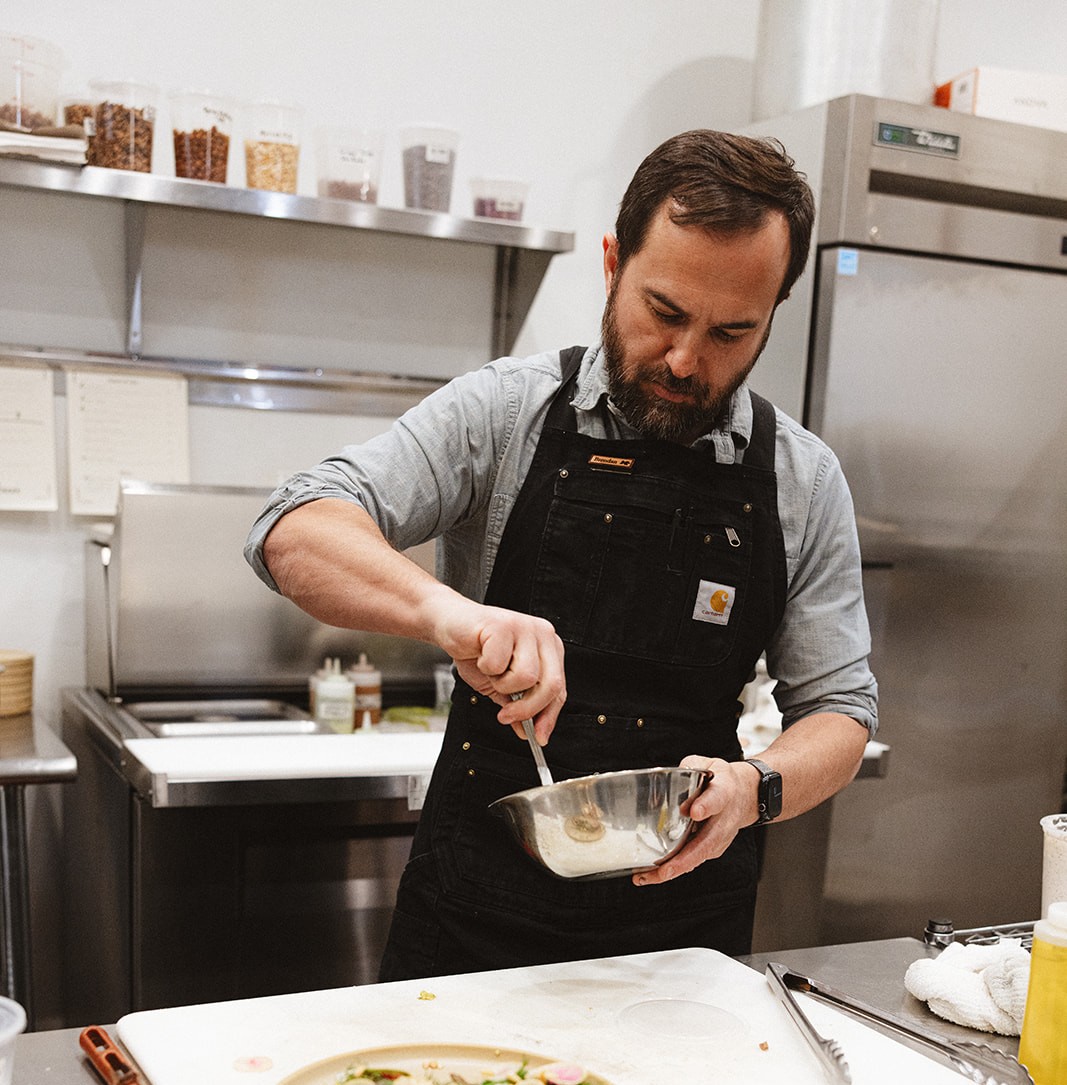
Chef Nick Zocco
Urban Hill
Hot Sauce: Z’s Blackberry Ghost Pepper
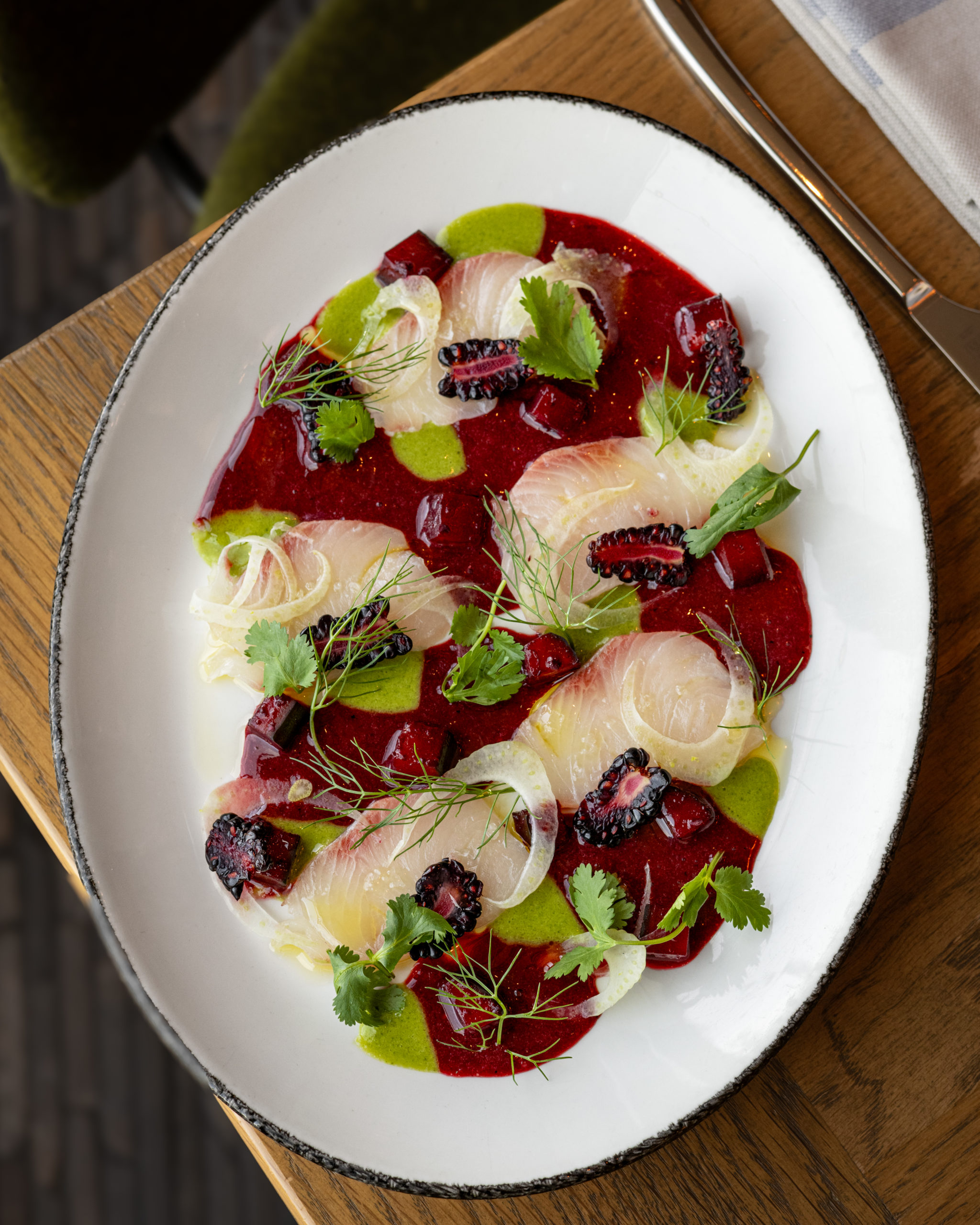
Chef Nick Zocco’s dish is a hiramasa crudo with smokey blackberry “hot sauce” aguachile, spicy compressed cucumber and fennel. Because Zocco enjoys raw fish preparations, crudo is one of his favorite dishes, so naturally, he had to make his own. Blackberries are almost in season, so why not lean into that anticipation and put a twist on this beloved dish? This spicy fresh fruit paired with sushi-grade fish is a delicious combo, allowing the bright acidity of the blackberry along with its sweet and sour flavor to complement the raw fish incredibly well. Zocco noticed the heat of Z’s Blackberry Ghost Pepper hot sauce on its own was far stronger, but by adding it to the aguachile, it balanced perfectly with the smoky, fruity flavor of the blackberries as a complementary finishing sauce. This is the perfect tone-setting dish for a lovely meal. Zocco claims Mexico takes the crown in hot sauce, since salsa is a foundation in their cuisine, not just a condiment.
Chef Brendan Kawakami
North Creek Grill
Hot Sauce: Flaming Homer’s Zahava
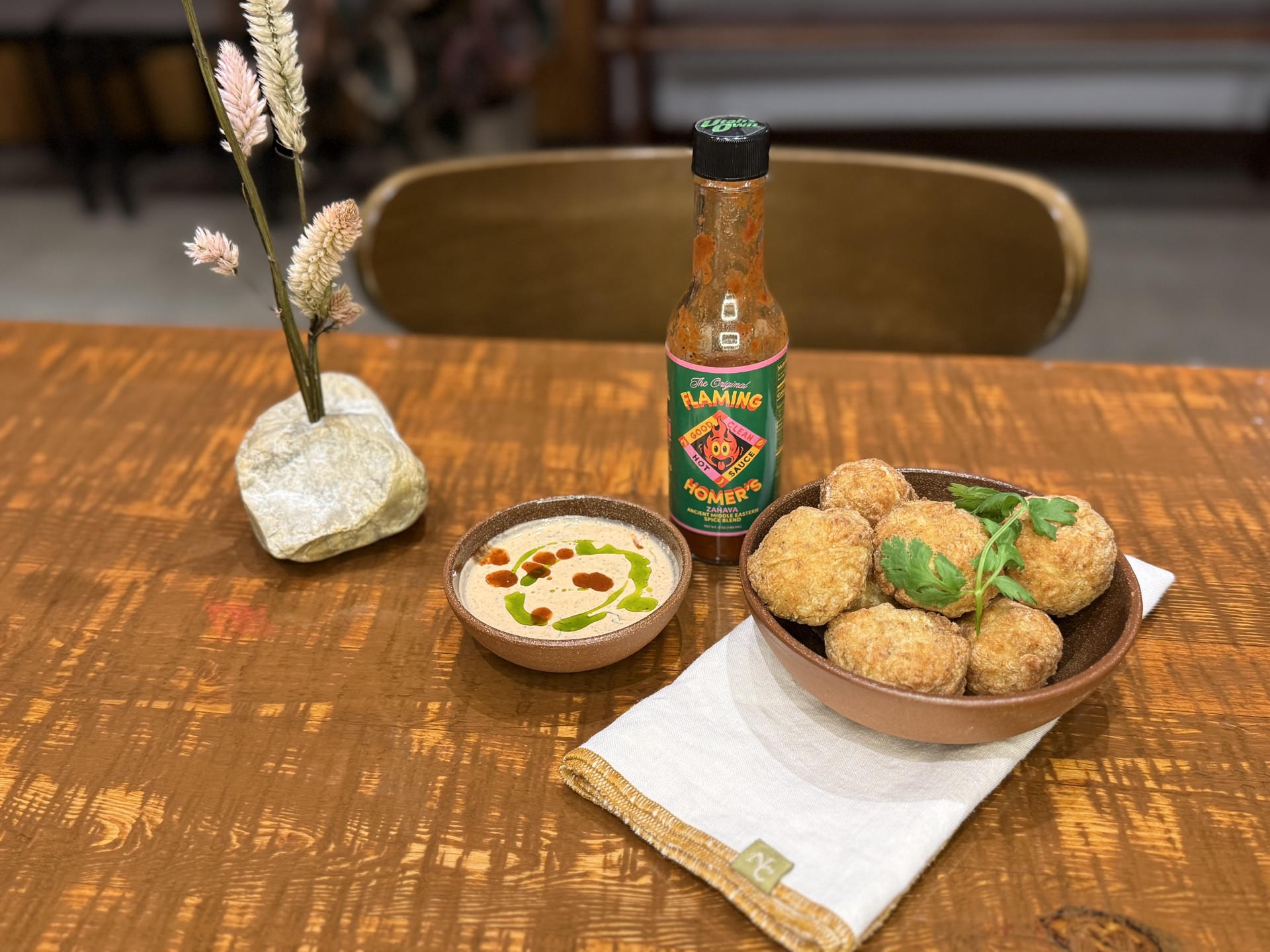
Chef Brendan Kawakami’s featured dish is a sunchoke fritter with a spicy yogurt tahini sauce. Kawakami was inspired to make this because of his love for a bite that is a little crunchy, salty and spicy. The hot sauce chosen was the Zahava flavor from the local Utah hot sauce maker Flaming Homer’s, which reminded him of his favorite hot sauce he ever had from a falafel spot in New York City. Drawn to Middle Eastern flavors, Kawakami adds a dab (or three) in the fritter mix to tie things together, but it really makes its presence known in the yogurt tahini dip. Coupled with creamy yogurt, nutty tahini, garlic and a little pomegranate molasses, the sauce really shines with its heat as well as its list of spices. Starchy foods like sunchokes and the potatoes in these fritters are great foils and vehicles for flavor and spice, allowing a balance for the spice to be present in the flavor but not overwhelming for the diner.
Chefs Travis Herbert & Sapo
Felt
Hot Sauce: Van Kwartel Sunrise Orange Pepper
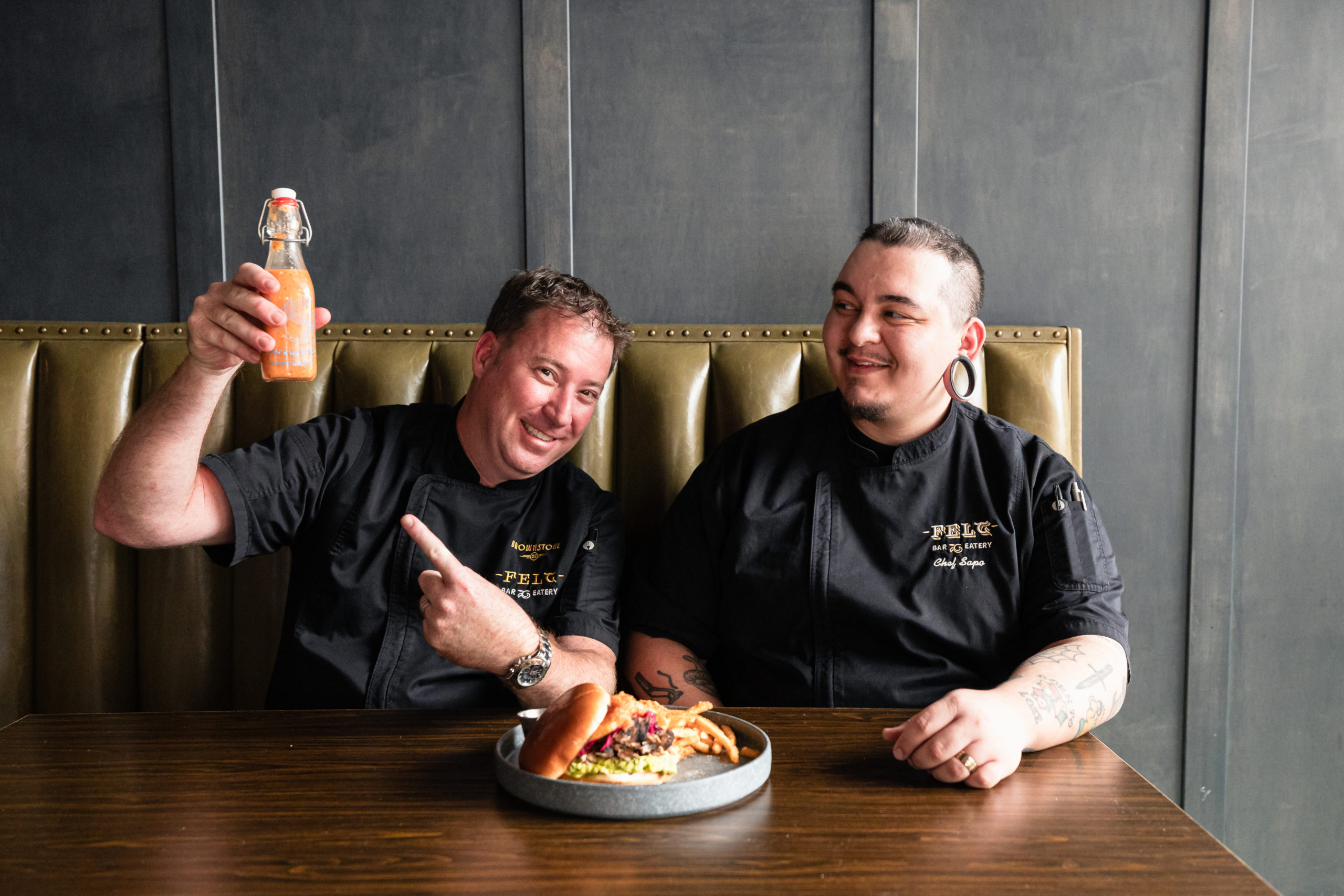
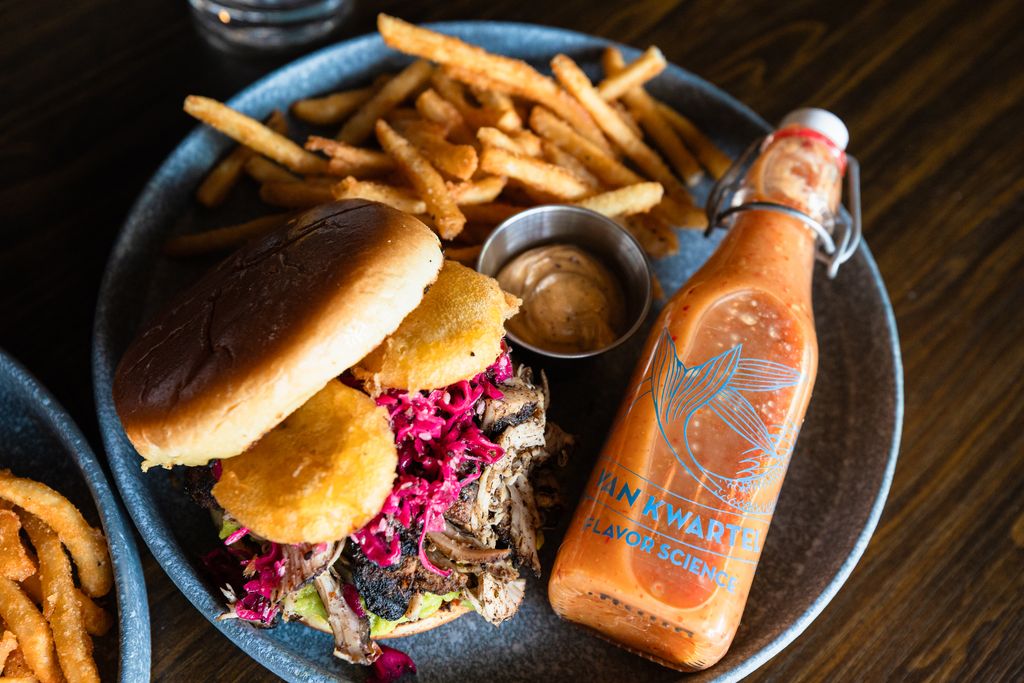
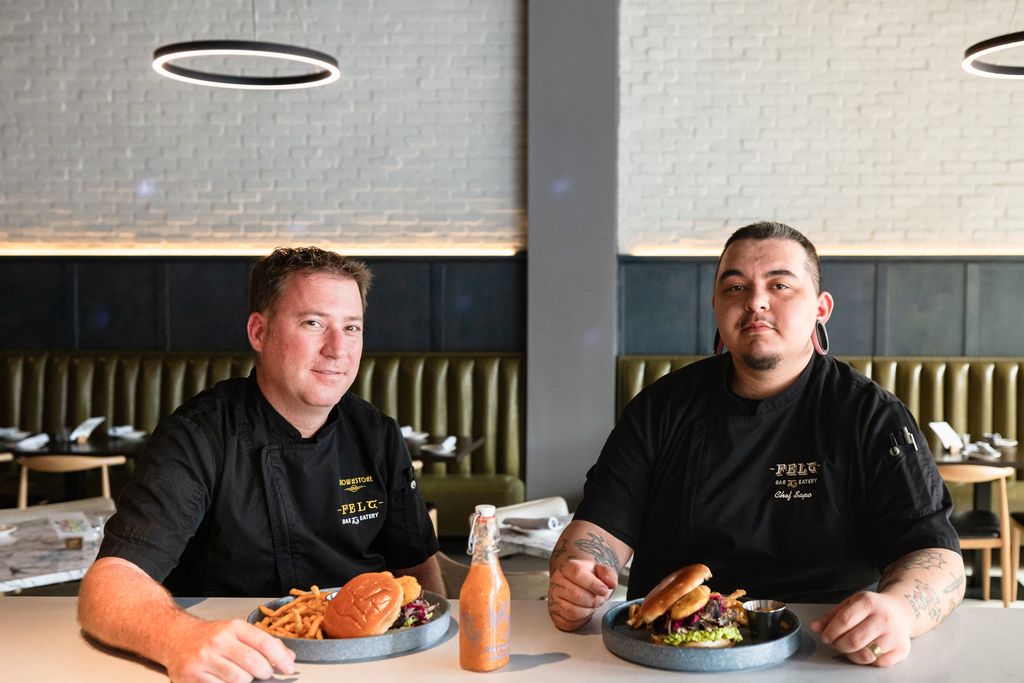
Chefs Travis Herbert and Sapo utilized the Van Kartel Sunrise Orange Pepper hot sauce for their jerk chicken sandwich. The sandwich consists of jerk-marinated, grilled and shredded chicken breast, goat cheese mint guacamole, salted cabbage, fried plantains and orange hot sauce, all on a brioche bun. “We wanted the hot sauce to be the star of the show here,” Herbert says. The idea was to pick the hottest sauce on their list to show flavor and heat working well together. The chicken is marinated for 24 hours then grilled for char and crust. Once shredded, it is placed on a bed of goat cheese mint guacamole, which adds creamy texture and eases some of the heat from the sauce. The salted cabbage brings an element of tang, while plantains contribute crispness and a touch of island flavor to round out the dish. The hot sauce is drizzled over, bringing all the heat and flavor that honors the Jamaican islands and delivers an unapologetically bold flavor.
Chef Romina Rasmussen
Chez Nibs
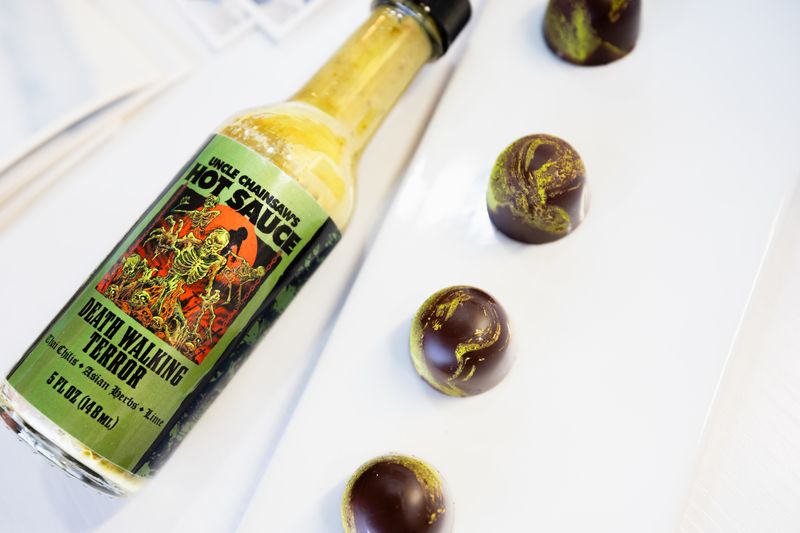
Hot Sauce: Uncle Chainsaw’s Death Walking Terror
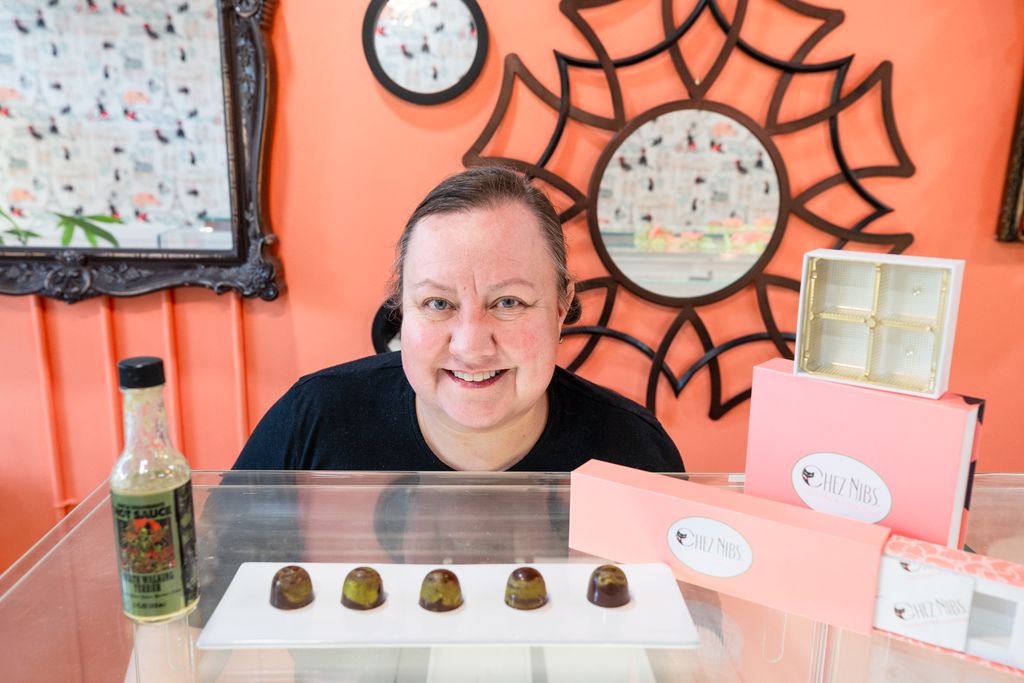
Chef Romina Rasmussen wanted it to be clear that there is hot sauce in the coconut ganache bonbons, but she wanted it to be subtle because she doesn’t like when heat dominates a dish to the point of distracting from the taste, and she also didn’t want to put anyone off who isn’t a fan of heat. Rasmussen used Uncle Chainsaw’s Death Walking Terror hot sauce because of its East Asian flavor profile, which she paired with the coconut ganache as a base because of the prominence of coconut in Asian desserts. The chocolate shell is about 67% chocolate, the coconut-hotsauce ganache is made with a vegan white chocolate and the kalamansi pâte de fruit, which adds an element of lime juice that complements the heat, was made with pectin, making this bonbon plant-based. This bonbon that looks like euphoric fluffy white clouds in a perfect blue sky appears tranquil, but has flavor with personality, incorporating a winning combination of coconut flavors and delightful heat.
Chef Tommy Nguyen
The Pearl
Hot Sauce: Heat Street Muay Thai
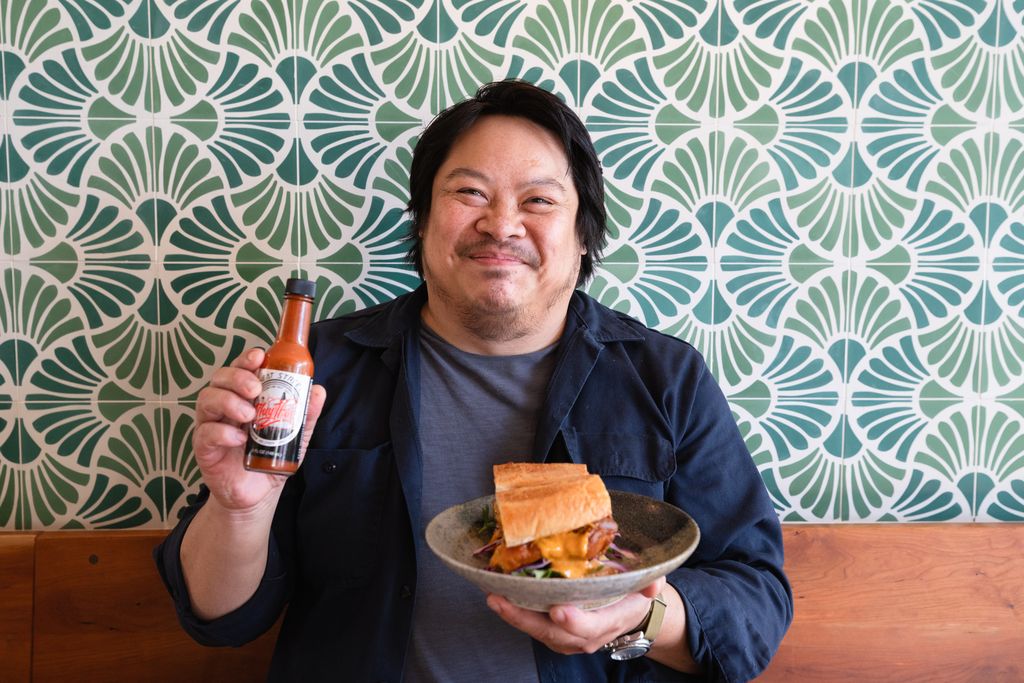
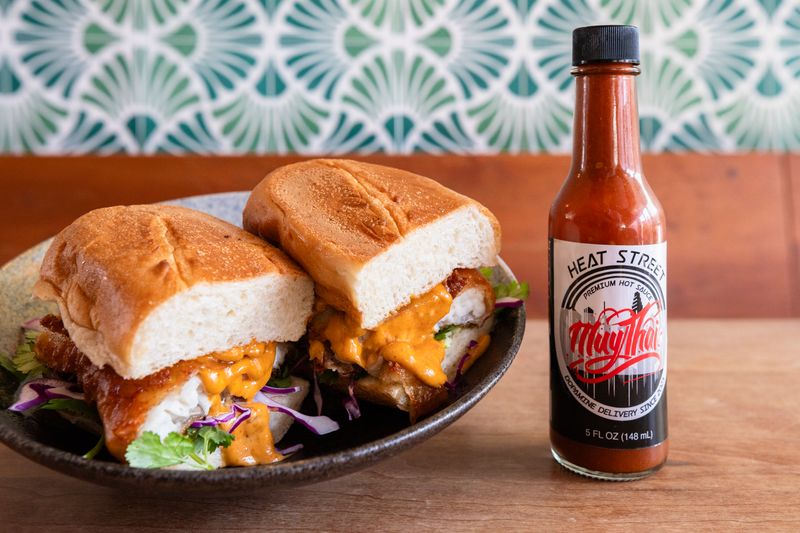
Finally, Tommy Nguyen makes a Bahn Mi, his version of a Vietnamese po boy, beer-battered catfish in a Thai hot sauce that is the perfect blend of heat and flavor. Nguyen takes this old favorite and drives it to flavor town. “For the uninitiated, I think this sauce could be a little hot,” Nguyen says, so he decided to cut the sauce with lime, cumin and Kewpie mayo so the flavor still shines amidst the heat. The Bahn Mi is a cultural mingling between bread, with an American-style catfish paired with the Thai sauce in a classic Vietnamese sandwich. Hot sauce is used both in the beer batter to fry the fish and after in the Kewpie mayo mix, enriching the flavor combinations and the textures while heightening the spice. Thai chili is the pepper Nguyen grew up eating, so he knew this sandwich had to be influenced by that Asian flavor that he feels goes with everything, and we’re inclined to agree.
Read more food interviews by Sean Rinn:
Caputo’s: It Takes a Village to Create a Salt Lake Staple
Chunky Cookies: DIY Festival Craft Food
Like discovering local creativity and deliciousness? Consider joining our community of donors!
