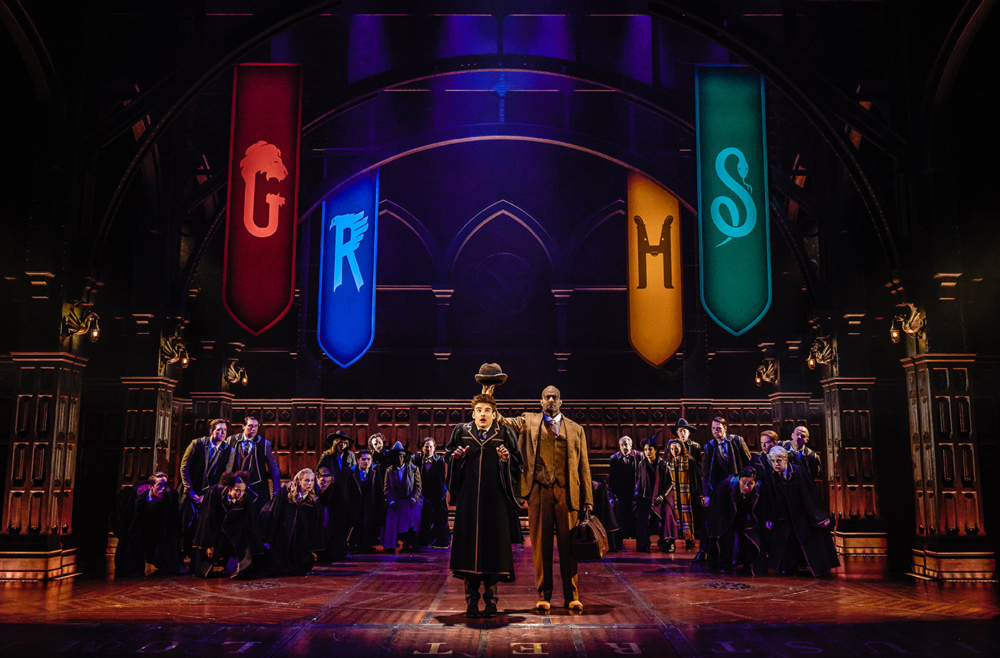
Harry Potter and the Cursed Child @ Eccles Theater
Arts
For a time, J.K. Rowling was a voice that spoke to both the mainstream media and the disenfranchised. She created a world centered on an orphan embraced by outcasts — a world that celebrated compassion, belonging and community. In recent years, Rowling has become an outspoken opponent of transgender rights. For some, that is a non-issue. For countless others, it feels like a betrayal.
I believe in the compassion that so many characters in the Wizarding World extended to one another. I believe transgender people deserve that same kindness, dignity and respect. Having seen Harry Potter and the Cursed Child in both London and New York City in its original two-part form, I’ll save my thoughts on how this reimagined version compares with the original production for the end of the article. There is some truth to the idea that ignorance is bliss: you can’t miss something you never knew was there.
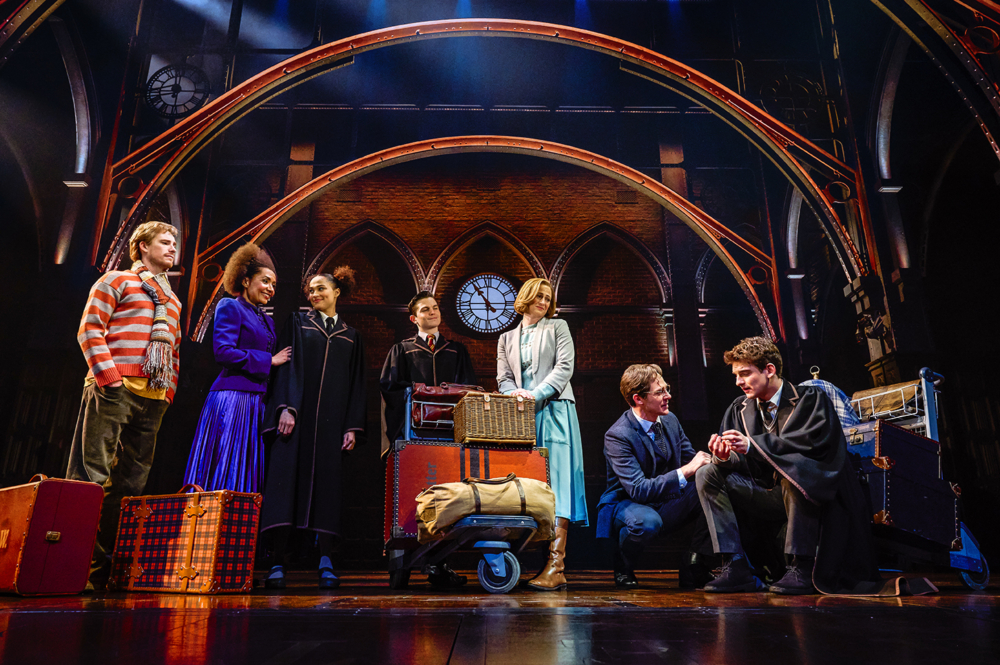
The story follows Albus, the son of the legendary Harry Potter, as he struggles to find his own identity while living in his father’s shadow. An overheard conversation sparks an idea: with the help of his best friend Scorpius, the son of Draco Malfoy, Albus sets out to right a wrong from his father’s past. But even the best intentions can have disastrous consequences.
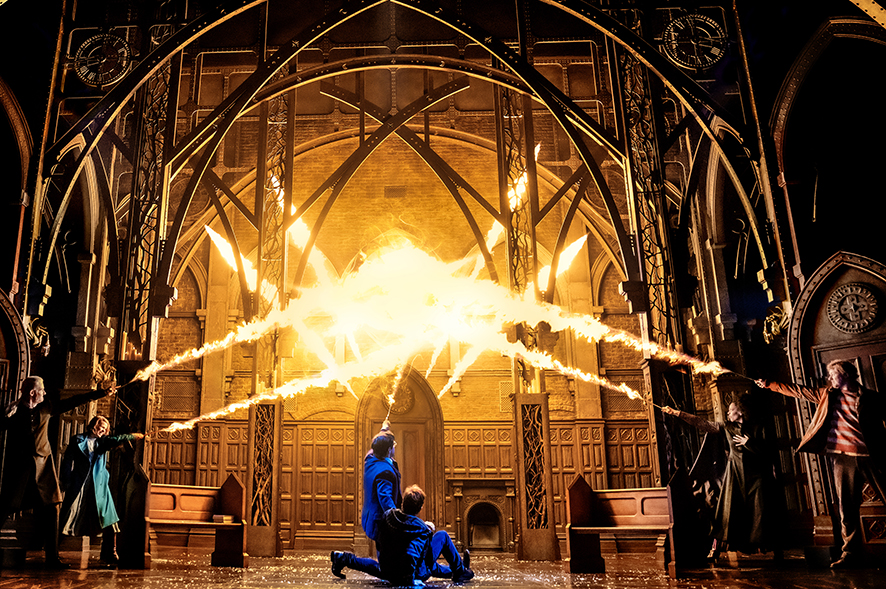
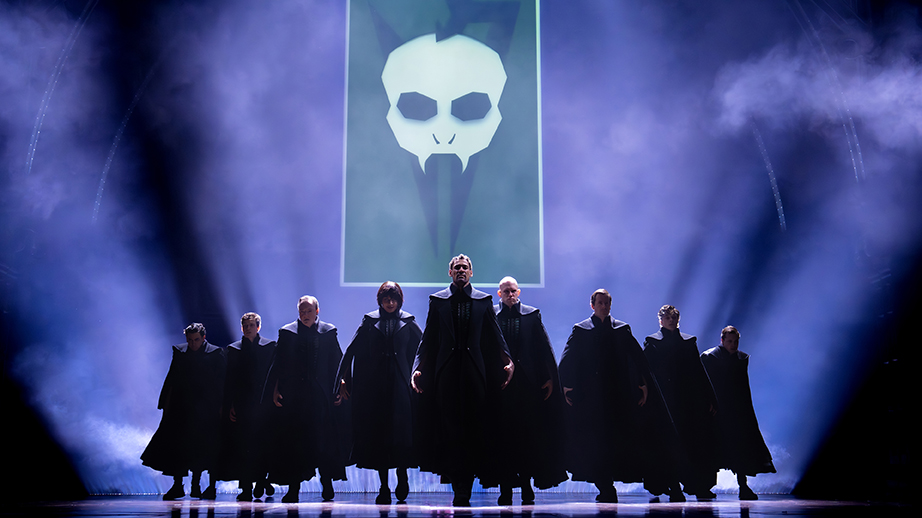
The play assumes its audience is familiar with the novels, particularly Harry Potter and the Goblet of Fire and Harry Potter and the Deathly Hallows. If this is your introduction to the Wizarding World, you’re likely to feel overwhelmed by the play’s relentless delivery of information. If you get lost, there are plenty of flashing lights, cloaked creatures, bursts of fire and general magical mayhem to distract you. In fact, the audience I watched the play with seemed more impressed by the technical wizardry than by the actors or the story. The Polyjuice Potion transformations were a particular crowd favorite. The performances are difficult to critique because they largely consist of impersonations of the characters’ performances in the movies. Even the children adopt their parents’ mannerisms. There are slight variations here and there, but anyone expecting radically different interpretations of these characters will be disappointed. There was a shrillness to some of the dialogue, partly due to the audio mix of the microphones. Diction was occasionally an issue as well. I’ve lived in England; I shouldn’t have to struggle to understand the dialogue.
When you make a play that relies on cutting-edge technology, you’ll always run the risk of the spectacle overshadowing the narrative. The Cursed Child, particularly in its truncated form, is guilty of this. It has a meaningful story that goes beyond fan service, but it is delivered at such a pace that the nuances of the characters’ decisions are completely lost. I’m not saying you won’t enjoy it. You just might not fully experience the story in the way it was intended. What happens to Albus and Scorpius should mean more and leave a greater impression than the special effects. Instead, you’ll inevitably leave the theater talking about how cool the magic was.
Compared to the original two-part productions, the revamped The Cursed Child feels diminished. There is little room for Harry’s part of the story. It hasn’t been completely removed, but Harry’s journey toward realizing that he needs to change the way he loves Albus was one of the most beautiful aspects of the original. There was also more atmosphere. The original format could feel a little indulgent at times, but now that those moments are gone, I can’t help but miss the opportunity to visit more locations and spend more time developing the secondary characters.
And yes, the effects were impressive, but they were far more immersive in theaters designed around the special effects than in a touring production where the effects have to be adapted to the theater. Even if presented as a two-part experience, the touring version could never match seeing the play in New York City or London.
Seeing as neither New York City nor London is showing the two-part version any longer, with the September 20 performance being the final two-part performance in London — the touring production is now almost as good as you’ll find anywhere. Assuming Rowling’s politics haven’t completely turned you against the franchise — and you’d be justified if they have — Harry Potter and the Cursed Child plays at the Eccles Theater through Oct, 11, 2026.
Read more by Ryan Michael Painter:
Review: Rosetta Stone — Executing Nostalgia
Review: Soft Cell — Danceteria
Want to help SLUG continue highlighting local theatre? Consider joining our community of donors
